Energy Gum vs Pouches: Which One Actually Keeps You Focused?
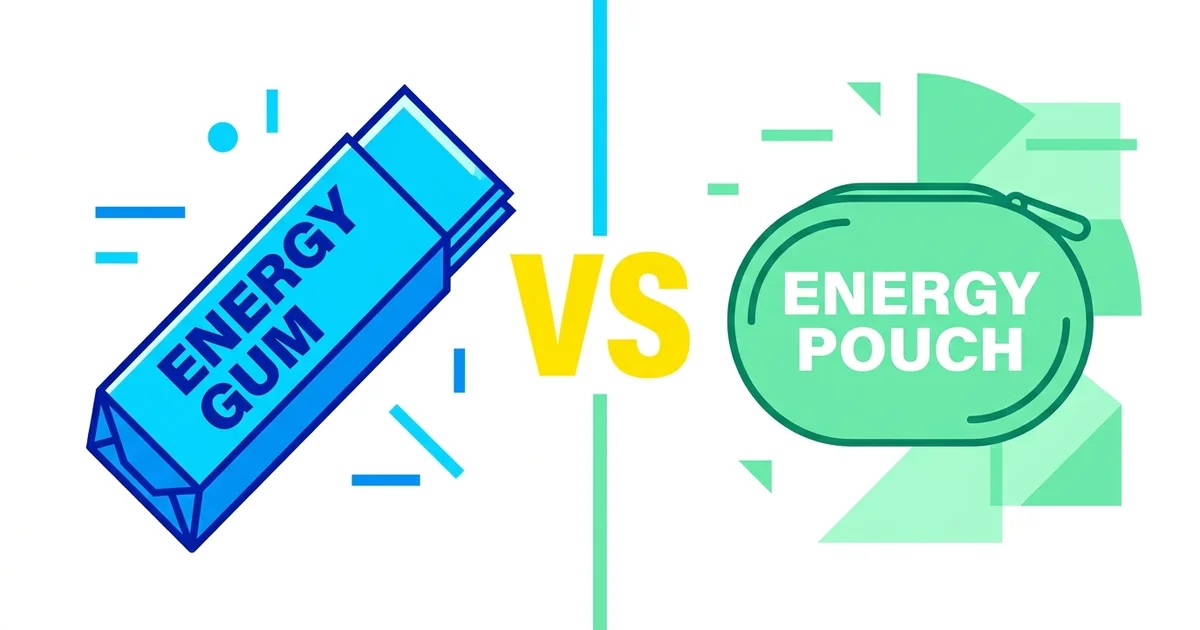
Energy Gum vs Pouches: Which One Actually Keeps You Focused?
Short answer: Gum hits a little sooner; pouches last longer and stay discreet. Neuro Gum pairs 40 mg caffeine with 60 mg L-theanine per piece, Ultra Focus pouches use 100 mg paraxanthine and no caffeine, and Roon pairs 80 mg caffeine with 60 mg L-theanine plus Dynamine and TeaCrine for a 6-8 hour window. Choose by how long your session runs.
How we compared: Doses come from each brand's label or product page, and Ultra's from the can label on its Amazon listing, checked October 2026. We did not lab-test or use these products, and onset figures come from the cited pharmacokinetic studies. Roon makes a competing pouch, covered at the end of this page.
You've seen them both at the checkout counter, in your coworker's desk drawer, or all over your Instagram feed. The debate around energy gum vs pouches is heating up as both formats become the fastest-growing options in the functional stimulant space. They look similar. They both promise focus without the coffee breath. But if you're comparing energy gum vs pouches, the way they deliver their active ingredients, how long they last, and what they actually contain are different enough to change whether your afternoon stays productive or falls apart.
This isn't about brand loyalty. It's about pharmacokinetics, ingredient stacks, and what the research actually says about each delivery method.
Key Takeaways
- Energy gum absorbs caffeine faster (peaking in roughly 45 minutes) through a combination of oral mucosa and GI absorption, but the effect window is shorter.
- Energy pouches sit against the gum line and deliver ingredients through sustained sublingual and buccal absorption, producing a longer, steadier effect.
- Most energy gums rely on caffeine alone (or caffeine plus B vitamins). Most nootropic pouches stack multiple active compounds.
- The energy gum vs pouches question ultimately depends on whether you need a quick spike or hours of sustained focus.
How Energy Gum Works
Energy gum embeds caffeine (and sometimes other compounds) into a chewable gum base. When you chew, the active ingredients release from the base and absorb through two pathways: the oral mucosa in your mouth and, after you swallow your saliva, the gastrointestinal tract.
A study published in the Journal of Pharmaceutical Sciences found that caffeine from chewing gum reached peak plasma concentration in roughly 44 to 80 minutes, compared to 84 to 120 minutes for a standard capsule. That's a real speed advantage for energy gum. Research from the Royal Society of Chemistry also confirmed two distinct absorption peaks from caffeinated gum: one from buccal absorption during chewing and a second from the GI tract after swallowing.
The catch? Caffeine release depends heavily on chewing time. The same research showed that chewing for 2 minutes released far less caffeine than chewing for 10 minutes. Stop chewing too early and you leave active ingredient behind in the gum base. Most people don't chew a single piece of gum for 10 straight minutes with any consistency. This is one of the first factors to consider in the energy gum vs pouches comparison.
The Most Popular Energy Gums
Here's what the major players actually put in their products:
| Product | Caffeine per Piece | Other Actives | Format |
|---|---|---|---|
| Neuro Gum | 40 mg | 60 mg L-Theanine, B6, B12 | Sugar-free gum |
| Neuro Gum Extra Strength | 100 mg | 60 mg L-Theanine, B6, B12 | Sugar-free gum |
| Run Gum | 50 mg | Taurine (20 mg), B6, B12 | Sugar-free gum |
| Run Gum Extra Strength | 100 mg | Taurine (20 mg), B6, B12 | Sugar-free gum |
| GYMGUM Energy | 50 mg | Taurine, B vitamins | Sugar-free gum |
Neuro Gum is the most well-known functional gum brand, combining caffeine with L-Theanine in a ratio that mirrors the classic nootropic pairing found in green tea. Run Gum takes a more athletic angle, swapping L-Theanine for taurine and marketing primarily to runners and endurance athletes.
The pattern across all of them: caffeine is the primary driver. B vitamins play a supporting role. And only Neuro Gum includes L-Theanine, the amino acid shown to improve attention-switching accuracy when paired with caffeine. Understanding these formulations is key to evaluating functional gum vs pouches.
How Energy Pouches Work
Energy pouches (sometimes called nootropic pouches or focus pouches) use a different delivery mechanism, and if you want a deeper look at how nootropic pouches work, that topic is covered separately. You place a small pouch between your upper lip and gum, where it sits against the oral mucosa. The active ingredients dissolve slowly and absorb through the buccal and sublingual tissue over 20 to 45 minutes.
This is the same absorption pathway used in pharmaceutical sublingual tablets, which is one reason the sublingual caffeine pouch format has grown so quickly as an alternative to drinks and pills. The tissue under your lip is thin, highly vascularized, and connects directly to systemic circulation. That means compounds bypass first-pass metabolism in the liver, a process that can degrade or reduce the bioavailability of many active ingredients when swallowed. This bioavailability advantage is central to the energy gum vs pouches discussion.
The key difference from gum: you don't have to do anything. No chewing required. The pouch sits passively and releases its contents at a controlled rate. That consistency matters. With energy gum, your absorption rate changes based on how aggressively you chew, how much saliva you produce, and when you spit it out. A pouch just works.
The Most Popular Energy Pouches
| Product | Caffeine | Other Actives | Format |
|---|---|---|---|
| Dialed In Energy (no longer listed on focuspouches.com, Oct 2026) | 80 mg (from coffee beans) | Vitamin C (30 mg), B1, B2, B6, B12 | Sublingual pouch |
| Dialed In Focus | Not stated | Citicoline (48 mg), N-Acetyl L-Tyrosine (48 mg), L-Theanine (48 mg), Theobromine (29 mg), Guarana (22 mg) | Sublingual pouch |
| Ultra Focus Pouches | 0 mg (caffeine-free) | Enfinity paraxanthine (100 mg), Alpha-GPC (30 mg), L-Theanine (10 mg), Panax Ginseng (1 mg), B6, B12 (can label) | Sublingual pouch |
| Xendurance Focus | Varies | Nootropic blend | Sublingual pouch |
Dialed In has sold two separate pouches, though the Energy pouch no longer appears in its online catalog (October 2026). The Energy pouch is 80 mg of caffeine from coffee beans plus vitamins. The Focus pouch publishes no caffeine figure and runs a nootropic stack instead, with citicoline for acetylcholine support and N-Acetyl L-Tyrosine for dopamine precursor activity. Ultra's Focus pouch takes a completely different approach by removing caffeine entirely and using paraxanthine (caffeine's primary metabolite) as the main stimulant, paired with Alpha-GPC and ginseng. Ultra also sells a caffeinated Energy pouch and a Sleep pouch, so only the Focus line is caffeine-free.
The pouch category, as a whole, tends to include more compounds per serving than energy gum, a distinction explored fully in the caffeine pouches vs nootropic pouches breakdown. That's partly a function of format: a pouch can hold more active material than a gum base, which needs to maintain chewability and flavor. This ingredient capacity is a major differentiator in the nootropic gum vs pouch comparison.
Energy Gum vs Pouches: The Direct Comparison
Let's put them side by side on the metrics that actually matter for cognitive performance.
Absorption Speed
Energy gum has a slight edge here for initial onset. Chewing activates both buccal absorption and saliva-mediated GI absorption simultaneously. But this advantage is inconsistent. It depends on chewing vigor, duration, and individual saliva production.
Pouches deliver a more predictable absorption curve. The pouch sits in place, dissolving at a steady rate regardless of what you're doing. If you're in a meeting, on a call, or mid-workout, the pouch doesn't care. It keeps releasing. For reliable absorption, energy gum vs pouches tips toward pouches.
Duration of Effect
This is where pouches pull ahead in the energy gum vs pouches matchup. Because gum releases its caffeine in a burst pattern (heavily front-loaded based on chewing intensity), the energy curve tends to spike and drop within 1 to 2 hours. Pouches, with their slower sustained release, spread the active ingredients over a longer window.
For a 30-minute pre-workout boost, energy gum works fine. For a 4-hour deep work session, pouches are the better tool.
Ingredient Complexity
Most energy gums are caffeine-plus-one formulas. Caffeine and B vitamins. Caffeine and taurine. Caffeine and L-Theanine (in Neuro Gum's case). The gum format limits how many compounds you can embed in the base while keeping the texture and taste acceptable.
Pouches don't have that constraint. The best nootropic pouches stack four, five, or six active ingredients. That allows for more sophisticated formulations: pairing a stimulant with an anxiolytic, adding a dopamine precursor, including a cholinergic compound for memory support. On ingredient complexity alone, functional gum vs pouches clearly favors the pouch format.
Discretion and Convenience
Tie. Both are portable, require no water, and can be used without anyone noticing. Energy gum has a slight social edge since chewing gum is completely normalized. Pouches might draw a second glance from someone who associates the format with nicotine or tobacco products, even though these are nicotine-free.
Taste and Experience
Energy gum wins for most people on taste. The chewing action itself can be satisfying, even stress-relieving. But some functional gums have a bitter, medicinal aftertaste from the caffeine. Pouches vary widely. Some are flavored well. Others have a chalky or herbal quality that takes getting used to. Taste is one area where the energy gum vs pouches debate comes down to personal preference.
Neuro Gum vs Ultra Pouches
Neuro Gum is a caffeine-plus-L-theanine gum; Ultra Focus is a caffeine-free paraxanthine pouch, so the choice is caffeine or no caffeine before it is gum or pouch.
| Neuro Gum (Energy) | Ultra Focus pouch | Roon | |
|---|---|---|---|
| Main stimulant | 40 mg caffeine per piece | 100 mg paraxanthine (0 mg caffeine) | 80 mg caffeine |
| L-theanine | 60 mg | 10 mg | 60 mg |
| Other actives | B6, B12 | 30 mg Alpha GPC, 1 mg ginseng extract, B6, B12 | 25 mg Dynamine, 5 mg TeaCrine |
| Units per pack | 54 or 90 pieces (neurogum.com) | 15 per can | 15 per tin |
| Price per unit | $0.46 (54 for $24.99); $0.34 (90 for $30.99) | $1.07 one-time; $0.69 on 9-can subscription | from $0.61 (subscription) |
Source: brand labels and product pages, prices checked Oct 2026 (neurogum.com, takeultra.com, takeroon.com). Our Ultra pouches review covers the paraxanthine evidence in more depth.
What's Missing From Both Categories
Here's where the honest assessment comes in. After looking at the actual formulations across the most popular energy gums and nootropic pouches, a few gaps become clear.
Most energy gums are too simple. Caffeine alone, or caffeine with B vitamins, is a 1990s energy formula in a 2026 format. B vitamins don't meaningfully boost acute cognitive performance unless you're deficient. Taurine at 20 mg (Run Gum's dose) is well below the amounts used in clinical research. Only Neuro Gum includes L-Theanine, and even then, the gum format limits how long those ingredients stay active.
Most nootropic pouches remove caffeine entirely or split the stimulant and the nootropics across two products. Ultra's Focus pouch bets everything on paraxanthine, which is interesting but still relatively new as a standalone ingredient with limited long-term human data. Dialed In's Energy pouch includes caffeine at 80 mg, which is a solid dose, but nothing beyond vitamins alongside it. Its broader nootropic stack sits in a separate Focus pouch that publishes no caffeine figure at all. When evaluating nootropic gum vs pouch options, neither category fully delivers.
Nobody addresses tolerance. This is the big one. Caffeine tolerance builds fast. Within a week or two of daily use, the same dose produces a weaker effect. You need more to get the same result. That's true for energy gum, most energy pouches, and coffee. Almost none of these products include ingredients specifically chosen to counteract or slow tolerance buildup. It's the blind spot in the entire energy gum vs pouches conversation.
Sustained duration without a smart ingredient stack is rare. Most products either give you a short burst (gum) or rely on caffeine alone to extend the window. Few are designed to produce a long focus window by pairing caffeine with compounds that extend and smooth its effect.
Frequently Asked Questions
Is gum or a pouch better for focus?
A pouch is better for long focus sessions, and gum is fine for a short boost. Gum releases caffeine in a chew-dependent burst that peaks in roughly 44 to 80 minutes, per the pharmacokinetic study cited above. A pouch sits still and releases steadily, and it has room for more actives: Roon carries four (80 mg caffeine, 60 mg L-theanine, 25 mg Dynamine, 5 mg TeaCrine) where most gums carry caffeine plus one.
Is Neuro Gum or Ultra better?
Neuro Gum is better if you want caffeine with L-theanine; Ultra Focus is better if you want to avoid caffeine. Neuro Gum prints 40 mg caffeine and 60 mg L-theanine per piece. Ultra Focus has no caffeine: its can label lists 100 mg paraxanthine, 30 mg Alpha GPC and 10 mg L-theanine, at $1.07 per pouch one-time or $0.69 on the 9-can subscription.
How long does energy gum last compared with a pouch?
Energy gum's effect usually spikes and fades within 1 to 2 hours because the caffeine releases in a burst while you chew. Plain caffeine pouches run a similar arc. Pouches that pair caffeine with methylliberine are built for longer: methylliberine slowed caffeine clearance in a small human study that used 4x Roon's methylliberine dose and about 1.9x its caffeine, which is the mechanism behind Roon's 6-8 hour target.
Can you use caffeine gum and a caffeine pouch on the same day?
Yes, as long as you add up the caffeine. A 40 mg Neuro Gum piece plus an 80 mg Roon pouch is 120 mg, and the FDA's 400 mg daily figure for healthy adults covers coffee and energy drinks too. Stop either format at least 8 hours before bed.
A Pouch Built to Fill Those Gaps
Roon was designed around the specific problems outlined above. After weighing energy gum vs pouches across every metric, Roon chose the pouch format for its sustained-release absorption advantage. It's a zero-nicotine sublingual pouch with an ingredient stack that targets the gaps other products leave open.
The formula pairs 80 mg of caffeine with L-Theanine, roughly equivalent to a cup of coffee, but with L-Theanine improving attention-switching accuracy and calm alertness. That caffeine-plus-L-Theanine pairing is well-studied. Research published in Nutritional Neuroscience found that 40 mg of caffeine combined with 97 mg of L-Theanine improved focus during demanding cognitive tasks compared to placebo. Roon uses 80 mg of caffeine paired with 60 mg of L-Theanine, maintaining the same well-studied pairing at a level comparable to a cup of coffee.
Then it adds two compounds most products ignore: Theacrine and Methylliberine. Theacrine is structurally similar to caffeine but activates adenosine and dopamine receptors without building tolerance at the same rate. Published research has shown that theacrine does not produce habituation over repeated dosing, which is the specific problem that makes caffeine less effective over time. Methylliberine complements theacrine by providing a faster-onset, shorter-duration stimulant effect that fills the gap while theacrine ramps up.
The result is a 6-to-8-hour focus window from a single pouch, without the crash, without the jitters, and without needing to increase your dose next week to get the same effect.
If you've been weighing energy gum vs pouches and bouncing between gums that fade too fast and pouches that rely on caffeine alone without a supporting stack, Roon is worth trying. It's the pouch format done with a purpose.