Kratom vs. Nicotine-Free Focus Pouches: Dose, Legal Risk
Roon Team
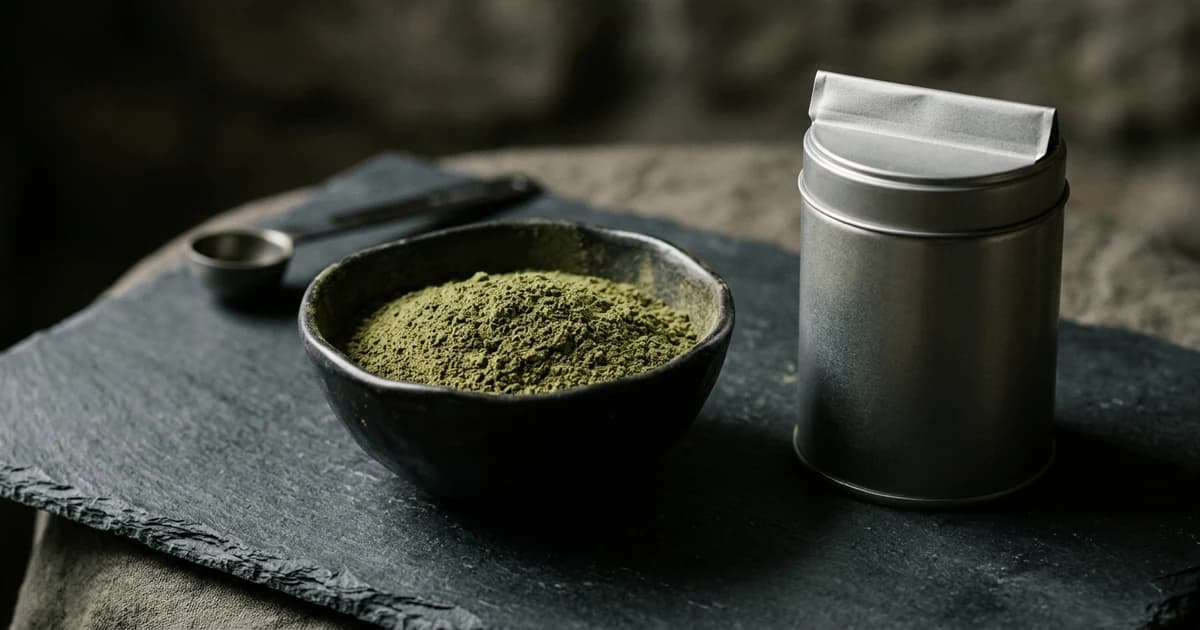
Kratom vs. Nicotine-Free Focus Pouches: Dose, Legal Risk, and Format Compared
Kratom and nicotine-free focus pouches both come in small, portable formats and promise energy or focus. That is where the similarities end. Kratom's active alkaloids (mitragynine and 7-hydroxymitragynine) act on opioid receptors, producing stimulant-like effects at low doses and progressively opioid-like effects at higher doses. Caffeine-based focus pouches like Roon act on adenosine receptors, a completely different stimulant mechanism with decades of well-characterized safety data. The legal picture is just as different: as of July 2026, the DEA has issued a Notice of Intent to temporarily schedule concentrated 7-hydroxymitragynine (7-OH) under the Controlled Substances Act, while caffeine carries no scheduling risk whatsoever.
For the full dose-response risk picture on kratom specifically, see our kratom guide. This article is different: it is a direct, format-level comparison between kratom pouches and Roon, covering mechanism, dose, onset, legal status, and who each product actually serves.
Key Takeaways
- Different receptors, different risk profiles. Kratom acts on opioid receptors; caffeine-based focus pouches act on adenosine receptors. These are not interchangeable mechanisms, and the dependence profiles differ accordingly.
- A real sublingual kratom pouch exists. Hyroxi 7-OH pouches contain 7mg of 7-hydroxymitragynine per pouch, making a genuine format-level comparison possible. But that specific compound is the one the DEA is moving to schedule.
- Kratom is banned in nine U.S. states; caffeine is legal everywhere. Regulatory uncertainty around concentrated 7-OH products is accelerating in 2026, not slowing down.
- These products solve different problems. Kratom at low doses is used for mood lift and mild analgesia. Caffeine-based pouches are designed for sustained cognitive focus and alertness. Picking the right one depends on what job you need done.
What Is Kratom, and What Does a Kratom Pouch Actually Contain?
Kratom (Mitragyna speciosa) is a tropical tree whose leaves contain dozens of alkaloids, the two most pharmacologically active being mitragynine and 7-hydroxymitragynine (7-OH). At low doses (roughly 1 to 2 grams of powder), kratom produces stimulant-like effects: increased alertness, mild euphoria, and elevated mood. Push the dose higher (5g and above), and the binding shifts toward mu-opioid receptors, producing sedation, analgesia, and a dependence profile that resembles opioid withdrawal, though typically milder than full-agonist opioids.
Most kratom is sold as loose powder, capsules, or liquid extract shots. MIT45 GO, one of the better-known extract products, is a liquid squeeze sachet containing 150mg of mitragyna speciosa extract with 65% mitragynine concentration. That is not a lip-pouch format; you squeeze it into your mouth.
The closest format-level comparison to a caffeine focus pouch is Hyroxi 7-OH Sublingual Pouches: a pouch you place under the tongue or between gum and cheek, containing 7mg of 7-hydroxymitragynine per pouch, with 10 pouches per container, available in Cool Mint and Citrus. This is the product that makes a fair apples-to-apples format comparison possible. It is also the product category most directly threatened by the DEA's July 2026 Notice of Intent.
How Do Kratom Pouches and Caffeine Focus Pouches Compare?
The table below uses Hyroxi 7-OH (the only widely available sublingual kratom pouch) and Roon (a caffeine-based focus pouch) as the two format-matched products.
| Category | Hyroxi 7-OH Sublingual Pouch | Roon Focus Pouch |
|---|---|---|
| Primary mechanism | Opioid receptor agonist (7-hydroxymitragynine) | Adenosine receptor antagonist (caffeine) |
| Active dose per pouch | 7mg 7-hydroxymitragynine | 80mg caffeine, 60mg L-theanine, 25mg methylliberine, 5mg theacrine |
| Format | Sublingual pouch, 10 per tin | Sublingual pouch, 15 per tin |
| Onset | Reported fast (sublingual absorption); exact time not disclosed | 5 to 10 minutes |
| Duration | Not disclosed by manufacturer; low-dose kratom generally lasts 2 to 4 hours | 6 to 8 hours |
| Dependence profile | Opioid-type physical dependence possible with regular use | Caffeine tolerance (well-characterized, manageable) |
| Federal legal status (July 2026) | 7-OH above a specified threshold: DEA Notice of Intent to schedule in Schedule I (not yet completed) | Legal; no scheduling action pending or contemplated |
| State-level bans | Kratom banned in 9 states as of July 2026 | None |
| Price range | $15.00 per 15-pouch tin one-time ($1.00/pouch); $9.16/tin on subscription ($0.61/pouch) | |
| Typical use case | Mood lift, mild analgesia, relaxation | Sustained cognitive focus and alertness |
Both products work. Neither is "better" in the abstract. They act on different receptor systems, carry different risk profiles, and solve different problems. The comparison matters because the format similarity can obscure just how different the pharmacology is.
The DEA's 2026 Move Against Concentrated 7-OH: What It Means for Kratom Pouches
On July 1, 2026, the DEA filed two Notices of Intent (NOI) with the Federal Register. The first targets 7-hydroxymitragynine above a specified concentration threshold for temporary placement in Schedule I. The second covers three related synthetic substances (mitragynine pseudoindoxyl, MGM-15, and MGM-16).
This is a Notice of Intent, not a completed scheduling action. The temporary scheduling orders have not yet taken effect. But once they do, manufacture, distribution, sale, and possession of covered 7-OH substances will become subject to criminal, civil, and administrative sanctions under the Controlled Substances Act.
Whole-leaf kratom and standard kratom powder remain unscheduled federally. The action targets concentrated 7-OH products specifically. A product like Hyroxi's 7mg 7-hydroxymitragynine pouch sits squarely in the crosshairs.
Separately, the FDA issued warning letters in June 2025 to seven companies marketing 7-OH products, including one to the maker of 7OHMZ gummies, citing concern about child-appealing packaging. The FDA's position is that 7-OH is not lawful in dietary supplements and cannot be lawfully added to conventional foods.
Caffeine, by contrast, is Generally Recognized as Safe (GRAS) by the FDA and faces no pending scheduling, restriction, or enforcement action at any level.
Kratom's State-by-State Legal Patchwork
As of July 2026, kratom is banned in nine U.S. states: Alabama, Arkansas, Connecticut, Indiana, Kansas, Louisiana, Tennessee, Vermont, and Wisconsin. Rhode Island reversed its ban effective April 1, 2026, becoming the first state to move from prohibition back to regulated-legal status.
Roughly 18 or more states have adopted a Kratom Consumer Protection Act (KCPA) framework, which regulates rather than bans kratom through 21+ age gates, lab testing requirements, and labeling standards including 7-OH concentration caps. The exact count varies by source because several states have bills in various stages of passage.
If you travel for work or live near a state border, this matters practically. Possessing kratom in a banned state is a criminal offense. Caffeine pouches carry no equivalent legal risk in any U.S. jurisdiction.
Who Is Each Product Actually For?
This is the question that matters more than "which is better." These products occupy different pharmacological categories and serve different needs.
Kratom (low-dose) is for people who want:
- Mild mood elevation and a sense of well-being
- Low-level analgesia (mild pain relief)
- A plant-based alternative to prescription opioids (a common self-reported use, though not FDA-approved for this purpose)
- Relaxation with mild stimulation at very low doses
A caffeine-based focus pouch (like Roon) is for people who want:
- Sustained alertness and cognitive focus for 6 to 8 hours
- A stimulant effect without nicotine, without opioid-receptor activity, and without the legal complexity of kratom
- Something they can use across all 50 states with no ambiguity
- A daily-driver option with a well-understood dependence profile (caffeine tolerance, which is real but manageable and well-studied)
Trying to use low-dose kratom as a focus tool is possible, but you are running a stimulant effect through opioid receptors rather than adenosine receptors, with a dose-response curve that shifts toward sedation as you increase. Trying to use a caffeine pouch for pain relief or anxiolytic relaxation will not work either. Caffeine is a stimulant, not an analgesic or a sedative. These are different tools for different jobs.
The Dependence Question, Stated Plainly
Kratom produces opioid-type physical dependence with regular use. Withdrawal symptoms resemble opioid withdrawal (sweating, nausea, agitation, anxiety, flu-like symptoms), though they are generally milder and shorter than withdrawal from full-agonist opioids like oxycodone. A 2020 systematic review found clear dependence potential with fewer severe autonomic signs than classical opioid withdrawal. The dose-escalation pattern is a real concern: users frequently report needing higher doses over time.
Roon contains 80mg of caffeine. Caffeine produces tolerance, full stop. If you use it daily, you will develop some degree of tolerance, and stopping abruptly can cause headaches and fatigue for a few days. This is not controversial, and it is not the same thing as opioid-type dependence. Theacrine (one of Roon's four active ingredients) specifically does not build tolerance the way caffeine does, but that property applies to theacrine itself, not to the whole pouch or to caffeine.
The honest framing: caffeine dependence is mild, well-studied, and socially normalized. Kratom dependence is pharmacologically closer to opioid dependence, less studied, and carries escalation risk that caffeine does not.
Choosing Between Two Different Pharmacologies
The question "kratom vs. focus pouches" is less like "Coke vs. Pepsi" and more like "ibuprofen vs. coffee." They act on different receptor systems, produce different subjective effects, carry different dependence profiles, and face very different regulatory futures. The format similarity (both can come in a pouch you place in your mouth) does not make them pharmacological equivalents.
If you want sustained cognitive alertness with a stable legal status and a well-understood safety profile, a caffeine-based pouch is the straightforward choice. If you want mood-based relaxation or mild analgesia and are comfortable navigating kratom's legal patchwork and dependence profile, that is a different decision with different trade-offs. Neither product substitutes for the other because they are not doing the same thing.
Frequently Asked Questions
Is kratom safer than nicotine pouches?
That depends on the metric. Nicotine pouches deliver nicotine (addictive but not an opioid agonist) without combustion. Kratom acts on opioid receptors and carries opioid-type dependence risk. Neither product involves smoking or combustion-related harm. Kratom's dependence profile is generally considered riskier than nicotine's in terms of withdrawal severity, but nicotine's addictive potential is extremely high. "Safer" requires specifying safer in what way.
Can you use kratom as a focus aid?
At very low doses (1 to 2 grams of powder), kratom can produce a mild stimulant effect lasting 2 to 4 hours. But the mechanism runs through opioid receptors, not the adenosine-receptor pathway that caffeine uses. The dose-response curve is steep: slightly more, and you shift toward sedation. It is a narrow and unpredictable window compared to a standardized caffeine dose.
Is 7-hydroxymitragynine (7-OH) legal in 2026?
It is in flux. The DEA issued a Notice of Intent on July 1, 2026 to temporarily place concentrated 7-OH in Schedule I. This has not yet taken effect, so 7-OH products remain technically available in states where kratom is legal. But the direction of federal enforcement is clear, and products like concentrated 7-OH pouches face the most immediate risk.
How many states have banned kratom?
As of July 2026, nine states ban kratom outright: Alabama, Arkansas, Connecticut, Indiana, Kansas, Louisiana, Tennessee, Vermont, and Wisconsin. Rhode Island reversed its ban effective April 1, 2026. Over 18 states have adopted the Kratom Consumer Protection Act as a regulatory framework rather than a ban.
What is a Kratom Consumer Protection Act (KCPA)?
The KCPA is model legislation adopted in 18+ states that regulates kratom instead of banning it. Requirements typically include a 21+ age gate, mandatory lab testing, accurate product labeling, and concentration limits on 7-hydroxymitragynine. The goal is consumer safety through standardization rather than prohibition.
Does Roon contain kratom or any opioid-receptor compounds?
No. Roon contains 80mg caffeine, 60mg L-theanine, 25mg methylliberine (Dynamine), and 5mg theacrine (TeaCrine). All four ingredients act through non-opioid mechanisms. Caffeine is an adenosine receptor antagonist. Roon contains no kratom, no 7-OH, no opioid-receptor agonists of any kind.
How long does kratom last compared to a Roon pouch?
Low-dose kratom (1 to 2g powder) typically lasts 2 to 4 hours. Moderate doses (2 to 4g) can extend to 4 to 7 hours. Roon's felt window is 6 to 8 hours from a single pouch, driven by methylliberine's effect on slowing caffeine's clearance.
Can you travel with kratom across state lines?
This is risky. Kratom is banned in nine states, and possessing it in those states is a criminal offense. There is no federal law protecting interstate transport of kratom through a banned state. Caffeine pouches have no equivalent legal restriction in any U.S. state.
Same Pouch Format, Different Pharmacology Entirely
Format can mislead. Two products that both come in a sublingual pouch and both promise "energy" or "focus" can have completely different mechanisms, dependence profiles, and legal exposures. The 2026 regulatory environment is making these differences harder to ignore, especially for concentrated 7-OH products that sit at the center of the DEA's scheduling intent. The right choice depends on the specific job you need done, not on which product fits in your pocket.
If the Job Is Focus, Not Analgesia
If what you actually need is sustained cognitive alertness for a work session, a study block, or a long drive, the pharmacology points clearly toward caffeine, not opioid-receptor agonism. Roon delivers 80mg of caffeine alongside 60mg L-theanine, 25mg methylliberine (Dynamine), and 5mg theacrine (TeaCrine) in a single sublingual pouch. That is a small-coffee dose of caffeine, but the methylliberine slows caffeine's oral clearance: a randomized crossover PK study (n=12) found co-administration cut clearance from 41.9 to 17.1 L/hr and extended half-life from 7.2 to 15 hours, with no increase in peak concentration. Same peak, longer tail. That is why the felt window is 6 to 8 hours instead of coffee's typical 3 to 4.
Roon is not a kratom substitute. It will not provide analgesia, mood-based relaxation, or any opioid-receptor effect. It is a caffeine-based stimulant in a format that happens to look like a kratom pouch. If you want focus with no legal ambiguity, no opioid-receptor engagement, and no pending DEA action against any ingredient in the tin, that is what Roon is built for. One real trade-off: a longer caffeine half-life means you should not take it late in the day. Roon's own guidance is to stop at least 8 hours before bed.
Written by Roon Team