What Is Brain Rot? The Word, the Research, and What It Is Not
What Is Brain Rot? The Word, the Research, and What It Is Not
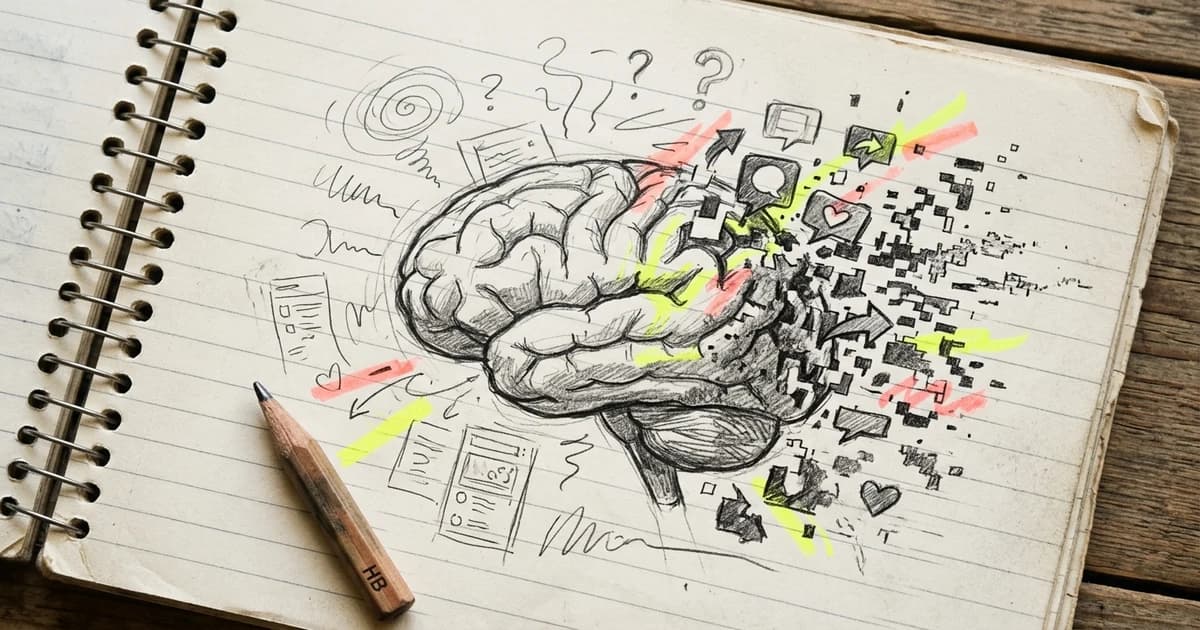
Brain rot means two things. The first: the low-value online content itself, the sludge videos and AI slop and endless short-form feeds. The second: the mental dulling people believe comes from consuming too much of it. Oxford University Press named it Word of the Year in 2024 after more than 37,000 public votes. It is a cultural term, not a medical diagnosis, and the research behind it is real but young.
This page holds the word's full history, both senses, the study numbers and their limits, and a flat statement about what brain rot is not. The slang glossary, the Italian brainrot explainer, and the practical strategies live on their own pages. This one is the hub.
Key Takeaways
- Brain rot is Oxford's 2024 Word of the Year, but Henry David Thoreau used the term in 1854. The complaint that easy material dulls the mind is older than television.
- A 2025 meta-analysis of 71 studies and 98,299 participants found moderate associations between heavy short-form video use and poorer attention, but most studies were cross-sectional, meaning they cannot prove causation.
- Brain rot is not a medical diagnosis, not brain damage, and not a condition anyone can give you. The research measures associations, not a disease.
- The "8-second attention span" stat is fabricated. So is the "7.2-second" version circulating in 2026.
The Oxford Definition
Oxford defines brain rot as "the supposed deterioration of a person's mental or intellectual state, especially viewed as the result of overconsumption of material (now particularly online content) considered to be trivial or unchallenging."
That definition covers both directions. Brain rot is the content you consume, and brain rot is what supposedly happens to you after you consume too much of it. Usage of the term rose 230 percent between 2023 and 2024, driven largely by TikTok, YouTube Shorts, and Instagram Reels discourse. More than 37,000 people voted in Oxford's public poll.
Casper Grathwohl, president of Oxford Languages, noted that Gen Z and Gen Alpha adopted the term despite being the communities most responsible for creating the content it describes. The term also appears in the Cambridge Dictionary and Merriam-Webster's slang dictionary.
The Word Is 170 Years Old
The earliest recorded use of brain rot comes from Henry David Thoreau's Walden, published in 1854. Thoreau wrote: "While England endeavours to cure the potato rot, will not any endeavour to cure the brain-rot, which prevails so much more widely and fatally?"
He was not talking about phones. He was talking about what he saw as a cultural preference for trivial ideas over serious thought. The specifics change every generation, but the structure of the complaint does not. Easy material rots the mind: people said it about novels in the 1800s, radio in the 1920s, television in the 1960s, and social media now. That pattern does not mean the current concern is wrong. It means the concern should be evaluated on evidence, not on the feeling that things were better before.
Brain Rot as the Content
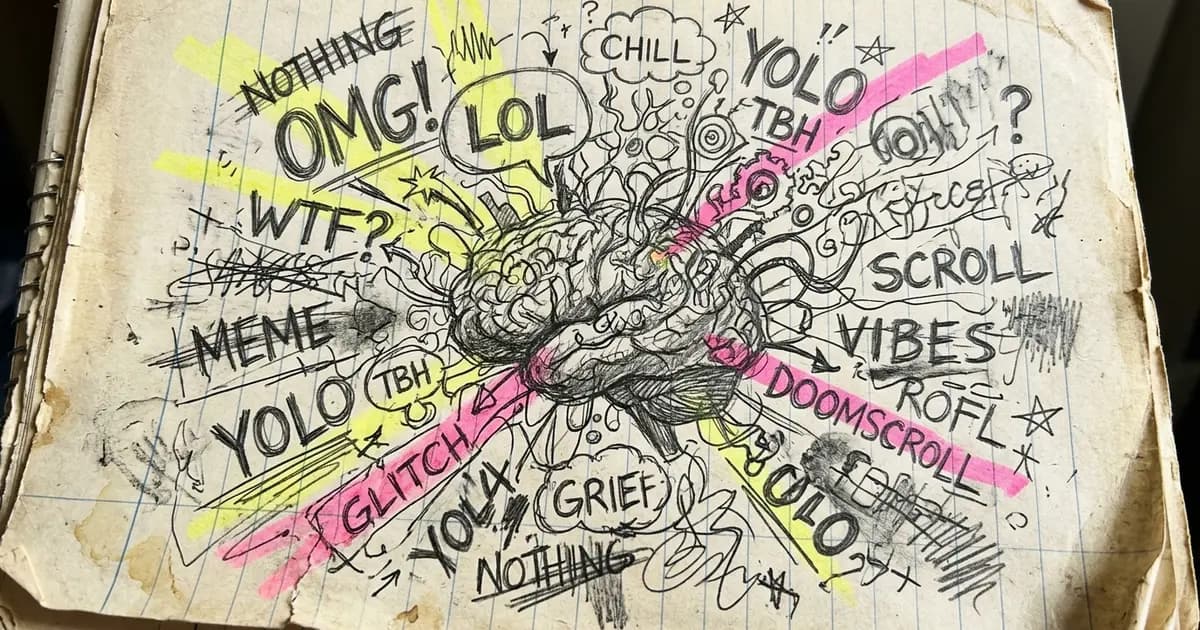
The first sense of brain rot refers to the content itself. Skibidi Toilet. Italian brainrot characters. AI-generated slop. Sludge videos with a mobile game running in one corner and a Reddit thread scrolling in the other. The vocabulary around it is large and shifts fast: cooked, fried, chronically online, sigma, rizz.
Roon maintains a full glossary of brain rot slang and a breakdown of the Italian brainrot trend, so this page will not re-list every term. The short version: if the content exists to hold your eyes for 15 seconds and deliver nothing you will remember tomorrow, it qualifies.
Brain Rot as the Effect
The second sense is personal. "My attention span is cooked." "I literally cannot read a paragraph." "I need everything on 2x speed." People use brain rot to describe a state they recognize in themselves: difficulty sitting with a slow task, rereading the same sentence, reaching for the phone the moment anything gets boring.
This self-report is worth taking seriously even though it is not a clinical measurement. When a large number of people, especially the generation that named the word, independently describe the same pattern, the right response is to look at the data, not to dismiss the feeling. What the research on social media and attention actually shows is a more careful story than either "it is ruining your brain" or "it is fine."
For a closer look at what brain rot looks like away from the screen, in an ordinary day, that piece covers it.
Is Brain Rot Real? What the Research Found
The strongest evidence comes from a meta-analysis published in Psychological Bulletin in late 2025, led by Lan Nguyen at Griffith University's School of Applied Psychology. The numbers:
| Metric | Finding |
|---|---|
| Studies included | 71 (70 in quantitative meta-analysis) |
| Total participants | 98,299 |
| Association with cognition | Moderate negative (r = -0.34) |
| Strongest link: attention | r = -0.38 |
| Strongest link: inhibitory control | r = -0.41 |
| Mental health association | Small but statistically significant |
| Study design limitation | Majority cross-sectional |
Higher short-form video use was most consistently associated with poorer attention and reduced inhibitory control. There was also a small but significant negative correlation with mental health outcomes, including anxiety, depression, and stress. NBC News covered the study alongside the researchers' own caution about its limits.
Here is what "cross-sectional" means in plain language: most of these studies measured people at one point in time. They found that people who watch more short-form video also score worse on attention tasks. But they cannot tell you which came first. Maybe heavy scrolling worsens attention. Maybe people with shorter attention spans are drawn to short-form video. Maybe both. The meta-analysis authors state this limitation explicitly.
A rapid review published in Brain Sciences in March 2025 reached a similar position: brain rot "is not a formally recognized medical condition," but doomscrolling and related behaviors are associated with impaired memory, attention span, and problem-solving.
Separately, Medscape reported in July 2026 that learning through short-form videos may impair memory by disrupting neural networks involved in information integration and cognitive control, with reduced neural synchronization during memory retrieval. That framing is clinical but not diagnostic: it describes a measured difference in brain activity, not a disease.
What Brain Rot Is Not
Brain rot is not a formally recognized medical condition. No one can diagnose you with it. It is not brain damage. It is not a permanent injury. It is not a dopamine receptor problem you can fix by abstaining from screens for a set number of days, despite how often that framing circulates online.
It is also not the same thing as tiredness, boredom, or a rough week. Feeling unable to concentrate after a bad night of sleep is normal. Feeling bored by a meeting does not mean your brain is rotting.
The term describes a cultural experience, and the research measures statistical associations between media habits and cognitive task performance. Those are real findings worth understanding. They are not a diagnosis.
The Attention Span Numbers People Quote, and Which Ones Are Fake
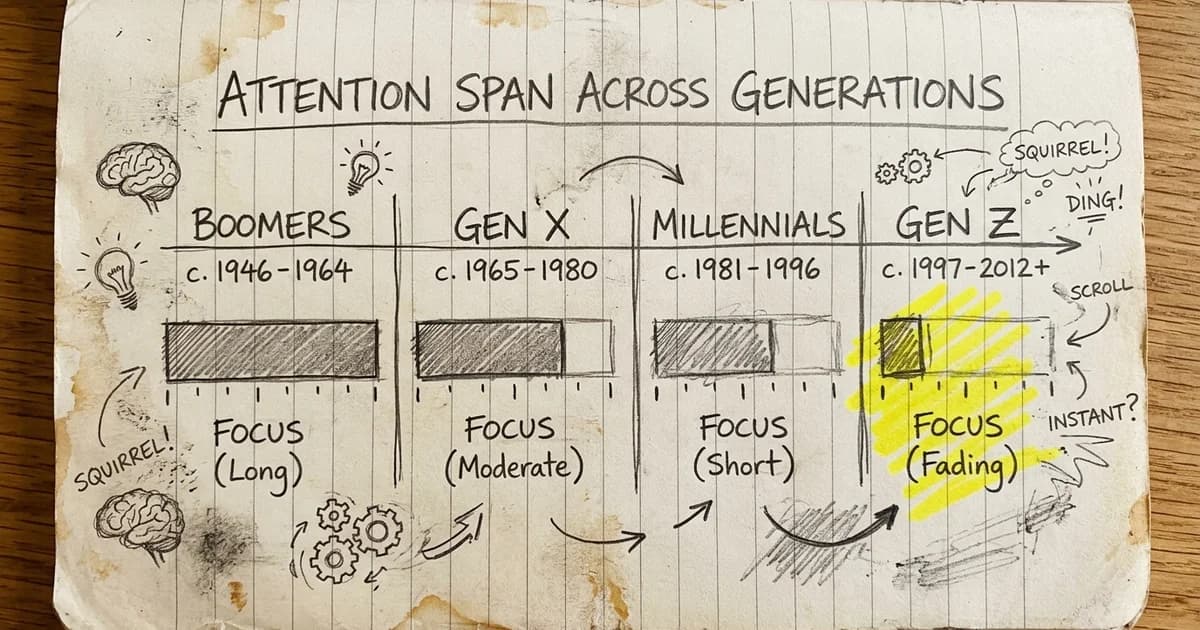
Gloria Mark, a professor at UC Irvine, has tracked how long knowledge workers stay on a single screen before switching. Her data: about 150 seconds in 2004, roughly 75 seconds by 2012, and 47 seconds in the most recent measurements (median 40 seconds). She has also found it takes about 25 minutes to return fully to an interrupted task. These numbers measure screen-switching behavior in work contexts. They are not a biological limit on human attention.
Then there is the goldfish number. In 2015, a Microsoft Canada infographic claimed the average human attention span had dropped to 8 seconds, shorter than a goldfish's supposed 9 seconds. The source listed was Statistic Brain, which had no source. There is no peer-reviewed evidence for the 8-second figure. There is no evidence for the goldfish figure either. Roon has a full breakdown of where the goldfish stat came from and why it never held up.
As of 2026, a new fabrication is spreading. Several statistics-roundup pages cite a "7.2-second" average attention span attributed to a "Global Attention Metrics report, Microsoft Research, March 15, 2026." A "7.97-second" variant also circulates. No such Microsoft Research report exists. It is the debunked 2015 number with a fresh date, laundered through AI-written aggregator sites. If you see a 2026 attention span statistic citing Microsoft Research, it is fake.
What People Do About It
This page is not a protocol. The research does not support a specific recovery plan because there is no measured condition with a documented course. What people generally try: structured screen-time limits, feed curation, app deletion, non-digital activities, and maintaining in-person social contact. The Brain Sciences review's recommendations run along the same lines.
For a longer look at the practical side, the strategies people use when they want to change their scrolling habits are covered separately.
A Cultural Term With Real Research Behind It
Brain rot is a phrase, not a pathology. It captures something people genuinely experience: the feeling that too much low-value content leaves you less able to focus on the things that matter. The research supports an association between heavy short-form video use and poorer attention, but it cannot yet confirm a causal direction, and the term itself falls outside any clinical framework.
Knowing what brain rot actually means, where the word came from, and what the studies do and do not prove puts you ahead of most of the conversation. The concern is worth taking seriously. The panic is not.
Frequently Asked Questions
What does brain rot mean?
Brain rot refers to two things: the low-quality online content itself (sludge videos, AI slop, endless short-form feeds) and the mental dulling people believe results from overconsumption of that content. Oxford University Press defines it as "the supposed deterioration of a person's mental or intellectual state" from consuming trivial or unchallenging material. The term has been in use since 1854.
Is brain rot a real medical condition?
No. Brain rot is a cultural term, not a medical diagnosis. No clinician can diagnose you with brain rot, and it does not appear as a recognized condition in medicine. The Brain Sciences review states explicitly that brain rot "is not a formally recognized medical condition." The research finds real statistical associations between heavy short-form video use and attention difficulties, but that is not the same as identifying a disease.
What is Italian brainrot?
Italian brainrot is a meme trend involving AI-generated characters with exaggerated Italian stereotypes, surreal visuals, and absurdist humor. It spread across TikTok and YouTube Shorts in late 2024 and 2025. The full breakdown of the Italian brainrot characters and their origins is on a separate page.
Is brain rot permanent?
The term does not describe a measured condition, so there is nothing with a documented course. What the research measures is an association between heavy short-form video use and worse performance on attention tasks at a single point in time. No study in the current evidence base has tested whether these associations persist, improve, or worsen over time after behavior changes.
What causes brain rot?
Brain rot is a cultural label, not a clinical outcome with established causes. The research links heavy consumption of short-form video to poorer cognitive performance, particularly in attention and inhibitory control, but most studies are cross-sectional and cannot determine whether the video use causes the effect or the other way around. The data on how attention and social media interact goes deeper on this question.
Was brain rot really Word of the Year?
Yes. Oxford University Press named brain rot its 2024 Word of the Year after a public vote with more than 37,000 participants. Usage of the term increased 230 percent between 2023 and 2024. It beat finalists including "demure," "slop," and "dynamic pricing." The quiz on the topic is a lighter way in, if you are curious where you land on the vocabulary.
A Note on What a Caffeine Pouch Is and Is Not
This article is about a cultural term and a body of research on short-form video and attention. Nothing in a pouch, a pill, or a supplement undoes anything described on this page. That needs to be said plainly before mentioning the product.
Roon is a zero-nicotine, zero-sugar oral pouch designed for a work block: 80 mg caffeine, 60 mg L-theanine, 25 mg methylliberine (Dynamine), and 5 mg theacrine (TeaCrine), in a Cool Mint sublingual format. Onset runs 5 to 10 minutes. The felt duration is 6 to 8 hours. Tins start from $9.16 on a 12-tin subscription, or $15.00 per tin one-time. First orders come with a 30-day money-back guarantee, once per customer.
Roon is a caffeine product for focused work. It is not a cognitive intervention, not a screen-time solution, and not something that belongs in the same sentence as attention research or recovery strategies. If you want a steady energy window for the hours when you sit down and do the thing, that is what it is for. Nothing more, and nothing claimed beyond that.
Written by Roon Team