Brain Rot Quiz: What It Actually Measures
Roon Team
Brain Rot Quiz: What It Actually Measures (and What Your Score Means)
You've seen the quizzes flooding TikTok and Instagram. "How brain rotted are you?" They ask whether you know what "skibidi" means or can identify the latest meme format. You laugh, share your score, and scroll on.
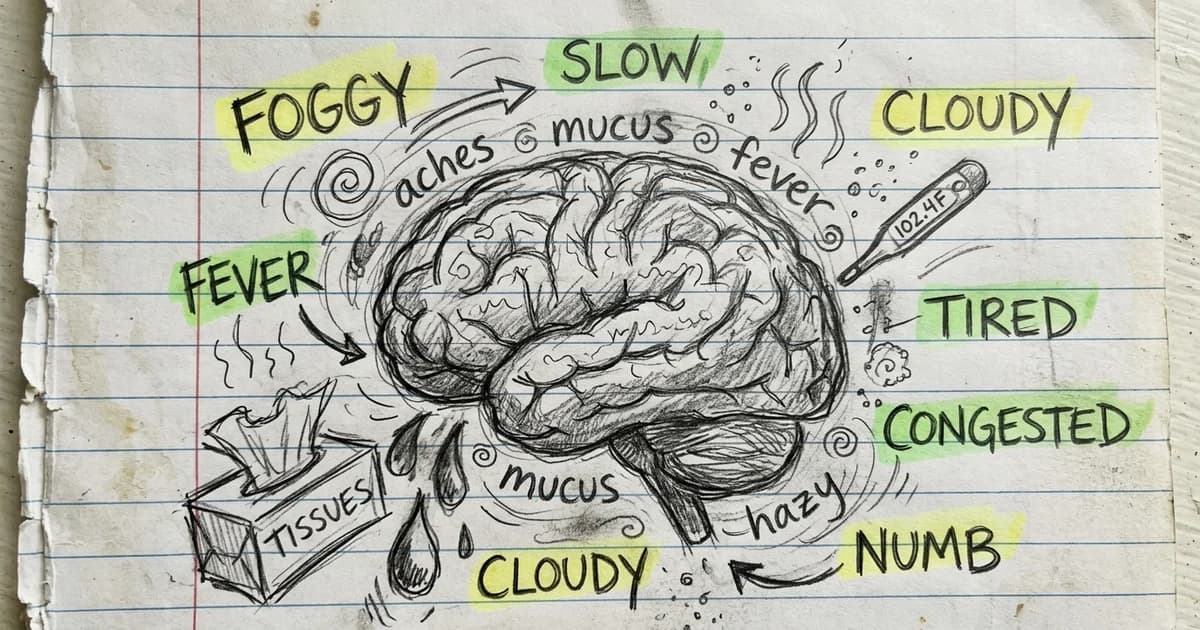
But here's the thing: a brain rot quiz might be more revealing than you think. Not because knowing meme slang is a cognitive test, but because the very habits that make you fluent in internet culture are the same habits research links to weakening attention. The slang is exaggerated, but some of the concerns behind it do overlap with real research on attention, digital overload, and short-form content.
Oxford University Press named "brain rot" its 2024 Word of the Year, noting a 230% increase in usage over the previous year. The term resonated because it described something millions of people already felt: a slow cognitive dulling caused by hours of low-quality digital consumption. And now, the science is catching up to the slang.
Key Takeaways:
- A brain rot quiz is viral entertainment, but the underlying concept reflects real cognitive effects backed by recent research.
- Short-form video consumption is linked to measurable declines in attention and inhibitory control.
- The average adult spends nearly 7 hours a day on screens, and the cognitive cost compounds over time.
- Practical interventions (not just digital detoxes) can help restore attentional capacity.
What Is a Brain Rot Quiz, Really?
Most brain rot quiz formats test your fluency in internet culture. They ask you to identify viral sounds, match memes to their origins, or define slang terms like "sigma," "Ohio," or "rizz." Platforms like JetPunk and BuzzFeed host versions that rack up millions of attempts.
The scoring is simple: the more you know, the more "brain rotted" you supposedly are. It's tongue-in-cheek. Nobody thinks defining "skibidi" is a genuine marker of cognitive decline.
But the brain rot quiz format taps into a real anxiety. People sense that their attention span is shrinking, that they can't sit through a long article or a two-hour movie the way they used to. Taking a brain rot quiz gives that anxiety a name and a number. It turns a vague feeling into something shareable.
The irony, of course, is that you're taking the quiz on the same platform that's contributing to the problem.
The Science Behind the Brain Rot Quiz Phenomenon
The meme is funny, but the attention and overload concerns behind it are worth taking seriously.
A 2025 meta-analysis published in the journal Technology, Mind, and Behavior analyzed data from over 98,000 participants across 71 studies. The conclusion: the more short-form video content a person consumes, the worse they perform on tests of attention and inhibitory control. The researchers noted that repeated exposure to fast-paced, highly stimulating content may cause habituation, making slower, more effortful tasks like reading or problem-solving feel almost unbearable.
A separate review in PMC found that brain rot leads to emotional desensitization, cognitive overload, and negative self-concept. The behaviors associated with it (doomscrolling, zombie scrolling, compulsive social media use) were all linked to psychological distress.
Research suggests heavier short-form video use is associated with poorer attention and inhibitory control.
The Dopamine Loop
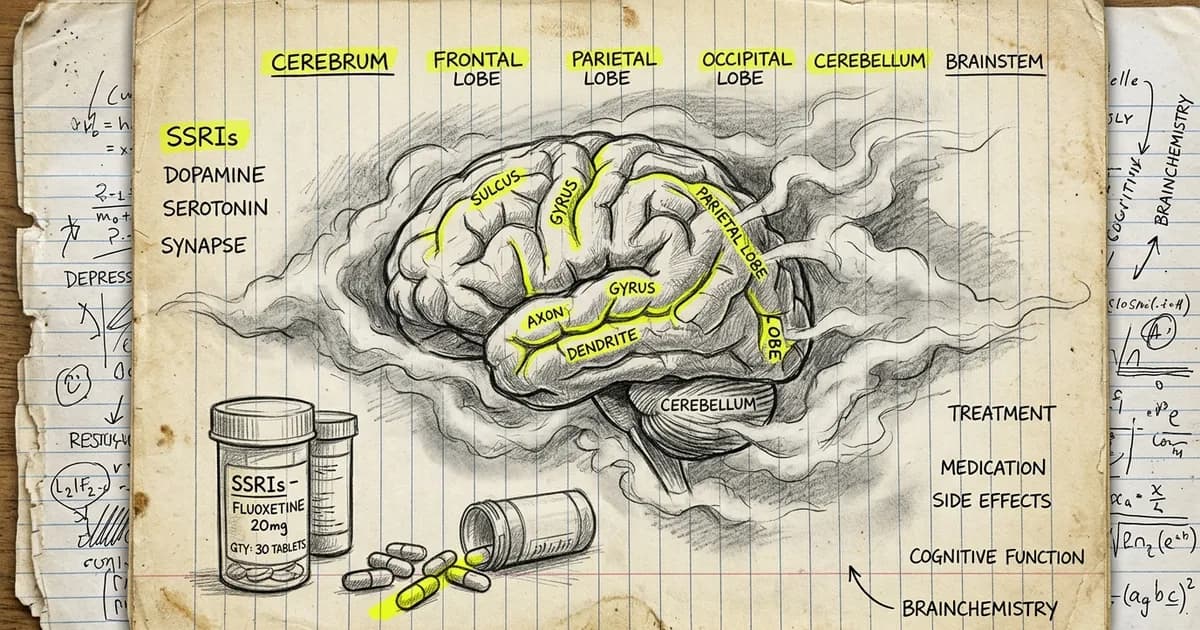
Social media platforms are engineered to trigger dopamine release, and AI-generated brain rot content is among the fastest-spreading formats designed to do exactly that. Notifications, novelty, and unpredictable rewards are part of what keeps people coming back to social platforms. Research from Dartmouth describes these as "short-term dopamine-driven feedback loops" that keep users returning for more.
One problem is that repeated novelty can raise the level of stimulation your brain starts expecting. Just like any repeated stimulus, the brain adjusts. You need more novelty, faster cuts, louder content to get the same hit. Meanwhile, activities that require sustained attention (reading, deep work, even conversation) feel flat by comparison. Your baseline dopamine sensitivity drops, and everything that isn't a 15-second dopamine hit starts to feel boring. This is the real mechanism behind what any brain rot quiz is trying to capture.
A 2025 study from PMC confirmed that social media engages brain reward pathways similar to those seen in addictive behavior, with extended beta and gamma wave activity interfering with emotional regulation and attention.
Your Attention Span, by the Numbers
The data on attention is stark. According to research cited by Swiss German University, in Gloria Mark's screen-based attention research, the average time people stay on a screen task before switching has dropped from about 2.5 minutes to around 47 seconds. Data from DemandSage reports that the average person now spends 6 hours and 54 minutes per day on screens. In the U.S., that figure is closer to 7 hours and 3 minutes.
That's nearly half your waking life spent in a state of rapid context-switching.
A 2025 study published in Memory examined how fast context-switching during short-form video consumption affects prospective memory (your ability to remember to do things in the future). The results confirmed what most of us already suspect: the faster you switch, the worse your memory performs.
How to Take a Brain Rot Quiz (and Actually Learn Something)
The viral quizzes are entertainment. But you can turn a brain rot quiz into a genuine self-assessment if you pay attention to the right signals.
What Your Brain Rot Quiz Score Actually Tells You
A high score on a brain rot quiz means you've absorbed a lot of internet culture. That's not inherently bad. But ask yourself these follow-up questions:
- Can you read for 20 minutes without checking your phone? If the answer is no, that's a stronger signal than any quiz score.
- Do you reach for your phone during any moment of boredom? Even waiting in line, sitting in a meeting, or pausing between tasks?
- When was the last time you finished a long article, book chapter, or deep-work session without interruption?
- Do you feel restless or agitated when you don't have access to your phone?
These questions measure something the meme quizzes don't: your actual attentional capacity. A brain rot quiz tells you how much internet content you've consumed. These questions give you a better sense of whether constant digital input is affecting your attention in everyday life.
The Real Self-Assessment
Here's a more honest brain rot quiz. No memes required.
| Question | Sign of Concern |
|---|---|
| You open your phone, forget why, and start scrolling | Attention fragmentation |
| You can't watch a movie without also looking at your phone | Reduced sustained attention |
| You skip ahead in YouTube videos or podcasts constantly | Lowered tolerance for pacing |
| You feel anxious without your phone nearby | Stimulus dependency |
| You re-read paragraphs multiple times because nothing sticks | Working memory interference |
| You feel mentally exhausted despite not doing "hard" work | Cognitive overload from passive consumption |
If three or more of these apply, your brain is spending more energy on context-switching and stimulus-seeking than on actual cognitive work. That result matters more than any brain rot quiz score you'll find online.
What Brain Rot Does to Your Performance
This isn't just about feeling scattered. The effects show up where it counts.
At work: A 2025 workplace study cited by Speakwise found that 59% of employees report being unable to focus for even 30 minutes without getting sidetracked by a digital distraction. That is partly a productivity problem, but it also points to how hard sustained focus has become in highly interrupted digital environments.
In learning: The Memory journal study showed that context-switching from short-form videos directly impairs prospective memory. If you're studying or learning a new skill, the residue of your last scrolling session is actively working against you.
In decision-making: When your dopamine system is calibrated for constant novelty, slower, more deliberate thinking feels punishing. You default to snap judgments, impulse decisions, and surface-level analysis because deep processing requires a level of sustained attention your brain has been trained out of. No brain rot quiz will flag this for you, but it's one of the most damaging consequences.
How to Reverse Brain Rot (What Actually Works)
The good news: the brain is adaptable. According to Dr. Boulos at University Hospitals, there is currently no strong evidence that brain rot causes permanent cognitive decline. The effects appear to be reversible with the right interventions.
Here's what the research supports:
1. Structured Attention Training
Don't just "try to focus more." Build the capacity deliberately. Start with timed reading sessions (10 minutes, no phone in the room) and gradually increase. Your attention is a muscle that atrophies with disuse and strengthens with practice.
2. Reduce Context-Switching, Not Just Screen Time
The total hours matter less than the pattern. Watching a 90-minute documentary is cognitively different from 90 minutes of TikTok filled with surreal brain rot images and rapid micro-content. The damage comes from rapid switching between unrelated micro-content. Batch your screen time into longer, single-task sessions.
3. Protect Your First Hour
What you do in the first hour after waking sets your neurochemical baseline for the day. If you start with 30 minutes of scrolling, you've primed your dopamine system for novelty-seeking before you've done a single productive thing. Delay phone use for at least 60 minutes after waking.
4. Support Your Neurochemistry Directly
Behavioral changes work. But the neurochemical pathways behind brain fog (adenosine buildup, GABA imbalance, dopamine dysregulation) also respond to targeted nutritional support.
This is where the right combination of compounds matters. A study published in Nutritional Neuroscience found that 97 mg of L-theanine combined with 40 mg of caffeine improved focus during demanding cognitive tasks without the jitteriness of caffeine alone. Research published in Cureus showed that adding theacrine and methylliberine to caffeine improved speed, accuracy, and cognitive performance beyond what caffeine could do on its own.
Beyond the Brain Rot Quiz: Cut Through the Fog
Brain rot quizzes are a mirror, even if they're wrapped in memes. Every brain rot quiz reflects a real pattern: too much low-quality input, not enough deep cognitive engagement, and a dopamine system that's been hijacked by platforms designed to keep you scrolling.
Fixing it takes two things. Better habits to reduce the damage. And better inputs to support the recovery.
Roon was built for exactly this. It's a zero-nicotine sublingual pouch that combines caffeine (80 mg), L-theanine, theacrine, and methylliberine, the same compounds shown in peer-reviewed research to support sustained attention and clean cognitive energy. No jitters. No crash. No tolerance buildup. Just 6 to 8 hours of focused, clear-headed performance.
Your brain isn't broken. It's just been getting the wrong inputs. Time to change that.