The Great Lock In 2026: What It Is, When It Starts, and How to Build Your Rules
The Great Lock In 2026: What It Is, When It Starts, and How to Build Your Rules
The Great Lock In is a TikTok challenge where you pick a small set of personal goals and go all in on them from September 1 to December 31, instead of waiting for a January reset. It started on TikTok in August 2025, returns every September, and has no official rules. That last part is the whole point. You define what "locking in" means for you, write it down, and run the last 122 days of the year like someone who decided four months was enough to change something real.
If you are seeing this phrase everywhere right now, you are not late. You are on time.
Key Takeaways
- The Great Lock In runs September 1 to December 31, 2026: 122 days (30 + 31 + 30 + 31).
- There are no official rules, no founder, and no restart penalty. You build your own rule set.
- The trend started on TikTok in August 2025 and returns for its second year in 2026.
- 122 days is past the 66-day median researchers found for a daily behavior to become automatic (Lally et al., 2010), so the window is long enough to stick, not just motivate.
What Is Actually Happening: The Great Lock In Explained
The Great Lock In is a self-directed, four-month commitment. Participants choose three to five personal rules covering fitness, career, finances, study, or mindset, and hold themselves to those rules through December 31.
It is not a branded program. There is no app, no fee, no certification. As TikTok creator Kadie Glenn told Newsweek, the concept is about choosing to focus on yourself for the last four months of the year instead of waiting for the usual January resolution period. Glenn's explainer video has drawn hundreds of thousands of views.
The trend resonates because September already feels like a starting line. You spent 13 or more years associating September with new notebooks and new schedules, and that wiring does not disappear. Fortune framed the Great Lock In as a rejection of the soft life and a reclaiming of structured effort. Cal Newport read it through a deep-work lens. Psychologist Shauna Shapiro told Newsweek the trend "reflects young people's desire for structure, focus, and personal growth."
When the Great Lock In Starts in 2026
September 1, 2026 through December 31, 2026. That is 122 days.
The earliest 2025 videos framed the window as August through October before creators settled on the run to New Year's Eve. Nothing breaks if you start on September 8 or 15. Late joiners still get 100+ days, which is past the 66-day median for habit formation in Lally's study, with a full range of 18 to 254 days. The popular "21 days" number has no support in that data. Starting late costs you days, not the outcome.
Where the Trend Came From
The Great Lock In emerged from overlapping TikTok videos in August 2025. The dated timeline, per Newsweek and early TikTok posts:
- August 7, 2025: @shmeat27 posted one of the earliest videos using the phrase, framing it as August through October.
- August 9, 2025: @meechiexx revised the window to August through December.
- August 31, 2025: @jason.dom's Great Lock In video reached 2.5 million views.
- Early September 2025: Explainer creators Kadie Glenn, Whitney London, and Mercedes Benson each drew audiences in the hundreds of thousands to over a million views (Newsweek).
- September 2025: Press coverage from Fortune, Cal Newport, CNN, and others followed.
There is no official founder. That is a feature, not a gap.
The Great Lock In Has No Rules, and That Is Deliberate
Glenn put it plainly to Newsweek: "there are no set to-do's like you would find for a challenge like 75 Hard."
A no-rules challenge spreads faster because anyone can join without reading a manual. But it also fails more quietly. 75 Hard has a hard restart on any miss. The Great Lock In has nothing. If you stop on October 3, nobody notices. That is why building your own rules, specific ones with measurement, is the single most useful thing you can do before September 1.
Great Lock In vs Winter Arc vs 75 Hard vs Monk Mode
| Great Lock In | Winter Arc | 75 Hard | Monk Mode | |
|---|---|---|---|---|
| Start date | September 1 | October 1 | Any day | Any day |
| Length | 122 days | 90 days | 75 days | Self-defined |
| Rules | Self-chosen | Self-chosen | 5 fixed daily rules | No fixed definition |
| Restart penalty | None | None | Full restart on any miss | None |
| Creator | No single creator | Carly Berges | Andy Frisella (2019) | None |
| Core idea | Last-quarter push on personal goals | 90-day self-development sprint | Mental toughness through compliance | Extended isolation + focus |
| Best for | Structure without rigidity | Shorter fall window | Strict external accountability | Deep single-project focus |
75 Hard requires two 45-minute workouts a day (one outdoors), a gallon of water, 10 pages of nonfiction, a strict nutrition plan, and a daily progress photo. Cleveland Clinic sports psychologist Dr. Matthew Sacco has noted there is "little to no scientific evidence that the program is beneficial," and that the restart mechanic can undermine motivation for beginners. The Great Lock In is the opposite bet: you set your own terms, and you decide what a miss means.
Build Your Great Lock In Rules: Five Questions
This is the part no ranking page gives you. Answer five questions and walk away with three to five rules. For the step-by-step version of the focus rule, see the full guide on how to actually lock in and hold focus for hours.
1. What is the one outcome you want on December 31? State it in a sentence you could show someone. Not "get better at school." Try: "I have a 3.6 GPA on my fall transcript."
2. What is the daily minimum that moves it? Size this so a bad day still clears it. If your daily minimum requires a perfect day, you will abandon it in week three.
3. What are you cutting? Name a specific input at a specific time. Not "less social media." Try: "No TikTok before my study block ends."
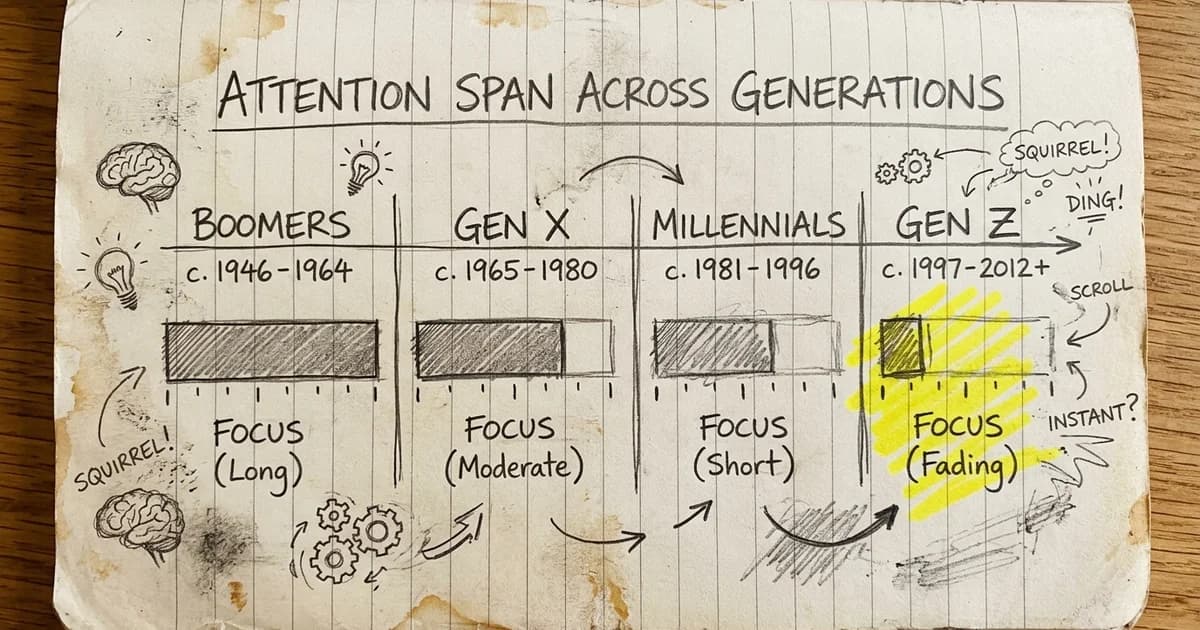
4. When is the protected block? Pick an actual clock time. "9am to 10:30am, phone in another room, deep work only." This is your focus rule, and it is mandatory. The average knowledge worker switches screens every 47 seconds (Gloria Mark, UC Irvine), down from about 150 seconds in 2004. That is not a biological limit. It is a behavior, and a protected block is how you override it. To plan the block around your caffeine, the workday caffeine schedule builds an hour-by-hour day from your wake time and bedtime.
5. What is the weekly check? One number you write down every Sunday. Hours studied. Workouts completed. Pages written. If you cannot measure it, you will rely on motivation instead of data.
Your Great Lock In Checklist Card
Copy this, fill it in, and put it where you will see it on September 1.
| Field | Your Rule | Example |
|---|---|---|
| My outcome | "3.6 GPA on my fall transcript" | |
| My daily minimum | "90 minutes of focused study before 6pm" | |
| My cut | "No TikTok before my study block ends" | |
| My protected block | "9am to 10:30am, phone in another room" | |
| My Sunday number | "Total focused study hours this week" | |
| My reset rule | "One miss is a data point. Two in a row gets a Sunday review." |
The reset rule matters. 75 Hard restarts you from zero on a single miss. The Great Lock In does not. But "no penalty" can slide into "no accountability" fast. Decide now what happens when you miss, before you miss.
Great Lock In Ideas People Are Actually Using
Phrased as rules, not vibes.
Study and school: Complete one focused study block of 90+ minutes daily before any screen entertainment. Review lecture notes within 24 hours of class.
Work and money: Save a fixed dollar amount per paycheck, automated, no touching until January. Spend the first 60 minutes of the workday on your hardest task, no email.
Training: Four sessions per week, logged. Hit a daily step floor on non-training days.
Screens and attention: No phone for the first 30 minutes after waking. Screen time under 3 hours/day on non-work apps, tracked in settings.
Sleep: Lights out by 11pm on weeknights. No caffeine after 2pm (or whatever puts you 8+ hours before bed).
How to Not Blow It in Week Three
Four failure modes kill most lock-in attempts:
Too many rules. Five is the ceiling. Three strong rules beat seven aspirational ones.
Rules that need a perfect day. If your plan only works when you wake up at 5am, eat clean, and have zero interruptions, it is a fantasy, not a rule set.
No measurement. Without a weekly number, you cannot tell the difference between "I feel like I'm slipping" and "I actually missed twice in 21 days." The habits underneath a daily minimum matter more than any single day.
Treating one miss as the end. A single miss on day 19 does not erase 18 days of work. Lally's 2010 study found that occasional missed days did not meaningfully delay habit formation as long as the behavior was repeated consistently. 122 days is comfortably past the 66-day median. The challenge is long enough to work, and long enough to quit if you let one bad week become a story about who you are.
Starting the Great Lock In in October
Missed September 1? An October 1 start still gives you 92 days to December 31, which is past the 66-day median in Lally's study. That is the same window Winter Arc uses, so an October start can borrow either set of rules. Use the same five questions and the same checklist card; only the start date changes.
Conclusion
The Great Lock In is not a brand. It has no official anything. What it has is a window, 122 days, a cultural moment where a lot of people are starting at the same time, and the freedom to define your own terms. Build your rules before September 1, measure every Sunday, and treat misses as information instead of identity. The calendar is on your side.
Frequently Asked Questions
When does the Great Lock In start in 2026?
September 1, 2026. It runs through December 31, 2026, a total of 122 days. Some people start a week or two late, which is fine. There is no official signup date and no penalty for joining after the first.
What are the rules of the Great Lock In?
There are no official rules. That is what separates it from challenges like 75 Hard. You build your own rule set based on your goals. Most participants pick three to five personal rules covering fitness, study, career, finances, or screen time.
Is the Great Lock In the same as Winter Arc?
No. Winter Arc starts October 1, runs 90 days, and was coined by TikTok creator Carly Berges. The Great Lock In starts September 1, runs 122 days, and has no single creator. Both are self-directed, but they differ in timing and length.
Who started the Great Lock In?
No single person. The earliest known video using the phrase was posted by @shmeat27 on August 7, 2025. @meechiexx and @jason.dom helped shape and spread it. By early September 2025, explainer creators like Kadie Glenn had made it a mainstream trend.
Can you start the Great Lock In late?
Yes. Starting on September 8 or 15 still gives you 100+ days, well past the 66-day median for habit formation (Lally et al., 2010). The point is sustained effort through December 31, not a perfect September 1 start.
Is the Great Lock In just 75 Hard with a new name?
No. 75 Hard has five fixed daily rules and a full restart on any miss. The Great Lock In has no fixed rules, no restart penalty, and runs 122 days instead of 75. They share a self-improvement intention, but the structure is almost opposite.
The Part of Locking In That Is Just Chemistry
One of the five rules above is a protected block: a clock time where you sit down and do the hard thing with your phone in another room. The Great Lock In does not tell you how to stay locked in during that block. It just tells you to show up.
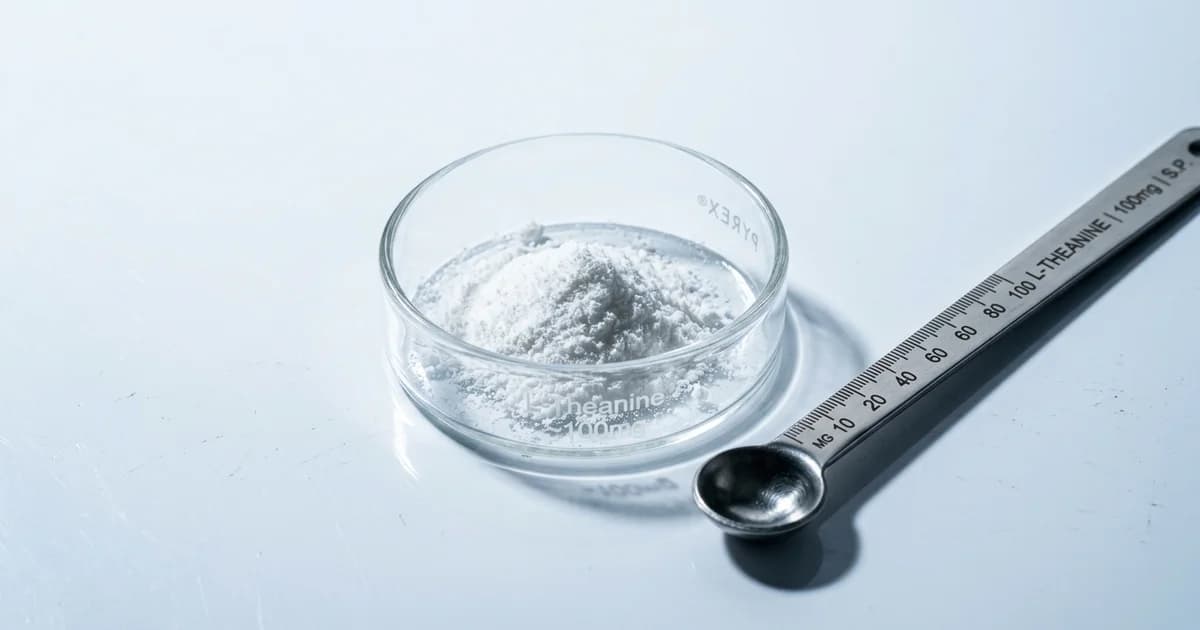
The staying part is partly behavioral, partly chemical. Caffeine helps with the first hour. That is not a grand claim. It is a well-studied acute effect on alertness and attention. Owen et al. (2008) found that caffeine combined with L-theanine improved speed and accuracy on an attention-switching task and reduced susceptibility to distracting information versus placebo. That study used 50 mg caffeine and 100 mg L-theanine.
Roon is a zero-nicotine, zero-sugar sublingual pouch with 80 mg caffeine, 60 mg L-theanine, 25 mg methylliberine (Dynamine), and 5 mg theacrine (TeaCrine). The ratio differs from the Owen study doses. For how a pouch compares with a can on dose and sugar, see caffeine pouches vs energy drinks. What Roon is: a fixed-dose way to start a focus block without brewing anything or guessing how much caffeine you just had. Onset is 5 to 10 minutes. The felt window is 6 to 8 hours, which means you need to stop at least 8 hours before bed, because extending caffeine's duration extends its ability to wreck your sleep. Tins start at $9.16 on the 12-tin subscription, with a first-order 30-day money-back guarantee (once per customer, nothing to send back).
Roon is not a discipline tool. It does not build habits, extend your willpower, or make September magical. It is caffeine with a longer tail. The rules you write on that card are what carry you to December 31.
Related from Roon
- Winter Arc 2026: Rules, Start Date, and Daily Template
- 75 Hard vs Winter Arc vs the Great Lock In: Which Fits You
- How to Study for Midterms Without the Energy Drink Spiral
Written by Roon Team