What Is Brain Rot in Real Life? The Science Behind Your Shrinking Attention Span
Roon Team
What Is Brain Rot in Real Life? The Science Behind Your Shrinking Attention Span
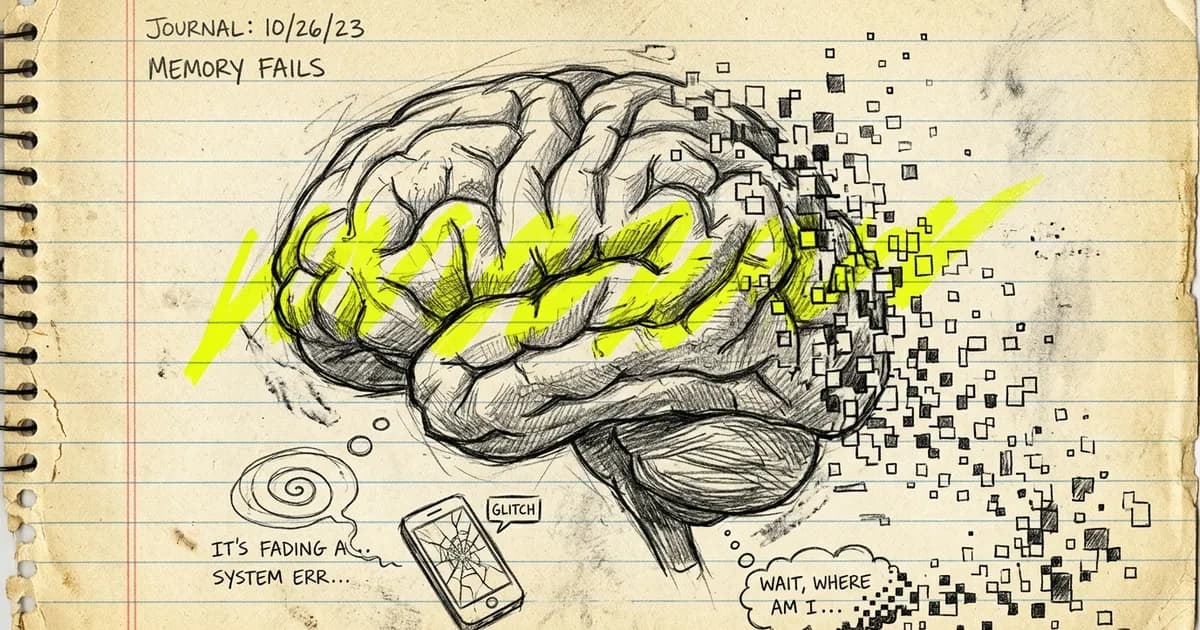
You used to read entire books. Now you can't finish a paragraph without checking your phone. The term for this is brain rot, and understanding what is brain rot in real life means looking at what excessive screen time actually does to your brain. The answer: more than you'd think.
Oxford University Press named "brain rot" the 2024 Word of the Year, noting a 230% spike in usage over the previous twelve months. The phrase isn't new, though. Henry David Thoreau coined it back in 1854 in Walden, asking whether anyone would "endeavor to cure the brain-rot, which prevails so much more widely and fatally" than the potato blight devastating Europe. Over 170 years later, the rot he described has a new source: your screen.
Key Takeaways:
- Brain rot is not a medical diagnosis, but the cognitive effects behind it are measurable and well-documented.
- Excessive consumption of low-quality digital content rewires dopamine pathways, weakens attention, and impairs memory.
- The average person now spends nearly 7 hours a day on screens, and attention on any single screen lasts about 47 seconds.
- Answering what is brain rot in real life requires understanding both the neuroscience and the behavioral patterns driving it.
- Reversing brain rot requires deliberate changes to how you consume information and fuel your brain.
What Is Brain Rot in Real Life? It's Not Just a Meme
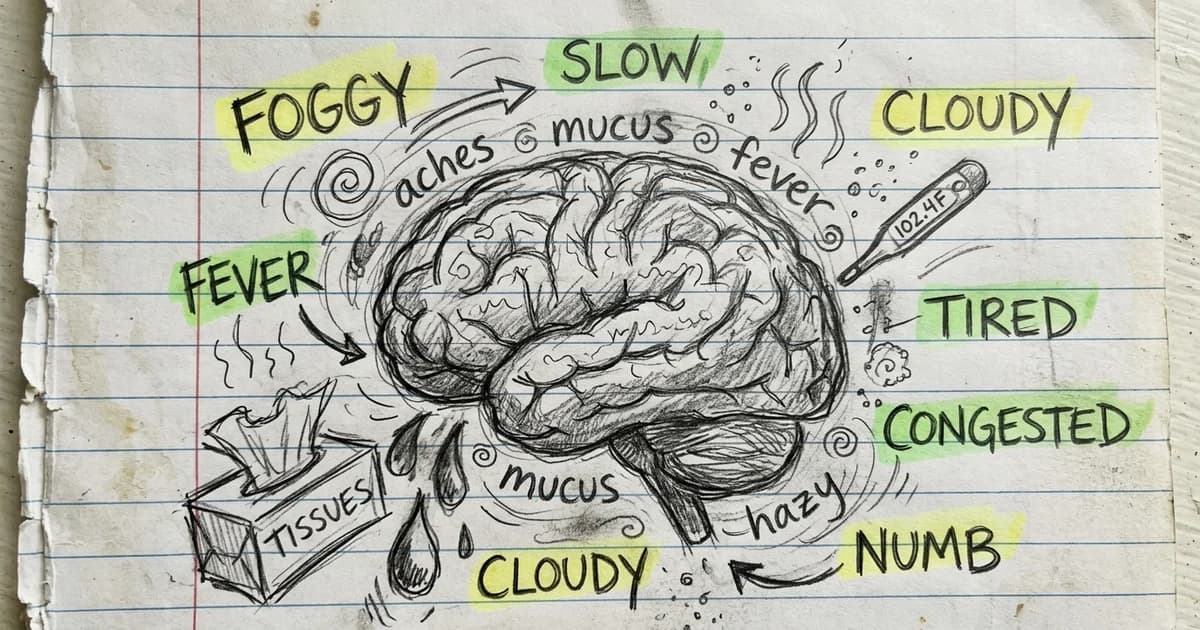
Brain rot describes the mental fog, shortened attention span, and cognitive decline that comes from overconsumption of low-quality digital content. Think endless TikTok scrolling, doomscrolling news feeds, or binge-watching compilation videos at 2 AM. It's not a clinical diagnosis you'll find in the DSM-5. But the symptoms are real, and neuroscience is catching up to what millions of people already feel.
A 2025 review published in the journal Brain Sciences examined research from 2023 to 2024 on excessive digital platform use among adolescents and young adults. The findings were blunt: internet addiction behaviors are closely associated with cognitive decline, particularly in memory, attention span, and problem-solving abilities.
WebMD puts the symptoms plainly: endlessly scrolling raises your dopamine levels, leading to memory problems, a shorter attention span, trouble focusing, and increased stress and anxiety.
So what is brain rot in real life, really? It's not about being lazy. It's about what happens when your brain adapts to a diet of constant, low-effort stimulation.
Your Brain on Infinite Scroll: The Dopamine Problem
Every notification, every autoplay video, every swipe triggers a small dopamine release. That's the neurotransmitter your brain uses to signal reward and motivation. The problem isn't that dopamine is bad. The problem is volume. Understanding what is brain rot in real life starts with understanding this dopamine loop.
Social media platforms are engineered around uncertainty. Your brain doesn't get the biggest dopamine hit from receiving a "like." It gets the biggest hit from not knowing whether you'll receive one. That unpredictability keeps you scrolling, and it mirrors the same reward mechanics found in slot machines.
Over time, this constant stimulation desensitizes your dopamine receptors. You need more stimulation to feel the same level of engagement. A review in PMC found that neurochemical gratification from social media reinforces compulsive behavior, making it harder for users to disconnect even when they're aware of the damage. The result is a brain that struggles to find slower, deeper tasks rewarding. Reading a long article, working through a complex problem, or sitting through a meeting without checking your phone all feel harder than they used to.
That's not a willpower failure. That's neurochemistry, and it's a core part of what is brain rot in real life at the biological level.
The Numbers: How Bad Is It?
The data paints a clear picture of what brain rot in real life looks like at a population level.
| Metric | Finding | Source |
|---|---|---|
| Average daily screen time | ~6 hours 54 minutes | DemandSage, 2025 |
| Average attention span on a screen | 47 seconds | Gloria Mark, UC Irvine |
| Attention span on screens in 2004 | 2.5 minutes | Gloria Mark, UC Irvine |
| Gen Z daily screen time | ~9 hours | Magnet ABA |
| Americans checking phone within 10 min of waking | 80.6% | SpeakWise |
That 47-second figure comes from Dr. Gloria Mark, a professor of informatics at UC Irvine who has studied attention spans for nearly two decades. In 2004, her research found people spent an average of two and a half minutes on a single screen before switching. By 2016, that number had dropped to 47 seconds. The trajectory is not encouraging.
And it's not just about time spent. It's about the quality of attention. When you train your brain to expect a new stimulus every 47 seconds, sustained focus becomes physiologically harder. The neural pathways that support deep concentration weaken from disuse while the pathways optimized for rapid task-switching grow stronger. These numbers help quantify what is brain rot in real life beyond the memes and slang.
What Brain Rot in Real Life Actually Feels Like
You probably don't need a study to recognize these symptoms. But naming them helps.
- Foggy thinking. You sit down to work and can't hold a thought for more than a few minutes. Simple decisions feel exhausting.
- Memory gaps. You watched something an hour ago and can't remember what it was about. Names, dates, and details slip away faster than they used to.
- Emotional flatness. Content that used to make you laugh or think barely registers. You scroll past it looking for something more stimulating.
- Reduced motivation. Tasks that require effort, like reading, writing, or learning something new, feel disproportionately hard compared to the easy dopamine of your feed.
- Restlessness without a screen. Sitting in silence, waiting in line, or being alone with your thoughts feels uncomfortable in a way it didn't five years ago.
A qualitative study on university students published in PMC found that excessive exposure to low-quality digital content leads to emotional desensitization, with students describing feeling detached or emotionally numb and needing more extreme stimuli to feel engaged.
This is what is brain rot in real life at the experiential level. Not a dramatic collapse, but a slow erosion of the cognitive abilities you rely on most.
The Structural Evidence: Your Brain Is Physically Changing
This isn't just about how you feel. Imaging studies show measurable changes in brain structure among heavy social media users, providing hard evidence for what is brain rot in real life from a neurological standpoint.
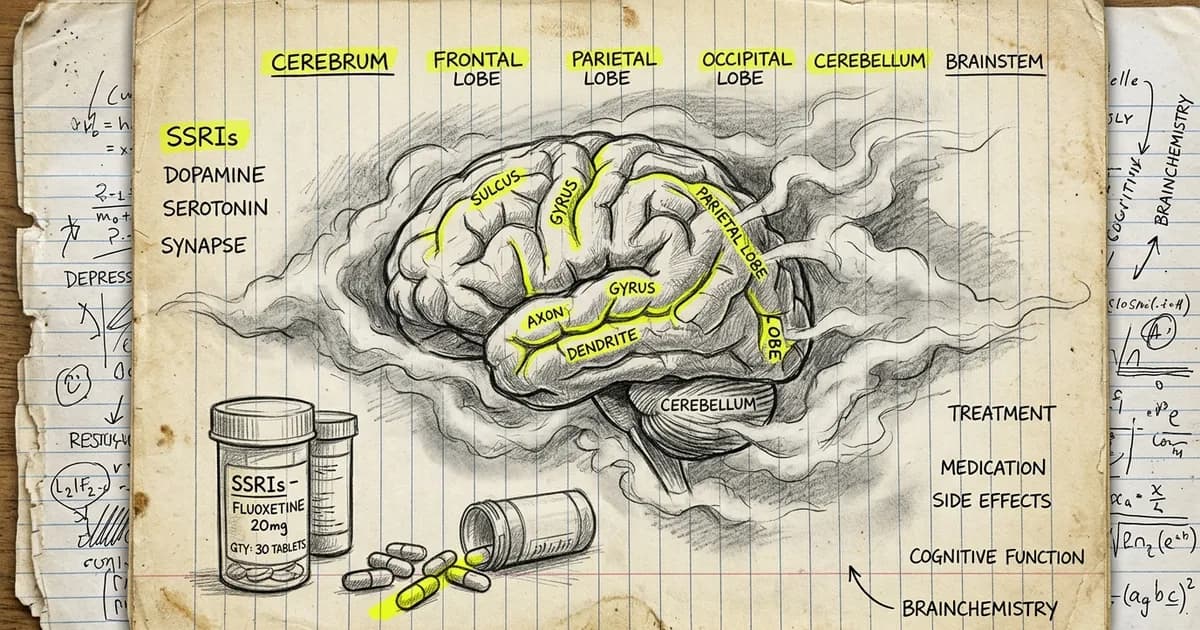
Research cited by Dr. Aaron Hartman points to a four-year study published in Scientific Reports that found decreased cerebellum volume in high social media users. The cerebellum affects balance, movement, and cognitive functions. According to Nivati, heavy social media users perform worse on cognitive tasks, and excessive use actually shrinks the part of the brain responsible for filtering distractions.
A 2025 PMC study on the neurocognitive impact of social media found that social media engages brain reward pathways similar to those seen in addictive behavior, with extended beta and gamma activity interfering with emotional regulation and attention.
Your brain is plastic. It adapts to whatever you feed it. Feed it 7 hours of fragmented, low-effort content per day, and it will optimize itself for exactly that. That's what is brain rot in real life at the structural level: your brain literally reshaping itself around low-quality input.
How to Reverse What Is Brain Rot in Real Life (Yes, It's Possible)
The same neuroplasticity that got you here can get you out. Your brain adapts in both directions. But reversing brain rot in real life takes deliberate effort.
1. Audit Your Screen Time Honestly
Check your phone's screen time report. Not to shame yourself, but to get a baseline. Most people underestimate their usage by about 50%.
2. Replace Passive Scrolling With Active Consumption
Reading a long article, listening to a podcast that requires your attention, or working through a problem all strengthen the neural pathways that passive scrolling weakens. WebMD recommends reading regularly, noting it encourages you to stretch your attention span and strengthens the parts of your brain linked to language and complex cognitive functions.
3. Build Boredom Tolerance
Your brain needs downtime without input. No podcast during your walk. No phone while waiting for coffee. Boredom is where your default mode network activates, the same network responsible for creativity, self-reflection, and long-term planning.
4. Support Your Neurochemistry
What is brain rot in real life if not a neurochemical problem? Your dopamine system is overstimulated. Your adenosine receptors (the ones that regulate alertness and fatigue) are out of balance. Your GABA activity, which promotes calm focus, is suppressed by constant stimulation.
Fixing the behavioral side matters. But so does giving your brain the raw materials it needs to operate well.
Cut Through the Fog
Now that you know what is brain rot in real life and what drives it, the fix starts with tipping the neurochemical balance back in your favor.
Roon is a zero-nicotine sublingual pouch built around four compounds that target the exact pathways brain rot disrupts: caffeine (80mg, enough to sharpen alertness without the jitters), L-theanine (which promotes calm, focused attention by modulating GABA activity), theacrine and methylliberine (which support sustained dopamine and adenosine function without the tolerance buildup you get from caffeine alone).
The result is 6 to 8 hours of clean, sustained focus. No crash. No overstimulation. Just your brain working the way it's supposed to.
You can't fix years of scrolling with a single product. But understanding what is brain rot in real life is the first step, and giving your brain better inputs, both in what you consume and in what you put in your body, is the second. Try Roon and feel the difference.