Italian Brain Rot: What You Need to Know
Roon Team
Italian Brain Rot: What You Need to Know
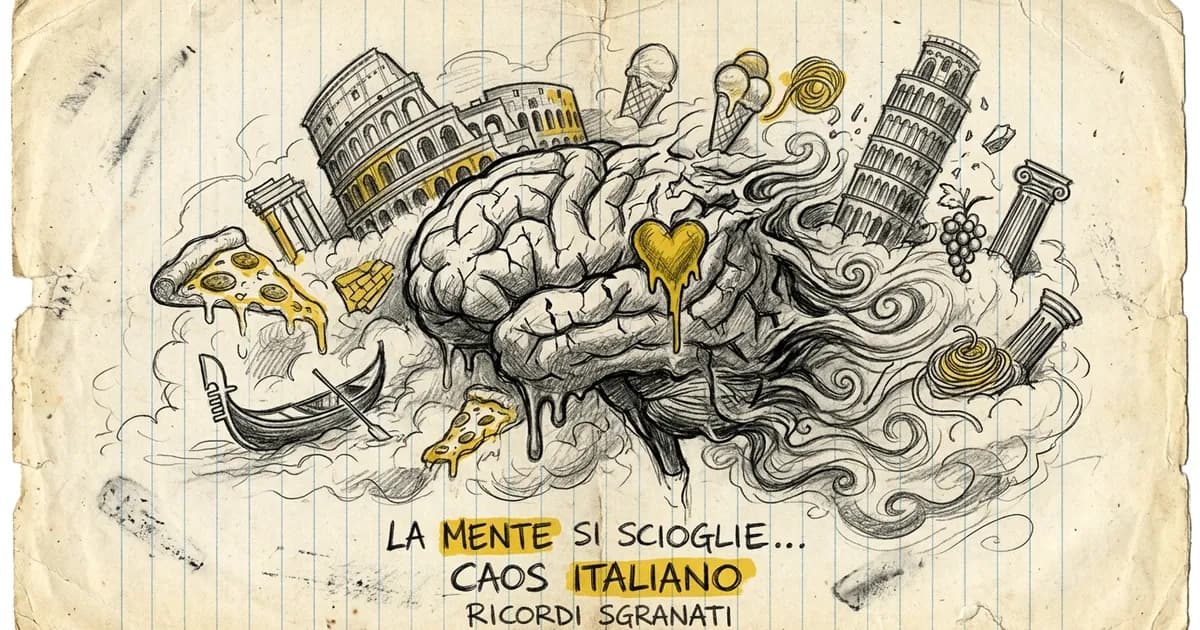
A shark in blue Nikes. A crocodile dropping bombs. Something called Chimpanzini Bananini doing deeply cursed things with fruit. If your feed has been taken over by AI-generated creatures with fake Italian names, you've already come across italian brain rot, the absurd meme trend that pulled in over 3 billion views on TikTok in the first half of 2025.
But here's what most people leave out: brain rot is not just a meme term. It was named Oxford's 2024 Word of the Year after more than 37,000 people voted for it, using it to describe the mental decline that can come from constantly consuming low-quality digital content. The italian brain rot memes are ridiculous and funny. The science behind the term they're borrowing is a lot less funny.
This piece breaks down both sides: what italian brain rot actually is as an internet phenomenon, why the format is so addictive, and what the research says about what all that scrolling may be doing to your attention, focus, and ability to think clearly.
Key Takeaways
-
Italian brain rot is a 2025 meme trend built around surreal, AI-generated animal-object hybrids with fake Italian-sounding names, usually paired with AI narration or text-to-speech audio.
-
The trend is widely traced back to absurd Dwayne "The Rock" Johnson meme audio from 2023, then really took off in January 2025 with characters like Tralalero Tralala and Bombardiro Crocodilo.
-
The idea of "brain rot" is bigger than the meme itself. Oxford named it its 2024 Word of the Year after more than 37,000 public votes, using it to describe the supposed mental or intellectual decline linked to overconsuming trivial online content. Research on short-form video and heavy screen use does suggest links to weaker attention control and other cognitive downsides, though the science is still developing.
-
A 2025 Translational Psychiatry study of more than 11,000 school-aged children found that higher screen time was associated with greater ADHD symptoms and hindered cortical-thickness development in parts of the temporal and frontal regions involved in higher-order cognitive functions.
What Is Italian Brain Rot, Exactly?
Italian brain rot is a corner of the internet built around AI-generated images of strange creature-object hybrids with ridiculous, Italian-sounding names. The videos are usually narrated in that now-familiar AI text-to-speech voice with an overly dramatic delivery, which somehow makes the whole thing even funnier.
The surreal brain rot format is pretty simple: take an animal, combine it with a random object, give it a name that sounds like a pasta dish from a fever dream, add a dramatic background track, then post it.
What you get is a weird kind of internet folk art made with generative AI, and somehow, italian brain rot spread way faster than anyone expected.
The Origin Story
The roots of italian brain rot seem to go back to late 2023, when people were already making absurd Italian-style memes featuring Dwayne "The Rock" Johnson. Those videos used AI-generated narration, nonsense rhymes, and chaotic punchlines that now feel like an obvious early version of the trend. One of those recurring phrases was "Tralalero tralala," which would later become the name of its first breakout character.
The real explosion came in January 2025. The original audio circulated through an account associated with @eZburger401, then quickly spread through reposts and early TikToks using bizarre animal images. Within days, it was paired with the now-famous shark in blue Nike shoes, and Tralalero Tralala took off as the character that pushed the format into the mainstream.
From there, the trend snowballed fast. By May 2025, the hashtag #italianbrainrot had passed 3 billion views on TikTok, and what started as one cursed shark had turned into a whole universe of characters, fan lore, remixes, games, and merch.
The Brain Rot Characters Everyone Knows
The characters are really what make italian brain rot stick. They all follow more or less the same formula: a surreal image, a fake Italian-sounding rhyming name, and a quick burst of chaotic lore delivered through AI narration. These are the characters that helped define the italian brain rot genre.
Tralalero Tralala
The original: a shark with blue Nike sneakers on its fins. Tralalero Tralala is widely seen as the first Italian brain rot character and the one that set the template for everything that came after. Even the name comes straight from the 2023 Dwayne Johnson brain rot meme audio.
Bombardiro Crocodilo
A flying crocodile that drops bombs, Bombardiro Crocodilo was the second major character to take off and quickly became just as iconic. In the fan-made lore that grew around the trend, Bombardiro is often framed as Tralalero Tralala's rival. The name follows the same chaotic formula as the rest: take something aggressive, make it sound Italian, then rhyme it with an animal.
Tung Tung Tung Sahur
Not actually Italian, despite the name. This character came from an Indonesian meme, but it eventually got pulled into the italian brain rot universe because the internet tends to mash everything together. Its rhythmic, almost percussive style fit right in with the chaotic and absurd tone of the trend.
Ballerina Cappuccina
A ballerina with a cappuccino cup for a head, Ballerina Cappuccina became one of the standout characters in the trend. According to Fortune, the creator behind the character pulled in more than 55 million views and 4 million likes on TikTok in the first half of 2025, with much of the audience coming from tweens.
Brr Brr Patapim
A character whose entire appeal is basically the sound of its name. Say it out loud and it immediately makes sense.
At this point, the full roster includes more than 375 documented characters across fan wikis, complete with rarity rankings, origin stories, and relationship charts. What started as pure shitposting has grown into its own weird little mythology.
Why Brain Rot Memes Are So Addictive
The term "brain rot" gets thrown around loosely, but the mechanics behind why brain rot memes hook your attention so effectively are well-documented in cognitive neuroscience.
The Dopamine Loop
Short-form video platforms are designed to keep feeding your brain quick rewards, creating the same dopamine loop from scrolling that also drives compulsive tapping in clicker-style games. Every swipe gives you a small hit of dopamine, the chemical tied to motivation and reward-seeking. As Revere Health explains, that fast feedback loop trains your brain to keep going back for more: watch, get a little reward, repeat.
Italian brain rot fits perfectly into that cycle. The videos are short, the payoff comes fast, and the visuals are weird enough to catch you off guard. A shark in blue Nikes is exactly the kind of image that makes your brain stop and pay attention.
Novelty Bias and Pattern Recognition
Your brain is naturally drawn to things that feel both familiar and unexpected. That is part of why italian brain rot works so well. The format stays recognizable: short video, AI narration, absurd character reveal. But the actual content is unpredictable. You never know if the next one will be a crocodile with bombs, a cactus-elephant hybrid, or some cursed espresso creature.
That mix of familiar structure and unpredictable payoff is what makes the format so sticky. The setup feels known, but the reward changes every time, which keeps people watching longer than they probably meant to.
The Phonetic Hook
There's a reason these characters are called Bombardiro Crocodilo and Chimpanzini Bananini instead of something flat like "Flying Croc #47." The fake Italian-style naming is a big part of why they stick. The names are rhythmic, catchy, and weirdly satisfying to say, which makes them easier to remember than a plain label would be.
It works a lot like a jingle. Rhythm and rhyme make things more memorable because they slip past your brain's usual filters and stick in your head faster. That is a big part of why these names linger long after the video ends.
The Real Neuroscience of Italian Brain Rot
Beyond the memes, brain rot points to something more real. A growing body of research suggests that excessive short-form content consumption may be linked to measurable changes in brain structure and cognitive performance.
Cortical Thinning and Screen Time
A 2025 study published in Translational Psychiatry looked at the link between screen time and brain development. The results were concerning: higher screen time was associated with reduced cortical thickness in areas of the brain involved in memory, attention, and higher-order thinking. The cortex is the brain's outer layer, and when it is thinner in these regions, it is generally linked to weaker cognitive performance.
Attention Fragmentation
A 2025 review published in PMC analyzed the literature on digital overconsumption and cognitive decline. The review focused on behaviors like doomscrolling and zombie scrolling, finding consistent links between these habits and reduced attention span, impaired working memory, and difficulty engaging in deep, reflective thinking.
The mechanism is straightforward. When your brain adapts to processing information in 15-second bursts, it gets worse at sustaining focus over longer periods. You're training your attention system to expect constant novelty, and anything that doesn't deliver it (a long article, a complex project, a conversation that requires patience) starts to feel unbearable.
A Preprint Worth Noting
Even large language models are not immune to the effects of low-quality input. A 2025 preprint on arXiv found that when AI models were trained on trivial, low-quality social media content, their performance declined across multiple cognitive dimensions. If that kind of content can degrade an AI system, it is worth thinking about what constant exposure might be doing to the biological neural networks running your actual life.
Italian Brain Rot in the Broader Context
Italian brain rot did not appear out of nowhere. It emerged at the crossroads of three larger trends that had been building online for years.
The Rise of AI-Generated Content
Generative AI made the surreal visuals behind italian brain rot incredibly easy to create. What might have taken hours of Photoshop work in 2020 can now be done in seconds. That basically dropped the barrier to entry to almost zero, which helps explain how the trend was able to produce more than 375 characters in just a few months.
The Absurdism Wave
Gen Z and Gen Alpha have been leaning into absurdist humor for years. Skibidi Toilet, YouTube Poop, and different corners of shitposting culture all helped set the stage. Italian brain rot feels like the latest version of that same pattern, where the joke comes from how aggressively meaningless it is. As one researcher quoted by Network Cultures put it, it reflects "a politics that feeds on nonsense and starves on meaning."
The Attention Economy's Endgame
Platforms need engagement, and users want constant stimulation. So content keeps getting shorter, louder, and stranger as everything fights for a shrinking attention span. Italian brain rot feels like the point where that cycle spins so far out that the content starts parodying its own absurdity.
The reason these memes are called "brain rot" is because the people making them already know exactly what they are. That self-awareness is part of the appeal. It is also what makes the trend harder to brush off than earlier meme waves. The creators are not unaware of the criticism, they have already built it into the name.
What You Can Actually Do About Italian Brain Rot
Recognizing the problem is the first step. But simply being aware of it does not undo the effects of chronic scrolling or rebuild the attention habits it can wear down. Here's what the research actually supports.
Set Consumption Boundaries
Research cited by National Geographic suggests that managing screen time and being more selective about the kind of digital content you consume is linked to better cognitive health. That does not necessarily mean deleting TikTok altogether, though it can. It can be as simple as being more intentional about when you scroll, how long you stay on the app, and how much italian brain rot or similar content you let fill your feed.
Train Sustained Attention
Your attention works a lot like a muscle. If you've trained it to operate in 15-second bursts, rebuilding it takes time and repetition. Start small. Read for 20 minutes without checking your phone. Stay with one task for 45 minutes before switching. Write something by hand. If it feels uncomfortable, that does not mean you're failing. It usually means your brain is adjusting to a different pace.
The goal is not to become someone who never watches a brain rot meme again. It is to rebuild the mental flexibility to choose between quick entertainment and deeper focus, instead of defaulting to scrolling because everything else feels harder.
Support Your Neurochemistry
The dopamine system that short-form content taps into is the same system involved in focus, motivation, planning, and follow-through. When that system is constantly overstimulated by low-level digital rewards, tasks that require sustained effort can start to feel harder than they should.
This is where targeted nutritional support may help. Compounds that support adenosine balance, help regulate GABA activity, and promote steadier dopamine function may make it easier for your brain to return to a more stable baseline. And when that baseline is stronger, focus, mental clarity, and follow-through tend to come more easily.
Cut Through the Fog
Italian brain rot is entertaining. That's the whole point, and there's nothing wrong with enjoying it. The problem starts when scrolling becomes the default, when your brain starts struggling to sit with anything complex because it has been trained to expect a new Bombardiro Crocodilo every 12 seconds.
That is exactly the kind of reset Roon was built to support. Its sublingual pouch delivers a precise blend of caffeine (80 mg), L-theanine (60 mg), theacrine, and methylliberine, four compounds chosen to support the neurochemical pathways involved in focus, alertness, and mental clarity. In one study, 97 mg of L-theanine combined with 40 mg of caffeine helped participants maintain attention during demanding cognitive tasks. No jitters. No crash. No tolerance buildup. Just 6 to 8 hours of clean, steady performance.
Your brain is the most sophisticated system you will ever run. Fuel it like it matters. Try Roon today.