Roon vs Thesis Nootropics

Roon vs Thesis Nootropics: Personalized Blends or One Clean Pouch?
Short answer: Thesis sells four capsule formulas matched by a quiz, with Clarity also sold caffeine-free, while Roon gives you one sublingual pouch with a fixed, transparent stack: 80mg caffeine, 60mg L-theanine, 25mg methylliberine (Dynamine), and 5mg theacrine (TeaCrine), with zero nicotine. Choose Thesis if you want a capsule formula matched to a goal, including caffeine-free options; choose Roon if you want one consistent, fast-absorbing formula you can use in minutes. Both support focus and steady energy without the jitter profile of straight coffee, but they ask very different things of you day to day.
The roon vs thesis debate starts with a simple question: how do you want your brain to perform when it matters? This comparison comes down to philosophy. Thesis sells you a capsule formula matched to you by a quiz. Roon sells you a single sublingual pouch with four targeted compounds. Same goal, radically different execution.
Both products sit in the premium tier of the nootropic market. Both claim to support focus, energy, and mental clarity without the downsides of traditional stimulants. But the similarities end there.
This page compares the two on their labels, and if you're also weighing a capsule stack vs sublingual pouch, we go beyond marketing copy into what actually matters: ingredients, delivery, cost, and what each product asks of you as a user.
Key Takeaways:
- Thesis's site now lists four formulas (Clarity, Motivation, Stress Reset, Neuroprotection), matched by a quiz; earlier reviews describe six blends (Energy, Clarity, Logic, Creativity, Motivation, Confidence)
- Roon delivers a single formula (Caffeine, L-Theanine, Theacrine, Methylliberine) through a sublingual pouch
- Thesis Clarity costs $59 for the first 25-day supply, then $79 per 25-day supply on subscription, or $129 one-time (takethesis.com, Nov 2026)
- The roon vs thesis divide comes down to complexity, delivery method, and daily commitment
Which one should you choose?
Roon makes one of these two products; every Thesis number in this section comes from takethesis.com, checked Nov 2026.
Choose Thesis if:
- you want a caffeine-free option: Thesis sells Clarity with or without caffeine. Roon always contains 80 mg caffeine.
- you want ingredients aimed at longer-term goals: Clarity lists 500 mg Lion's Mane, 250 mg CDP choline and 200 mg Panax ginseng, and the site lists four formulas (Clarity, Motivation, Stress Reset, Neuroprotection) matched by a quiz.
- you prefer swallowing a capsule to using a pouch.
- you want theacrine and methylliberine at higher doses: Thesis Motivation lists 100 mg of each with 150 mg caffeine, against Roon's 5 mg and 25 mg with 80 mg caffeine.
Choose Roon if:
- you want a lower price per serving: as little as $0.61 per pouch, against about $3.16 a dose for Thesis Clarity at its $79 renewal price (a 25-day supply), or $2.36 on the $59 first order.
- you want one pouch to cover a work block: Roon states a 6 to 8 hour window, with onset in 5 to 10 minutes.
- you want every dose printed: 80 mg caffeine, 60 mg L-theanine, 25 mg Dynamine and 5 mg TeaCrine, adjustable in 80 mg steps (up to 4 pouches a day).
Where Roon falls short: it contains caffeine and has no caffeine-free version, it is one formula in one flavor (Cool Mint), and there is no single tin: one-time orders are multi-tin packs, or a subscription from $9.16 per tin. It is sweetened with sucralose.
How we compared: we read both brands' labels, product pages and prices, checked Nov 2026. We did not lab-test either product or try them side by side for this page.
How Thesis Nootropics Works
Thesis takes a quiz-based, personalized approach. You fill out an online questionnaire about your goals, lifestyle, and sensitivities. Based on your answers, Thesis recommends one of its four formulas (Clarity, Motivation, Stress Reset, Neuroprotection) on a subscription that ships every 25 days.
Earlier third-party reviews describe an older lineup of six blends: Energy, Clarity, Creativity, Logic, Motivation, and Confidence. Thesis has since moved to four formulas.
Here is that earlier lineup as reviewers described it. Thesis says Motivation has been reformulated: its current label lists 100 mg methylliberine, 100 mg theacrine, 400 mg NALT, rhodiola, B6, B12, 200 mg L-theanine and 150 mg caffeine.
- Energy: N-Acetyl-L-Tyrosine, Choline, Caffeine, L-Theanine
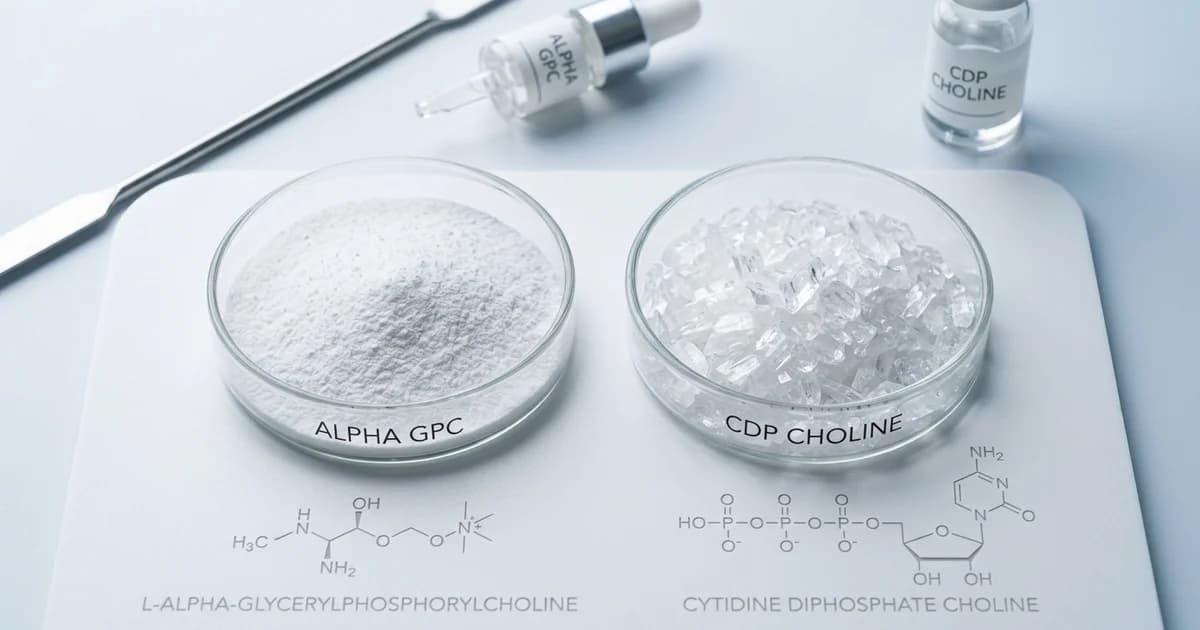
- Clarity: Lion's Mane, Alpha GPC, Caffeine, L-Theanine
- Logic: Bacopa Monnieri, Ginkgo Biloba, Caffeine, L-Theanine
- Confidence: Ashwagandha (Shoden), Saffron Extract, Caffeine, L-Theanine
- Motivation: Artichoke Extract, Vitamin B12, Methylliberine, L-Theanine
- Creativity: Features ingredients like Alpha GPC and Panax Ginseng
According to multiple reviews, every blend in that earlier lineup contained caffeine and L-theanine. On the current site, Clarity is sold with or without caffeine and lists no L-theanine. The differentiating ingredients (Lion's Mane, Bacopa, Ashwagandha, etc.) are what change from blend to blend. Understanding this shared base is essential to any roon vs thesis evaluation.
The format is standard capsules. You take them in the morning, ideally on an empty stomach. According to Thesis, as quoted in a Bustle review, effects can be felt in as little as 30 minutes, though it can take up to five days for the full benefits to build.
How Roon Works
Roon takes the opposite approach. Instead of four formulas and a quiz, you get one formula in a sublingual pouch. Place it between your gum and lip. The active ingredients absorb directly through the oral mucosa, bypassing the digestive system entirely.
The formula contains four compounds:
- Caffeine (80mg): Comparable to a standard cup of coffee, but paired with three other compounds for a smoother, longer-lasting effect
- L-Theanine: The amino acid found in tea that promotes calm focus
- Theacrine: A purine alkaloid structurally similar to caffeine but with a longer duration and reduced tolerance buildup
- Methylliberine: A fast-acting purine alkaloid that complements Theacrine's slower onset
There is no quiz and no capsule to swallow with water: one pouch, one stack. That simplicity is what makes the roon vs thesis decision so clear for many users.
Roon vs Thesis Nootropics: The Head-to-Head Comparison
Here's how these two products stack up across the categories that actually matter in this comparison:
| Category | Thesis | Roon |
|---|---|---|
| Format | Capsules (oral) | Sublingual pouch |
| Blends/Formulas | 4 formulas on takethesis.com (Nov 2026), Clarity with or without caffeine | 1 formula |
| Caffeine Content | Clarity 100 mg or 0 mg; Motivation 150 mg (per 2 capsules) | 80mg per pouch |
| Key Differentiating Ingredients | Clarity: Lion's Mane, CDP choline, Panax ginseng; Motivation: theacrine, methylliberine, NALT | Theacrine, Methylliberine |
| Delivery Speed | ~30 minutes (oral digestion) | Faster (sublingual absorption) |
| Monthly Cost | $59 first shipment, then $79 per 25-day supply (subscription) | From $9.16 per tin, as little as $0.61 per pouch; see takeroon.com |
| Personalization | Quiz-based blend selection | Single optimized stack |
| Nicotine | N/A (capsule format) | Zero nicotine |
| Requires Water | Yes | No |
Ingredients: Breadth vs Depth
The roon vs thesis ingredients story is one of breadth versus depth. Thesis wins on ingredient diversity. Across its four formulas, Thesis covers more ingredients, such as Lion's Mane, Panax ginseng and CDP choline in Clarity and rhodiola and NALT in Motivation. If you're interested in exploring how different nootropic compounds affect you personally, Thesis gives you a structured way to do that.
Roon wins on ingredient specificity. The four compounds in the Roon pouch were selected to work as a single, self-reinforcing stack. A study published on PubMed found that 97mg of L-Theanine combined with 40mg of caffeine helped focus attention during demanding cognitive tasks. Roon uses 80mg of caffeine paired with 60mg of L-Theanine, a different dose ratio built on the same complementary pairing.
Theacrine and methylliberine appear in only one Thesis formula, Motivation, which lists 100 mg of each with 150 mg caffeine. A 2025 study in the Journal of the International Society of Sports Nutrition confirmed that Theacrine is safe at doses up to 300 mg/day for eight weeks, supporting consistent energy and focus without tolerance development. And Methylliberine acts as a fast-onset complement. According to Nootropics Depot, Methylliberine is faster acting than Theacrine, with a more immediate impact on energy, mood, and focus.
Together, these four compounds create a layered effect. Caffeine and Methylliberine kick in quickly. L-Theanine smooths out the stimulant edge. Theacrine is there for duration and tolerance; the study above used up to 300 mg a day, and Roon has 5 mg. This layered design is a key differentiator in the roon vs thesis nootropics matchup.
Delivery: Capsules vs Sublingual
This is a bigger difference than most roon vs thesis articles acknowledge.
Thesis uses standard capsules. That means the ingredients pass through your stomach and liver before reaching your bloodstream (first-pass metabolism). It works, but it's slower, and bioavailability varies based on what you've eaten, your gut health, and individual metabolism.
Roon's sublingual delivery skips that entire process, and it's a format shared by other sublingual pouch options worth comparing. The mucous membranes under your lip absorb the active compounds directly into the bloodstream. It's the same principle behind sublingual medications that doctors prescribe when they need faster, more reliable absorption.
You also don't need water, a meal plan, or a morning routine built around capsule timing. You just place the pouch and go. For anyone weighing roon vs thesis, delivery method alone can be the deciding factor.
Cost and Complexity
According to Thesis's own product page, Thesis costs $79 a month on subscription after a $59 first month, or about $3.16 per dose at the renewal price. A one-time purchase runs $129. And that's for one blend at a time. If you buy two or more formulas, the cost climbs.
As SOMA Analytics noted in their review, that price point is roughly twice what you'd pay for some competing nootropic products. Cost is a real consideration in any roon vs thesis decision.
Beyond price, there's the complexity tax. Thesis asks you to take a quiz, start on the formula it recommends, and manage a subscription that ships every 25 days. That process can be valuable. It can also be exhausting if you just want something that works today.
Trade-offs on Both Sides
No product is perfect. A thorough comparison requires honesty about where each falls short.
Where Thesis falls short:
- Capsule-only delivery. Capsules are swallowed and absorbed through digestion, and some people prefer not to take pills.
- A quiz and subscription to start. Thesis matches you to a formula with a quiz and ships on a 25-day subscription, which some people will find more involved than one fixed product.
- Caffeine dose is fixed per formula. Clarity's caffeinated version has 100 mg per two-capsule serving and Motivation 150 mg; the caffeine-free Clarity has none.
- Theacrine in one formula only. Motivation lists 100 mg theacrine and 100 mg methylliberine; Clarity, Stress Reset and Neuroprotection do not list either.
Where Roon falls short:
- No ingredient variety. If you want adaptogens like Ashwagandha, mushroom extracts like Lion's Mane, or cholinergics like Alpha GPC, Roon doesn't offer them. It's a focused stack, not a broad-spectrum nootropic.
- No personalization. Everyone gets the same formula. If you're someone who responds poorly to caffeine (even at 80mg), there's no caffeine-free option.
- Single use case. Roon is built for focus and sustained energy. It's not designed for sleep, relaxation, or mood support the way some Thesis blends aim to be.
The shared gap:
Neither product addresses long-term cognitive health ingredients like Omega-3s, Phosphatidylserine, or Vitamin D, though other delivery formats like pouches vs gum for focus have their own ingredient trade-offs worth considering. Both are performance tools, not neuroprotective stacks. That's fine, but worth knowing as you evaluate roon vs thesis for your own needs.
Why Roon's Simplicity Might Be the Point
A comparison isn't just about ingredients on a label. It's about what you'll actually use consistently. That's where the roon vs thesis conversation gets practical.
Thesis is built for the nootropic enthusiast: someone who enjoys the process of testing, tracking, and optimizing. If that's you, Thesis offers a structured and reasonably well-formulated system for exploring different cognitive targets.
Other people want one fixed formula. They're looking for something that works in minutes, fits in a pocket, and delivers the same result every time they use it. For those people, Roon is the closer fit in the roon vs thesis choice.
That's the problem Roon was designed to solve. Four compounds that work together: Caffeine at 80mg (comparable to a cup of coffee), L-Theanine to keep it smooth, Theacrine for duration (studied at up to 300 mg a day; Roon has 5 mg), and Methylliberine for fast onset. Delivered sublingually so it absorbs in minutes, not the better part of an hour.
Roon is one pouch with no water needed, built for 6-8 hours of sustained, jitter-free focus.
Roon won't give you Ashwagandha's stress support or Lion's Mane's long-term neural benefits. But if what you need is reliable cognitive performance on demand, without the complexity of managing a multi-blend subscription system, the roon vs thesis choice becomes straightforward. Roon is worth a serious look.
Try it at takeroon.com.
Frequently Asked Questions
Is Roon or Thesis better for focus?
Neither is universally better; it depends on how you like to work. Thesis suits people who want a capsule formula matched to a goal, including caffeine-free options. Roon suits people who want one fixed formula that absorbs in minutes and delivers the same result every time. Both support focus and steady energy, so the deciding factor is usually delivery speed, daily commitment, and whether you value variety or consistency over a simple, repeatable routine.
What exactly is in a Roon pouch?
Each Roon pouch contains four active compounds: 80mg of caffeine, 60mg of L-theanine, 25mg of methylliberine (branded Dynamine), and 5mg of theacrine (branded TeaCrine). There is zero nicotine. The stack pairs a coffee-level caffeine dose with L-theanine for smoothness, plus two purine alkaloids that extend duration. Unlike Thesis, the formula never rotates, so you get the same transparent label in every tin, with no quiz and no blend swapping.
Does Thesis or Roon absorb faster?
Roon generally absorbs faster because of its delivery route. Thesis capsules pass through the stomach and liver first, so onset depends on digestion and what you have eaten. Roon's pouch sits under the lip, where compounds cross the oral mucosa directly into the bloodstream. Sublingual delivery bypasses first-pass metabolism and can be several times faster than swallowing a pill, according to NCBI's StatPearls review of medication routes.
Is theacrine safe to take daily?
Theacrine has a favorable safety record in published research. A peer-reviewed study on PMC found TeaCrine at doses up to 300mg per day for eight weeks produced no habituation and no tachyphylactic response, unlike caffeine. Roon uses just 5mg of theacrine per pouch, far below the tested ceiling. As with any caffeinated product, your total daily caffeine intake still matters, so factor in coffee and other sources.
Do caffeine and L-theanine really work together?
Research supports the pairing. A systematic review on PMC concluded that the combination of L-theanine and caffeine is a likely safe and effective cognitive enhancer that improves attention and memory more than either compound alone. Thesis Motivation includes both (150 mg caffeine, 200 mg L-theanine); Clarity lists no L-theanine. Roon uses 80 mg caffeine with 60 mg L-theanine. The two products rely on the same core pairing; they differ mainly in dose ratio and delivery method.
How much does each one cost?
Thesis Clarity runs $59 for the first 25-day supply, then $79 per 25-day supply on subscription, or $129 as a one-time purchase (takethesis.com, Nov 2026), and the total climbs if you buy two or more formulas. Roon is a single formula, so there is nothing to mix and match. For current Roon pricing and subscription options, check the Roon product page. Cost is a real factor, but daily commitment and delivery method usually weigh just as heavily.
By Roon Team