Thesis Nootropics Review 2026: Real Cost of All 4 Blends
Roon Team

Thesis Nootropics Review: Are Personalized Nootropics Worth the Price in 2026?
Thesis nootropics charge $79/month on subscription ($119/month after the first month, or $119 one-time) for a quiz-selected set of four pre-made blends. The pitch: your brain is unique, so your nootropics should be too. After testing the formulas, reviewing the ingredients, and reading dozens of user reports, this thesis nootropics review lands on a mixed verdict. The ingredient quality is real. The "personalization" is mostly marketing. And the price is hard to justify when a single well-designed stack can outperform six overlapping ones.
Below, you'll find a full breakdown of every blend, a comparison table, real user feedback, and what the science actually says about each ingredient. If you've been searching for a thesis pills review that goes beyond surface-level takes, this is it.
Key Takeaways from This Thesis Nootropics Review
- Thesis offers six pre-made blends (Energy, Clarity, Logic, Motivation, Creativity, Confidence), not truly custom formulas. Each is available in caffeinated or caffeine-free versions.
- Pricing starts at $79 for the first month on subscription, then rises to $119/month thereafter. One-time purchase: $119. Per-serving cost lands around $3.29 to $4.96 depending on your plan.
- The "personalization" is a 25-question quiz that selects which four of the six blends you receive. You cannot modify individual ingredients or dosages.
- Ingredient quality is above average, but there is substantial overlap across blends (caffeine and L-theanine appear in every caffeinated version; several share Citicoline or Alpha GPC).
- Results are genuinely split: some users report clear cognitive benefits from specific blends, while others notice little difference from a strong cup of coffee.
Thesis Nootropics vs. Competitors at a Glance
| Feature | Thesis | Alpha Brain | Gorilla Mind | Qualia Mind | Roon |
|---|---|---|---|---|---|
| Format | Capsules | Capsules | Capsules | Capsules | Sublingual pouch |
| Monthly Price | $79–$119/mo | ~$35/mo | ~$40/mo | ~$69–$139/mo | $9.16/tin subscribed, $15.00 one-time (tin of 15) |
| Per-Serving Cost | ~$3.29–$4.96 | ~$1.17 | ~$1.33 | ~$2.30–$4.63 | $0.61/pouch subscribed, $1.00 one-time |
| Caffeine | Yes (in caffeinated versions) | No | Yes (150 mg) | Yes (90 mg) | Yes (80 mg) |
| L-Theanine | Yes | No | No | Yes | Yes (60 mg) |
| Personalization | Quiz selects 4 of 6 blends | None | None | None | None |
| Onset Time | 30–60 min (capsule) | 30–60 min | 30–60 min | 30–60 min | 5–10 min (sublingual) |
| Tolerance Management | None | None | None | None | Theacrine + Dynamine |
| Money-Back Guarantee | 30 days | 90 days | 30 days | 100 days | N/A |
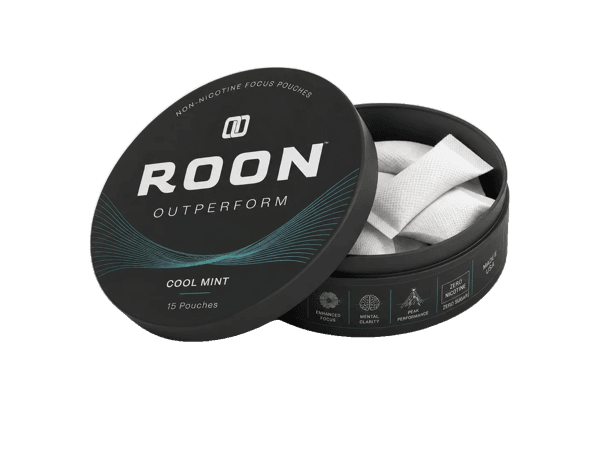 RoonOne pouch RoonOne pouch |  Coffee8 fl oz Coffee8 fl oz |  Energy drink8.4 fl oz can Energy drink8.4 fl oz can |  Nicotine pouchOne pouch Nicotine pouchOne pouch |  Other pouchesNon-nicotine Other pouchesNon-nicotine | |
|---|---|---|---|---|---|
| CaffeineCaffeine | 80 mg | ~95 mg | 200–300 mg | 0 mg | 100–200 mg |
| SynergistsSynergists (L-theanine, Dynamine®, TeaCrine®) | Yes | No | No | No | No |
| Fast onsetFast onset (5 to 10 min) | Yes | No | Sometimes | Yes | Yes |
| Lasts 6-8hLasts 6 to 8 hours | Yes | No | No | No | No |
| No crashNo crash or jitters | Yes | No | No | Sometimes | Sometimes |
| No nicotineNo nicotine | Yes | Yes | Yes | No | Yes |
| No sugarNo sugar | Yes | Yes | No | Yes | Yes |
How Thesis Nootropics Work
Thesis nootropics start with a 25-question online quiz that asks about your goals, lifestyle, diet, and sensitivity to stimulants. Based on your answers, their algorithm selects four blends for your Starter Kit. You try one blend per week, log your results, and then reorder the ones that worked. The starter kit includes a coaching call to help optimize the protocol.
It sounds tailored. In practice, you're choosing from six pre-made capsule formulas. The quiz narrows down which four you get first, but anyone can eventually buy any blend. That's not a knock on the product itself. It just means the "personalized" label deserves an asterisk.
If you've seen a thesis pills review elsewhere online, you've probably noticed this same point come up. The thesis supplements themselves are fixed formulas. The personalization is really about selection, not formulation.
Each blend targets a different cognitive outcome. For this thesis nootropics review, I broke down what's actually inside them.
Breaking Down the Six Thesis Blends
Energy
The Energy blend pairs caffeine and L-theanine with Citicoline (300 mg), Mango Leaf Extract, and Theacrine. According to a detailed ingredient review from Sleep and Hypnosis, the Citicoline dose may fall short of what clinical studies typically use (most research uses 500–2,000 mg), and the Mango Leaf Extract has limited supporting research. Theacrine works through similar pathways as caffeine, which raises a fair question: do you really need both in the same capsule? Any honest thesis nootropics review should flag this redundancy.
Clarity
Clarity includes Lion's Mane (500 mg), Alpha GPC, Zembrin (a Sceletium tortuosum extract), and optionally caffeine and L-theanine. Lion's Mane is one of the better-studied nootropic mushrooms. Research published in the International Journal of Medicinal Mushrooms found that Hericium erinaceus extract induced NGF (nerve growth factor) synthesis and promoted neurite outgrowth in neural cells. This is probably the most interesting formula in the lineup from a neuroscience perspective, and it's the blend most thesis pills review articles tend to highlight positively.
Logic
Logic leans on Bacopa Monnieri, Triacetyluridine, and Ginkgo Biloba, some of the oldest and most studied herbal nootropics. A meta-analysis published in the Journal of Ethnopharmacology covering six randomized controlled trials found that Bacopa monnieri improved cognitive performance, particularly speed of attention. The catch: most studies show benefits only after 8–12 weeks of consistent daily use. This isn't a "feel it in 30 minutes" blend for most people.
Motivation
The Motivation blend uses Forskolin (250 mg) to boost cyclic AMP levels, along with Artichoke Extract. This is essentially a version of the CILTEP stack that's been popular in nootropic communities for years. Nootropics Expert notes that it also contains Panax Ginseng at 200 mg, which acts as a serotonin and norepinephrine reuptake inhibitor. Among the thesis supplements, this one has the most niche appeal.
Creativity
Creativity combines Alpha GPC and Ashwagandha (KSM-66). Alpha GPC supports acetylcholine production, which plays a role in learning and memory. Ashwagandha is well-studied for stress reduction, and the KSM-66 extract is one of the better forms available. The logic here is that reducing stress frees up cognitive bandwidth for creative thinking.
Confidence
The Confidence blend includes Shoden Ashwagandha and Saffron Extract. Both ingredients have research supporting their use for mood regulation. This blend feels more like an anxiolytic stack than a traditional nootropic, which isn't necessarily a bad thing if social anxiety is your primary concern.
What Real Users Are Saying: Thesis Nootropics Review Roundup
User reviews for thesis nootropics are genuinely split. Thingtesting's aggregated reviews show a clear pattern: many users report noticeable focus and sustained energy, especially from the Clarity and Energy blends. Others report no effect at all, or uncomfortable side effects.
A 60-day test from Lift Big Eat Big flagged that Ashwagandha at 120 mg in certain blends sits well below the 300–600 mg clinical dose range, and noted the lack of third-party testing from NSF, Informed Sport, or USP. That's a meaningful gap for a product at this price point.
The Sleep and Hypnosis review raised a structural concern worth repeating: their tester found that a single well-designed formula would likely outperform six specialized ones with overlapping ingredients.
That's a fair critique, and one that comes up in nearly every thesis nootropics review I've read. Look across the six blends and there's a lot of ingredient repetition. Caffeine and L-theanine appear in every caffeinated formula. Several blends share Citicoline or Alpha GPC. The "personalization" starts to feel thinner when you realize the unique ingredients in each blend amount to just two or three compounds.
The Price Question
At $79 for the first subscription month and $119/month thereafter, thesis nootropics sit at the premium end of the market, though premium nootropic pricing at Qualia climbs even higher. For context, that gets you one blend at a time, taken daily. If you want to rotate between two blends (say, Energy on workout days and Clarity for deep work), you're looking at $158–$238 per month.
The Amazon Starter Kit runs about $134.95 for 24 packets across four blends. That's a reasonable way to test the waters, but the per-serving math still puts you well above most competitors.
Is it worth it? That depends entirely on whether the specific blend you land on delivers results you can't get from a simpler, cheaper stack. For some people, the Clarity or Energy blend genuinely clicks. For others, the premium feels unjustified. Reading more than one thesis pills review can help you set realistic expectations before committing.
In the Alpha Brain vs Gorilla Mind vs Thesis comparison, most rivals land in the $30–50 range, making Thesis's $79–$119 price tag a real premium for the brand experience and the quiz-based selection process. The ingredients themselves, while quality, aren't rare or proprietary enough to justify 2–3x the market rate on their own.
What's Missing from Thesis Nootropics
After testing the formulas and reviewing the research for this thesis nootropics review, a few gaps stand out.
No tolerance management. Every caffeinated Thesis blend contains caffeine, and caffeine builds tolerance. Take it daily for a few weeks and you'll need more to get the same effect. Thesis doesn't include any ingredients specifically designed to counteract this. Theacrine appears in the Energy blend, but it's layered on top of caffeine rather than replacing it. An 8-week clinical trial of 60 healthy adults published in the Journal of the International Society of Sports Nutrition found that up to 300 mg/day of theacrine was non-habituating, meaning it didn't produce the tolerance buildup that caffeine does. Thesis uses theacrine in only one blend, and pairs it with caffeine anyway.
Capsule delivery is slow. Thesis uses standard capsules, which means your body has to break them down in the digestive tract before anything reaches your bloodstream. Depending on what you've eaten, that can take 30 to 60 minutes. Sublingual delivery reaches the bloodstream in as few as 5–15 minutes by bypassing stomach acid, intestinal transit, and first-pass liver metabolism. If you need focus now, capsules are inherently limited by their delivery mechanism.
The "personalization" has a ceiling. You can pick which blend to reorder, but you can't adjust dosages or swap individual ingredients. If the Clarity blend is almost perfect but you want less caffeine and more Lion's Mane, that option doesn't exist. You get the formula as-is.
Ingredient overlap dilutes the concept. With caffeine and L-theanine in every caffeinated blend, plus shared ingredients like Citicoline across multiple formulas, the six thesis supplements aren't as distinct as the branding suggests. A review from Sleep and Hypnosis noted that many of the ingredients are redundant across blends, and that a single well-formulated stack might be more effective.
No sustained-release energy curve. Caffeine in capsule form hits you in a spike. You get a window of alertness, then a decline. None of the thesis nootropics blends are designed to extend or smooth out that energy curve over four, five, or six hours.
No third-party certification. As Lift Big Eat Big noted, Thesis lacks third-party testing from NSF, Informed Sport, or USP. For a supplement at this price point, that's a notable omission.
The Verdict on Thesis Nootropics
Thesis makes a quality product with well-chosen ingredients. The Clarity and Energy blends, in particular, contain compounds with real research behind them. If you land on the right blend for your neurochemistry, you may genuinely notice a difference.
But the "personalized nootropics" framing overpromises. You're selecting from six fixed formulas via a quiz, not getting a custom stack built for your brain. The ingredient overlap across blends undermines the premise. And at $79–$119/month, the price-to-value ratio only works if your specific blend delivers results that cheaper, simpler alternatives can't match.
For most people, a single well-designed nootropic formula with the right delivery method will outperform a rotation of overlapping capsule blends. The science supports this: a 2008 study in Nutritional Neuroscience found that the caffeine-plus-L-theanine combination improved attention task performance and target discriminability versus placebo, with the combination outperforming either ingredient alone. You don't need six blends to get that benefit. You need the right two or three ingredients, dosed correctly, delivered fast.
Related from Roon
Frequently Asked Questions
Do Thesis nootropics actually work?
Some blends work for some people. The Clarity and Energy blends contain clinically studied ingredients like Lion's Mane (500 mg) and Citicoline (300 mg) that have peer-reviewed research supporting cognitive benefits. User reviews are split: roughly half report noticeable focus improvements, while others notice minimal effects beyond what caffeine alone provides. Results depend heavily on which blend matches your neurochemistry.
Are Thesis nootropics safe?
Thesis uses generally recognized safe ingredients at moderate doses. The main safety concern is caffeine sensitivity, since every caffeinated blend includes it. Some users report jitters or digestive discomfort. Thesis lacks third-party testing from NSF, Informed Sport, or USP, which means independent purity verification isn't available. Consult a physician before starting any nootropic regimen, especially if you take prescription medications.
How much do Thesis nootropics cost per month?
The first subscription month costs $79. After that, the subscription price rises to $119/month. A one-time purchase runs $119. The Amazon Starter Kit costs approximately $134.95 for 24 packets across four blends. Per-serving cost ranges from about $3.29 to $4.96 depending on your purchase method, placing Thesis among the more expensive nootropic options on the market.
Is Thesis personalization real or just marketing?
It's a mix. The 25-question quiz does match you with blends based on your stated goals and sensitivities, and the coaching call adds a human layer. But the six formulas are pre-made and fixed. You can't modify ingredients or dosages. Anyone can eventually purchase any blend regardless of quiz results. The personalization is about selection, not formulation.
How long does it take for Thesis nootropics to work?
Caffeinated blends like Energy produce noticeable effects within 30–60 minutes (standard for capsule delivery). Blends containing Bacopa Monnieri (Logic) require 8–12 weeks of daily use before cognitive benefits appear, based on clinical research. Thesis recommends trying each blend for a full week before judging its effectiveness.
What are the best alternatives to Thesis nootropics?
Competitors include Alpha Brain ($35/month, no caffeine), Gorilla Mind ($40/month, 150 mg caffeine), Qualia Mind (~$69–$139/month), and Roon ($9.16/tin subscribed, $15.00 one-time, sublingual pouch with 80 mg caffeine, 60 mg L-theanine, 25 mg Dynamine, 5 mg TeaCrine). The right alternative depends on whether you prioritize price, ingredient count, delivery speed, or tolerance management.
Can you take Thesis nootropics with coffee?
You can, but be mindful of total caffeine intake. Each caffeinated Thesis blend already contains caffeine (exact dose varies by blend). Adding a cup of coffee (roughly 95 mg caffeine) on top could push you past the 400 mg daily limit that the FDA considers generally safe for most adults. If you're caffeine-sensitive, choose the stimulant-free versions of Thesis blends.
Does Thesis offer a money-back guarantee?
Yes. Thesis offers a 30-day money-back guarantee on your first order. That gives you enough time to test one blend per week across your four-blend Starter Kit. If none of them work for you, you can request a refund within that window.
Where a Sublingual Pouch Wins Over Six Capsule Blends
This thesis nootropics review keeps circling back to the same structural problems: ingredient overlap, capsule-speed delivery, caffeine tolerance, and a price tag that assumes personalization adds more value than it does.
Roon was designed around a different premise. Instead of six overlapping formulas, it's one sublingual pouch with four ingredients: 80 mg caffeine, 60 mg L-theanine, 25 mg methylliberine (Dynamine), and 5 mg theacrine (TeaCrine). The sublingual format bypasses your digestive system, reaching your bloodstream in 5–10 minutes instead of the 30–60 minutes a capsule requires.
The theacrine and methylliberine are the tolerance answer. A 2016 clinical trial found theacrine non-habituating over 8 weeks of daily use. Paired with L-theanine for smooth onset, the stack delivers 6–8 hours of sustained focus with no jitters, no crash, and no tolerance buildup. It's not a replacement for a targeted mushroom or adaptogen protocol. It is a faster, simpler, cheaper way to get the clean-focus effect that most Thesis users are actually chasing.
If the concept of nootropics appeals to you but $79–$119/month for rotating capsule blends doesn't, try Roon.
Written by Roon Team
What Blends Does Thesis Sell in 2026?
Thesis sells four blends as of August 2026: Clarity, Motivation, Stress Reset, and Neuroprotection. All four are $59 for a first subscription month and $79 per month after that. The six-blend lineup that almost every review still describes has been cut. Energy, Logic, Creativity, and Confidence are gone from takethesis.com, and the product pages for Energy and Logic now return a 404. There is no product called "Thesis Calm"; the calm-positioned blend is Stress Reset.
| Blend | Status (Aug 2026) | Ingredients Thesis lists | Doses published? |
|---|---|---|---|
| Clarity | Current | CDP-choline, Panax ginseng, Lion's mane, 7,8-dihydroxyflavone, vitamin B6, optional caffeine anhydrous | No |
| Motivation | Current | Dynamine (methylliberine), TeaCrine (theacrine), N-acetyl-L-tyrosine, fermented salidrosides, B6, B12, L-theanine, optional caffeine | No |
| Stress Reset | Current | Ashwagandha, saffron, kanna (Sceletium tortuosum), rhodiola, magnesium bisglycinate, dihydrohonokiol-B, L-theanine, optional caffeine | No |
| Neuroprotection | Current | Listed on the product page without amounts | No |
| Energy | Retired | Not sold | Not applicable |
| Logic | Retired | Not sold | Not applicable |
| Creativity | Retired | Not sold | Not applicable |
| Confidence | Retired | Not sold | Not applicable |
Retired blends still turn up on Amazon third-party listings at 24 servings per box, so seeing "Thesis Logic" for sale does not mean Thesis still makes it.
The last column is the bigger story. Thesis publishes no milligram amounts for any ingredient in any blend, not on the product pages and not on its ingredients page. That matters because the research behind these compounds is dose-specific. A systematic review of six randomized controlled trials of Bacopa monnieri used 300 to 450 mg per day, with every trial running 12 weeks. The NIH Office of Dietary Supplements notes that ashwagandha stress and anxiety trials used 240 to 1,250 mg per day of extract. A 12-week randomized trial of citicoline in older adults used 500 mg per day. Without published doses, no reviewer, including this one, can check Thesis against any of those numbers in either direction.
For contrast on labeling alone: Roon prints all four of its amounts on the tin (80 mg caffeine, 60 mg L-theanine, 25 mg Dynamine, 5 mg TeaCrine) across 15 nicotine-free pouches, sweetened with sucralose. It is a different format answering a different question, not a substitute for a daily capsule stack.
How Much Does Thesis Cost, and Where Do You Buy It?
Thesis costs $59 for your first subscription month, $79 per month after that, and $129 as a one-time purchase. Each box is 50 capsules dosed at 2 capsules per serving, which is 25 servings. Thesis advertises "$2.36 per dose" on every product page, but that figure is calculated off the promotional first month ($59 divided by 25). The ongoing subscription actually works out to $3.16 per serving, and the one-time box to $5.16. Thesis sells direct at takethesis.com and is not stocked in retail stores.
| Purchase option | Price | Servings | Real cost per serving | Shipping |
|---|---|---|---|---|
| First subscription month | $59 | 25 | $2.36 | Free, ships every 25 days |
| Ongoing subscription | $79/month | 25 | $3.16 | Free, ships every 25 days |
| One-time purchase | $129 | 25 | $5.16 | Free |
Two details most reviews miss. First, the shipping cadence is every 25 days, not monthly. At that interval a subscription you never skip delivers roughly 14 boxes a year rather than 12, which is about $1,150 annually instead of the $948 a "$79 per month" figure implies.
Second, the guarantee is narrower than the marketing line. Product pages promise a refund "if you don't feel 50% improvement in your cognitive focus area within 30 days," but the refund policy page limits refunds to within 30 days of delivery of your first order. Later shipments can be skipped, rescheduled, or canceled, but not refunded. If you are testing Thesis, the decision window is the first box only.
For a per-serving benchmark from a different category: Roon is $15.00 per tin as a one-time purchase and drops to $9.16 per tin on its longest subscription plan, at 15 pouches per tin, which is $0.61 to $1.00 per pouch (current pricing).
Thesis vs NooCube: Which One Should You Pick?
Thesis and NooCube are built for different buyers. Thesis sells four goal-specific blends you rotate through, each with an optional caffeinated version, at $79 per month on an ongoing subscription, and it publishes no ingredient amounts. NooCube sells one caffeine-free daily formula at $64.99 a bottle and prints a milligram amount for every active on its label. If dose transparency is your deciding factor, NooCube wins outright. If you want a stimulant option or a blend aimed at a specific goal such as stress or long-term brain health, Thesis has the wider range.
| Thesis | NooCube | |
|---|---|---|
| Products | 4 blends (Clarity, Motivation, Stress Reset, Neuroprotection) | 1 core formula (Brain Productivity) plus a separate NAD+ product |
| One-time price | $129 | $64.99 |
| Subscription price | $59 first month, then $79/mo | $55.24/mo (15% off) |
| Servings per box | 25 | 30 |
| Cost per serving | $3.16 on the ongoing subscription | $1.84 subscription, $2.17 one-time |
| Per-ingredient amounts published | No | Yes, full supplement facts panel |
| Caffeine | Optional caffeinated version of each blend | None |
| Published trial on the finished formula | None found | None found |
| Guarantee | 30 days, first order only | 60 days, minus a 5% handling fee, shipping excluded |
Neither company has a published clinical trial on its finished formula, so both are asking you to trust ingredient-level research rather than evidence about the product you actually swallow. The full ingredient-by-ingredient breakdown is in our NooCube review.