Gifts for Nursing Students Built Around 12-Hour Clinical Days
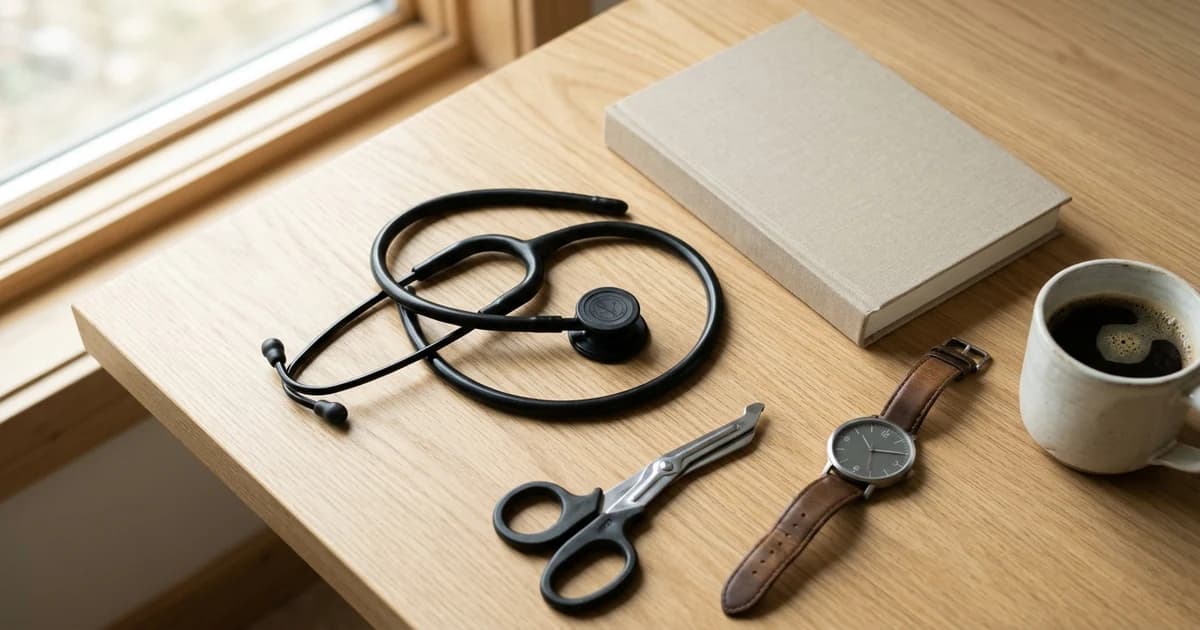
Gifts for Nursing Students Built Around 12-Hour Clinical Days
The best gifts for nursing students are the ones that survive a 12-hour clinical day: a Littmann Classic III stethoscope ($99.99 at Stethoscope.com), Leatherman Raptor Rescue shears ($79.95), Dansko Professional clogs ($155.00) and, for the NCLEX year, the new Saunders NCLEX-RN review ($77.99 at Elsevier, out Nov 9, 2026). Because most students get through those days on caffeine, this guide also covers the part other gift lists skip: how much caffeine is safe on a clinical day and when to take it.
Nursing Student Gifts and Prices
| Gift | Price | Seller | Price checked | Where it gets used |
|---|---|---|---|---|
| Littmann Classic III 5620 (Black) | $99.99 (MSRP $119.90) | Stethoscope.com | Oct 31, 2026 | Skills lab, every clinical |
| Leatherman Raptor Rescue | $79.95 | Leatherman.com | Oct 31, 2026 | Clinical bag |
| Dansko Professional clog (Chocolate) | $155.00 | Dansko.com | Oct 31, 2026 | 12 hours on hospital floors |
| Timex Weekender 38mm (T2N651) | $77.00 | Timex.com | Oct 31, 2026 | Counting respirations |
| Loop Quiet 2 earplugs | $24.95 | Loop Earplugs (US) | Oct 31, 2026 | Sleep before a 0645 start |
| Saunders NCLEX-RN Review, 10th ed. | $77.99 (pre-order) | Elsevier | Oct 31, 2026 | NCLEX year |
| Roon caffeine pouches (15 per tin) | from $9.16/tin* | takeroon.com | Oct 31, 2026 | Before report and at lunch |
*Roon is the only item priced on subscription (12 tins). Prices come from each seller's product page on the date shown and can change. Check the program's supply list before buying a stethoscope, shoes or a watch.
How This List Was Built
Prices and specs come from each brand's own product page or an authorized seller, checked Oct 31, 2026. We did not put any of these products through trials of our own. Roon makes one item on this list and this page links to it, so you know where the incentive sits. Caffeine figures come from the FDA, NIOSH and peer-reviewed studies linked in place. Shopping for a working nurse instead? The gifts for night shift nurses guide is built around day-sleep, not school.
What a Clinical Day Looks Like
Clinical rotations at many programs run as 8 to 12 hour shifts once or twice a week, for 3 to 8 weeks at a time, per Highline College's nursing program. A 12-hour day shift usually means a pre-dawn alarm, a 0645 report and a 1915 handoff, then care plans or pharmacology reading at night. Long hours matter for patients as well as students: in a study of 393 hospital staff nurses, the odds of an error were about three times higher on shifts of 12.5 hours or more (Rogers et al., Health Affairs, 2004). A gift that protects sleep or makes the day easier to run is not a small thing.
Caffeine on a 12-Hour Clinical Day
How much is safe
- Healthy adults: The FDA cites 400 mg a day as an amount not generally associated with negative effects.
- Pregnant students: ACOG's guidance is that intake under 200 mg a day does not appear to be a major factor in miscarriage or preterm birth. Anyone pregnant, trying to conceive or breastfeeding should set a number with their own clinician.
- Onset and clearance: NIOSH's training for nurses says caffeine takes about 30 minutes (15 to 45) to act and has a half-life of 5 to 6 hours, but "can remain in your system much longer."
For the bigger picture on limits, see how much caffeine is too much.
What they are probably already drinking
| Drink (12 fl oz) | Caffeine, per the FDA |
|---|---|
| Brewed coffee | 113 to 247 mg |
| Black tea | 71 mg |
| Green tea | 37 mg |
| Caffeinated soda | 23 to 83 mg |
| Energy drink | 41 to 246 mg |
| One Roon pouch (for comparison) | 80 mg |
Source: FDA, Spilling the Beans, checked Oct 31, 2026. Roon figure from the Roon label.
Two large hospital-cafeteria coffees can reach the 400 mg line before the shift is half over. That is the case for a measured dose.
A timing plan for a 0645 to 1915 clinical day
| Time | Step | Why |
|---|---|---|
| 0515 | Wake, water, breakfast | Caffeine works better on top of food and fluids than in place of them |
| 0615 to 0630 | First dose, in the car or locker room | About 30 minutes to act, so it lands for 0645 report |
| 1130 to 1230 | Second dose at lunch, if needed | Covers the post-lunch dip and the afternoon med pass |
| After 1430 | No more caffeine | Keeps at least 8 hours between the last dose and a 2230 bedtime |
| 1915 | Handoff, then home | Sleep is the recovery tool; caffeine is not |
With one Roon pouch at each dose, that day comes to 160 mg, well under the FDA figure and under ACOG's 200 mg. A large coffee on top changes the math, so count everything. A sleep study gave 400 mg of caffeine 6 hours before bed and measured more than an hour of lost sleep, and the participants did not notice it (Drake et al., J Clin Sleep Med, 2013). That is why the cutoff sits so early.
Clinical sites have their own rule: OSHA's bloodborne pathogens standard prohibits eating and drinking in work areas where exposure is reasonably likely, and employers decide which areas count. Doses happen in the break room or locker room, never at the bedside. More on this in why there is no coffee at the nurses' station.
First Semester and Skills Lab
Littmann Classic III stethoscope. A common pick on nursing program supply lists. At Stethoscope.com, the 5620 (Black) and 5621 (Gray) sell for $99.99 against an MSRP of $119.90, and the 5811 (Smoke) runs $109.99 (MSRP $130.90). Ask before you order: some programs name the model, and color and engraving are personal.
Timex Weekender 38mm (T2N651). $77.00 at Timex.com. An analog dial with a seconds hand, on a slip-through fabric strap. Check the program's watch rule before wrapping it.
Loop Quiet 2 earplugs. $24.95 at Loop Earplugs. Reusable silicone plugs with a carry case. A 0645 report means an early bedtime in a dorm or shared apartment, and these help with that.
Do Nursing Students Need a Littmann Stethoscope?
The program's required supply list, not a gift guide, should decide the brand and model. The Classic III is the one most lists and most guides name, and at Stethoscope.com its colors range from $99.99 to $109.99 as of Oct 31, 2026.
Clinical Rotations
Leatherman Raptor Rescue. $79.95 at Leatherman.com. Folding trauma shears with a strap cutter, ring cutter, ruler, oxygen tank wrench and glass breaker. Leatherman says they are built in the USA with a 25-year warranty, and a utility holster is included.
Dansko Professional clog. $155.00 at Dansko.com in Chocolate; some patterns run $160.00. Dansko calls it "our flagship clog," with a roomy toe box and a rocker bottom. Uniform policies set shoe color and style, so confirm before ordering.
Roon caffeine pouches. Each Cool Mint pouch carries 80 mg caffeine, 60 mg L-theanine, 25 mg methylliberine (Dynamine) and 5 mg theacrine (TeaCrine), with no nicotine and zero sugar (it contains sucralose). Fifteen pouches per tin, from $9.16 per tin on a 12-tin subscription, or as little as $0.61 per pouch. A pouch fits the timing plan above: one before report, one at lunch, none after mid-afternoon. It goes under the lip during breaks and the commute, not on the unit. Roon is for adults 18 and older; the cap is 4 pouches a day, inside the 400 mg total from all sources.
The NCLEX Year
Saunders NCLEX-RN review, 10th edition. By Linda Anne Silvestri and Angela Silvestri. $77.99 at Elsevier, publication date Nov 9, 2026, with more than 6,000 NCLEX-RN questions in the book and online per Elsevier. Orders placed before that date ship after release.
On exam day, candidates get five hours, breaks included. Practice-test days are the right time to learn how their usual morning caffeine sits over a five-hour sitting, not the real test.
Gifts That Are Not Products
Covering a uniform order, a meal delivery plan for clinical weeks, or taking over chores the night before a 0645 start. Sleep before a clinical day does more than any gear on this list.
Pick by Budget
- Under $25: Loop Quiet 2 earplugs ($24.95), a Roon tin (from $9.16 on subscription)
- $75 to $100: Timex Weekender ($77.00), Saunders NCLEX-RN 10th ed. ($77.99), Leatherman Raptor Rescue ($79.95), Littmann Classic III ($99.99)
- Over $150: Dansko Professional clog ($155.00)
All prices checked Oct 31, 2026.
Related from Roon
- Gifts for night shift nurses
- Gifts for med students
- How night-shift nurses stay alert without a 3 AM crash
- Best energy pouches for long work shifts
Frequently Asked Questions
What is a good gift for a nursing student?
Something used on every clinical day: a Littmann Classic III ($99.99), trauma shears ($79.95) or clogs ($155.00), all checked Oct 31, 2026. For a smaller gift, Loop Quiet 2 earplugs ($24.95) protect sleep before an early report.
How much caffeine can a nursing student have on a 12-hour shift?
The FDA cites 400 mg a day as generally safe for healthy adults, and ACOG uses under 200 mg for pregnancy. Front-load it: a dose about 30 minutes before report, a second at lunch if needed, and nothing after mid-afternoon if bedtime is around 2230.
Can nursing students drink coffee during clinicals?
Not in patient-care areas. OSHA prohibits eating and drinking where exposure is reasonably likely, and each facility sets which areas that covers. Caffeine happens in the break room, on lunch, or before the shift.
Should I buy scrubs as a gift?
Most programs set the scrub color and sometimes the brand. Ask for the program's spec and size, or cover the cost and let the student order.
When does the new Saunders NCLEX book come out?
The 10th edition is scheduled for Nov 9, 2026, per Elsevier's product page.
One Dose Before Report, One at Lunch
Nursing school asks for alert hours at both ends of the day: clinicals that start before sunrise and care plans that run past dinner. Roon is built for the clinical half. It pairs 80 mg of caffeine with 60 mg L-theanine, 25 mg methylliberine (Dynamine) and 5 mg theacrine (TeaCrine), and it goes under the lip in the locker room, with no cup to set down.
The methylliberine is the reason one pouch can cover a long stretch. In a randomized, double-blind, crossover PK study (n=12), adding methylliberine cut caffeine's oral clearance from 41.9 to 17.1 L/hr and stretched its half-life from 7.2 to 15 hours, with no higher peak (study). That study used 100 mg methylliberine and 150 mg caffeine, about 4x and 1.9x a Roon pouch, so the direction carries over and the exact numbers do not. Slower clearance is also why the timing plan above ends the day's caffeine by mid-afternoon. Most people feel one pouch for about 6 to 8 hours, which is half a clinical day, with onset in 5 to 10 minutes.
Tins start at $9.16 on a 12-tin subscription, as little as $0.61 per pouch, and a first order has a 30-day money-back guarantee, once per customer. Roon is a caffeine supplement for adults 18 and up, not a study drug and not a replacement for sleep. Tuck a tin in with the stethoscope, or get Roon for the nursing student in your life.
Sources
- Stethoscope.com: Littmann Classic III Best Sellers (checked Oct 31, 2026)
- Leatherman: Raptor Rescue (checked Oct 31, 2026)
- Dansko: Professional Clog, Chocolate (checked Oct 31, 2026)
- Timex: Weekender 38mm T2N651 (checked Oct 31, 2026)
- Loop Earplugs: Quiet 2 (checked Oct 31, 2026)
- Elsevier: Saunders Review for the NCLEX-RN, 10th Edition (checked Oct 31, 2026)
- NCLEX: Exam Day
- Highline College Nursing: Clinicals
- Rogers AE et al., "The Working Hours of Hospital Staff Nurses and Patient Safety," Health Affairs, 2004
- FDA: Spilling the Beans: How Much Caffeine Is Too Much?
- ACOG Committee Opinion No. 462: Moderate Caffeine Consumption During Pregnancy
- NIOSH Training for Nurses on Shift Work and Long Work Hours, Module 6: Caffeine
- Drake C et al., "Caffeine Effects on Sleep Taken 0, 3, or 6 Hours before Going to Bed," J Clin Sleep Med, 2013
- eCFR: 29 CFR 1910.1030, Bloodborne Pathogens
- Caffeine and Methylliberine: A Human Pharmacokinetic Interaction Study
Written by Roon Team