Roon vs Neuro Gum: Pouches vs Gum for Cognitive Focus
Roon Team
Roon vs Neuro Gum: Pouches vs Gum for Cognitive Focus
Short answer: Neuro Gum and Roon both pair caffeine with L-theanine in a pocketable format, but they differ in delivery, dose, and formula depth. Neuro Gum is a chewable gum with 40mg caffeine and 60mg L-theanine per piece plus B vitamins. Roon is a zero-nicotine sublingual pouch with 80mg caffeine, 60mg L-theanine, 25mg methylliberine (Dynamine), and 5mg theacrine (TeaCrine) per pouch, a four-compound stack built for longer, steadier focus. If you want a familiar, low-dose chew, Neuro Gum fits; if you want a deeper stack and a longer focus window in one piece, Roon is the closer match.
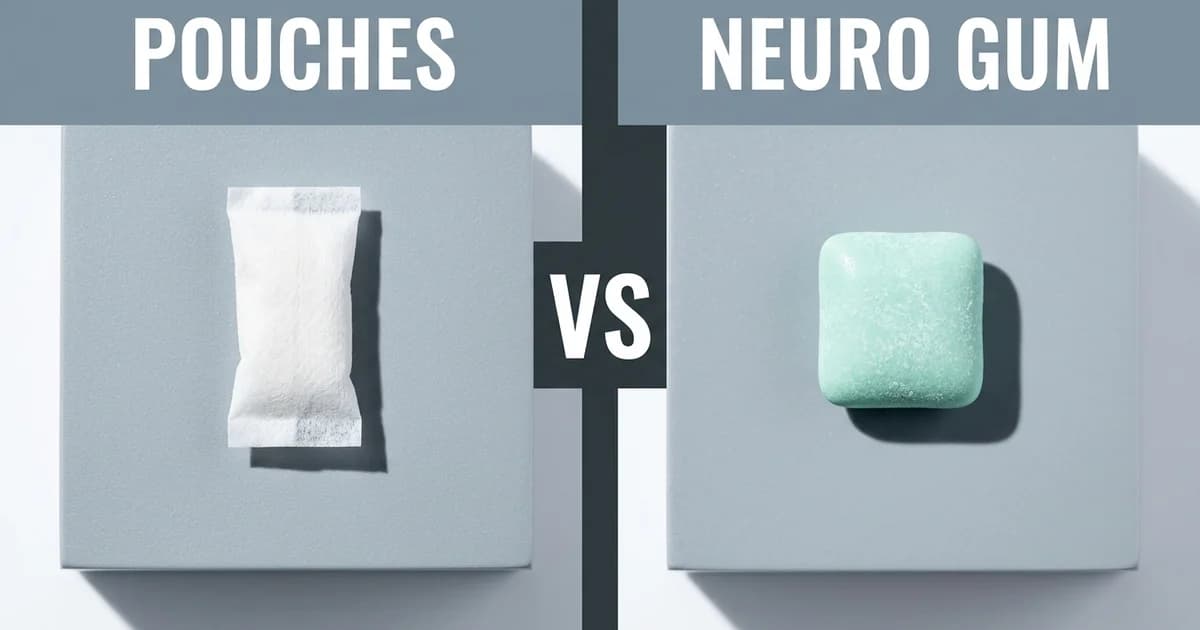
If you're comparing roon vs neuro gum, you're already past the energy drink aisle and looking for something smarter. One is a nootropic gum. The other is a sublingual pouch. Both fit in your pocket. Both promise sharper focus without the coffee jitters. So which one actually delivers?
The roon vs neuro gum comparison comes down to more than brand preference. It's a question of ingredients, delivery method, duration, and what happens to your brain three hours after you dose. Let's break both products apart and see what the science says.
Key Takeaways:
- Neuro Gum uses caffeine and L-theanine in a chewable format; Roon uses a four-compound nootropic stack in a sublingual pouch.
- Gum delivers caffeine faster than a pill or drink, but a sublingual pouch may offer even more direct absorption, making the nootropic gum vs pouch debate worth examining closely.
- Neuro Gum's formula lacks compounds that address tolerance buildup and sustained duration.
- The ratio of L-theanine to caffeine matters for focus quality, and the two products handle it differently.
What Is Neuro Gum?
Neuro Gum is a functional chewing gum built around a simple nootropic formula. Each piece contains 40mg of natural caffeine derived from green coffee beans, paired with L-theanine. According to BodySpec's review of NeuroGum, the standard gum delivers 40mg caffeine and 60mg L-theanine per piece, plus vitamins B6 (about 41% DV) and B12 (about 100% DV).
The brand positions itself as a fast-acting alternative to coffee or energy drinks. It's sugar-free, vegan, and available in several mint flavors. On neurogum.com the cheapest gum listing is a 54-piece pack at $24.99. You can find it at grocery stores, Amazon, and the Neuro Gum website.
Neuro also makes an Extra Strength version with 100mg of caffeine per piece for people who want a heavier hit.
Neuro Gum's Ingredient Profile
The formula is straightforward:
| Ingredient | Amount Per Piece | Role |
|---|---|---|
| Natural Caffeine | 40mg | Stimulant, alertness |
| L-Theanine | 60mg | Calming amino acid, smooths caffeine edge |
| Vitamin B6 | ~41% DV | Neurotransmitter production |
| Vitamin B12 | ~100% DV | Energy metabolism, DNA synthesis |
This is a clean, minimal stack. Caffeine plus L-theanine is one of the most studied nootropic pairings in existence. A 2008 study published in Nutritional Neuroscience found that L-theanine and caffeine together improved both speed and accuracy on attention-switching tasks and reduced susceptibility to distracting information.
The B vitamins are a nice addition, though at these doses they function more as general nutritional support than acute cognitive enhancers. Understanding this ingredient profile is essential before weighing roon vs neuro gum for your own needs.
Where Neuro Gum Delivers
Credit where it's due. Neuro Gum does several things well.
Speed of absorption. Chewing gum releases active ingredients through the buccal mucosa (the lining of your cheeks), which means caffeine hits your bloodstream faster than swallowing a capsule or drinking coffee. A study published in the International Journal of Pharmaceutics found that the rate of caffeine absorption from a gum formulation was faster than from capsules, likely due to absorption through the buccal mucosa.
Portability. A pack of gum is about as discreet and portable as it gets. No water needed, no brewing, no cans to recycle.
Low commitment. At 40mg of caffeine per piece, you can titrate your dose easily. One piece for a light lift, two for something closer to a cup of coffee.
What Is Roon?
Roon is a zero-nicotine sublingual pouch designed for sustained cognitive performance. Instead of chewing, you place it between your lip and gum and let the active compounds absorb directly through the oral mucosa. This is the core distinction in the nootropic gum vs pouch format debate.
The formula is a four-ingredient stack:
| Ingredient | Amount | Role |
|---|---|---|
| Caffeine | 80mg | Stimulant, alertness |
| L-Theanine | Clinical dose | Calming focus, smooths caffeine |
| Theacrine (TeaCrine®) | Included in stack | Extended energy, no tolerance buildup |
| Methylliberine (Dynamine®) | Included in stack | Fast-onset focus and mood support |
The key difference in roon vs neuro gum isn't just the delivery method. It's the formula depth. Roon adds two compounds, theacrine and methylliberine, that Neuro Gum doesn't include.
Roon vs Neuro Gum: The Head-to-Head Comparison
Here's where the nootropic gum vs pouch debate gets specific.
Delivery Method: Chewing vs Sublingual
Both products bypass the traditional digestive route to some degree. Gum releases compounds through chewing, and some caffeine absorbs through the cheek lining. A sublingual pouch sits against the gum tissue, delivering compounds through one of the most vascular areas in your mouth.
As noted by MedXDrg, both buccal and sublingual absorption offer a fast route to the bloodstream by bypassing the digestive system. The practical difference in the roon vs neuro gum matchup: a pouch delivers a steady release over the time it sits in your mouth, while gum absorption depends on chewing intensity and duration. If you chew aggressively for two minutes and then park the gum, you've front-loaded your dose. A pouch gives you a more controlled, passive release.
The Caffeine Question
Neuro Gum uses 40mg of caffeine per piece, roughly half a cup of coffee. Roon uses 80mg per pouch, comparable to a full cup of coffee. But Roon's advantage isn't the caffeine dose alone: L-theanine smooths the stimulation, while methylliberine and theacrine extend it to 6-8 hours of sustained focus with no jitters, no crash, and no tolerance buildup. For most people, either dose provides alertness without the shaky hands and racing heartbeat that come with 200mg+ energy drinks.
The real question in any roon vs neuro gum evaluation isn't how much caffeine, but what else is working alongside it.
L-Theanine Ratios: This Matters More Than You Think
Neuro Gum contains 60mg of L-theanine per piece alongside 40mg of caffeine. That's a 1.5:1 ratio of L-theanine to caffeine.
According to Cadence, research suggests that a 2:1 ratio of L-theanine to caffeine is effective for optimizing cognitive function and sustained energy. A 2010 study published in Nutritional Neuroscience using 97mg of L-theanine with 40mg of caffeine found improvements in cognitive performance, alertness, and mood in young adults.
Neuro Gum's 60mg of L-theanine isn't bad. But it falls short of the doses used in clinical research showing the strongest effects. To reach a 2:1 ratio with 40mg of caffeine, you'd need 80mg of L-theanine. Neuro Gum gives you 75% of that.
Roon includes L-theanine as part of its stack. Combined with the other active compounds, the formula is designed to provide the calming, focused state that L-theanine is known for, without relying on L-theanine alone to do all the heavy lifting. This is one of the clearest advantages in the roon vs neuro gum comparison.
Duration: The Three-Hour Wall
Here's where the roon vs neuro gum comparison shifts decisively. Caffeine has a half-life of about 5 hours, but its perceived effects peak within 30-60 minutes and taper after 2-3 hours for most people. A single piece of Neuro Gum gives you a window of maybe 1-2 hours of noticeable focus before the effect fades.
Roon's formula addresses this with theacrine and methylliberine, two compounds with different pharmacokinetic profiles than caffeine.
A 2022 study in the Journal of the International Society of Sports Nutrition found that co-ingestion of caffeine, methylliberine, and theacrine can improve cognitive performance over a longer period compared to caffeine alone.
Theacrine has a longer onset but a more sustained curve. Methylliberine kicks in faster but complements caffeine's peak. Together, they extend the useful window of focus from the typical 1-2 hours to something closer to 6-8 hours. This duration gap is one of the most important factors when weighing roon vs neuro gum for real-world use.
What's Missing from Both Products
No product is perfect. Here's an honest look at the gaps on both sides of the roon vs neuro gum equation.
What Neuro Gum Lacks
No tolerance-mitigation compounds. This is the biggest gap. Caffeine tolerance builds fast. If you chew Neuro Gum daily, you'll need more pieces to get the same effect within a week or two. According to Compound Solutions, research on TeaCrine® (theacrine) shows that even after consuming 300mg daily for 8 weeks, individuals demonstrated no signs of tolerance buildup or habituation. Neuro Gum doesn't include theacrine or any similar compound.
No extended-duration ingredients. The caffeine + L-theanine stack is well-studied but short-lived. There's nothing in the formula to extend the focus window beyond what caffeine alone provides.
Sub-clinical L-theanine dose. At 60mg per piece, you're getting less than what most positive clinical trials used. You'd need to chew two pieces to approach the doses studied in research, which doubles your caffeine intake to 80mg.
B vitamins aren't acute nootropics. Vitamins B6 and B12 support long-term neurological health, but they don't produce a noticeable cognitive effect in the moment. They pad the label without adding to the immediate experience.
What Roon Lacks
Less mainstream availability. Neuro Gum is in Walmart, grocery stores, and Amazon. Roon is available through its website, which means less impulse-buy accessibility. For anyone researching roon vs neuro gum, this is a practical consideration.
The pouch format isn't for everyone, and anyone curious about pouch vs capsule nootropics will find that format preference plays a real role in daily adherence. Some people find sublingual pouches unfamiliar or uncomfortable at first. Chewing gum is second nature for most adults. The nootropic gum vs pouch preference often comes down to personal comfort.
No B vitamin bonus. Roon focuses on its four-compound nootropic stack and doesn't include supplemental vitamins. Whether this matters depends on your diet and existing supplementation.
The Full Comparison Table
| Feature | Neuro Gum | Roon |
|---|---|---|
| Format | Chewing gum | Sublingual pouch |
| Caffeine | 40mg per piece | 80mg per pouch |
| L-Theanine | 60mg per piece | Included (clinical dose) |
| Theacrine | ❌ Not included | ✅ Included |
| Methylliberine | ❌ Not included | ✅ Included |
| B Vitamins | ✅ B6 + B12 | ❌ Not included |
| Nicotine | Zero | Zero |
| Sugar | Zero | Zero |
| Duration of Effect | ~1-2 hours | ~6-8 hours |
| Tolerance Buildup | Yes (caffeine-driven) | Designed to minimize |
| Delivery | Buccal (chewing) | Sublingual (passive) |
| Retail Availability | Wide (Amazon, Walmart, grocery) | Online (takeroon.com) |
| Price Per Pack | $24.99 / 54 pieces | Available at takeroon.com |
How Roon Addresses the Gaps in the Roon vs Neuro Gum Debate
The neuro gum vs roon comparison isn't just about how the product sits in your mouth. It's about what's inside.
Roon was built around a specific problem: caffeine alone isn't enough for sustained cognitive work, and most nootropic products stop at caffeine + L-theanine as if that's the finish line, a pattern visible in any nootropic pouch comparison. It isn't.
By including theacrine, Roon adds a compound that extends the duration of focus without increasing caffeine content. According to Compound Solutions, TeaCrine® delivers clean, long-lasting energy and enhanced mental focus without the crash, jitters, or habituation associated with caffeine.
By including methylliberine, Roon fills the onset gap. A study published in Cureus found that a combination of caffeine, theacrine, and methylliberine improved speed, accuracy, and cognitive abilities compared to both placebo and caffeine alone.
The sublingual delivery method means you aren't depending on chewing mechanics to release the compounds. You place the pouch, and it works passively while you focus on whatever you're actually doing. That passive, consistent absorption is what separates the roon vs neuro gum experience in practice.
The Bottom Line on Roon vs Neuro Gum
Neuro Gum is a solid entry point into functional nootropics, and Neuro Gum user reviews reflect its broad appeal among people switching from coffee. The caffeine + L-theanine combination is well-researched, the gum format is familiar, and the price is accessible. If you want something better than coffee that fits in your pocket, it works.
But if you've hit the ceiling on caffeine-only products, if you've noticed that your second week of daily use doesn't feel like your first, or if you need focus that lasts through a full afternoon rather than a single meeting, the formula matters more than the format. That's where the roon vs neuro gum decision becomes clear.
Roon was designed for exactly that scenario. Four active compounds instead of two. Sublingual delivery for consistent absorption. And a stack specifically chosen to address the tolerance and duration problems that simpler formulas leave on the table. Anyone seriously evaluating neuro gum vs roon will find the deeper formula hard to ignore.
Try it and feel the difference yourself at takeroon.com.
Frequently Asked Questions
What is the main difference between Roon and Neuro Gum?
The main difference is format and formula depth. Neuro Gum is a chewable gum delivering 40mg caffeine and 60mg L-theanine per piece, plus B6 and B12. Roon is a zero-nicotine sublingual pouch with a four-compound stack: 80mg caffeine, 60mg L-theanine, 25mg methylliberine (Dynamine), and 5mg theacrine (TeaCrine). Neuro Gum keeps things simple and familiar; Roon adds two extended-action compounds and uses passive sublingual absorption instead of chewing.
Does Roon contain nicotine?
No. Roon is a zero-nicotine sublingual pouch. It places a cognitive-performance stack against the gum tissue and contains no nicotine and no tobacco, which sets it apart from traditional pouches people associate with nicotine. Neuro Gum is also nicotine-free. Both products give you a pocketable focus option without nicotine.
How much caffeine does each product contain?
Roon contains 80mg of caffeine per pouch, roughly a cup of coffee. Standard Neuro Gum contains 40mg of caffeine per piece, with a 100mg Extra Strength version available. Beyond the caffeine number, Roon pairs its 80mg with 60mg L-theanine plus methylliberine and theacrine, so the caffeine works alongside three other compounds rather than on its own.
What are methylliberine and theacrine?
Methylliberine (branded Dynamine) and theacrine (branded TeaCrine) are purine alkaloids related to caffeine, and they are the two compounds Roon includes that Neuro Gum does not. In a 2016 study in the Journal of the International Society of Sports Nutrition, participants took up to 300mg of TeaCrine daily for eight weeks with no signs of habituation, meaning the body did not adapt the way it commonly does to caffeine alone.
Is the caffeine and L-theanine combination backed by research?
Yes. Caffeine paired with L-theanine is one of the most studied focus combinations. A 2021 systematic review in Cureus concluded that the pairing is likely a safe and effective cognitive enhancer, with reported benefits across attention, alertness, and reduced fatigue. Both Neuro Gum and Roon use this pairing; Roon builds on it with two additional compounds.
How long does focus from Roon last compared to Neuro Gum?
A single piece of Neuro Gum tends to provide a noticeable focus window of roughly 1 to 2 hours before caffeine's perceived effects taper. Roon's stack pairs caffeine and L-theanine with methylliberine and theacrine, which the brand designs to extend that window to around 6 to 8 hours of steady focus with no jitters and no crash. Individual results vary with body weight, tolerance, and timing.
Where can I buy Roon?
Roon is sold directly through its product page rather than in grocery stores. Neuro Gum has wider retail availability, including Amazon and Walmart. If you prefer a deeper four-compound stack in a sublingual pouch and don't mind ordering online, Roon ships direct to you.
By Roon Team