Ozempic Brain Fog: Why Focus Drops on GLP-1s and What the Science Says

Ozempic Brain Fog: Why Focus Drops on GLP-1s and What the Science Says
"Ozempic brain fog" is not a labeled side effect. The words "brain fog," "memory," "concentration," and "cognition" appear nowhere in Ozempic's FDA-approved prescribing information. The only nervous-system-adjacent adverse reactions listed are dizziness and dysgeusia (altered taste).
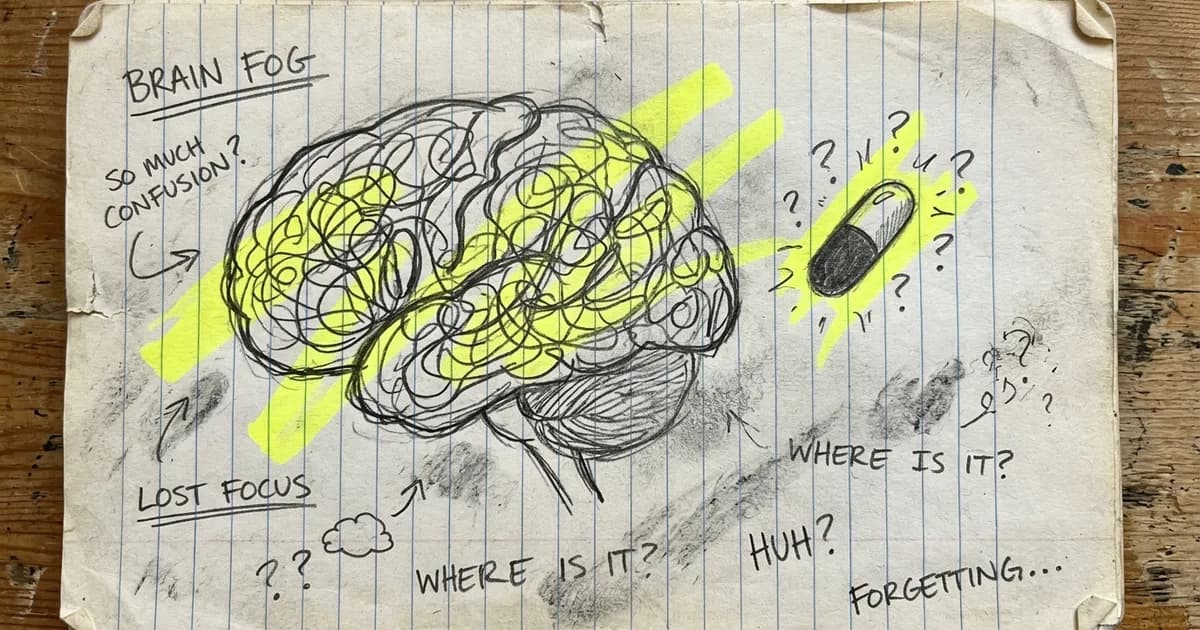
That does not mean the experience is invented. Thousands of patients on semaglutide, tirzepatide, and other GLP-1 receptor agonists describe real cognitive symptoms: slowed processing, forgetfulness, a feeling some call "zombie mode." Two separate bodies of research exist, they point in different directions, and they are not contradictory because they measure different things over different timescales.
Key Takeaways
- Brain fog is not in the Ozempic label. No clinical trial for semaglutide or tirzepatide has measured it as an endpoint.
- Short-term fog is plausible from hypoglycemia, dehydration, caloric restriction, and micronutrient depletion, the same mechanisms behind GLP-1 fatigue, just presenting as mental rather than physical.
- Long-term population data trends the other way. Retrospective studies in type 2 diabetes associate GLP-1 use with lower dementia diagnoses, but the EVOKE randomized trial failed to confirm a cognitive benefit in early Alzheimer's.
- The practical fixes are nutritional and medical. Check B12, iron, vitamin D. Eat enough protein. Hydrate. Talk to your prescriber.
What the Ozempic Label Does and Doesn't Say About Cognition
"Not labeled" does not mean "not real." It means no controlled trial measured it. Brain fog is subjective and hard to capture in a standardized adverse-event questionnaire. Ozempic's trials were designed to measure HbA1c reduction, cardiovascular outcomes, and weight change, not whether participants felt sharp at 2 p.m.
Two Bodies of Research, Not One
| Short-term cognitive complaints | Long-term dementia association | |
|---|---|---|
| What it measures | Self-reported fog, forgetfulness, slowed thinking | Dementia diagnosis rates over years |
| Population | Anyone on a GLP-1, any age | Primarily type 2 diabetes patients aged 65+ |
| Direction | Negative (cognitive symptoms increase) | Positive (dementia diagnoses decrease) |
| Study type | Patient reports, forums, surveys | Retrospective cohorts, one failed RCT |
| Mechanism | Hypoglycemia, undereating, nutrient gaps | Neuroinflammation reduction, insulin signaling |
| Strength of evidence | Weak (no controlled trial) | Moderate (observational) to weak (interventional) |
These findings are not contradictory. Feeling foggy for eight weeks after starting a drug that halves your calorie intake is a different phenomenon from a population-level reduction in dementia diagnoses over five years. Treating them as one conversation causes confusion in both directions.
The Mechanisms Behind Short-Term Fog
Four plausible drivers explain the cognitive complaints GLP-1 users report. None require a direct central-nervous-system drug effect.
Caloric restriction itself impairs cognition
A randomized, double-blind, placebo-controlled study found that two days of calorie deprivation impaired accuracy on task-switching and response-inhibition tests in healthy adults performing aerobic exercise, suggesting caloric restriction compounds cognitive strain under physical or mental load. GLP-1s suppress appetite powerfully. Many users drop to 800 to 1,200 calories per day without intending to. That deficit alone is enough to produce fog-like symptoms.
Delayed gastric emptying changes glucose delivery
Semaglutide slows gastric emptying per its own FDA label. That reduces post-meal glucose spikes, which is the point. But slower glucose delivery to the brain during periods of already-low intake can mimic mild hypoglycemia: confusion, difficulty concentrating, feeling "stoned."
Micronutrient depletion compounds the problem
A retrospective study of 461,328 GLP-1 users found over 22% developed at least one nutritional deficiency within 12 months. Vitamin D deficiency was the most common, reaching 13.6% at 12 months. GLP-1 users also showed 26% to 30% lower ferritin versus other diabetes medications. A 2026 Harvard Health review confirmed this pattern across vitamin D, iron, and B vitamins.
B12, iron, and vitamin D all play documented roles in cognitive function. Deficiency in any one can produce symptoms indistinguishable from "brain fog." See the nutrient deficiencies behind brain fog and B12 status and cognitive symptoms.
Sleep disruption from GI symptoms
Nausea, reflux, and disrupted digestion are the most common GLP-1 side effects. When they hit at night, sleep quality suffers. Poor sleep produces cognitive symptoms nearly identical to brain fog: slowed reaction time, impaired working memory, difficulty with word retrieval. Often the easiest driver to fix with dosing timing and GI management.
What the Long-Term Cognition Research Actually Shows
Population studies in type 2 diabetes paint a different picture. A large retrospective cohort using records from healthcare organizations worldwide found GLP-1 use associated with 42% lower dementia risk versus DPP-4 inhibitors (HR 0.58, 95% CI 0.55 to 0.61). A separate study comparing GLP-1s to metformin found lower overall dementia incidence (adjusted HR 0.90) and nonvascular dementias (adjusted HR 0.75).
These are observational findings. They show association, not causation.
The first real test was supposed to settle things. The EVOKE and EVOKE+ trials enrolled approximately 1,840 participants with early-stage Alzheimer's to test whether oral semaglutide could slow cognitive decline. In November 2025, Novo Nordisk announced both trials failed their primary endpoints. Semaglutide did not outperform placebo in delaying disease progression, despite improving Alzheimer's-related biomarkers.
A 2026 systematic review of systematic reviews noted that efficacy on cognitive domains requires replication in larger controlled trials. The evidence is genuinely mixed. This is not a green light to expect a cognitive benefit from your Ozempic prescription.
The Reddit and TikTok Version
Patient forums are full of vivid descriptions: "zombie state," "groggy and forgetful," "feels like being stoned all day." These are self-reported and uncontrolled, but consistent with the known mechanisms. Drastically cut calories, lose iron and B12 stores, sleep poorly from nausea, and alter your glucose delivery curve, and you will feel mentally slower. No novel drug-brain interaction required.
Most users describe onset in the first weeks of treatment or after a dose increase, resolving within one to three months as eating stabilizes. Fog persisting beyond three months warrants investigation.
What Actually Helps Day to Day
Before reaching for any supplement, start with what the evidence supports.
Eat enough protein. GLP-1 users who undershoot protein lose muscle mass faster and report more fatigue and fog. Aim for 1.2 to 1.6 g/kg of body weight per day, even if total calories are lower.
Hydrate deliberately. Less food means less water from food. Many GLP-1 users are mildly dehydrated without knowing it. See dehydration's effect on thinking clearly.
Get labs done. Ask your prescriber to check B12, ferritin, and vitamin D, ideally before starting a GLP-1 and again at 6 and 12 months. A deficiency caught early is one you correct before it becomes a cognitive problem.
Protect your sleep. If GI symptoms disrupt your nights, discuss dosing timing or a slower titration schedule with your doctor.
Talk to your prescriber if fog persists beyond two to three months, worsens with dose increases, or comes with symptoms beyond forgetfulness (vision changes, numbness, severe headaches). These warrant clinical evaluation, not a Google search.
Caffeine provides general alertness support during reduced caloric intake. It is not a treatment for a medical symptom. For a deeper look at how caffeine interacts with brain fog, that article covers the mechanism honestly. If you are struggling with waking up mentally sharp instead of groggy, the morning protocol matters more than any single ingredient.
Conclusion: The Fog Is Real, the Label Gap Is Also Real
Ozempic brain fog is not a clinically validated side effect. It likely reflects a cluster of nutritional, metabolic, and sleep-related consequences of rapid caloric restriction, not a direct drug effect on your neurons. The long-term cognition data is interesting but preliminary, and the largest controlled trial to date failed.
If you are experiencing cognitive symptoms on a GLP-1, the right move is a conversation with your prescriber about labs, protein intake, and whether your dose titration is moving too fast. A blood draw and an honest conversation about what you are actually eating.
Frequently Asked Questions
Does Ozempic affect memory?
Ozempic's FDA label does not list memory problems, and no clinical trial has measured memory as an endpoint. Some users report forgetfulness, but this likely stems from caloric restriction, dehydration, or micronutrient depletion. If memory changes persist, get B12, iron, and vitamin D checked.
Can GLP-1s help with ADHD focus?
No GLP-1 receptor agonist is approved or studied for ADHD. Population-level dementia data in type 2 diabetes patients does not translate to focus benefits in younger or ADHD populations. No one should start or continue a GLP-1 for cognitive reasons without guidance from their prescriber.
Is there a link between Ozempic and dementia risk?
Retrospective studies in type 2 diabetes patients associate GLP-1 use with lower dementia rates, with one study reporting 42% lower risk versus DPP-4 inhibitors. But the EVOKE randomized trials failed their primary endpoints in 2025. The association exists; causal proof does not.
Does tirzepatide cause brain fog too?
Tirzepatide (Mounjaro, Zepbound) shares the GLP-1 mechanism and adds GIP receptor activation. The same caloric-restriction, dehydration, and nutrient depletion pathways apply. Tirzepatide's label does not list brain fog either. Self-reported cognitive complaints appear in patient forums at similar rates.
How long does Ozempic brain fog last?
Most users describe symptoms appearing in the first weeks of treatment or after dose increases, resolving within one to three months as caloric intake stabilizes. Fog persisting beyond three months warrants lab work for nutrient deficiencies and a prescriber conversation about dose adjustment.
Should I stop Ozempic if I have brain fog?
Never stop a prescribed medication without consulting your prescriber. Cognitive symptoms have identifiable, correctable causes in most cases: low protein intake, dehydration, B12 or iron deficiency, disrupted sleep. Address those first. Your prescriber may recommend a slower titration schedule.
Do GLP-1 cognitive side effects get worse over time?
Self-reported fog tends to be worst during dose escalation and the period of most rapid caloric reduction, then improves. Nutritional deficiency rates do rise over 12 months of GLP-1 use, which is why periodic lab monitoring matters even after the subjective fog clears.
Can caffeine help with GLP-1 brain fog?
Caffeine is a general alertness aid, not a treatment for a medical symptom. It can partially offset the subjective sluggishness of caloric restriction. It does not fix a B12 deficiency or reverse dehydration. See the physical-fatigue side of GLP-1s and semaglutide's fatigue picture, drug by drug for the broader energy picture.
A Focus Tool for the Caloric-Deficit Fog, Not a Fix for It
If you have read this far, you know two things: the cognitive symptoms are real, and the fixes start with food, hydration, labs, and your prescriber. No supplement replaces those.
That said, the sluggishness of a caloric deficit is a specific problem, and caffeine helps with it. Roon is a zero-nicotine, zero-sugar, zero-calorie sublingual pouch. Users report a felt window of 6 to 8 hours. (Note: PK research on methylliberine used 100 mg methylliberine + 150 mg caffeine; Roon contains 25 mg + 80 mg. Individual response may vary.) Because it is a pouch and not a drink, it adds nothing to your caloric intake.
Roon is not a treatment for Ozempic brain fog. It does not correct nutrient deficiencies or address the metabolic shifts a GLP-1 creates. What it does is provide an extended caffeine window for the hours when you need to think clearly, from as little as $0.61 per pouch. It contains sucralose and 80 mg of caffeine that builds tolerance like any caffeine source. Stop at least 8 hours before bed. Fix the foundation first.
Related from Roon
- How caffeine interacts with brain fog
- The nutrient deficiencies behind brain fog
- Dehydration's effect on thinking clearly
- B12 status and cognitive symptoms
Written by Roon Team