L-Theanine While Breastfeeding: What the Science Actually Says
Roon Team
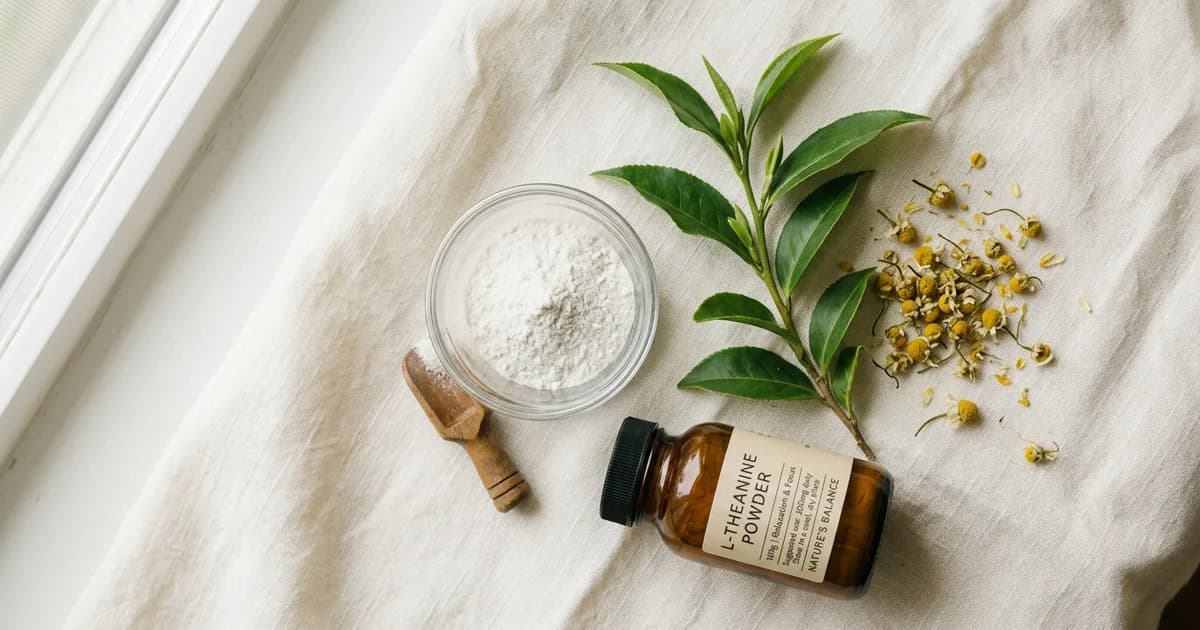
L-Theanine While Breastfeeding: What the Science Actually Says
You just had a baby. You're running on broken sleep, your stress hormones are through the roof, and someone on a mom forum told you L-theanine might help you feel calmer without the side effects of prescription medication. But now you're staring at the bottle wondering: is l theanine while breastfeeding actually safe?
It's a fair question. And the honest answer is more nuanced than most wellness blogs will tell you.
Here's what we know, what we don't know, and how to make an informed decision with your doctor.
Key Takeaways
- L-theanine is a naturally occurring amino acid found in green and black tea, consumed safely by millions of people daily.
- No human studies have directly measured l theanine while breastfeeding transfer into breast milk from supplemental doses.
- The NIH's LactMed database considers amounts from green tea "likely acceptable" during nursing but advises caution with high-dose supplements.
- L-theanine has a short half-life (roughly 1 hour), meaning it clears from your system relatively fast.
- Always consult your healthcare provider before taking l theanine while breastfeeding or adding any supplement to your routine.
What Is L-Theanine, Exactly?
L-theanine (technically N-ethyl-L-glutamine) is an amino acid found almost exclusively in the tea plant, Camellia sinensis. It's the reason green tea makes you feel alert but calm, instead of wired and jittery like coffee sometimes does.
A typical cup of green tea contains roughly 20 to 60 mg of L-theanine, depending on the variety and how it was brewed. Matcha tends to sit at the higher end of that range because you're consuming the whole leaf.
At the molecular level, L-theanine crosses the blood-brain barrier and influences several neurotransmitter systems. Animal neurochemistry studies show that it increases brain levels of serotonin, dopamine, and GABA, three chemicals directly involved in mood regulation and relaxation. L-theanine also promotes alpha brain wave activity, the same pattern your brain produces during meditation or focused calm.
The FDA has granted L-theanine GRAS (Generally Recognized as Safe) status at doses up to 250 mg per serving. That's worth knowing, but GRAS status applies to the general adult population. It doesn't specifically address l theanine while breastfeeding.
L-Theanine While Breastfeeding: What Does the Research Say?
This is where things get thin. And being honest about that matters more than giving you false confidence.
The LactMed Entry
The most authoritative source on drug safety during lactation is LactMed, a database maintained by the National Institutes of Health. Their entry on theanine is short, and that brevity tells you something.
Here's the key finding: no information is available on l theanine while breastfeeding from direct clinical study. The database notes that amounts found in green tea are "likely acceptable during nursing," but that high-dose supplements are "not necessarily safe for the breastfed infant."
LactMed also flags that L-theanine has a half-life of about 1 hour, which means it should be mostly cleared from breast milk within 3 to 5 hours after ingestion. And they add a specific caution: it is "probably best to avoid using l theanine while breastfeeding a newborn or preterm infant."
Why the Data Gap Exists
Studying supplements in breastfeeding mothers is ethically complicated. You can't run a randomized controlled trial that intentionally exposes infants to unknown risks. So researchers rely on observational data, case reports, and pharmacokinetic modeling. For l theanine while breastfeeding specifically, none of those have been published for lactating women.
The LactMed entry on green tea confirms this directly: "The excretion of l-theanine into breastmilk has not been studied."
That doesn't mean l theanine while breastfeeding is dangerous. It means nobody has formally measured it yet.
What We Can Infer
Here's where reasonable inference comes in. Billions of cups of green tea are consumed annually by breastfeeding mothers around the world, particularly in East Asia. Green tea contains L-theanine naturally. No pattern of adverse effects in breastfed infants has been linked to maternal tea consumption.
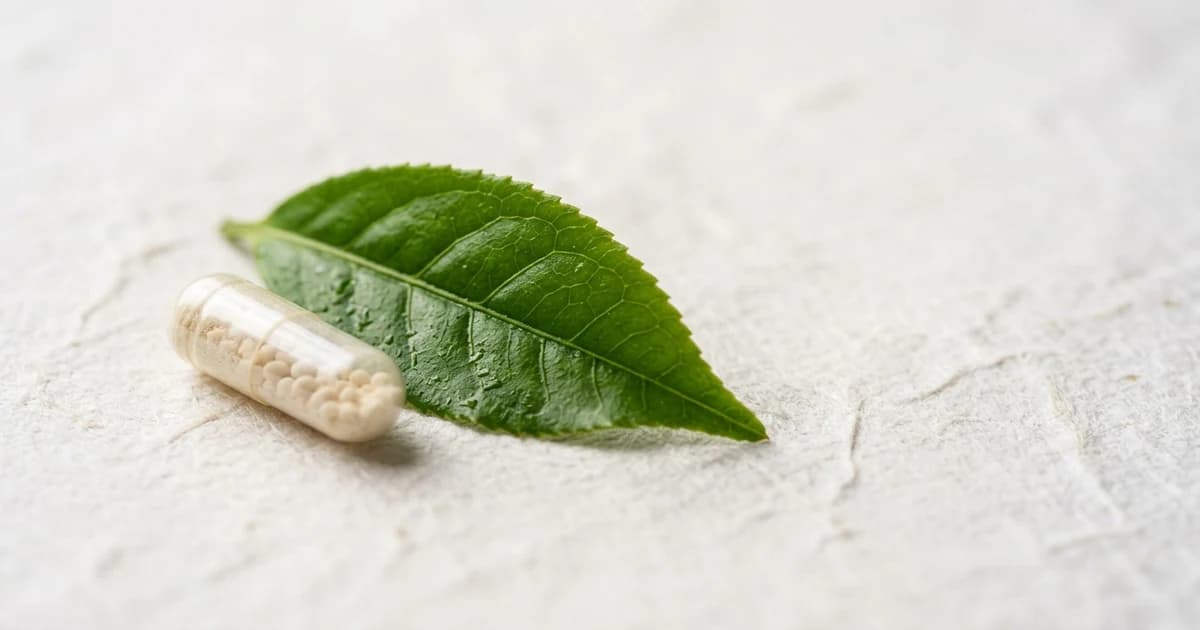
The gap in evidence is specifically about supplemental doses, which typically range from 100 to 400 mg. That's 2 to 20 times the amount in a single cup of tea. Dose matters.
The Difference Between Tea and L-Theanine Supplements
This distinction is the crux of the safety conversation.
| Green Tea (1 cup) | L-Theanine Supplement | |
|---|---|---|
| L-Theanine dose | 20-60 mg | 100-400 mg |
| Caffeine | 25-50 mg | Usually 0 mg |
| Other compounds | Polyphenols, tannins, catechins | Isolated amino acid |
| LactMed assessment | "Likely acceptable" | "Not necessarily safe" |
Drinking a cup or two of green tea while breastfeeding? Most experts consider that fine. The CDC states that moderate caffeine intake (under 300 mg/day) is generally safe for breastfeeding mothers, and the L-theanine in those cups is a small amount.
Taking a 200 mg L-theanine capsule? That's a different conversation about l theanine while breastfeeding, and one you should have with your OB or pediatrician before starting.
Why New Mothers Are Interested in L-Theanine
The appeal makes sense. Postpartum life is a stress test in every sense of the word. Sleep deprivation, hormonal shifts, the cognitive fog that many mothers describe. These are real physiological experiences, not just "new parent tiredness."
L-theanine has a solid evidence base for stress reduction in the general population. A 2021 randomized, triple-blind, placebo-controlled study found that a single 200 mg dose of L-theanine produced measurable increases in alpha brain wave power, reduced salivary cortisol levels, and lowered self-reported anxiety compared to placebo.
A 2025 systematic review published in Nutritional Neuroscience concluded that supplementation with 200 to 450 mg per day of L-theanine "appears to be a safe and effective way to support healthy sleep in adults." Sleep quality is, of course, one of the biggest concerns for new parents.
These are promising findings. But they were conducted in general adult populations, not in mothers using l theanine while breastfeeding.
Practical Guidelines If You're Considering L-Theanine While Breastfeeding
Based on the available evidence, here's a framework for thinking about this decision. This is not medical advice. It's a summary of what the current science suggests.
1. Talk to Your Doctor First
This isn't a throwaway disclaimer. Your healthcare provider knows your medical history, your baby's health status, and whether l theanine while breastfeeding could interact with anything else you're taking. InfantRisk, a resource founded by pharmacology researcher Dr. Thomas Hale, notes that there is "no evidence one way or the other about safety of L-Theanine" during breastfeeding and advises against combining it with antihypertensives or stimulant medications.
2. Consider the Source
Getting L-theanine from a few cups of green tea is a very different risk profile than taking a concentrated supplement. If you're looking for a gentle introduction, tea is the most studied delivery method.
3. Mind the Timing
With a half-life of roughly 1 hour, L-theanine should be mostly cleared from your system within 3 to 5 hours. If you do use l theanine while breastfeeding (with your doctor's approval), timing your dose right after a feeding session gives the longest possible window before the next one.
4. Avoid It with Newborns and Preterm Infants
LactMed's caution here is specific and worth taking seriously. Newborns and preterm infants have immature metabolic systems. Their ability to process any compound transferred through breast milk is limited compared to older infants.
5. Start Low
If your doctor clears you for l theanine while breastfeeding, start with the lowest effective dose. Many people notice effects from as little as 50 to 100 mg, well below the 200 to 400 mg range used in most clinical studies.
What About Other Calming Supplements?
If your provider advises against l theanine while breastfeeding, you might wonder about alternatives. A few quick notes:
- Magnesium: Often recommended during postpartum. Magnesium glycinate in particular has calming properties and is generally considered compatible with breastfeeding. Still, check with your doctor on dosing.
- Ashwagandha: Limited safety data during lactation. Most lactation experts recommend avoiding it.
- CBD: Very limited research on breast milk transfer. Most medical organizations advise against it during breastfeeding.
The recurring theme? The supplement industry moves faster than the research, especially for lactation safety.
The Bottom Line on L-Theanine While Breastfeeding
L-theanine is one of the most well-studied amino acids in the nootropic space. In the general population, it has a strong safety profile, meaningful effects on stress and focus, and FDA GRAS status. But the specific question of l theanine while breastfeeding remains unanswered by direct clinical evidence.
The most responsible position: green tea amounts appear safe. Supplemental doses require a conversation with your healthcare provider. And if you're nursing a newborn or preterm infant, caution is warranted.
Your brain and your baby both matter. Getting the right information is the first step toward taking care of both.
Once you're past the breastfeeding stage and ready to bring L-theanine back into your routine, Roon makes it simple. Each sublingual pouch pairs L-theanine with caffeine, theacrine, and methylliberine for 6 to 8 hours of clean, sustained focus with no jitters and no crash. Zero nicotine. Just a smarter way to stay sharp when the demands of parenthood (and everything else) don't let up.