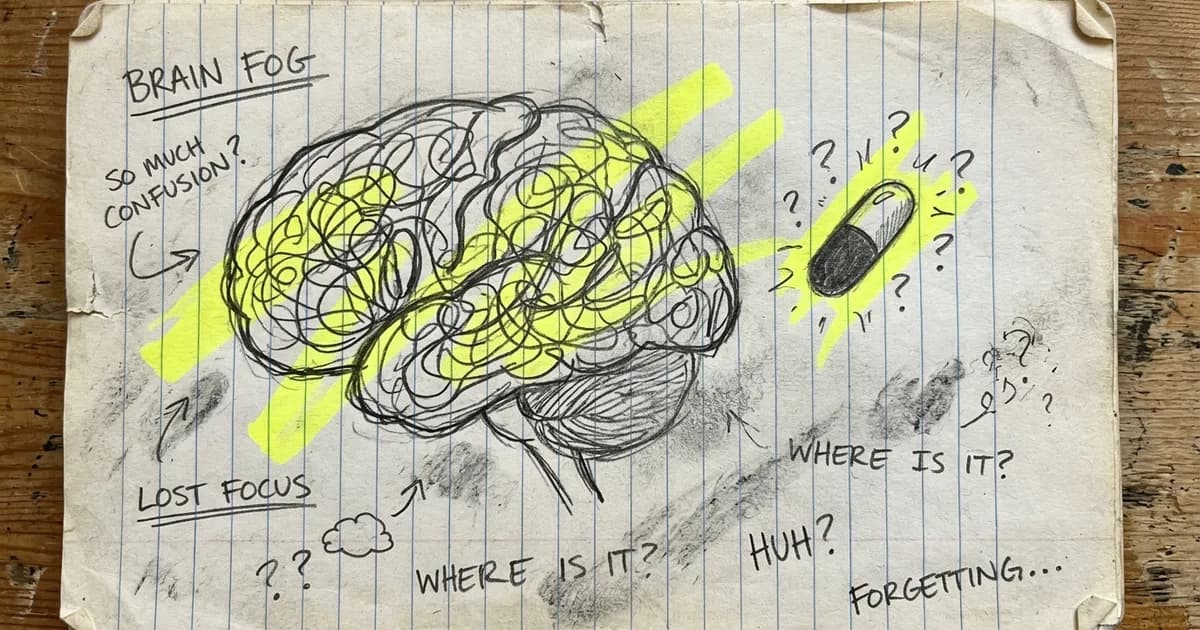
Why Do I Crave Sugar When I'm Tired? The Sleep Science
Why Do I Crave Sugar When I'm Tired? The Sleep Science
You crave sugar when you're tired because sleep loss rewires your brain's food decisions. Short sleep dials up the reward response to high-calorie food and dials down the frontal regions that pump the brakes. But the fix your brain reaches for doesn't work: a 31-study meta-analysis (1,259 participants) found carbohydrates left people more fatigued and less alert within an hour. Your tired brain is requesting alertness, and sugar is a poor way to deliver it.
Key Takeaways
- Sleep restriction increases appetite for calorie-dense food alongside hormonal changes (leptin down 18%, ghrelin up 28% in a controlled crossover of 12 men).
- Your endocannabinoid system peaks in the early afternoon; short sleep makes that peak higher and longer, one likely reason the craving hits around 3 p.m.
- No controlled trial supports the idea that a single nutrient deficiency causes sugar cravings in healthy adults.
- If you're hungry, eat protein. If you just ate and still feel flat, the problem is alertness, not fuel.
Why Do I Crave Sugar? The Short List
Four drivers explain most sugar cravings, ranked by evidence strength.
- Short sleep. Even two nights of restricted sleep shift appetite toward calorie-dense, high-carbohydrate food in controlled lab studies. Strongest experimental data; detailed in the next section.
- Stress and cortisol. In 59 premenopausal women, high cortisol reactors ate more calories on stress days and more sweet food across both study days (Epel et al., 2001).
- Long gaps without food. Five or six hours after your last meal, your body wants food. This is just hunger.
- Habit and cue. The 3 p.m. vending-machine run is partly a conditioned loop. Breaking the cue matters more than willpower once the pattern is set.
Most afternoon cravings involve at least two of these at once.
What Sleep Loss Does to Food Choices: The Studies
The controlled trials connecting short sleep to appetite, food preference, and intake:
| Study | Year, Journal | Design and n | Sleep manipulation | What changed |
|---|---|---|---|---|
| Spiegel et al. | 2004, Ann Intern Med | Randomized crossover, n=12 men | 2 nights restricted vs. 2 nights extended | Leptin -18%, ghrelin +28%, hunger +24%, appetite for calorie-dense high-carb foods +33 to 45% |
| Greer et al. | 2013, Nat Commun | Within-subjects fMRI, n=23 | One night total deprivation | Decreased frontal/insular activity, amplified amygdala response, increased desire for high-calorie foods |
| Hanlon et al. | 2016, Sleep | Randomized crossover, n=14 | 4 nights at 4.5 h vs. 8.5 h | Afternoon 2-AG peak amplified; snack intake 993 vs. 612 kcal (trend, P=0.085) |
| Spaeth et al. | 2013, Sleep | Controlled lab, n=225 | 5 nights at 4 h | Extra late-night calories consumed between 10 p.m. and 4 a.m. |
| Al Khatib et al. | 2017, Eur J Clin Nutr | Meta-analysis, 11 studies, n=172 | Partial sleep deprivation | +385 kcal/day (95% CI 252 to 517); higher fat, lower protein, no change in carbohydrate |
| Al Khatib et al. | 2018, Am J Clin Nutr | RCT, n=42 short sleepers | 4-week sleep extension (~21 min added) | Free-sugar intake -9.6 g/day vs. control (P=0.042) |
One honest note: the 2017 meta-analysis found no increase in carbohydrate intake specifically. Sleep loss raises total calories. The sugar-specific signal comes from the sleep-extension trial (Al Khatib 2018), where adding 21 minutes of sleep cut free-sugar intake by nearly 10 grams a day. More on what one short night does to your brain, and the late-night eating from Spaeth 2013 in late-night cravings and the circadian clock.
Why the Craving Hits Around 3 P.M.
Hanlon 2016 measured 2-arachidonoylglycerol (2-AG), an endocannabinoid involved in hedonic eating. 2-AG follows a daily rhythm: it bottoms out during mid-sleep and peaks in the early afternoon. After four nights of 4.5 hours, that afternoon peak was higher and lasted longer. Hunger and appetite rose with it.
Pair this with the post-lunch circadian dip. Low alertness plus a high endocannabinoid signal equals one thing: your brain sends a strong request for something palatable. Sugar is the easiest answer in most offices.
Does Sugar Actually Give You Energy When You're Tired?
No. The Mantantzis et al. meta-analysis (2019, Neuroscience & Biobehavioral Reviews) examined 31 studies, 1,259 participants, and 176 effect sizes. Carbohydrates produced no positive effect on any aspect of mood at any time point. Within the first hour, participants who consumed carbohydrates reported higher fatigue and lower alertness compared to placebo.
The tired brain asks for sugar. Sugar makes the tired brain more tired. We covered whether the sugar high is real in a dedicated piece.
What Deficiency Causes Sugar Cravings?
No controlled trial has established that a single nutrient deficiency causes sugar cravings in healthy adults.
The most-cited study (Docherty et al., 2005) tested 600 mcg/day of chromium picolinate in 113 adults with atypical depression. It missed its primary outcome. Improvements in carbohydrate-craving items were secondary findings in a subgroup of 41 high cravers (65% response vs. 33% on placebo). Participants had diagnosed depression, not a deficiency, and the study did not measure chromium status.
If cravings come with persistent fatigue or unexplained weight changes, see a clinician. But "you crave sugar because you're low in X" is folklore that has outrun the evidence.
Stress, Not Just Sleep
In 59 healthy premenopausal women, those who produced more cortisol in response to a lab stressor ate more total calories on the stress day and more sweet food across both days (Epel et al., 2001).
Limitation: women only, lab stressor. Still, if you're both sleep-deprived and stressed, you're stacking two independent drivers that converge at the same vending machine.
What to Do When You're Tired and Craving Sugar
- Ask: hungry or tired? If it has been four or more hours since your last meal, eat a real snack with protein and fat. The craving may just be hunger.
- If you just ate, the problem is alertness. Sugar won't solve it (Mantantzis 2019). Try bright light, a 10-minute walk, or caffeine at a sensible time. See ways to handle the 3 p.m. crash at work.
- Protect tonight's sleep. Al Khatib 2018: extending sleep by about 21 minutes per night reduced free-sugar intake by 9.6 g/day. Better sleep is the upstream fix.
- Time your caffeine earlier, not later. Push it too late and you create the next morning's short sleep. More in how much caffeine after a short night.
- Constant cravings plus exhaustion? See a clinician. Persistent fatigue paired with constant sugar cravings can signal conditions that deserve a workup, not a supplement.
The Craving Is a Request for Alertness
Sleep loss changes your hormones, your reward circuitry, and your endocannabinoid rhythm, all in the direction of eating more calorie-dense food. The craving feels like a need for fuel. The evidence says it's a need for alertness, and the 31-study meta-analysis confirms sugar doesn't deliver. Sleep when you can, eat when you're actually hungry, and when the problem is focus, treat it as a focus problem.
Frequently Asked Questions
Why do I crave sugar when I'm tired?
Sleep loss increases ghrelin (hunger hormone) by 28% and decreases leptin (satiety hormone) by 18% in a controlled crossover of 12 men (Spiegel et al., 2004). Frontal brain regions that help resist impulses become less active (Greer et al., 2013). Your tired brain gravitates toward the highest-calorie option available.
Why do I crave sugar in the afternoon?
The endocannabinoid 2-AG peaks in the early afternoon. Short sleep amplifies and extends that peak (Hanlon et al., 2016). Combine that with the natural post-lunch alertness dip, and the 2 to 3 p.m. window becomes a common time for sugar cravings.
What deficiency causes sugar cravings?
No controlled trial links a single nutrient deficiency to sugar cravings in healthy adults. The most-cited chromium study (Docherty et al., 2005) involved people with atypical depression, missed its primary outcome, and did not measure deficiency. If fatigue accompanies cravings, see a clinician rather than self-supplementing.
Does lack of sleep make you crave sugar?
Yes. A meta-analysis of 11 studies (n=172) found partial sleep deprivation increased energy intake by 385 kcal/day (Al Khatib et al., 2017). The increase was driven by fat and total calories rather than carbohydrates specifically, but preference studies show a clear tilt toward calorie-dense, high-carbohydrate options.
Does sugar give you energy when you're tired?
No. A meta-analysis of 31 studies (1,259 participants) found no mood benefit from carbohydrates at any time point and reported more fatigue and less alertness within the first hour vs. placebo (Mantantzis et al., 2019).
How do I stop sugar cravings when I'm exhausted?
If you're actually hungry, eat (protein and fat hold you longer). If you just ate, the craving is for alertness: try light exposure, a short walk, or timed caffeine. Longer term, modest sleep extension (about 21 minutes per night) reduced free-sugar intake by 9.6 g/day in a 4-week RCT (Al Khatib et al., 2018). For the brain fog when you quit sugar, that's a separate timeline.
When the Craving Is Really for Focus
The afternoon sugar craving is often a request for alertness that sugar cannot fill. If you've eaten a real meal and still feel flat at 3 p.m., the gap isn't calories. It's focus.
Roon is a zero-sugar oral pouch (it contains sucralose) with 80 mg caffeine and 60 mg L-theanine. A 2025 Nutrition Reviews meta-analysis (50 RCTs reviewed, 15 pooled) found theanine plus caffeine beat placebo on attention-switching accuracy and digit vigilance accuracy, though confidence intervals were wide. Roon also includes 25 mg methylliberine (Dynamine) and 5 mg theacrine (TeaCrine). In a randomized, double-blind crossover PK study (n=12), methylliberine slowed caffeine clearance from 41.9 to 17.1 L/hr and extended its half-life from 7.2 to 15 hours, with no higher peak concentration (study). That study used 100 mg methylliberine and 150 mg caffeine, about 4x Roon's methylliberine and roughly 1.9x the caffeine, so Roon's 6 to 8 hour felt window reflects the same directional mechanism, not the study's exact result.
The trade-off: a longer half-life means you stop at least 8 hours before bed, because tonight's sleep is the real upstream fix for tomorrow's cravings. Roon is not food, does not reduce cravings, and does not replace sleep. It covers the alertness gap. Tins start at $9.16 on subscription. Try Roon for the afternoon focus block.
Related from Roon
- Is the Sugar High Real? What 31 Studies Say About Sugar and Mood
- Sugar Withdrawal Brain Fog: What's Happening and How Long It Lasts
- How to Beat the 3 P.M. Crash at Work Without Another Coffee or a Sugar Hit
- Sleep Deprivation Effects on the Brain
Written by Roon Team