How to Stay Awake in Class: 12 Things That Work When You Can't Leave Your Seat
Roon Team
How to Stay Awake in Class: 12 Things That Work When You Can't Leave Your Seat
You're three slides into a 75-minute lecture and your eyelids are already losing the fight. You can't leave. You can't nap. You need to know how to stay awake in class using only what's available at your desk, right now.
This guide gives you 12 tactics sorted by speed: one you can do in the next 60 seconds, several that keep you alert through the full session, and a few that fix the underlying problem so tomorrow's lecture doesn't feel like a sedation trial.
Key Takeaways
- Start with a 60-second physical reset (cold water, posture change) before trying anything else.
- Chewing gum and handwriting notes are the two best-studied in-seat alertness tools.
- More than 75% of college students sleep under 8 hours on weeknights. In-class tactics are a patch, not a fix.
- Time caffeine 30 to 60 minutes before the lecture for peak effect when you sit down.
Before You Start: Why You're Nodding Off
Falling asleep in class is almost always a sleep-debt problem, not a willpower problem. The Fall 2024 ACHA-NCHA survey of 33,763 college students found that more than 75% reported averaging less than 8 hours of sleep on weeknights. You're not uniquely lazy. You're statistically normal.
The tactics below help you force yourself to stay awake in a boring class on any given day. But if you're nodding off in every lecture, skip ahead to Step 11 first.
| Time needed | Tactic | Evidence level |
|---|---|---|
| 60 seconds | Cold water on face/wrists | Low (anecdotal, plausible mechanism) |
| 60 seconds | Sit up straight, shift posture | Moderate (EEG data on posture and theta activity) |
| Ongoing | Chew gum | Strong (controlled trials) |
| Ongoing | Handwrite notes | Moderate (original finding; replication results were mixed) |
| Ongoing | Isometric holds under the desk | Low-moderate (exercise and arousal literature) |
| Before class | Sit in the front row | Moderate (observational + controlled data) |
| Before class | Time caffeine 30-60 min pre-lecture | Strong (pharmacokinetic consensus) |
Step 1: The 60-Second Reset
If you're reading this mid-lecture, do this first. Stand up briefly if the room allows it. A 2003 study by Caldwell et al. found that standing upright attenuated the theta-wave increases tied to sleep deprivation compared to sitting. Even 30 seconds on your feet shifts your nervous system away from the drowsy end of the dial.
If standing isn't an option, splash cold water on your face and wrists at the next break. Cold facial exposure triggers a mild norepinephrine response via the trigeminal nerve. The controlled evidence is mixed, so treat it as a low-cost tactic rather than a proven intervention.
Step 2: Chew Gum
The easiest in-seat tactic with real data. A 2015 study from Allen and Smith at Cardiff University found that chewing gum reliably increased subjective alertness and improved sustained attention, with the benefit growing larger as the task dragged on. Gum helps most exactly when you need it most: deep into a long lecture. Keep a pack in your bag as standard equipment.
Step 3: Fix Your Posture (Repeatedly)
Slouching signals sleep to your brain. The same Caldwell et al. research showed that more upright body positions reduced the slow-wave EEG patterns marking drowsiness. Sit at the front edge of your chair, plant both feet flat, pull your shoulders back.
Your posture will collapse every 10 to 15 minutes. Set a mental checkpoint: every time the professor changes slides, reset your spine. Staying awake during lecture becomes a recurring micro-task, not a sustained act of will.
Step 4: Isometric Holds Under the Desk
Squeeze your quads for 10 seconds. Release. Press your palms together under the desk for 5 seconds. These silent contractions raise your heart rate slightly and nudge your sympathetic nervous system without drawing attention. Cycle through muscle groups every few minutes.
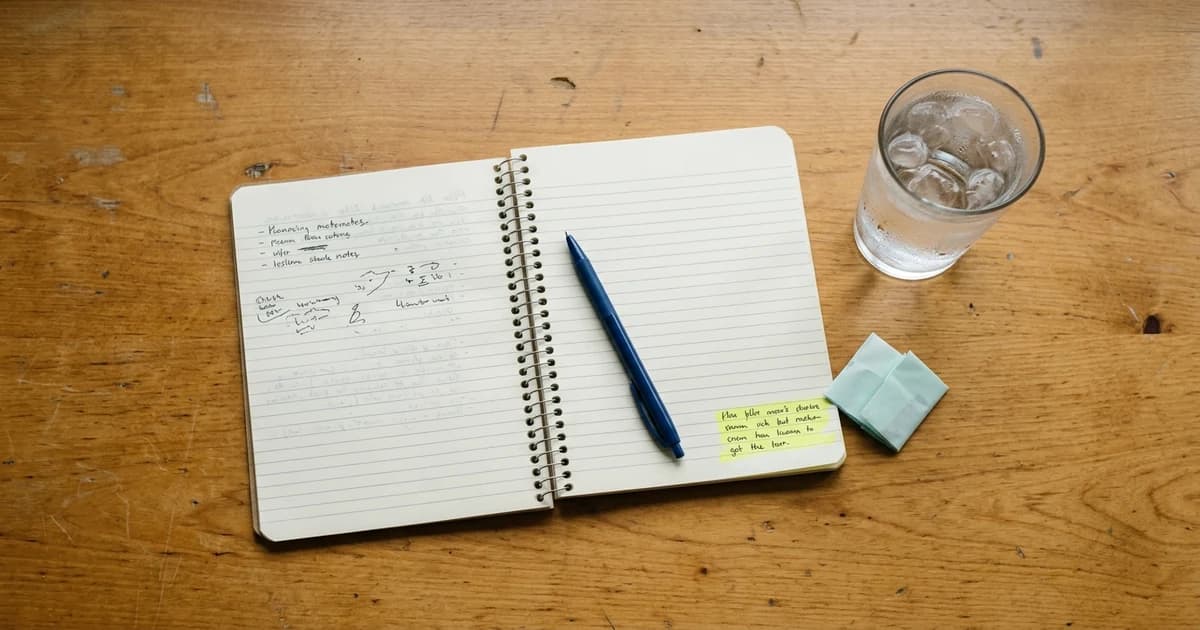
Step 5: Handwrite Your Notes
Put the laptop away. Mueller and Oppenheimer (2014) found that students who typed transcribed lectures nearly verbatim, while those who wrote by hand were forced to process and summarize. (A 2019 direct replication found nonsignificant differences in test performance, so the advantage may be smaller than originally reported.) That active processing is exactly the engagement your drowsy brain needs. You can't zone out and let your fingers autopilot. Diagrams, concept maps, and margin annotations work even better.
Step 6: Ask a Question (or Write One Down)
Raising your hand commits you to staying alert for the next few minutes. If speaking up isn't your style, write a question in your margin every 10 minutes. Generating questions forces high-effort cognition. High-effort cognition and sleep don't coexist easily.
Step 7: Sit Where You're Seen
A 2020 study in PLOS ONE tracking students in a 450-seat UBC lecture hall found that grades dropped by 0.75 percentage points per row farther from the instructor. Some of this is self-selection, but the accountability effect is real: when the professor can see your face, the social cost of nodding off goes up, and so does your baseline arousal. Sit front-center. It's free.
Step 8: Control Your Light Exposure
Bright light suppresses melatonin and boosts alertness. A 2024 study in Building and Environment found measurable alertness effects from short-wavelength-enriched light in moderately sleep-restricted university students. You can't always control classroom lighting, but you can get outside for five minutes between sessions. Window seats beat interior seats.
Step 9: Eat Light Before Class
A heavy meal triggers a postprandial sleepiness spike 1 to 2 hours later. If your lecture follows lunch, choose protein and fiber over refined carbs. A banana or a handful of nuts 30 minutes before class gives you stable blood sugar without the crash.
Step 10: Breathe With Intention
Inhale through your nose for 4 seconds, hold for 4, exhale through your mouth for 6. Three to five rounds takes under a minute and is completely silent. This isn't a long-term fix. It's a 60-second tool for the moments when your head starts the slow nod forward.
Step 11: Fix the Real Cause
Every tactic above is a band-aid. The real answer to how to not fall asleep in class is getting enough sleep the night before.
The CDC's 2023 Youth Risk Behavior Survey found that only 23% of high school students got 8+ hours on an average school night. College numbers are similarly bleak. Two changes that actually move the needle: a consistent wake time (even on weekends) and cutting screens 30 to 60 minutes before bed. For more on what chronic short sleep does to cognition, see this piece on what one bad night does.
Step 12: Time Your Caffeine Before Class
If you use caffeine, timing matters more than dose. Caffeine reaches peak blood concentration roughly 30 to 60 minutes after oral intake for most people. Drinking coffee as you walk into the lecture hall is too late. Take it during the break before your hardest class so it peaks when you sit down. And if you need caffeine daily just to stay conscious, revisit Step 11. More on staying awake while studying here; for broader strategies, see focusing better in school.
Staying Alert Is a System, Not a Single Trick
No single tactic keeps you awake through a 3-hour evening seminar on 4 hours of sleep. But stacked together (front row, gum, handwritten notes, posture resets, properly timed caffeine), they form a system covering the physical, cognitive, and environmental inputs your brain uses to decide whether to stay alert or shut down. Start with the 60-second reset, layer in the engagement tactics, and fix the sleep problem underneath. That order matters.
Frequently Asked Questions
How do I force myself to stay awake in class right now?
Stand up briefly if possible, then sit at the front edge of your chair with feet flat. Start handwriting notes instead of typing. Layer in gum and isometric holds under the desk. These physical and cognitive shifts give your brain competing signals that override the drift toward sleep.
Is falling asleep in class a sign of ADHD?
Usually, no. The most common cause is sleep deprivation, and more than 75% of college students sleep under 8 hours on weeknights. But persistent excessive daytime sleepiness despite adequate sleep (consistently 7 to 9 hours) is worth mentioning to a doctor. It could point to a sleep disorder, ADHD, or other conditions. Don't self-diagnose from a classroom nap.
Does chewing gum actually help you stay awake?
Yes. Research from Allen and Smith (2015) at Cardiff University found gum increased subjective alertness and sustained attention, with the benefit growing larger the longer the task ran. Mint-flavored gum adds a mild sensory stimulus on top of the chewing effect.
What is the best seat in class to stay awake?
Front row, center. A UBC study found grades dropped 0.75 percentage points per row farther from the instructor. The accountability of being visible raises your baseline arousal and makes it harder to zone out.
How much sleep do I need to stop falling asleep in class?
The consensus for adults 18 to 25 is 7 to 9 hours per night. Most students averaging under 6 hours will struggle with daytime drowsiness regardless of in-class tactics. A consistent wake time and less screen time before bed are the two highest-impact changes.
Does caffeine help you stay awake in class?
It does, but timing beats dose. Caffeine peaks 30 to 60 minutes after intake, so dosing it as you sit down means the first chunk of class is wasted. Plan it for the gap before your hardest lecture.
What is the "1-2-3 sleep rule"?
There's no established clinical guideline by that name. Various social media versions circulate (no caffeine 10 hours before bed, no food 3 hours before, no screens 2 hours before). Some individual components have evidence, but the specific framework isn't from a medical organization. Treat it as a mnemonic, not a protocol.
Why do I get so sleepy after lunch in class?
The postprandial dip is a real physiological phenomenon: blood sugar fluctuates and sleepiness increases 1 to 2 hours after a meal. Large, carb-heavy lunches amplify it. Eat lighter before afternoon lectures and time caffeine 30 to 60 minutes before that post-lunch class.
A Caffeine Pouch Timed for Lecture Halls
Most of the tips above are free and require nothing but your own body and a stick of gum. But if caffeine is already part of your routine and you want a format that works between classes without a coffee shop, that's the problem Roon was designed for.
Roon is a zero-nicotine oral pouch with 80 mg caffeine, 60 mg L-theanine, 25 mg methylliberine (Dynamine), and 5 mg theacrine (TeaCrine). Sublingual delivery means onset in 5 to 10 minutes. The methylliberine slows caffeine clearance, so the felt window runs 6 to 8 hours from a single pouch. (A pharmacokinetic study found methylliberine extended caffeine's half-life when co-administered, though that study used 100 mg methylliberine + 150 mg caffeine, roughly 4x the methylliberine and 1.9x the caffeine in Roon. The direction of the effect is the same; the magnitude at Roon's dose isn't directly measured.) The trade-off: a longer tail means you should stop at least 8 hours before bed.
Roon is not a fix for chronic sleep deprivation. No pouch is. Tins start at $9.16 each on a 12-tin subscription (as little as $0.61 per pouch).
Related from Roon
- How to Stay Awake While Studying
- How to Focus Better in School
- Sleep Deprivation Effects on the Brain
- The Science of a Power Nap
- How to Stop Yawning: What a Yawn Is Doing and 7 Interrupters
- How to Stay Awake at Work Without Coffee: 14 Desk Tactics
- How to Stay Awake in a Meeting (Zoom Included): 10 Fixes
- How to Stay Awake While Reading: Why Books Put You Under
- How to Stay Awake in Church: 9 Quiet Ways to Stay Alert
Written by Roon Team