How to Stay Awake While Reading: Why Books Put You Under
Roon Team
How to Stay Awake While Reading: Why Books Put You Under
Reading makes you sleepy because it strips away every arousal signal at once: still body, quiet room, fixed gaze, predictable input. If you need to know how to stay awake while reading, the fix depends on why you are reading and when. Sit upright at a desk in cool, bright light. Read in 25-minute blocks with a pen moving across the page. Time any caffeine 30 to 60 minutes before you start. And if you fall asleep on every page despite sleeping seven-plus hours, the fix is a clinician, not a tactic.
Key Takeaways
- Reading is sedating for four measurable reasons: accumulated sleep pressure, the vigilance decrement, low-arousal posture, and the circadian dip between 1 and 4 p.m.
- Nine fixes below are ranked by onset time, from immediate (stand up) to strategic (move the session to morning).
- The advice splits by scenario: what a bar-prep candidate does at 10 a.m. is wrong for a parent reading a bedtime story at 7:30 p.m.
- If nothing works, sleep debt is probably the real problem. No tactic replaces rest.
Why Reading Puts You Under: Four Mechanisms
Most "how to stay awake while reading" lists hand you tips without explaining what they are fighting. Here are the four forces that knock you out, backed by actual data.
1. Sleep Pressure (Adenosine)
Every hour you stay awake, adenosine accumulates in your basal forebrain and cortex, binding to A1 receptors and building a chemical need to sleep. By early afternoon, the load is already heavy. Reading does nothing to counteract it. A walk, a conversation, or a bright screen would partially mask that pressure; a quiet page does not. For a deeper look at this system, see how adenosine and sleep pressure work.
2. The Vigilance Decrement
In 1948, Norman Mackworth showed that radar operators watching a monotonous display lost 10 to 15% of their signal-detection accuracy within the first 30 minutes, with slower declines continuing over two hours. Reading a dense textbook is structurally the same task: sustained attention, low novelty, minimal motor output. Your brain does not "get tired" in the cardio sense. It deprioritizes a task that stops delivering new information per unit of effort.
3. Posture, Temperature, and Light
A randomized trial of 991 adults (Finucane 2022, Trials) assigned half to read a book in bed for seven nights. Of those who reported back, 42% of readers said their sleep improved versus 28% of non-readers. That 14-point gap is the strongest argument for bedtime fiction and the strongest argument against reading your CPA outlines in the same spot. Reclined posture, warm blankets, dim light: these are sleep cues, and your body responds accordingly.
4. The 1-to-4 p.m. Circadian Dip
The post-lunch dip is a circadian event that arrives whether or not you eat lunch. Core body temperature dips slightly, alertness drops, and reaction time slows. If your reading session starts at 2 p.m., you are fighting biology before you open the book. For more on this window and how to work with it, see the best time of day for productivity.
Eye-muscle fatigue from sustained convergence may also contribute, though no controlled trial has isolated it as a primary cause. Treat it as plausible, not proven.
Nine Fixes Ranked by How Fast They Work
| # | Fix | Onset | Best For |
|---|---|---|---|
| 1 | Stand up and read at a counter | Immediate | Any scenario |
| 2 | Switch to cool, bright light | Immediate | Afternoon desk sessions |
| 3 | Read aloud or summarize each page in writing | Immediate | Textbooks, outlines |
| 4 | Cold water on wrists + 2-minute walk | 1-2 min | Mid-session reset |
| 5 | 25-minute blocks with 5-minute breaks | Ongoing | Long reading sessions |
| 6 | Caffeine timed 30-60 min before the session | 30-60 min | Morning/early afternoon only |
| 7 | Caffeine nap (caffeine + 15-20 min nap) | 15-20 min | Marathon afternoon sessions |
| 8 | 10-minute nap alone | 10 min | When caffeine is off the table |
| 9 | Move the reading earlier in the day | Next day | Chronic afternoon drowsiness |
Fix 1: Stand Up
Standing raises heart rate, engages postural muscles, and removes the reclined-body sleep cue. Read five minutes at a kitchen counter, then sit back down. Arousal baseline reset.
Fix 2: Cool, Bright Light
A study of undergraduates found that bright blue-enriched white light in the early afternoon relieved post-lunch sleepiness and improved performance. A cool-white desk lamp plus overhead lights gets you most of the way there. Warm, dim lighting does the opposite.
Fix 3: Read Aloud or Write a One-Line Summary
This converts reading from input-only to input-plus-output, breaking the monotonous-task pattern that triggers the vigilance decrement. After each page, write one sentence summarizing what you read. The pen forces a decision, and decisions keep you awake. More on the attention side: how to focus better when reading.
Fix 4: Cold Water and a Short Walk
Cold water on your wrists for 15 seconds, then a two-minute walk. The cold triggers a mild sympathetic response; the walk clears the stale-posture signal. This buys you another 20 to 30 minutes, not more.
Fix 5: 25-Minute Blocks
The Mackworth data gives this a hard number: the vigilance cliff hits around 30 minutes. Set a timer for 25 minutes, read with full effort, then take a five-minute break where you stand and move.
Fix 6: Caffeine, Timed Correctly
Caffeine blocks adenosine receptors, directly opposing sleep pressure. It peaks in blood about 30 to 60 minutes after swallowing, so take it before you sit down, not after you start nodding off.
The back end matters just as much. A 2025 randomized crossover trial (Gardiner et al., n=23, polysomnography) found 100 mg up to 4 hours before bed had no measurable sleep effect, but 400 mg disrupted sleep architecture within 12 hours and increased fragmentation within 8 hours. Keep your total under the FDA's 400 mg daily ceiling for healthy adults, and stop at least 8 hours before bed for larger doses. More on cutoff timing: the latest safe time for afternoon caffeine.
Fix 7: The Caffeine Nap
Combine caffeine with a short nap when an afternoon session must run two more hours. Reyner and Horne (1997) found 200 mg caffeine followed by a 15-minute nap cut driving-simulator incidents to about 9% of placebo levels, versus 34% for caffeine alone. Drink, set a 20-minute alarm, close your eyes, then start reading when the alarm fires. Full protocol: how to take a caffeine nap.
Fix 8: A 10-Minute Nap (No Caffeine)
Too late for caffeine? A short nap alone still works. Brooks and Lack (2006) found a 10-minute nap gave immediate improvements in sleepiness, fatigue, vigor, and cognitive performance lasting up to 155 minutes. A 30-minute nap caused sleep inertia first. Keep it at ten.
Fix 9: Move the Session Earlier
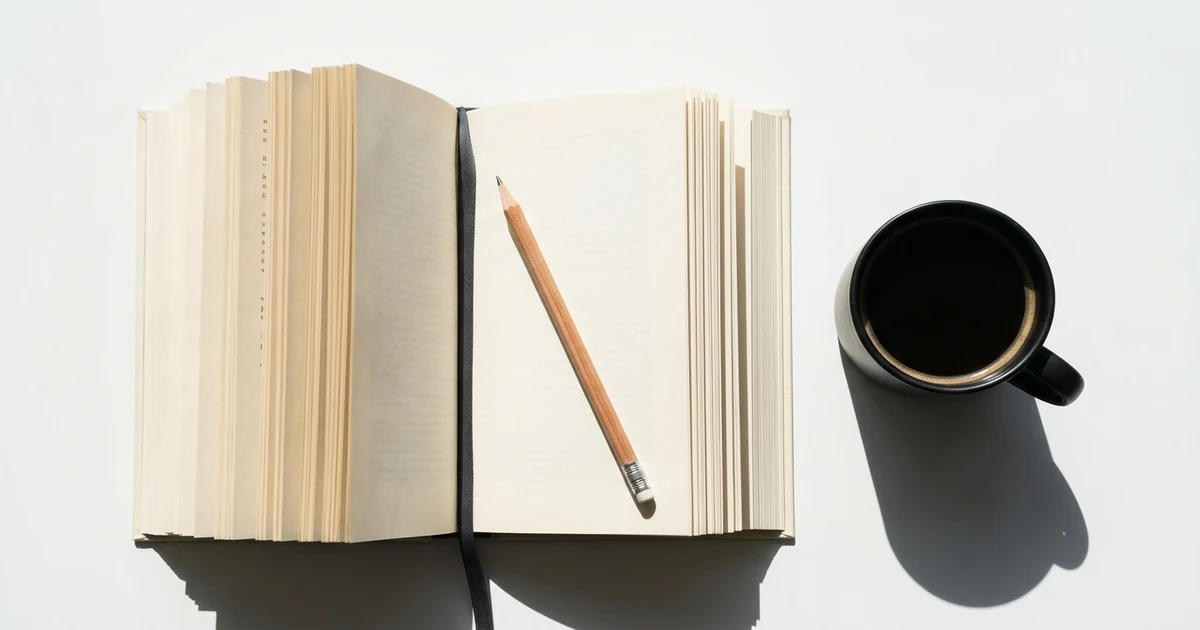
The same 40 pages read at 9 a.m. and at 2:30 p.m. are two different tasks. Morning reading benefits from low adenosine, no circadian dip, and a body that has not been sitting for eight hours. Reschedule hard material for morning; save lighter review for the afternoon.
By Scenario: Match the Fix to the Situation
Textbooks and professional exams (bar prep, CPA, boards). Desk, pen in hand, 25-minute blocks. First caffeine at the start of the session. If you have a second dose, take it 30 minutes before the post-lunch dip, and stop all caffeine by mid-afternoon. For more on the full study session, see how to stay awake while studying.
Reading to your kids at bedtime. This is the one time you are supposed to be sleepy. Dim light, a warm room, a child lying down: these are sleep cues by design. Sit in a chair rather than lying in the bed. Read with slight vocal variation. Do not add caffeine; it is 7:30 p.m. and you need to sleep in two hours. If you still nod off, the story is doing its job on both of you.
Conclusion: When Sleepiness While Reading Is a Signal
Everyone nods off over a boring chapter now and then. But falling asleep within minutes of sitting down, every day, regardless of subject or time, is something different. That is daytime sleepiness, and it usually points to insufficient sleep. If it persists despite seven or more hours in bed, talk to a clinician.
Frequently Asked Questions
Why does reading make me sleepy?
Reading removes the stimuli that keep you alert: movement, social interaction, varied visual input, unpredictable noise. What remains is a still body, a quiet room, and predictable text. Add accumulated adenosine from hours of wakefulness, and the brain has no reason to stay at full alert. The effect is stronger in the afternoon and in warm, dim environments.
How do I stay awake while reading a textbook?
Sit at a desk (never in bed), use a bright cool-white light, keep a pen in hand, and break the reading into 25-minute blocks. Summarize each page in one written line. If it is morning, caffeine 30 minutes before the session helps. If it is afternoon, a two-minute walk between blocks is more useful than a second cup.
Is it bad to read lying down?
Not if the goal is relaxation or sleep. A 991-person trial showed that reading in bed improved sleep for 42% of participants. But lying down pairs every sleep cue at once, so for exam material, it works against you. Read to learn at a desk; read for pleasure wherever you like.
Does reading out loud help you stay awake?
Yes. Reading aloud converts a passive input task into an active output task, engaging motor planning, vocalization, and self-monitoring. It directly counters the vigilance decrement that monotonous silent reading triggers. If you cannot read aloud (library, shared space), writing a one-line summary per page has a similar effect.
How much caffeine should I have before a long reading session?
Between 80 and 200 mg, taken 30 to 60 minutes before you sit down. The FDA sets 400 mg per day as the upper limit for healthy non-pregnant adults. Avoid caffeine within 8 hours of bedtime for larger doses. For context, a standard cup of brewed coffee is roughly 95 mg, and an espresso is about 63 mg.
Why do I fall asleep reading but not watching TV?
TV provides rapidly changing visual scenes, variable audio, social and emotional cues, and flickering light, all of which sustain arousal. A book delivers information through a single, static channel with no novelty per glance. Your brain must generate all the engagement internally. When energy is low, it stops doing that. For tips on staying alert in other low-movement situations, the same principles apply.
A Pouch, Not a Mug, Next to the Textbook
The problem with coffee during a long reading session is the refill. The first cup peaks at 30 to 60 minutes and fades by hour three, right when the afternoon dip arrives. A second cup at 2 p.m. keeps you reading but can fragment that night's sleep.
Roon is built around that timing gap. Each pouch delivers 80 mg of caffeine with 60 mg of L-theanine. A 2025 systematic review and meta-analysis (Nutrition Reviews) of randomized trials in healthy adults found the caffeine-plus-L-theanine combination likely improved attentional task performance and may have benefited alertness, primarily in the second hour after intake, though the review noted effects were not always distinguishable from caffeine alone.
The other half of the duration story is methylliberine (Dynamine). In a randomized, double-blind, crossover PK study (n=12), co-administration of methylliberine with caffeine cut caffeine's oral clearance from 41.9 to 17.1 L/hr and extended its half-life from 7.2 to about 15 hours, with no increase in peak concentration. That study used 100 mg methylliberine and 150 mg caffeine, roughly 4x and 1.9x the amounts in a Roon pouch (25 mg and 80 mg). Roon's felt window is 6 to 8 hours, directionally consistent with that mechanism but not a direct replication of the study's doses. The trade-off: a longer half-life means you should stop at least 8 hours before bed.
One pouch 5 to 10 minutes before the first page. Nothing after mid-afternoon. Not for the bedtime story. From $9.16 per tin on a 12-tin subscription, or $15.00 one-time for four tins. Try Roon for your next reading session.
Written by Roon Team