Can You Chew Gum With Braces? What Orthodontists Allow
Roon Team
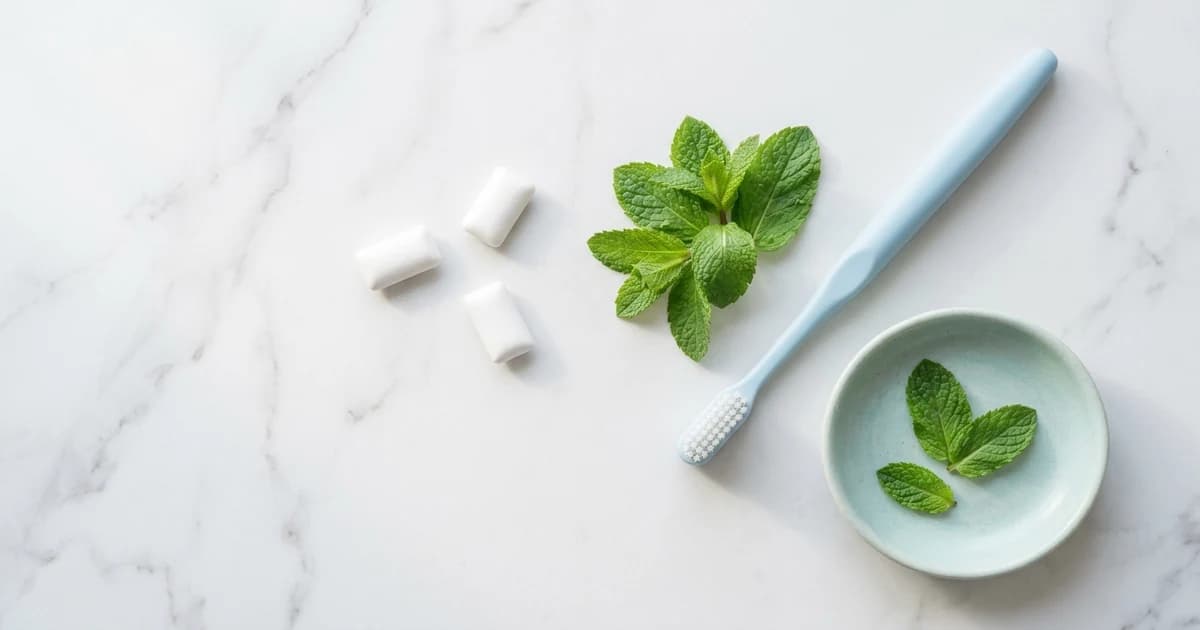
Can You Chew Gum With Braces? What Orthodontists Allow
Can you chew gum with braces? Usually yes, if it is sugar-free and your orthodontist agrees. Randomized trials in braces patients found sugar-free gum eased soreness after adjustments and did not increase broken brackets. But the ADA's patient page still lists chewing gum among foods to avoid with braces, and sugared or very sticky gum is always off the table. Your own orthodontist's rule comes first.
Why does every office blog give a different answer? Because the guidance bodies and the clinical evidence point in slightly different directions, and a blanket "no gum" rule is easier to hand a 12-year-old than a conditional one.
Key takeaways:
- A 2023 meta-analysis of 15 studies (2,116 patients) found sugar-free gum relieved orthodontic pain and did not raise bracket breakage rates.
- The ADA's consumer page still advises avoiding chewing gum with braces. The AAO warns against bubblegum and sticky candy but does not address sugar-free gum directly.
- Sugared gum, bubblegum, and anything extremely sticky or hard are always no.
- Follow your orthodontist's instructions. They know your brackets, your wire, and your treatment stage.
Can You Chew Gum With Braces? A Quick Reference
| Type of gum or situation | Verdict | Why |
|---|---|---|
| Sugar-free gum (ADA Seal varieties) | Usually fine, ask your orthodontist | Trials show no extra breakage; stimulates saliva |
| Sugared gum or bubblegum | No | Sugar feeds plaque around brackets; bubblegum is sticky enough to pull wires |
| Very sticky or hard gum (gumballs, jawbreakers) | No | High breakage risk from force and adhesion |
| First days after braces go on or after a tightening | Ask first | Teeth are sore, soft foods recommended (AAO) |
| Braces with elastics, expanders, or a loose bracket | Ask first | Extra hardware changes the risk profile |
| Clear aligners such as Invisalign | Remove trays first, or skip it | Gum sticks to plastic and warps the fit |
| Removable retainers | Take retainer out first | Same sticking problem as aligners |
What Do Orthodontists and Dentists Actually Say?
The two biggest U.S. professional bodies leave room for different readings.
The ADA's MouthHealthy braces page lists chewing gum alongside popcorn, corn on the cob, and whole apples as foods to avoid: "Ask your dentist about foods to avoid while you are in treatment." It does not distinguish between sugared and sugar-free gum.
The AAO's patient pages warn against "sticky, chewy and hard treats such as caramels, taffy, jellybeans, bubblegum, hard candy, licorice and nuts" but do not address sugar-free gum directly.
Why the gap? Older wire-and-adhesive systems broke more easily, and a blanket "no gum" rule is faster to communicate than a conditional one. Individual orthodontists read the same evidence and land in different places.
Does Chewing Gum Break Braces? What the Trials Found
The clinical data is more reassuring than the pamphlets suggest.
A 2012 RCT by Benson et al. enrolled 57 patients aged 18 or younger starting fixed appliances. The gum group reported less pain at 24 hours (median pain VAS difference of 25 mm, p = 0.038) and a lower Total Impact Score (difference of 16, p = 0.031). By one week the difference had disappeared. Breakages were tracked to the end of treatment: none of the risk ratios were statistically significant.
A 2023 meta-analysis by Guo et al. pooled 15 studies with 2,116 participants. Gum relieved pain at all measured time points after initial archwire placement (p ≤ 0.05), performed comparably to analgesics, and did not increase bracket breakage. A separate 2023 systematic review by Jabr et al. in the Journal of Orthodontics reached a similar conclusion.
Limits: these trials used sugar-free gum under orthodontist supervision, mostly in the first week after archwire placement. They do not prove any gum at any stage is risk-free, but they do show sugar-free gum, used as directed, did not cause the bracket carnage older advice assumed.
What Gum Can You Chew With Braces?
Sugar-free gum carrying the ADA Seal of Acceptance is the safest category. Orbit Sugarfree Gum and Trident Sugarfree Gum both hold the Seal.
The ADA notes that clinical trials found decreased cavity incidence in people who chewed sugar-free gum for 20 minutes after meals, because chewing stimulates saliva flow. It is not a substitute for brushing twice daily with fluoride toothpaste and cleaning between teeth, and with braces, that cleaning matters more because brackets create extra surfaces for plaque.
When You Should Not Chew Gum With Braces
Even with a green light on sugar-free gum, there are times to skip it:
- Right after getting braces or a tightening. The AAO recommends soft foods. Your teeth are already sore.
- A loose bracket or poking wire. Do not chew on compromised hardware. The AAO advises contacting your orthodontist.
- Elastics, palatal expanders, or other appliances. Follow whatever restrictions your orthodontist flagged.
- Jaw pain or clicking. Skip the gum and mention symptoms at your next visit.
- Sugared gum, ever. The ADA warns that sugary foods with braces can lead to plaque buildup around brackets that could permanently stain or damage teeth.
Any time your orthodontist said no, the answer is no. The AAO notes that "broken braces cannot deliver the right forces to move your teeth, and that could prolong treatment."
What About Caffeine Gum, Nicotine Gum, and Energy Drinks With Braces?
Some people chew gum for focus or as a nicotine delivery method. Caffeine gum and nicotine gum tend to be firmer and are chewed longer, sometimes in a "park and chew" pattern. The same sugar-free and stickiness rules apply, but extended chewing means more mechanical stress on brackets. Ask your orthodontist before using either type. Nicotine products are for adults only and are addictive.
Energy drinks and sodas pose a different problem: acid and sugar pooling around brackets, which accelerates enamel erosion and staining. Rinsing with water afterward and being mindful of when you brush helps, but less exposure is better.
For adults looking for caffeine without chewing, an oral pouch (placed between lip and gum) sidesteps the mechanical concerns. No study has examined pouches in people with braces, so check with your orthodontist about anything you place in your mouth during treatment.
Can You Chew Gum With Invisalign or a Retainer?
Not with the trays in. Gum sticks to thermoplastic material, warps the fit, and is nearly impossible to clean out. Remove trays first, chew sugar-free gum, then rinse before reinserting. The trade-off: every minute the trays are out cuts into daily wear time, and most plans assume 20 to 22 hours.
Removable retainers: take the retainer out, chew your gum, clean your teeth, put it back.
Bonded (permanent) retainers are fixed wires cemented behind your teeth. Treat them like braces: sugar-free gum only, and ask your orthodontist whether the adhesive can handle it.
What to Do If Gum Gets Stuck in Your Braces
Do not yank at the wire. That is how a minor annoyance becomes a bracket repair.
- Brush gently with a soft-bristle toothbrush, working gum away from the bracket and wire.
- Use an interdental brush or floss threader to reach trapped gum.
- Rinse with warm water to soften residue.
- Check the hardware. If a bracket feels loose or a wire has shifted, the AAO advises contacting your orthodontist to find out if you need to be seen. Do not wait on a loose bracket.
The Short Version: Ask Your Orthodontist, Then Chew Accordingly
The evidence and the guidance point in different directions. Trials consistently show sugar-free gum does not raise bracket breakage rates and eases post-adjustment soreness. The ADA's patient page still says avoid gum. Your orthodontist knows your specific hardware, adhesive, and treatment stage, and that makes their instruction the one to follow. If they say sugar-free gum is fine, choose an ADA Seal product. If they say no gum, respect it.
Frequently Asked Questions
Can you chew sugar-free gum with braces?
In most cases, yes. A 2023 meta-analysis of 15 studies found sugar-free gum did not increase bracket breakage and relieved post-adjustment pain. The ADA's braces page still lists gum as a food to avoid, so your orthodontist's instruction is the tiebreaker. Look for gum with the ADA Seal of Acceptance.
Will gum pull my brackets off?
Sugar-free gum is unlikely to, based on trial data. Sugared gum, bubblegum, and extremely sticky varieties are a different story: they can grab onto brackets with enough force to loosen adhesive. Avoid those entirely.
Does chewing gum help braces pain?
Clinical evidence supports it. In the Benson 2012 RCT, gum chewers reported less pain at 24 hours. The Guo 2023 meta-analysis found gum relieved pain at all time points after initial archwire placement, performing comparably to analgesics. The effect appears strongest in the first days after adjustment.
Can you chew gum with Invisalign?
Not while wearing your aligners. Gum adheres to the plastic and affects the fit. Remove trays first, chew sugar-free gum, then rinse before reinserting. Keep track of your total wear time.
Can you chew gum with a permanent retainer?
A bonded retainer is a fixed wire, so treat it like braces. Sugar-free gum only, and confirm with your orthodontist that the adhesive can handle it. If the retainer feels loose after chewing, call the office.
What can I chew instead of gum with braces?
If your orthodontist says no gum, there are alternatives to chewing gum worth considering. Sugar-free mints, oral pouches, and sipping water after meals can help with fresh breath and saliva flow. For focus, caffeine pouches or mints replace the stimulation some people get from gum without the chewing.
If You Chewed Gum for Focus, Here Is an Option With Nothing to Chew
If braces just removed gum from your routine and you miss the focus boost more than the flavor, the problem is mechanical: chewing and stickiness. An oral pouch eliminates both. It sits between your lip and gum. Nothing sticks to a wire, nothing gets chewed.
Roon is a zero-nicotine, zero-sugar oral pouch (Cool Mint, sweetened with sucralose) for adults 18 and older. Each pouch combines 80 mg caffeine, 60 mg L-theanine, 25 mg methylliberine (Dynamine), and 5 mg theacrine (TeaCrine). Methylliberine matters for duration: in a randomized, double-blind crossover PK study (n = 12), co-administration with caffeine cut caffeine's oral clearance from 41.9 to 17.1 L/hr and extended its half-life from 7.2 to 15 hours, with no higher peak (study). That study used 100 mg methylliberine + 150 mg caffeine, roughly 4x the methylliberine and 1.9x the caffeine in a Roon pouch, so the exact magnitude differs. The direction is why one pouch targets a 6 to 8 hour felt window instead of caffeine gum's 20-minute chew. Stop at least 8 hours before bed.
No study has tested oral pouches in orthodontic patients, so your orthodontist still gets a vote. Roon starts at $9.16 per tin (12-tin subscription, $0.61 per pouch) or $15.00 per tin one-time, with a 30-day money-back guarantee on a first order.
Related from Roon
- Does Chewing Gum Help Your Jawline?
- Does Chewing Gum Help You Focus?
- Alternatives to Chewing Gum: A Complete Guide
- Are Caffeine Pouches Bad for Your Gums?
Written by Roon Team