Brush Your Teeth Before or After Coffee? The Enamel Answer
Brush Your Teeth Before or After Coffee? The Enamel Answer
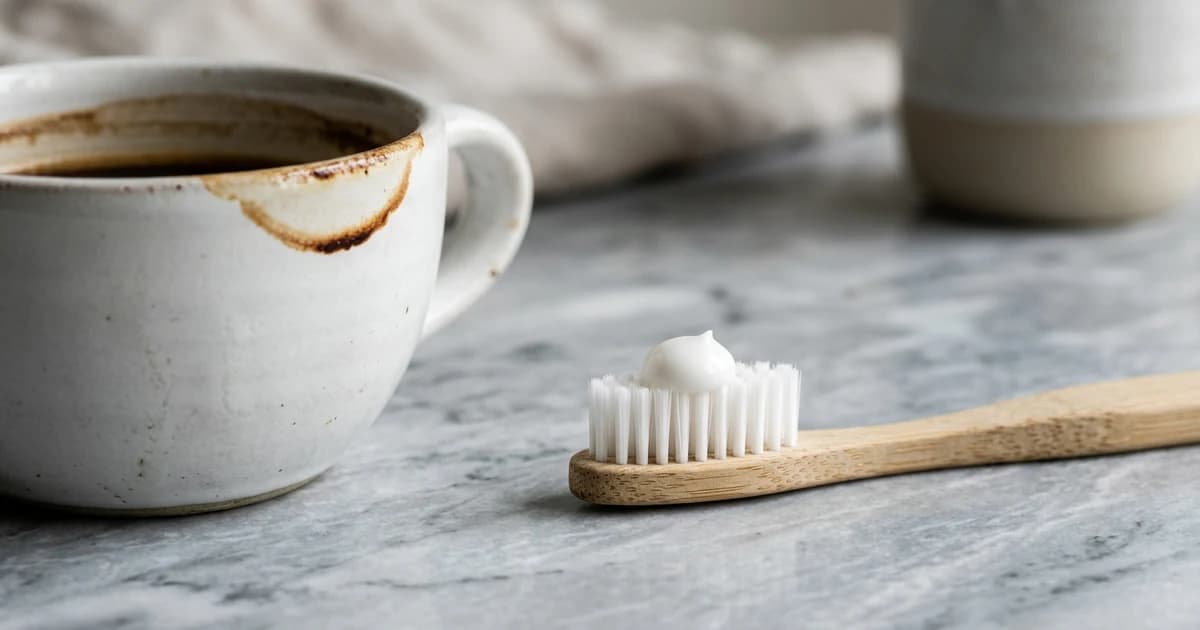
Should you brush teeth before or after coffee? Brush before, not right after. Coffee is mildly acidic and briefly softens the enamel surface, so brushing immediately afterward can scrub away that softened layer. Brushing first removes the plaque film that coffee pigments cling to. If you want to brush again after your cup, rinse with water and wait 30 to 60 minutes.
Key Takeaways
- Brush before coffee to strip the sticky biofilm that holds stains. Rinse with water during or right after your cup.
- Wait 30 to 60 minutes before brushing again. Acid temporarily softens enamel, and brushing too soon wears it down.
- Coffee (pH ~5.1) is mildly acidic. The ADA names carbonated sodas and fruit juices, not coffee, as the primary dietary risk for erosive tooth wear.
- Normal brushing with a soft-bristle brush and fluoride toothpaste is unlikely to cause erosive wear, per the ADA.
The Morning Sequence, Step by Step
The question "should I brush my teeth before or after coffee" sounds like you have to pick one. You do not. Texas A&M College of Dentistry lays out a three-step sequence from Dr. Amal Noureldin, clinical professor in public health sciences:
- Brush before you drink that first cup.
- Rinse your mouth with water either while you drink or immediately after.
- Wait about 30 minutes, then brush again if you choose to.
One brushing protects against staining, the rinse clears pigment and acid, and the wait protects temporarily softened enamel.
Why Brushing First Helps: Plaque and Biofilm
Your teeth wake up coated in plaque, a sticky biofilm that accumulates overnight. Coffee pigments anchor to it. Dr. Noureldin explains that brushing before coffee "removes plaque and biofilm that would otherwise act like a sticky surface for stains to cling to" (Texas A&M College of Dentistry).
Remove the film, and there is less for the color to grab. No amount of brushing makes coffee colorless, but the mechanical advantage is real.
Why Waiting After Coffee Helps: The Softening Window
The ADA's clinical page on dental erosion describes the process: erosion begins with "initial softening of the enamel surface," followed by progressive loss of volume if the challenge continues. Brushing during that softened window applies abrasion to weakened enamel.
Rinse with water right after your cup to dilute the acid. Then let saliva do its job: buffer acid, clear it from the mouth, and redeposit minerals. The ADA notes that chewing sugar-free gum can accelerate this by promoting salivary flow.
Dr. Noureldin puts it directly: "Rinsing helps wash away pigments and acids, and waiting 30 minutes before brushing again prevents enamel damage since acids temporarily soften enamel and brushing too soon could erode it."
How Long to Wait: The Honest Range
Sources vary, and there is no single number.
| Source | Recommended wait time |
|---|---|
| ADA, MouthHealthy | 1 hour after acidic foods |
| Texas A&M College of Dentistry | About 30 minutes |
| Colgate Professional | Half an hour to an hour |
The ADA's consumer guidance says to "wait an hour before you brush after eating acidic foods to give your saliva a chance to naturally wash away acids and re-harden your enamel." The dental school says about 30 minutes. Anywhere in that window is consistent with the evidence. Do not overthink the exact minute. The point is: do not brush right away.
How Acidic Is Coffee, Actually?
Less than you probably think. A 2016 study in the Journal of the American Dental Association measured 379 beverages purchased from stores in Birmingham, Alabama. Coffee came in at pH 5.11. Brewed teas and coffees in the same study ranged from pH 2.85 to 5.18, and 93% of all beverages tested had a pH below 4.0. Coffee was among the least acidic drinks measured.
The ADA's MouthHealthy page names soft drinks, especially soda and sports drinks, as a primary risk factor for erosive tooth wear, along with acidic snacks and fruit juices. Coffee does not appear on that list. The dental risk from coffee is considerably lower than from soda or citrus.
The Part That Gets Overstated
The internet makes it sound like one wrong brushstroke will dissolve your teeth. The ADA says otherwise: "normal toothbrushing practices using a soft-bristle brush and low-abrasion, fluoride-containing toothpaste are considered unlikely to cause erosive wear of enamel" (ADA, Dental Erosion).
This article is about a small optimization, not a dental emergency. If you have been brushing after coffee your whole life with a soft brush, you have not been destroying your teeth. The better sequence is worth adopting, but proportion matters.
Coffee Staining: What Dental Sources Say
Coffee polyphenols bind to enamel and discolor it over time. Rinsing with water after a cup helps clear pigment before it sets. Brushing before the cup removes the biofilm those polyphenols attach to.
One detail from the dental school: casein, the protein in cow's milk, binds coffee polyphenols so they pass through instead of sticking to enamel. Dr. Noureldin notes that plant milks like soy and almond do not contain casein and do not provide the same effect.
Habits That Make It Worse
A few behaviors increase coffee's impact on your teeth, according to the ADA and Texas A&M:
- Sipping one cup slowly over hours. Contact time matters as much as pH. A cup that takes two hours exposes your teeth to acid the entire time.
- Adding sugar. Sugar feeds cavity-causing bacteria, turning an erosion question into a decay question.
- Swishing or holding coffee in your mouth. The ADA recommends eliminating behaviors that increase acidic challenges, including swishing and holding liquid in the mouth.
- Drinking many cups a day. One cup is a manageable exposure. Five cups a day compounds the acid contact and the staining.
- Skipping the straw (iced coffee). The ADA notes that a straw positioned behind the front teeth minimizes bathing them in acid.
Sugar-free gum after coffee is a small win. The ADA states that chewing sugarless gum promotes salivary flow and may help protect teeth from erosion.
Quick Answers for Common Scenarios
Iced coffee? Same rules. Acid is acid regardless of temperature. Rinse, wait, brush.
Coffee with breakfast? Eating food alongside coffee stimulates saliva and dilutes the acid. You still want to wait before brushing, but the meal helps.
Coffee at night? Rinse with water, wait, then brush with fluoride toothpaste before bed. Twice-daily brushing still stands, and the overall health calculus of your coffee habit does not change because of when you hold the toothbrush.
Conclusion: The Sequence, One More Time
Brush before coffee. Rinse with water during or right after. Wait 30 to 60 minutes if you want to brush again. Soft-bristle brush, fluoride toothpaste. That covers enamel protection and stain reduction in a routine you can follow every morning.
Frequently Asked Questions
Is it bad to brush your teeth right after coffee?
It is not ideal. Coffee is mildly acidic and temporarily softens the enamel surface. Brushing during that window applies abrasion to weakened enamel. The ADA recommends rinsing with water after acidic beverages rather than brushing immediately. Wait 30 to 60 minutes.
How long should you wait to brush after drinking coffee?
Dental sources recommend 30 minutes to one hour. The ADA's consumer page says one hour after acidic foods. Texas A&M College of Dentistry says about 30 minutes. Either end of that range is reasonable.
Does brushing before coffee prevent stains?
It helps reduce them. Brushing removes the plaque biofilm that coffee pigments cling to, so fewer polyphenols attach to enamel. It does not make coffee stain-proof, but it does make staining harder.
Is black coffee worse for your teeth than coffee with milk?
For staining, yes. Casein, a protein in cow's milk, binds to coffee polyphenols and prevents them from sticking to enamel. Plant milks lack casein and do not have the same effect. Acid exposure is similar either way, though milk helps neutralize it slightly.
Does rinsing with water actually do anything?
Yes. Rinsing dilutes acid and washes away pigments before they set on enamel. It is the simplest protective step you can take. The ADA and dental school sources both recommend it as a first move after acidic food or drink.
Does coffee erode enamel the way soda does?
No. Coffee sits at roughly pH 5.1, which is mildly acidic. Most sodas test below pH 3.0. The ADA names carbonated soft drinks, not coffee, as a primary risk factor for erosive tooth wear. Coffee can contribute to erosion with heavy, prolonged consumption, but the risk is far lower than soda or citrus juice. Even decaf carries the same acidity and pigments, so the brushing routine applies regardless.
Where to Go from Here
Your dentist can see your actual enamel. You cannot. If you have concerns about erosion, staining, or sensitivity, a clinical exam will tell you more than any article. The sequence above is supported by dental school and ADA guidance, and it costs nothing but a glass of water and a few minutes of patience.
The Brushing Sequence Applies to Every Caffeine Source
The 30-to-60-minute wait applies to anything acidic in your mouth, and coffee is not the only option. If your morning caffeine never touches your enamel in the first place, the brushing-timing question disappears entirely.
Roon is a sublingual caffeine pouch that tucks between your upper lip and gum: 80 mg caffeine, 60 mg L-theanine, 25 mg methylliberine (Dynamine), 5 mg theacrine (TeaCrine), zero sugar, zero nicotine. Because absorption is buccal rather than gastric, nothing acidic washes over your teeth. That does not make Roon a dental product. It is not a substitute for the brushing, rinsing, and waiting protocol your dentist recommends. But it does sidestep the acid-and-pigment exposure that makes the timing question necessary.
Dynamine slows caffeine's clearance, extending the useful window to roughly 6 to 8 hours. The longer tail means stopping at least 8 hours before bed. Pouches start at as little as $0.61 each. Try Roon if your morning caffeine and your enamel keep colliding.
Written by Roon Team