How to Heal a Burnt Tongue From Hot Coffee
Roon Team
How to Heal a Burnt Tongue From Hot Coffee
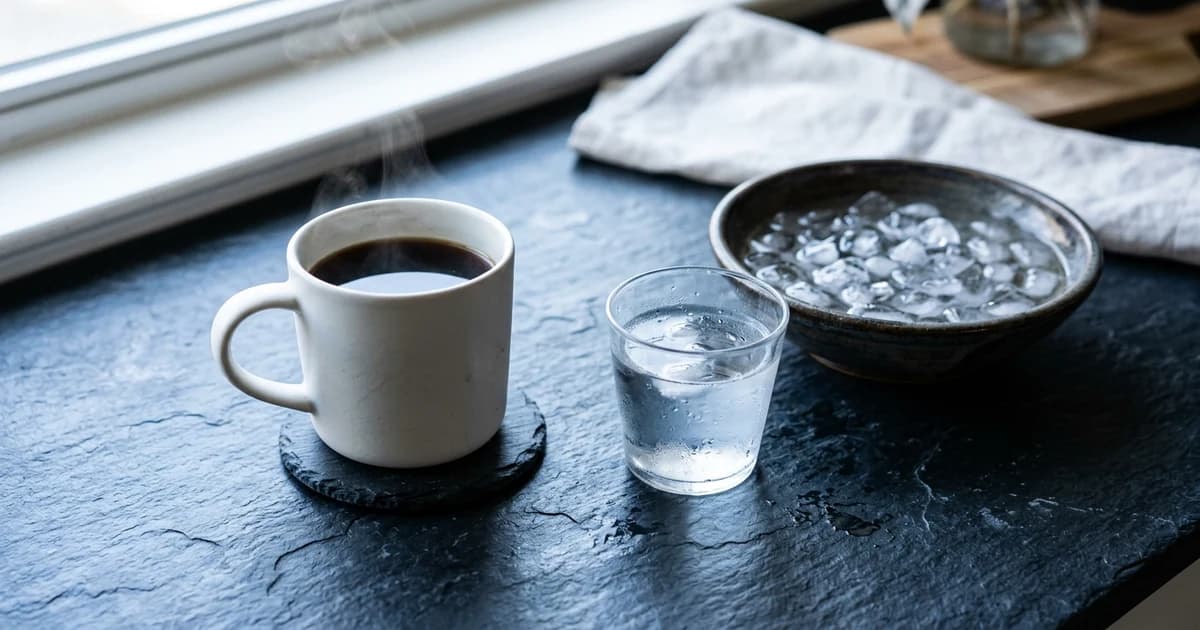
Cool it immediately. Sip cold water, hold ice chips against the burn, or eat something cold like yogurt. For the next few days, skip hot, spicy, and acidic food, rinse with salt water, and keep brushing gently. Most coffee burns are first-degree and ease within a few days. Deeper or blistered burns can take up to two weeks. See a provider if pain worsens or hasn't improved in about two weeks.
Key Takeaways
- Act in the first 10 minutes: cold water, ice chips, cold soft food. No hot drinks, no spicy food.
- Mild burns heal in 1 to 3 days. Blistered burns may take 1 to 2 weeks. Taste cells replace themselves roughly every two weeks.
- Coffee brews near 200°F but the preferred drinking temperature is about 140°F. Letting a cup sit for a few minutes with the lid off prevents most burns.
- If a burn sidelines your morning coffee, iced coffee, cold brew, or a lukewarm cup keeps caffeine flowing without reinjuring the tissue.
Step 1: Stop Sipping and Cool the Burn (First 10 Minutes)
Put the mug down. Sip cold (not ice-cold) water and hold it over the burned area before swallowing. If you have ice chips, let one rest against the sore spot. Cleveland Clinic recommends sucking on ice chips or popsicles, but warns not to let them get so cold they stick. Cold yogurt, frozen yogurt, or a spoonful of ice cream all work. Cold milk is especially useful because it coats the tissue.
If pain is more than mild, an OTC pain reliever (acetaminophen or ibuprofen) at the standard label dose can help.
Quick-Reference: Do vs. Skip
| Do | Skip |
|---|---|
| Cold water, ice chips | Hot coffee, tea, soup |
| Cold yogurt, ice cream, popsicles | Spicy food (chili, hot sauce) |
| Milk or honey on the tongue | Acidic food (citrus, tomato, vinegar) |
| Salt water rinse (½ tsp salt in ½ cup warm water) | Alcohol-based mouthwash |
| Gentle brushing with a soft toothbrush | Tongue scrapers |
| OTC pain reliever if needed | Numbing gels on children under 2 |
Step 2: Protect the Burn for the Next Few Days
Once the initial sting fades, your job is to stop re-irritating the tissue. Eat soft, cool, or room-temperature food. Tomato sauce, orange juice, vinegar-based dressings, and salsa all sting an open burn. Switch to a non-alcohol mouthwash or plain salt water rinses (half a teaspoon of salt in half a cup of warm water). Cleveland Clinic notes that salt rinses can ease tongue pain and lower infection risk.
Keep brushing, but be gentle around the sore area. For more on timing, see whether to brush before or after coffee.
How Long Does a Burnt Tongue Take to Heal?
A mild, first-degree burn on the tongue typically heals in 1 to 3 days. Second-degree burns, which damage deeper tissue and may blister, can take 1 to 2 weeks. Cleveland Clinic's remedies page frames most first-degree tongue burns as healing within one to two weeks at the outer range.
The sandpaper feeling happens because heat flattens the papillae that house your taste buds. Taste cells have a lifespan of roughly 10 to 14 days (measured in rodents; human turnover is thought to be similar). Even if a burn knocks out some taste cells, your tongue is already growing replacements.
If hot coffee is off the table for a few days, iced coffee or an 80 mg caffeine pouch keeps the caffeine without the heat.
Burnt Tongue Remedies That Actually Have Sources
Not every home remedy has evidence. These do, or at least carry a credible clinical recommendation.
Cold food and drinks. Ice chips, popsicles, frozen yogurt, cold water. Simple and immediately effective.
Milk. Cleveland Clinic recommends coating the tongue with milk. The fat and protein form a mild barrier over irritated tissue.
Honey. Anti-inflammatory and antimicrobial properties, per Cleveland Clinic. Apply a thin layer directly to the burn. Caveat: never give honey to babies under 12 months because of botulism risk.
Salt water rinse. Half a teaspoon of salt in half a cup of warm (not hot) water. Swish gently a few times a day.
OTC pain relievers. Acetaminophen or ibuprofen at standard doses if pain interferes with eating or sleeping.
Vitamin E oil. Cleveland Clinic suggests squeezing a 1,000 IU liquid vitamin E capsule onto the tongue. Large controlled trials on mouth burns are limited, but this is their recommendation.
Gentle oral hygiene. Soft-bristle brush, no tongue scraper until the burn heals.
What to Avoid While Your Tongue Heals
Hot drinks and food. This sounds obvious. It is still the number-one mistake. One impatient sip of morning coffee resets the clock.
Spicy and acidic food. Capsaicin, citric acid, and vinegar irritate exposed tissue. Tomato soup, orange juice, and hot wings are out for a few days.
Alcohol-based mouthwash. The alcohol stings open tissue. Use an alcohol-free rinse or salt water instead.
Tongue scrapers. Mechanical abrasion on a burn is counterproductive.
Numbing gels (with caution). Benzocaine gels like Orajel exist, but the FDA warned in 2018 against using benzocaine on children under 2 because of methemoglobinemia risk. Adults should follow the label, use the smallest effective amount, and cap it at four applications per day.
Burned the Roof of Your Mouth Too?
Same burn, different spot. The hard palate just behind your front teeth catches the first wave of hot coffee, pizza, or soup because that is where the liquid lands before it spreads.
First-aid steps are identical: cold water, ice chips, soft food, salt water rinses. Healing follows the same timeline. The tissue on the palate is thinner than the tongue, so deep burns can be more painful. Do not pop blisters. If pain persists beyond two weeks or you notice white or dark patches, see a dentist or doctor.
Why Coffee Burns Your Tongue: How Hot Is a Fresh Cup?
Coffee brews with water near 200°F (National Coffee Association: 195 to 205°F). It is often served between 160°F and 185°F, a range that can cause significant scald burns on brief oral contact.
The temperature most people actually prefer? Much lower. A study of 300 coffee drinkers (Lee and O'Mahony, 2002) found a mean preferred temperature of about 140°F (60°C). Black coffee drinkers ran slightly higher at 143°F; those adding cream preferred 138°F. A thermal modeling paper (Brown and Diller, 2008) calculated the optimum at 136°F (57.8°C), and a 2019 review (Abraham and Diller) recommended a service range of 130 to 160°F.
| Stage | Temperature | Source |
|---|---|---|
| Brewing water | 195 to 205°F (90 to 96°C) | National Coffee Association |
| Typical service | 160 to 185°F (71 to 85°C) | Brown and Diller, 2008 |
| Preferred drinking | ~140°F (60°C) | Lee and O'Mahony, 2002 (n=300) |
| Calculated optimum | 136°F (57.8°C) | Brown and Diller, 2008 |
| Recommended service range | 130 to 160°F (54 to 71°C) | Abraham and Diller, 2019 |
One note on long-term habit: in 2016, IARC classified drinking very hot beverages above 65°C (149°F) as "probably carcinogenic" (Group 2A) based on limited evidence for esophageal cancer in populations that habitually drink at those temperatures. Coffee itself was not classified as a carcinogen, and the finding concerns lifelong daily habit, not a single burn.
How to Stop Burning Your Tongue on Coffee
- Wait 3 to 5 minutes with the lid off. A lidded travel mug traps heat for hours. Removing the lid lets the surface cool quickly.
- Add cold milk or cream. A small splash can drop the temperature noticeably, bringing the cup closer to the 140°F sweet spot.
- Use a thermometer once. Measure your mug at 1-minute intervals after pouring. You will learn how long your setup takes to hit 140°F and never need the thermometer again.
- Test sip at the rim. Touch a small amount to your lower lip first. Your lip is more heat-sensitive than your tongue.
- Be cautious with insulated travel mugs. Coffee in a double-walled steel mug can stay above 160°F an hour after brewing. For more on French press water temperature and ratio, the same principle applies: brew hot, drink cooler.
Can You Drink Coffee With a Burnt Tongue?
Yes, but cool it down first. Iced coffee, cold brew, or a cup cooled to lukewarm won't reinjure the tissue. If acidity stings, try a low-acid coffee or add milk. For more lower-acid ways to get caffeine, cold brew naturally has lower perceived acidity than hot-brewed coffee.
Caffeine itself is not the problem. Heat and acidity are the irritants. Skip coffee entirely and the caffeine withdrawal headache starts 12 to 24 hours after your last dose.
When to See a Doctor or Dentist
Most coffee burns heal on their own. See a provider if you notice:
- Widespread or worsening blistering
- White or blackened patches on the tongue or palate
- Severe pain that OTC relievers do not control
- Fever, discharge, or signs of infection
- Difficulty swallowing or breathing
- No improvement after 10 to 14 days
If your tongue burns or tingles but you did not actually burn it on anything hot, that may be burning mouth syndrome, a separate condition thought to involve nerve dysfunction. See a clinician; do not self-diagnose.
A Burnt Tongue Heals Itself, Usually Fast
A first-degree tongue burn from coffee is painful and almost always temporary. Cool it immediately, protect it from heat and acid for a few days, and let the body's rapid oral-tissue turnover do the rest. If it blisters, blackens, or isn't improving after two weeks, see a provider. For everyone else, the fix is patience and a brief pivot to cooler food and drinks.
Frequently Asked Questions
Do burnt taste buds grow back?
Yes. Taste cells replace themselves roughly every 10 to 14 days. A coffee burn may flatten papillae temporarily and dull taste, but the cells regenerate. Most people notice normal taste returning within a few days to two weeks.
Why does my tongue feel like sandpaper after a burn?
Heat flattens or peels the tiny papillae on the tongue's surface. You are sensing exposed tissue that is normally covered. As new cells grow in, the texture returns to normal.
Does salt water help a burnt tongue?
Cleveland Clinic says yes: salt water rinses can ease pain and lower infection risk. Half a teaspoon of salt in half a cup of warm water, swished gently. Avoid alcohol-based mouthwashes, which sting open tissue.
Is honey good for a burnt tongue?
Cleveland Clinic lists honey as a remedy, citing anti-inflammatory and antimicrobial properties. Apply a thin coat directly to the burn. Do not give honey to children under 12 months because of botulism risk.
Can I use Orajel on a burnt tongue?
Orajel contains benzocaine, a topical anesthetic. Adults can follow label directions, but the FDA cautioned in 2018 against using benzocaine on children under 2 because of methemoglobinemia risk. Use the smallest amount needed, no more than four applications per day.
How long until food tastes normal again?
For a mild burn, taste typically returns within 3 to 5 days. Deeper burns may take up to two weeks. If taste has not returned after two weeks, or if you notice persistent numbness, see a healthcare provider.
Three Days of Lukewarm Coffee, or a Caffeine Source With No Temperature
Iced coffee and cold brew work while your mouth heals. But if you rely on a hot cup first thing and the thought of three days of lukewarm anything sounds grim, the real problem is caffeine continuity. Skip your usual cup and the withdrawal headache shows up within 12 to 24 hours.
Roon is a zero-nicotine, zero-sugar oral pouch (Cool Mint, 15 per tin) with 80 mg caffeine, 60 mg L-theanine, 25 mg methylliberine (Dynamine), and 5 mg theacrine (TeaCrine). It sits between the gum and upper lip, not on the tongue, and has no temperature and no acidity. The 80 mg caffeine is close to one 8 oz cup by USDA figures. Methylliberine extends caffeine's duration: in an n=12 crossover PK study, 100 mg methylliberine with 150 mg caffeine cut caffeine's clearance from 41.9 to 17.1 L/hr and extended its half-life from 7.2 to 15 hours, no higher peak (study). Roon uses 25 mg methylliberine with 80 mg caffeine, so the magnitude differs, but the mechanism is directionally the same. Felt window: 6 to 8 hours. Stop at least 8 hours before bed.
Honest caveat: Roon contains sucralose and mint flavoring. If your mouth is still raw and a pouch stings, wait until it feels normal. Tins start from $9.16 on a 12-tin subscription or $15.00 one-time. For questions about pouches and gum tissue, see are caffeine pouches bad for gums.
Related from Roon
- How Much Caffeine Is in a Cup of Coffee
- Coffee Breath: Why It Happens and How to Get Rid of It
- French Press Ratio: Coffee to Water
- Coffee and an Upset Stomach: Lower-Acid Ways to Get Caffeine
Written by Roon Team