Brain Fog Flu: Why the Flu, Colds, and Illness Wreck Your Thinking
Roon Team
Brain Fog Flu: Why the Flu, Colds, and Illness Wreck Your Thinking
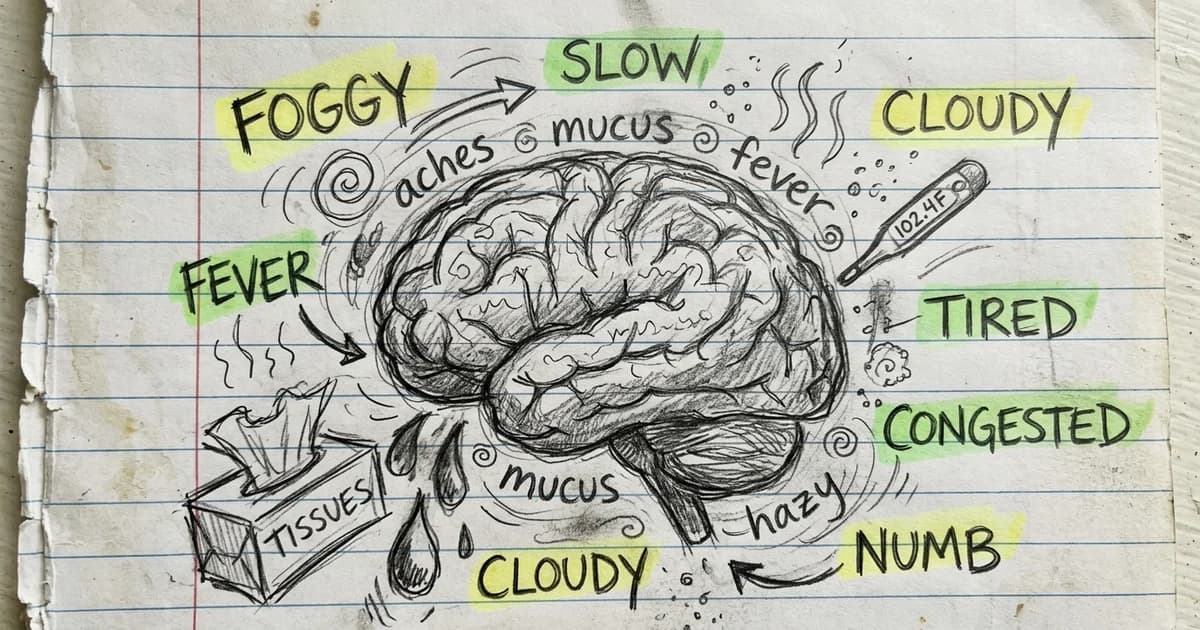
You're three days into the flu. The fever broke yesterday, but your brain didn't get the memo. You read the same email four times. You forget what you walked into the kitchen for. Simple decisions feel like calculus.
This is brain fog flu at its worst, and it's not just "feeling tired." Your immune system is actively interfering with how your neurons communicate. The mental haze you experience when sick has real, measurable neurological causes that researchers have been studying for over two decades.
Here's what's actually happening inside your skull, why brain fog flu lingers after you recover, and what you can do about it.
Key Takeaways:
- Brain fog causes and symptoms extend beyond fatigue or discomfort, with flu specifically driven by inflammatory cytokines disrupting neural communication.
- Even a common cold can reduce reaction time, memory, and attention for days.
- Brain fog flu can persist for weeks after physical symptoms resolve.
- Hydration, sleep, and targeted nutritional support can speed cognitive recovery.
Your Immune System Is Hijacking Your Brain During Brain Fog Flu
When a virus enters your body, your immune system launches a counterattack by releasing proteins called cytokines. These molecules coordinate the immune response, signaling cells to fight the infection. The problem: they don't stay confined to your respiratory tract.
Cytokines cross the blood-brain barrier. Once inside the central nervous system, they trigger neuroinflammation, activating immune cells in the brain called microglia. A study published in the Journal of Neuroscience found that influenza infection increased inflammatory cytokines (IL-1β, IL-6, TNF-α) in the hippocampus of mice and activated microglia, the brain's resident immune cells. The infected mice showed impaired spatial memory and altered neuron structure in the hippocampus, the brain region responsible for learning and memory.
This isn't limited to severe infections. Research published in PMC covering twenty-five years of data on the common cold and influenza found that even mild respiratory infections impair cognitive performance. Naval cadets with flu-like symptoms performed worse on daily memory tasks compared to healthy controls.
Brain fog flu isn't weakness. It's biochemistry.
What Brain Fog Flu Actually Feels Like (and Why It's Different From Tiredness)
Fatigue makes you want to sleep. Brain fog flu makes you unable to think clearly even when you're awake. The distinction matters because they have different mechanisms.
When you have a cold or flu, the cognitive symptoms typically include:
- Slowed reaction time: Processing speed drops measurably during infection.
- Poor working memory: Holding multiple pieces of information in your head becomes difficult.
- Reduced attention span: Focusing on a single task feels like pushing through wet concrete.
- Word-finding difficulty: You know the word. It's right there. But you can't grab it.
According to The Globe and Mail's reporting on cold and flu research, seasonal viruses reduce mental alertness by interfering with neurotransmitters like noradrenaline, which governs reaction times. These short-term cognitive declines stem from temporary changes in the brain itself, not just from cold or flu symptoms like congestion or coughing.
That's worth repeating: the virus is changing your brain chemistry. You're not imagining brain fog flu.
The Cytokine Connection: How Brain Fog Flu Clouds Your Thinking
Let's get specific about the mechanism. Your body produces several types of inflammatory cytokines during illness, and each one affects cognition differently.
| Cytokine | Role in Immune Response | Effect on the Brain |
|---|---|---|
| IL-1β | Triggers fever and inflammation | Impairs long-term potentiation (memory formation) |
| IL-6 | Activates immune cells | Disrupts hippocampal function and attention |
| TNF-α | Kills infected cells | Can damage neurons at high concentrations |
| Interferons | Block viral replication | Cause fatigue and cognitive slowing |
A review published in Oxford Academic found that inflammatory cytokines reduce long-term potentiation (LTP) and long-term depression (LTD), two processes essential for learning and memory. They also reduce neurogenesis, the creation of new brain cells, and interfere with dendritic sprouting, which is how neurons form new connections.
Stanford researchers found that viral infections can elevate a chemokine called CCL11, which directly causes microglial reactivity in the hippocampus. This same pattern appears in chemotherapy-related cognitive impairment, which is why post-viral brain fog flu and "chemo brain" share so many symptoms.
The takeaway: your immune system's weapons are effective against viruses but cause collateral damage to cognitive function.
Why Brain Fog Flu Sticks Around After Recovery
Here's what catches most people off guard. The physical symptoms clear up. The fever is gone, the cough fades, your energy starts returning. But your brain still feels like it's running on dial-up.
Brain fog flu can linger for days to weeks after the acute infection resolves. NeuroHealth Services reports that the cognitive impairments caused by the immune response can last several weeks after common flu symptoms have subsided.
Why does brain fog flu persist? Three reasons:
-
Residual neuroinflammation. Microglia don't just switch off when the virus is cleared. Research in PMC demonstrated that influenza A virus infection caused long-term neuroinflammation in mice, with spine loss on hippocampal neurons, reduced long-term potentiation, and impaired spatial memory formation lasting well beyond the acute infection phase.
-
Neurotransmitter disruption. The flu alters levels of serotonin, dopamine, and norepinephrine. These systems don't rebalance instantly. Research from Neurolaunch describes how neurotransmitter levels fluctuate during infection, leaving cognitive function unstable during recovery.
-
Sleep debt and dehydration. Fever burns through fluids. Illness disrupts sleep architecture. Even mild dehydration of 1-2% body weight loss can impair attention, memory, and motor skills. After several days of illness, you're likely carrying a deficit in both hydration and restorative sleep.
For most people, brain fog flu improves within one to three weeks. If it persists beyond that, it may be worth talking to a doctor about post-viral syndrome.
Brain Fog Cold vs. Brain Fog Flu: Is There a Difference?
Yes, but it's a matter of degree, not kind.
A brain fog cold tends to be milder because the common cold triggers a less aggressive immune response. You might feel slightly foggy, have trouble concentrating during meetings, or forget small details. It's annoying but manageable.
Brain fog flu hits harder. Influenza produces a stronger cytokine response, higher fevers, and more severe dehydration. The cognitive impairment is more pronounced, and brain fog flu tends to last longer. Research from Exergen Corporation notes that influenza can result in prolonged fatigue, mental fog, and cognitive disruption that extends well beyond the acute phase of illness.
The same basic mechanism drives both: inflammation crosses into the brain, disrupts neurotransmitter signaling, and impairs the hippocampus. Brain fog flu just does it with more force.
How to Clear Brain Fog Flu (During and After Illness)
You can't eliminate brain fog flu during an active infection. Your immune system needs to do its job. But you can reduce the severity and speed up cognitive recovery.
Hydrate aggressively
Your brain is roughly 75% water. Fever and illness accelerate fluid loss, and dehydration directly impairs cognitive performance. Don't just sip water. Add electrolytes. Aim for consistent intake throughout the day, not just when you feel thirsty.
Prioritize sleep quality
Your brain clears metabolic waste during deep sleep through the glymphatic system. When illness disrupts your sleep cycles, this cleanup process stalls. Keep your room cool, dark, and quiet. If congestion is waking you up, elevate your head.
Reduce cognitive load
This isn't the time to power through complex work. Your prefrontal cortex is running on limited resources. Postpone major decisions. Break tasks into smaller pieces. Give your brain permission to operate at reduced capacity.
Support your recovery nutritionally
Once the acute phase passes, targeted nutritional support can help resolve brain fog flu faster. Compounds that promote calm focus without overstimulating an already-taxed nervous system are ideal.
L-theanine, an amino acid found in green tea, has been shown to improve attention and working memory in a randomized placebo-controlled study. It crosses the blood-brain barrier and promotes alpha brain wave activity, the pattern associated with relaxed concentration. Research from ScienceDirect has also explored L-theanine's potential anti-inflammatory properties, making it particularly relevant during post-illness recovery.
When combined with a low dose of caffeine, the effects sharpen further. A study published in Nutritional Neuroscience found that 97mg of L-theanine combined with 40mg of caffeine improved focus and attention during demanding cognitive tasks. The L-theanine boosts alpha-wave activity and improves attention-switching accuracy alongside caffeine, producing sustained mental clarity instead of a spike-and-crash cycle.
Getting Back to Sharp After Brain Fog Flu
Brain fog flu is your body telling you that resources are being redirected. It's temporary, it's normal, and it's backed by decades of neuroscience research. The inflammation will subside. Your neurotransmitters will rebalance. Your cognition will return.
But if you're past the worst of an illness and still waiting for the mental clarity to come back, you don't have to just sit around hoping.
Roon was designed for exactly this kind of situation. It combines 80 mg of caffeine with L-theanine, theacrine, and methylliberine in a zero-nicotine sublingual pouch, delivering 6-8 hours of clean, sustained focus without jitters or a crash. The same caffeine-plus-L-theanine combination that researchers have validated for cognitive performance, in a format that works in minutes.
Your immune system did the hard part. Give your brain the support it needs to finish recovering from brain fog flu.