Trazodone and Magnesium for Sleep: What Actually Works
Roon Team
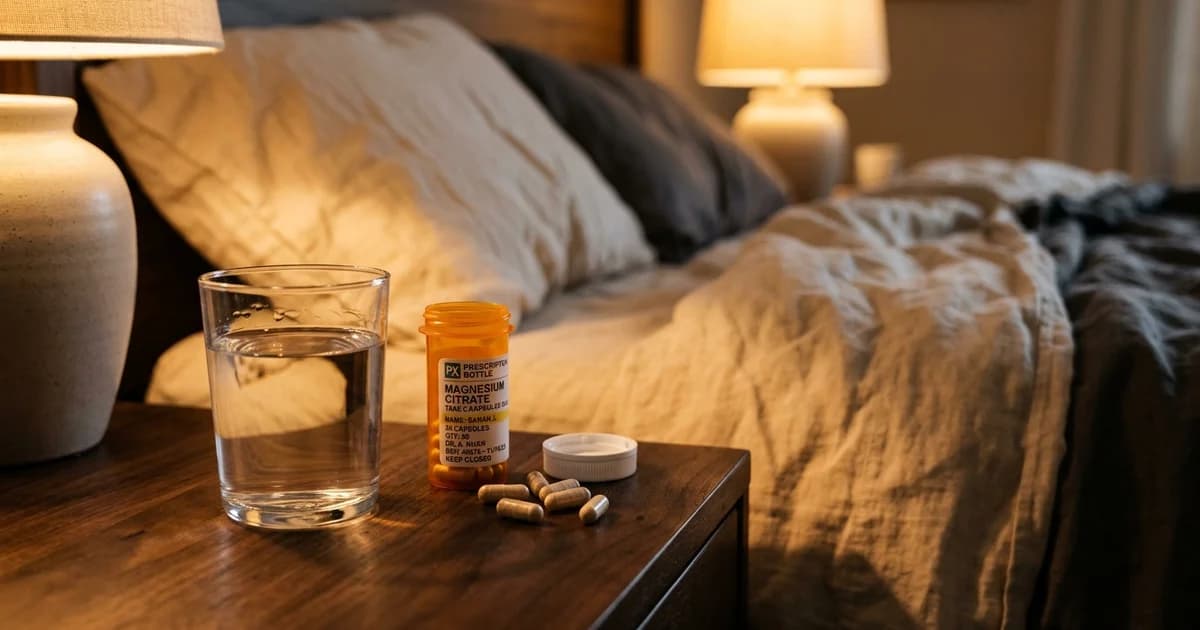
Trazodone and Magnesium for Sleep: What Actually Works (And What Doesn't)
You're lying in bed at midnight, scrolling through Reddit threads about trazodone, and magnesium for sleep, trying to figure out which one will finally let you get a full night's rest. One person swears by 50 mg of trazodone. Another says magnesium glycinate changed their life. A third says combining trazodone and magnesium for sleep is the real answer.
The problem? Most of these recommendations come with zero context about how either one actually works, what the clinical data says, or whether combining trazodone, and magnesium for sleep makes any sense.
Here's what the science actually shows.
Key Takeaways
- Trazodone is an antidepressant prescribed off-label for insomnia. It works fast but carries real side effects, including next-day cognitive impairment.
- Magnesium has growing clinical support as a sleep aid, especially if your dietary intake is low. The effect is modest but consistent, with minimal downsides.
- Taking trazodone and magnesium for sleep together is generally considered safe, but the combination doesn't automatically double the benefit.
- Neither one fixes the root cause of poor sleep. Behavioral changes still matter more than any pill or supplement.
How Trazodone Became America's Favorite Off-Label Sleep Aid
Trazodone is an antidepressant. Full stop. The FDA approved it for major depressive disorder, not insomnia. Yet it has become one of the most widely prescribed sleep aids in the United States, with off-label insomnia prescriptions far exceeding its use as an antidepressant. According to Sleepstation, roughly five million Americans received a trazodone prescription in 2019 alone, and nearly 20% of Americans with insomnia were prescribed it by 2022.
How did this happen? At low doses (25 to 100 mg), trazodone blocks histamine H1 receptors and serotonin 5-HT2A receptors, both of which promote wakefulness. The result is sedation without the dependency risk that comes with benzodiazepines or Z-drugs like Ambien. Doctors liked the safety profile, patients liked that it wasn't "addictive," and the prescriptions kept climbing. Many of those patients eventually started researching trazodone, and magnesium for sleep as a way to enhance their results.
But the American Academy of Sleep Medicine explicitly recommends against using trazodone for insomnia. That's not a minor footnote.
What the Clinical Data Says About Trazodone and Sleep
A systematic review published in the Journal of Clinical Sleep Medicine evaluated the evidence across multiple studies and found a mixed picture. In non-depressed subjects, trazodone improved time spent in deep sleep (slow-wave sleep) without disrupting normal sleep architecture at lower doses. Some studies showed improved sleep efficiency in the first few days of use.
The catch: those benefits didn't always hold up over time. One study found improved sleep efficiency on Day 3 but not Day 28. This inconsistency is part of why people start exploring trazodone, and magnesium for sleep as a combined approach.
And then there are the mornings after.
The Next-Day Problem
A study on primary insomniacs published in PMC found that even at just 50 mg per night, trazodone produced small but measurable impairments in short-term memory, verbal learning, equilibrium, and muscle endurance the following day. These weren't dramatic effects, but they were statistically real. If you're taking trazodone to sleep better so you can perform better during the day, that tradeoff deserves a hard look.
Other common side effects include daytime drowsiness, dizziness, dry mouth, and in rare cases, cardiac arrhythmias. For a drug being used off-label with limited long-term insomnia data, the risk-benefit calculation isn't as clean as many people assume. These side effects are one reason people look into pairing trazodone and magnesium for sleep rather than increasing the trazodone dose.
Magnesium for Sleep: Modest Evidence, Minimal Risk
Magnesium plays a role in over 300 enzymatic reactions in the body, including several that regulate your nervous system and circadian rhythm. It helps activate the parasympathetic nervous system (the "rest and digest" mode) and regulates melatonin production. Understanding magnesium's role is essential before evaluating trazodone, and magnesium for sleep as a combination strategy.
The theory is simple: if you're low in magnesium, your sleep suffers. And a lot of people are low. Dietary surveys consistently show that a large portion of the U.S. population falls short of the recommended daily intake.
But does supplementing with magnesium actually improve sleep? The evidence is growing, though it's still catching up to the hype.
What the Studies Show
A meta-analysis published in PubMed pooled data from randomized controlled trials in older adults and found that magnesium supplementation reduced sleep onset latency by an average of 17 minutes compared to placebo. That's not a dramatic number, but for someone who lies awake for 45 minutes every night, shaving off 17 minutes is meaningful.
A 2025 randomized, placebo-controlled trial tested magnesium bisglycinate (250 mg elemental magnesium daily) in 155 adults with self-reported poor sleep. The magnesium group showed a greater reduction in Insomnia Severity Index scores compared to placebo by Week 4. The effect size was small (Cohen's d = 0.2), but the benefit was strongest among participants with lower baseline dietary magnesium intake. Translation: magnesium helps the most if you're not getting enough from food. This finding is relevant for anyone considering trazodone, and magnesium for sleep, since correcting a deficiency may amplify the benefits of both.
A separate randomized controlled trial on magnesium L-threonate found improvements in behavior following awakening, mental alertness, and mood compared to placebo. The L-threonate form is notable because it crosses the blood-brain barrier more effectively than other forms of magnesium.
Which Form of Magnesium Should You Use?
Not all magnesium supplements are created equal. If you're researching trazodone, and magnesium for sleep, the form of magnesium you choose matters. Here's a quick breakdown of the forms most relevant to sleep:
| Form | Key Feature | Best For |
|---|---|---|
| Magnesium Glycinate | Bound to glycine (a calming amino acid); high bioavailability | General sleep support, stress-related insomnia |
| Magnesium L-Threonate | Crosses the blood-brain barrier effectively | Cognitive function + sleep |
| Magnesium Citrate | Well-absorbed, but can have a laxative effect | Budget-friendly option (if your gut tolerates it) |
| Magnesium Oxide | Poorly absorbed | Not recommended for sleep |
If sleep is the primary goal, magnesium glycinate and magnesium L-threonate are the two strongest options based on current research. Both pair well with trazodone and magnesium for sleep protocols.
Can You Take Trazodone, and Magnesium for Sleep Together?
This is the question that drives most of the search traffic, so let's be direct.
There are no known direct drug interactions between magnesium supplements and trazodone. Taking trazodone and magnesium for sleep together is generally considered safe. One caveat from Healthline: low magnesium levels may increase the risk of cardiac side effects associated with trazodone, so correcting a magnesium deficiency could actually be protective if you're on the medication.
That said, "safe to combine" doesn't mean "better together." There's no clinical trial that has tested the specific combination of trazodone, and magnesium for sleep outcomes. The logic is additive, not proven: trazodone sedates through serotonin and histamine pathways, magnesium calms through GABA and parasympathetic activation, and theoretically they complement each other.
If you're already on trazodone and want to add magnesium, talk to your prescribing doctor. If you're choosing between the two, consider this comparison:
| Factor | Trazodone | Magnesium |
|---|---|---|
| Onset | Fast (within 1 hour) | Gradual (days to weeks) |
| Prescription Required | Yes | No |
| Next-Day Impairment | Possible (memory, alertness) | Unlikely |
| Dependency Risk | Low (but withdrawal possible) | None |
| Best Evidence For | Short-term insomnia relief | Sleep onset latency, sleep quality in deficient individuals |
| Side Effects | Drowsiness, dizziness, dry mouth, rare cardiac issues | Loose stools at high doses (form-dependent) |
What Actually Fixes Sleep (Beyond Trazodone, and Magnesium for Sleep)
Here's the part nobody wants to hear: neither trazodone nor magnesium addresses why you can't sleep in the first place.
The gold standard treatment for chronic insomnia is Cognitive Behavioral Therapy for Insomnia (CBT-I), not medication. It works by restructuring the habits and thought patterns that perpetuate sleeplessness. Multiple studies show it outperforms sleep medications in the long run, with effects that last after treatment ends.
A few non-negotiable sleep hygiene basics that cost nothing:
- Consistent wake time. Set your alarm for the same time every day, including weekends. This anchors your circadian rhythm more than any supplement.
- Light exposure. Get bright light within 30 minutes of waking. Avoid screens for at least 30 minutes before bed.
- Temperature. A cool bedroom (around 65°F / 18°C) promotes deeper sleep.
- Caffeine cutoff. Stop caffeine intake at least 8 hours before bedtime. Yes, that afternoon coffee counts.
Whether you use trazodone and magnesium for sleep or rely on behavioral strategies alone, these basics form the foundation. Supplements and medications work best as part of a system, not as a standalone fix.
Sleep Better at Night, Perform Better During the Day
The whole point of researching trazodone, and magnesium for sleep isn't just to feel rested. It's to think clearly, react faster, and sustain focus through the hours that actually matter.
That's the connection most people miss. Sleep quality and daytime cognitive performance aren't separate problems. They're two halves of the same equation. Get the nights right, and your days improve. Get the days right, and your nights follow.
If you've dialed in your sleep hygiene, whether through trazodone, and magnesium for sleep or other methods, and you're looking to optimize your waking hours, Roon was built for exactly that. It's a zero-nicotine sublingual pouch with caffeine, L-theanine, theacrine, and methylliberine, designed to deliver 6 to 8 hours of clean, sustained focus without jitters or a crash. No tolerance buildup. No afternoon collapse.
Good sleep sets the foundation. What you do with the hours after you wake up is where the real gains happen.