Caffeine Gum Explained: How It Works, How Fast It Hits, Which Brands Are Worth It
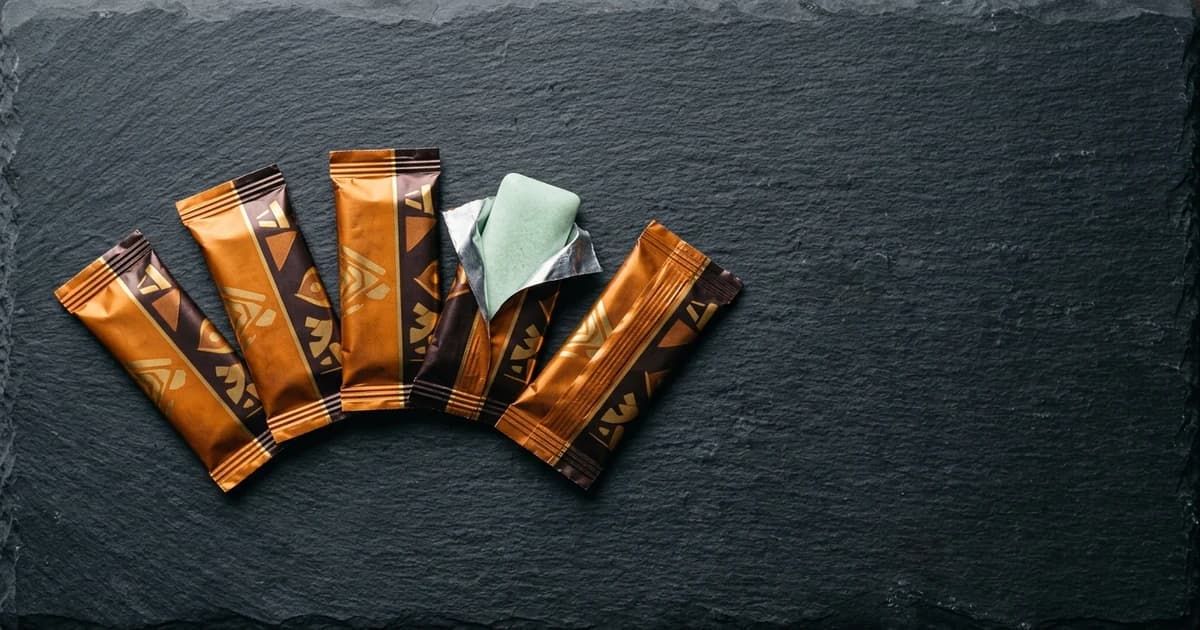
Caffeine Gum Explained: How It Works, How Fast It Hits, Which Brands Are Worth It
Yes, caffeine gum works. It delivers caffeine through the lining of your mouth (buccal mucosa) and reaches peak blood levels in roughly 44 to 80 minutes, compared to 84 to 120 minutes for a swallowed capsule at the same dose, per a pharmacokinetic study by Kamimori et al. (2002). Total absorption is similar. The gum just front-loads the curve.
That faster onset is the selling point. But "faster" does not mean "5x faster," and not every brand delivers the same dose or value per piece. Here is what the data says, what each brand puts in the gum, and where the marketing outpaces the science.
Best Caffeine Gum Brands at a Glance
| Brand | Caffeine per piece | Other actives | Pieces per pack | Approx. price per piece | Flavors |
|---|---|---|---|---|---|
| Neuro Gum | 40 mg (Extra Strength: 100 mg) | 60 mg L-theanine, B6, B12 | 54, 90, 108 or 180 | ~$0.34 to $0.46 | Peppermint, Spearmint, Cinnamon, Wintergreen, plus a Variety Pack |
| Run Gum | 50 mg | Taurine, B6, B12 | 2 per pouch (12 pouches/box) | ~$0.42 | Mint, Fruit, Cinnamon |
| Rev Gum | 60 mg (Extra Strength: 100 mg) | None listed | 6 | ~$0.25 to $0.33 | Spearmint, Polar Mint |
| Military Energy Gum (MEG) | 100 mg | None | 5 per pack | ~$0.30 | Spearmint, Cinnamon, Arctic Mint |
| Viter Energy Gum | 60 mg | B vitamins | Varies | ~$0.30 | Wintergreen, Spearmint, Cinnamon |
All five are sugar-free. Caffeine doses range from 40 mg (one Neuro piece) to 100 mg (one MEG piece or one Rev Extra Strength piece), so "a piece of caffeine gum" can mean anything. Always check the label.
How Caffeine Gum Is Absorbed: Buccal vs. Digestive
When you chew caffeine gum, caffeine dissolves in saliva and crosses the buccal mucosa, the thin tissue lining your cheeks and gums. This bypasses the stomach and liver on first pass, getting caffeine into the bloodstream sooner.
The Kamimori et al. (2002) study tested 100 mg and 200 mg doses in both gum and capsule form. The gum's absorption rate constant (ka) was 3.21 to 3.96 per hour, versus 1.29 to 2.36 per hour for capsules. That is roughly 1.5 to 3x faster, not the "5x" some brands claim. Relative bioavailability was about 77 to 90% after correcting for caffeine retained in the gum base.
A 2018 Sports Medicine review (Wickham & Spriet) confirmed the pattern: caffeinated gum is absorbed faster via buccal mucosa than capsule or gut delivery, but total caffeine absorption over time is not meaningfully different. Gum gets you there sooner, not higher.
Does caffeine gum really work?
It does. Chewing releases caffeine into saliva, and the mouth's blood supply carries it to the brain faster than waiting for a pill to dissolve in your stomach. The practical difference is 20 to 40 minutes of faster onset. After that, blood levels converge.
A Note on Military Energy Gum's "5x Faster" Claim
Military Energy Gum has a real pedigree. It was developed by the Walter Reed Army Institute of Research and won the U.S. Army's Greatest Invention of the Year Award in 2005. Each piece delivers 100 mg of caffeine with nothing else.
The brand's marketing states caffeine is absorbed "5x faster than energy drinks, pills or coffee." The peer-reviewed data does not support that. The Kamimori study, which tested the military's own gum formulation, measured absorption rate constants roughly 1.5 to 3x higher than capsules. Whether the brand is comparing a different metric or rounding generously is unclear. Treat "5x" as a marketing number, not a pharmacokinetic one.
Is Caffeine Gum Bad for You?
At normal doses, no. The FDA's general guidance puts the ceiling at 400 mg per day for most healthy adults, and caffeine gum is just another vehicle for the same molecule. The gum format does introduce a few unique considerations:
- Jaw fatigue. Gum base requires continuous chewing to release the caffeine. Some users report jaw soreness after multiple pieces, especially with stiffer formulations.
- Sugar-free sweeteners. Most caffeine gums use sugar alcohols (xylitol, sorbitol) or artificial sweeteners. Generally recognized as safe, though large amounts of sugar alcohols can cause digestive discomfort.
- Gum-base additives. Gum base is a blend of food-grade polymers, waxes, and softeners, swallowed in trace amounts. No established health concern at normal consumption.
The real risk is the same as with any concentrated caffeine product: it is easy to chew three or four pieces without thinking. Four pieces of MEG is 400 mg, your entire daily budget in 15 minutes.
What Happened to Wrigley's Alert Energy Gum in 2013
Wrigley launched Alert Energy Caffeine Gum (40 mg per piece) on April 29, 2013 and pulled it nine days later after the FDA opened an investigation into caffeine being added to foods that might reach children. This was not a safety recall. The FDA did not find that the gum was unsafe at its labeled dose.
The inquiry was about category-level policy: should caffeine show up in gum, candy, and snack foods where children are the likely consumers? Wrigley suspended production voluntarily. The product never came back, but the FDA never banned caffeine gum. Multiple brands sell it today without regulatory issue.
If you have seen the story framed as a safety scandal, that framing is wrong. It was a regulatory question about caffeine in the food supply, not a finding against gum specifically.
Caffeine Gum vs. a Cup of Coffee
| Factor | Caffeine gum (1 piece) | Drip coffee (8 oz) |
|---|---|---|
| Caffeine | 40 to 100 mg (varies by brand) | ~95 mg |
| Onset to peak | ~44 to 80 min | ~84 to 120 min (similar to capsule) |
| Calories | 0 to 5 | 2 (black) |
| Requires | Chewing for 10 to 15 min | A cup, hot water, brewing time |
| Portability | Pocket-sized | Spill risk |
| Duration of effect | 3 to 5 hours | 3 to 5 hours |
Coffee wins on ritual and flavor. Gum wins on speed and portability. Neither is metabolically different once caffeine hits your bloodstream. You are choosing a delivery method, not a different drug.
Caffeine Gum vs. Sublingual Pouches
Caffeine gum is not the only oral-absorption format. Sublingual pouches sit between your lip and gum, releasing their contents through the same mucosal tissue, no chewing required.
The practical differences: no jaw fatigue, no gum base to discard, and room for compounds that do not survive chewing well. Gum is limited by what stays stable in a gum matrix. Pouches can carry a broader ingredient profile. For a deeper look, see our focus pouch vs caffeine gum comparison and our Neuro Gum vs Run Gum breakdown.
Picking the Right Caffeine Delivery
Caffeine gum is a legitimate, research-backed way to get caffeine into your system faster than a pill or a cup of coffee. The difference is roughly 20 to 40 minutes to peak blood levels, and total absorption is comparable. Choose a brand based on dose per piece, your tolerance for jaw work, and whether you want extras like L-theanine or B vitamins. Stay under the FDA's 400 mg daily ceiling, and count every source, not just the gum.
Frequently Asked Questions
How many pieces of caffeine gum can you chew per day?
That depends on the caffeine per piece and your other sources. The FDA's general guidance is up to 400 mg per day for most healthy adults. If you are chewing 100 mg pieces (MEG or Rev Extra Strength), four pieces puts you at the limit with zero room for coffee or tea. Track your total intake, not just gum.
Is caffeine gum better than coffee?
"Better" depends on your priorities. Gum reaches peak blood levels 20 to 40 minutes faster, and you can use it anywhere without brewing equipment. Coffee offers more antioxidants, wider flavor range, and a social ritual. The caffeine molecule is identical once absorbed.
Does caffeine gum work for exercise?
Yes. The 2018 Sports Medicine review found caffeinated gum effective for exercise performance, with the faster buccal absorption useful for a quick pre-workout boost. Chewing 15 to 30 minutes before training gives a practical head start over a capsule.
What happened to Wrigley's caffeine gum?
Wrigley launched Alert Energy Caffeine Gum in April 2013 and pulled it nine days later after the FDA began investigating caffeine added to snack foods. The FDA did not declare the gum unsafe. It was a policy question about caffeinated foods reaching children, not a product safety finding.
Is caffeine gum bad for your teeth?
Most caffeine gums are sugar-free and use xylitol or sorbitol, which do not promote tooth decay. Xylitol may actually have mild anti-cavity properties. The gum itself is not a dental concern, though very frequent chewing can contribute to jaw tension or TMJ discomfort in susceptible individuals.
How fast does caffeine gum kick in?
Pharmacokinetic data shows caffeine gum reaches peak plasma concentration in about 44 to 80 minutes, depending on dose. Many users report feeling it within 10 to 15 minutes, which likely reflects the early buccal absorption phase before the full peak.
Which caffeine gum has the most caffeine per piece?
Military Energy Gum (MEG) and Rev Gum Extra Strength both deliver 100 mg per piece. That is roughly equivalent to a small cup of coffee in a single piece of gum. If you want a lower starting dose, Neuro Gum's standard formula (40 mg) or Run Gum (50 mg) give you more control.
The Format Caffeine Gum Can't Solve
Caffeine gum nails portability and speed. What it cannot do is stack multiple compounds in meaningful doses and deliver them without chewing. Gum base limits what you can include, how much fits in each piece, and how long the release lasts.
Roon is a sublingual pouch, not a gum. It sits between your lip and gum and delivers caffeine, L-theanine, methylliberine (Dynamine), and theacrine (TeaCrine) through the same buccal tissue caffeine gum uses, with no chewing and no gum base. Methylliberine slows caffeine clearance: a randomized, double-blind crossover PK study (n=12) found that co-administering methylliberine with caffeine cut oral clearance from 41.9 to 17.1 L/hr and extended half-life from 7.2 to 15 hours, with no increase in peak concentration. That study used 100 mg methylliberine + 150 mg caffeine, roughly 4x the methylliberine and 1.9x the caffeine in a Roon pouch (25 mg + 80 mg), so the exact magnitude differs at Roon's dose. The mechanism is directionally the same: same peak, longer tail, which is why Roon's felt window runs 6 to 8 hours instead of gum's 3 to 4.
The trade-off: a longer half-life means stop at least 8 hours before bed. Roon starts from $9.16 per tin ($0.61 per pouch on a 12-tin subscription), more per serving than basic caffeine gum. You are paying for duration, not more stimulation. If all you need is a quick caffeine hit on a trail run, gum is fine. If you want 6 to 8 hours of sustained focus from a single pouch, that is a different problem and a different format.
Related from Roon
- Neuro Gum vs Run Gum: full head-to-head
- Focus pouch vs caffeine gum comparison
- Best caffeine pills and supplements
- Caffeine gummies and energy chews
Written by Roon Team