Caffeine Pouches Zyn: An Honest Side-by-Side
Caffeine Pouches Zyn: An Honest Side-by-Side
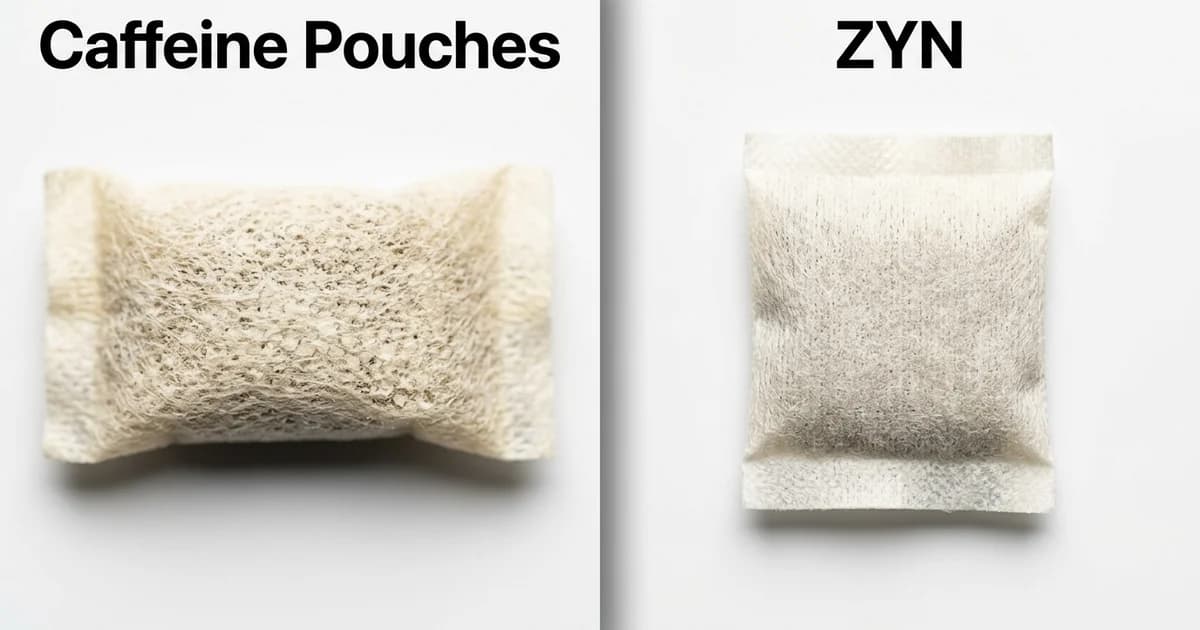
If you're comparing caffeine pouches Zyn products, the distinction is simple: Zyn delivers nicotine, and caffeine pouches deliver caffeine. That single difference decides almost everything else about how each one feels, what it does to your body, and whether it belongs in your daily routine.
The caffeine pouches vs Zyn question usually comes from someone who likes the pouch format but wants the buzz without the nicotine. Same discreet delivery under the lip, different active ingredient. This guide breaks down both categories of caffeine pouches Zyn options on the details that actually matter: what's inside, how they work, what they cost per pouch, and the real trade-offs on each side.
No hype, no cessation claims. Just the facts and the pharmacology.
Key Takeaways
- Zyn is a nicotine product; caffeine pouches are nicotine-free stimulant products. They are not interchangeable.
- Zyn's classic strengths are 3 mg and 6 mg nicotine, and it carries the known risks of nicotine: addiction and gum irritation.
- Caffeine pouches skip nicotine entirely and rely on caffeine, often paired with L-theanine to sharpen attention and calm alertness.
- Per-pouch prices range widely, from roughly $0.30 to about $1.00, depending on the brand and formula.
- If your goal is clean focus rather than a nicotine hit, a caffeine or nootropic pouch is the closer match in the caffeine pouches Zyn comparison.
Caffeine Pouches Zyn: The Core Difference
The active ingredient is the whole story. Zyn is built around nicotine; caffeine pouches are built around caffeine. Everything downstream flows from that.
Nicotine is a stimulant, but it's also one of the most addictive substances people use recreationally. Some consider nicotine pouches a safer alternative to smoking, but they can cause side effects like gum irritation and addiction. That's the honest baseline for any nicotine pouch, Zyn included.
Caffeine is also a stimulant, and it has its own downsides at high doses. It is not, however, delivered as a nicotine salt, and it doesn't carry nicotine's dependence profile. So the caffeine vs nicotine pouches decision is really a decision about which stimulant you want in your mouth and why.
What Zyn Actually Contains
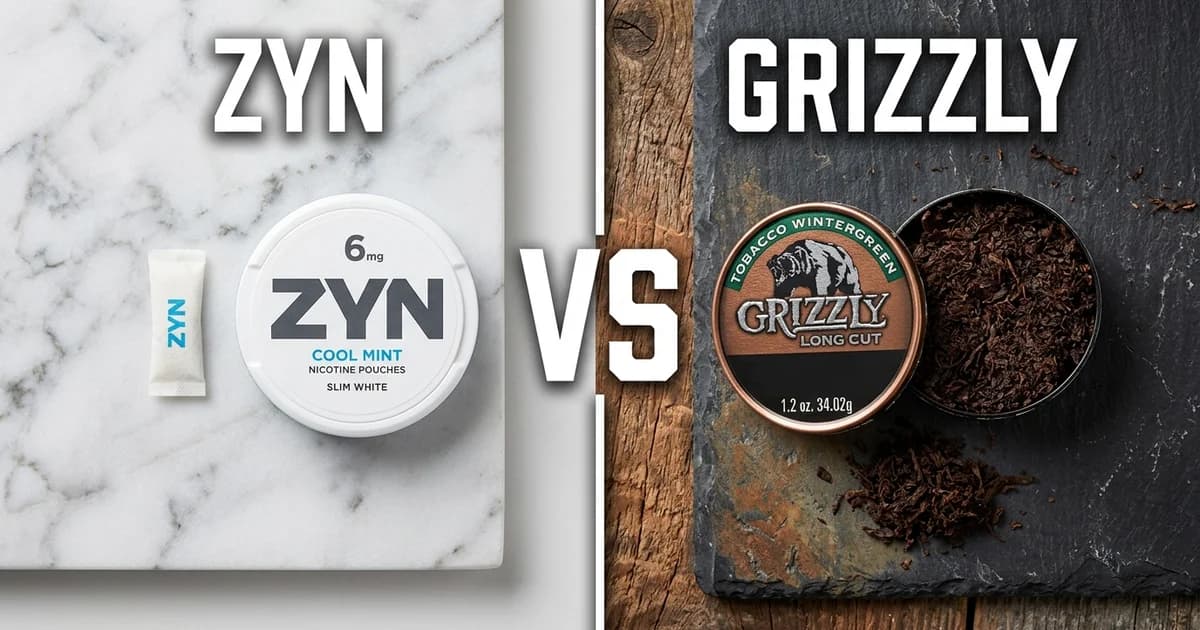
Zyn is a synthetic-fiber pouch you park between your gum and lip. In addition to nicotine salt, ZYN contains only food-grade ingredients, including a granulation agent, fillers, pH balancers, sweeteners and flavorings. The nicotine itself is pharmaceutical-grade nicotine bitartrate dihydrate.
Strength options are straightforward. ZYN's standard line now comes in 1.5 mg, 3 mg, 6 mg, and 8 mg strengths on zyn.com, up from the classic 3 mg and 6 mg, with newer flavors like Black Cherry, Peach, and Dragonberry added to the range. There is also a stronger line: ZYN Ultra is a hydro-boosted pouch available in 9 mg and 11 mg strengths, with 20 pouches per can.
On the regulatory side, Zyn is now the most-vetted product in the category. The FDA authorized the marketing of 20 ZYN nicotine pouch products through the premarket tobacco product application pathway, the first time the agency authorized products commonly referred to as nicotine pouches, which are small synthetic fiber pouches containing nicotine placed between a person's gum and lip.
In 2026 the agency went a step further. The FDA issued modified risk orders allowing 20 ZYN products to be marketed with the claim that using ZYN instead of cigarettes puts you at a lower risk of mouth cancer, heart disease, lung cancer, stroke, emphysema, and chronic bronchitis. Read that carefully. The comparison is to cigarettes, not to abstaining. The FDA is clear that for adults who currently smoke, fully quitting all tobacco products would most benefit their health. This context matters for anyone weighing caffeine pouches Zyn products against each other.
What Caffeine Pouches Actually Contain
Caffeine pouches swap nicotine for caffeine, and the better ones don't stop there. The category splits into two camps.
Plain caffeine pouches deliver a caffeine dose, usually in the same fiber-pouch format, absorbed partly through the tissue under your lip and partly by swallowing. Nootropic pouches go further, stacking caffeine with focus ingredients like L-theanine, methylliberine, and theacrine.
That second group is where the science gets interesting, and it's the fair comparison point for anyone weighing zyn vs caffeine pouches for productivity rather than a nicotine habit.
How Each One Feels: Onset, Duration, and the Crash
Nicotine hits fast and fades fast. Caffeine hits a little slower but lasts far longer. This is the practical difference you'll notice most in the caffeine pouches Zyn comparison.
A nicotine pouch produces a quick head-rush that typically peaks and declines within roughly 30 to 60 minutes, which is part of why nicotine drives repeat use throughout the day. Caffeine's effects build over minutes and stretch across hours, and how sharp the peak feels depends heavily on what it's paired with.
Pairing matters because caffeine alone can bring jitters and an afternoon dip. That's the problem L-theanine solves.
The L-Theanine Difference
L-theanine is the amino acid in tea that takes the edge off caffeine without dulling the focus. The research here is specific.
In a double-blind, placebo-controlled crossover trial, researchers tested a caffeine and L-theanine combination on attention in sleep-deprived adults. The study examined the acute effects of a high-dose L-theanine and caffeine combination, using 200 mg L-theanine with 160 mg caffeine, on reaction time and neurophysiological measures of selective attention in overnight sleep-deprived healthy adults. You can read the full study on PubMed Central.
The takeaway for pouch shoppers: caffeine paired with L-theanine tends to deliver steadier focus than caffeine on its own. A plain caffeine pouch skips this benefit; a nootropic pouch designed around it does not. This is one reason the caffeine pouches Zyn debate often tips toward nootropic options for focus-driven users.
Methylliberine and Theacrine: The Tolerance Angle
Two lesser-known ingredients show up in the more advanced nootropic pouches, and both are worth understanding because of how they behave differently from caffeine.
Both come from the same plant as caffeine. Theacrine is a pure alkaloid isolated from the Kucha tea leaf, and like caffeine it is an adenosine receptor antagonist that also activates dopamine D1 and D2 receptors. Methylliberine, sold as Dynamine, is also a purine alkaloid from the Kucha tea leaf that acts at adenosine receptors.
The interesting part is tolerance. Theacrine has been shown to be safe after eight weeks of use and does not appear to exhibit a tachyphylaxis or habituation effect like caffeine. In plainer terms, your body may not adapt to it the way it adapts to caffeine, which is one reason it gets stacked in. And on the jitters front, caffeine and theacrine together have been shown to lower jitteriness compared to caffeine alone, without elevating blood pressure or heart rate. The research on this trio is summarized in a study of egamer cognitive performance.
The Caffeine Pouches Zyn Side-by-Side Comparison Table
Here's the honest breakdown across the category, including plain nicotine pouches, plain caffeine pouches, and nootropic pouches. Per-pouch prices below were live-checked in 2026. Every product gets real pros and real cons.
| Brand / Product | Active(s) | Nicotine? | Pouches/Tin | Price/Pouch | Honest Pros | Honest Cons |
|---|---|---|---|---|---|---|
| Zyn | Nicotine (3 mg / 6 mg; Ultra 9 / 11 mg) | Yes | 15 (Ultra 20) | Not analyzed here | FDA-authorized; consistent dosing; wide flavor range | Addictive; can cause gum irritation; no cognitive stack |
| Roon | 80 mg caffeine, 60 mg L-theanine, 25 mg Dynamine, 5 mg TeaCrine | No | 15 | $0.61 to $1.00 | Full 4-ingredient focus stack; L-theanine to sharpen attention and promote calm alertness; sublingual; 6-8 hr window | Higher end per pouch; caffeine sensitivity applies |
| Ultra Focus | enfinity paraxanthine, L-theanine, Alpha GPC, Panax Ginseng, B6, B12 | No | 15 | $1.067 | Caffeine-free stimulant route; 5 flavors plus a variety pack | Doses on Amazon label only; caffeine-free may underwhelm caffeine users |
| Smile+ | Caffeine plus a Smile Protection blend | No | Not analyzed | $0.666 to $1.666 | Simple caffeine format | Wide price spread; blend doses not published |
| Draft State | Caffeine | No | Not analyzed | $0.575 to $0.998 | Mid-tier caffeine option | Price varies by tier |
| Nuks | 40mg caffeine, 60mg Alpha-GPC, 55mg BHB ketones, 50mg L-theanine, 50mg acetyl-L-carnitine, 30mg L-tyrosine, 15mg Lion's Mane, 15mg Rhodiola, 10mg phosphatidylserine | No | Not published | Not derivable, $7.99 per can | Long dosed ingredient list at a low can price | 8 further ingredients listed with no amount; pouch count not published |
| Berserker | Caffeine | No | Not analyzed | $0.350 to $0.400 | Budget-friendly | Plain caffeine, no L-theanine |
| Fully Loaded ALPHA | 60mg Alpha-GPC, 60mg L-Tyrosine, 20mg GABA | No | Not analyzed | $0.295 (bulk) | Cheapest per pouch in bulk | Bulk pricing; no caffeine |
A few notes on the table. Zyn's per-pouch price varies too much by retailer to state one honest number, so it's left out rather than guessed. Ultra Focus is worth a caveat many shoppers miss: Ultra Focus is nicotine-free, tobacco-free, and caffeine-free, using paraxanthine instead of caffeine, so if you specifically want caffeine, it isn't your match. This caffeine pouches Zyn table should help you narrow down the right product for your needs.
Who Each One Is For
Match the tool to the goal. That's the cleanest way to settle caffeine pouches vs Zyn for yourself.
Zyn makes sense for an adult who already uses nicotine and wants a smoke-free, spit-free way to get it. The FDA's modified risk order frames it as a lower-risk option than cigarettes for people who smoke, and that's the population it was reviewed for.
Caffeine and nootropic pouches make sense for a different person entirely: someone who wants sharper focus, faster onset than a coffee, and no nicotine in the equation. If you've been reaching for a pouch to power through work, study, or a long drive, the caffeine side of the caffeine pouches Zyn comparison is the honest fit. Plain caffeine pouches cover the basics cheaply. Nootropic pouches with an L-theanine stack cover them with less jitter.
The caffeine vs nicotine pouches split also matters for daily habits. Nicotine drives repeat dosing because of its short effect window and dependence profile. Caffeine pouches, especially those with theacrine, may hold up better over weeks of consistent use without the same tolerance buildup.
If you're weighing broader options, our guides on the best nootropic pouches for focus and how sublingual caffeine absorption works go deeper on the mechanics.
The Honest Bottom Line on Caffeine Pouches Zyn Products
Caffeine pouches and Zyn look alike and behave nothing alike. One is a nicotine product with real regulatory backing and real dependence risk. The other is a nicotine-free stimulant, sometimes just caffeine, sometimes caffeine engineered with L-theanine, methylliberine, and theacrine for steadier focus.
The right choice in the zyn vs caffeine pouches debate depends entirely on what you're actually after. If you want nicotine, a nicotine pouch is the category. If you want focus without the nicotine, caffeine and nootropic pouches are built for exactly that, and the ones that add L-theanine tend to feel smoother than caffeine alone.
The caffeine vs nicotine pouches question has no universal answer. Read the label, know your active ingredient, and pick the pouch that matches the job. That's the only honest way to settle the caffeine pouches Zyn decision.
Frequently Asked Questions
Are caffeine pouches a substitute for Zyn?
Not directly. Zyn delivers nicotine and caffeine pouches deliver caffeine, so they produce different effects and serve different goals. Some people who like the pouch format switch to caffeine pouches when they want the discreet delivery without nicotine, but the two are not pharmacologically interchangeable. If your goal involves nicotine specifically, a caffeine pouch will not replicate that. The caffeine pouches Zyn comparison is about choosing the right stimulant, not swapping one for the other.
Do caffeine pouches contain nicotine?
No. Caffeine pouches are nicotine-free by definition. Their active ingredient is caffeine, and many nootropic versions add L-theanine, methylliberine, or theacrine for focus. Zyn, by contrast, is a nicotine product. Always check the label, since some brands sell both nicotine and non-nicotine lines under similar packaging.
Is Zyn safer than caffeine pouches?
They carry different risks, so "safer" depends on what you're measuring. Nicotine pouches can cause addiction and gum irritation, per health sources like WebMD. Caffeine pouches avoid nicotine dependence entirely but can still cause caffeine side effects like a racing heart or trouble sleeping at high doses. The FDA authorized Zyn as lower-risk than cigarettes, not as risk-free. This is a key nuance in the caffeine vs nicotine pouches discussion.
Why do caffeine pouches add L-theanine?
L-theanine takes the rough edge off caffeine. Research on a caffeine and L-theanine combination found it improved measures of selective attention in sleep-deprived adults, and the amino acid is widely used to reduce caffeine jitters. A plain caffeine pouch skips this; a nootropic pouch built around the pairing tends to deliver steadier, calmer focus for the same caffeine dose. This is one area where caffeine pouches Zyn products differ most: Zyn has no cognitive stack, while nootropic caffeine pouches are designed around one.
What is methylliberine and why is it in some pouches?
Methylliberine, sold as Dynamine, is a purine alkaloid from the same Kucha tea leaf as caffeine, and it acts at adenosine receptors. It's added to nootropic pouches for a fast, clean lift. It's often paired with theacrine, which research suggests does not build tolerance the way caffeine does, making the combination attractive for daily focus without the usual caffeine adaptation.
How much do caffeine pouches cost compared to Zyn?
Caffeine pouch prices vary widely by brand and formula. Live-checked 2026 per-pouch prices ranged from about $0.35 for a plain caffeine pouch up to $1.00 for a full four-ingredient nootropic pouch (or as low as $0.61 on a subscription). Plain caffeine pouches sit at the low end; nootropic stacks with L-theanine, Dynamine, and TeaCrine sit at the higher end because they contain more actives. Zyn pricing depends on the retailer, so the caffeine pouches Zyn cost comparison requires checking local availability.
Do caffeine pouches cause a crash like energy drinks?
They can, but a good formula limits it. Caffeine alone can produce a peak-and-crash pattern, especially at high doses. Adding L-theanine helps smooth the curve, and ingredients like theacrine are used specifically because they don't appear to build tolerance the way caffeine does. Plain caffeine pouches are more prone to a dip than well-formulated nootropic pouches. This is another reason the zyn vs caffeine pouches choice matters: the experience curve is very different between the two.
Where a Nicotine-Free Focus Pouch Fits
If you got here because you like the pouch format but don't want nicotine, that's the exact gap Roon was built for. It's a zero-nicotine, sublingual pouch aimed at focus rather than a nicotine hit, so it isn't a Zyn replacement in the nicotine sense and it isn't meant to be. For anyone whose caffeine pouches Zyn research led them toward the caffeine side, Roon is worth a closer look.
What's inside is the full stack this article described: 80 mg caffeine, 60 mg L-theanine, 25 mg methylliberine (Dynamine), and 5 mg theacrine (TeaCrine), 15 pouches per tin. The L-theanine is there to smooth the caffeine, and the design targets a 6 to 8 hour window of steady focus without the jitters or the hard crash that plain caffeine can bring.
Be clear-eyed about the trade-offs. At $1.00 per pouch one-time (or as low as $0.61 per pouch on a subscription), it sits at the higher end of the table, and if you're caffeine-sensitive, the same caution applies as with any 80 mg dose. Roon is not a nicotine product, not a cessation aid, and not a fix for lost sleep. If focus without nicotine is what you actually want, try Roon and judge it on that.
Written by Roon Team