What Is Third Shift? Hours, Pay and How to Sleep
Roon Team
What Is Third Shift? Hours, Pay and How to Sleep
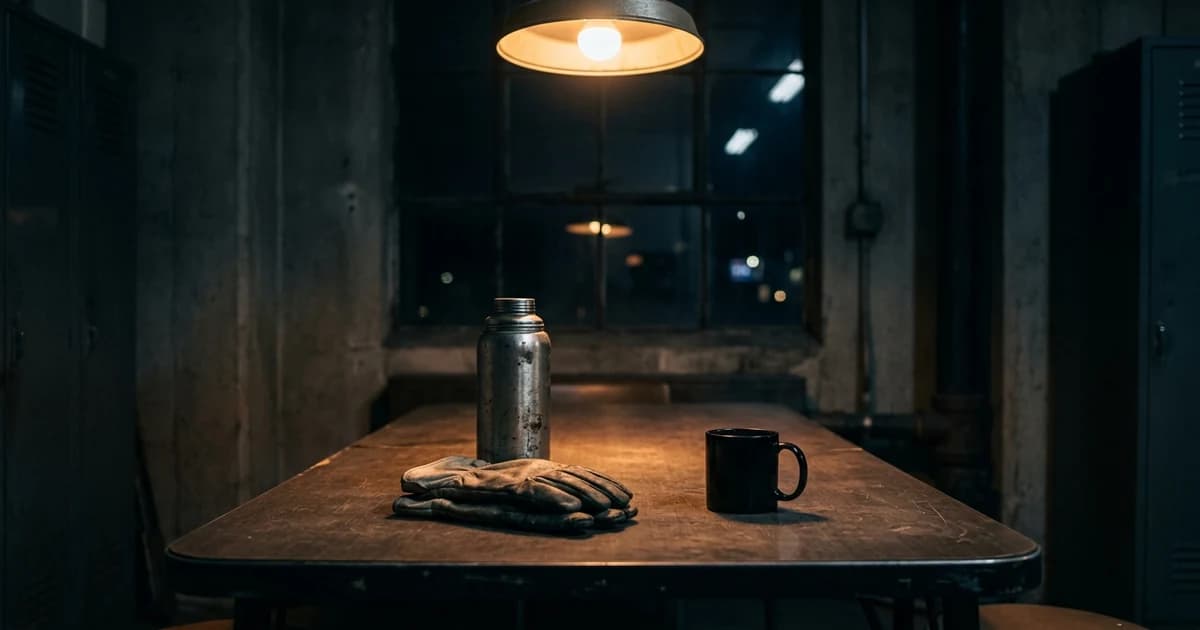
Third shift is the overnight shift in a three-shift, 24-hour operation. It usually runs 11 p.m. to 7 a.m. or midnight to 8 a.m., though some employers start at 10 p.m. You will also hear it called the night shift, the graveyard shift, or just "overnights." If you just saw those words on a job posting, here is where third shift fits.
| Shift | Typical hours | Other names | Federal wage differential |
|---|---|---|---|
| First | 7:00 a.m. to 3:00 p.m. | Day shift, morning shift | None (base rate) |
| Second | 3:00 p.m. to 11:00 p.m. | Swing shift, afternoon shift | 7.5% |
| Third | 11:00 p.m. to 7:00 a.m. | Night shift, graveyard shift | 10% |
Federal differentials apply to Federal Wage System employees only. Private-sector employers set their own rates.
Key Takeaways
- Third shift typically means 11 p.m. to 7 a.m. or midnight to 8 a.m. Federal law does not require extra pay for night work, but the federal wage system pays a 10% differential.
- About 4% of U.S. wage and salary workers usually work nights (BLS, 2017-2018).
- Daytime sleep after a night shift is shorter and lighter. A structured plan, timed caffeine, and a dark room make the difference.
- The drive home after third shift is the most dangerous part of the night. If you are very sleepy, do not drive.
What Are Third Shift Hours?
Most third shifts run eight hours starting between 10 p.m. and midnight. The 11 p.m. to 7 a.m. window is the most common in manufacturing and warehousing. Hospitals and dispatch centers sometimes run 12-hour nights (7 p.m. to 7 a.m.) instead. If your schedule is a rotating 12-hour pattern, the DuPont, 2-2-3, and Panama schedule guides are a better fit.
Who works thirds? Security guards, warehouse pickers, production operators, transport workers, nurses, hotel staff, and anyone keeping a 24-hour operation running. According to the Bureau of Labor Statistics (2017-2018, the most recent release), 4% of wage and salary workers usually worked nights and 6% worked evenings.
Does Third Shift Pay More?
Maybe. Federal law does not require it. The U.S. Department of Labor is direct: the FLSA does not require extra pay for night work. Overtime past 40 hours still applies, but that is overtime, not a shift differential.
The one published benchmark: Federal Wage System employees receive 7.5% for second shift (majority of hours between 3 p.m. and midnight) and 10% for third shift (majority between 11 p.m. and 8 a.m.), applied to the entire shift. Private-sector differentials vary by employer. Some pay a flat dollar amount, some a percentage, some nothing at all. Get your number in writing before you accept.
What Third Shift Does to Your Body Clock
Your internal clock drops core temperature, raises melatonin, and dials down alertness between about 2 a.m. and 6 a.m. Working through that window is fighting physiology. Most third shift veterans call it the 4 a.m. wall: concentration sags, reaction time lengthens, mistakes multiply.
Daytime sleep compounds the problem. NIOSH notes that night shift workers usually get less sleep overall, and that the sleep is lighter. Daylight, traffic noise, and the household waking up all work against deep rest.
The IARC classified night shift work as "probably carcinogenic to humans" (Group 2A) in 2019, based on limited evidence of cancer in humans, sufficient evidence of cancer in experimental animals, and strong mechanistic evidence. Worth knowing, not worth panicking over. If you have persistent insomnia or excessive sleepiness lasting a month or more, raise it with a clinician. Shift work disorder is a recognized diagnosis.
A Third Shift Sleep Schedule That Works (11 p.m. to 7 a.m.)
One workable template, not the only one. Adjust for your commute and family. The structure comes from NIOSH guidance.
| Time | What to do | Why |
|---|---|---|
| 7:00 a.m. | Clock out. Blue-light-blocking sunglasses on before you step outside. | NIOSH: morning sunlight signals "wake up." Blocking it protects your ability to fall asleep. |
| 7:30 a.m. | Small meal if hungry. | NIOSH recommends eating before bed if needed. Keep it light. |
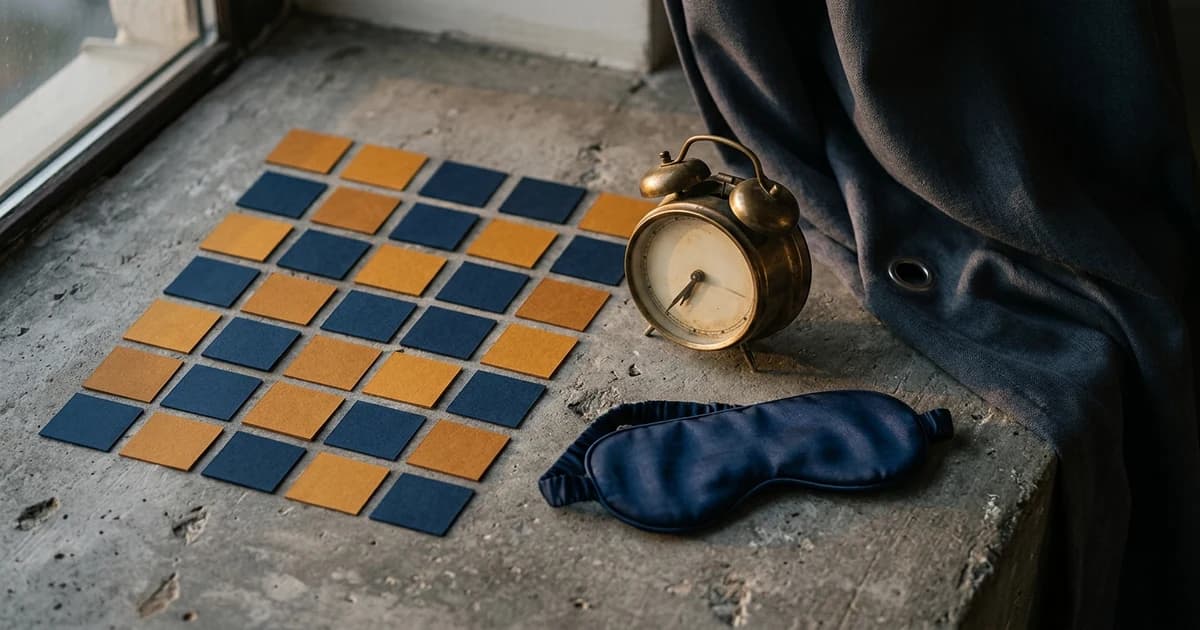
| 8:00 a.m. to ~3:00 p.m. | Main sleep. Room blacked out, earplugs or white noise, phone silenced. | NIOSH: make the room "so dark you cannot see your hand in front of your eyes." |
| 3:00 to 6:00 p.m. | Family, errands, daylight, exercise. | Afternoon daylight anchors the circadian rhythm without pushing bedtime earlier. |
| 6:00 p.m. | Main meal. | Eat before the shift so you are not relying on vending machines at 3 a.m. |
| 9:00 to 9:30 p.m. | Optional 30-minute nap. | NIOSH: a pre-shift nap improves alertness during the second half of the night. |
| 10:30 p.m. | First caffeine. | Takes about 30 minutes to kick in. You are alert by 11. |
| 11:00 p.m. | Shift starts. | Caffeine rising, nap behind you. |
| ~2:00 to 3:00 a.m. | Last caffeine, if needed. | Half-life is 5 to 6 hours. A dose at 3 a.m. still has half its punch at 8 a.m. |
| 7:00 a.m. | Home. Sunglasses on. Repeat. | Full cycle. |
When to Use Caffeine on Third Shift (and When to Stop)
NIOSH is direct: use caffeine at the beginning of the shift and stop several hours before the shift ends. Caffeine's half-life is 5 to 6 hours in most people, meaning half of a 3 a.m. dose is still circulating at 8 or 9 a.m.
A 2013 study by Drake et al. (n=12) tested 400 mg of caffeine at 0, 3, or 6 hours before bedtime. Even the 6-hour condition reduced total sleep by more than an hour. That dose was five times an 80 mg serving, but the principle holds: late caffeine costs sleep, and on third shift you cannot afford to lose any. The practical rule for an 11-to-7 shift with an 8 a.m. bedtime: last caffeine by 2 to 3 a.m. The FDA cites 400 mg per day as the ceiling for most adults.
Format is personal: coffee, tea, energy drinks, caffeine pouches, pills or drinks built for night shift. What matters is when the last dose goes in. For 12-hour nights, see the 12-hour night shift caffeine schedule.
How to Handle Days Off Without Wrecking the Week
The temptation on Friday morning is to flip fully to a day schedule, stay up all day, and crash at 10 p.m. By Sunday night you have half-readjusted to days and you are starting from scratch.
NIOSH recommends a compromise: on days off, stay up until 3 to 4 a.m. and sleep until noon or 1 p.m. You still get daylight hours with family, but your sleep window never jumps by more than four or five hours. The full flip costs more sleep across the week than the partial flip saves in social time. For more on resetting, see the guide on how to reset your circadian rhythm.
The Drive Home Is the Dangerous Part
NHTSA reports 633 people died in 2023 in crashes involving a drowsy driver, with crashes clustering between midnight and 6 a.m. and in the late afternoon. A third shift worker clocking out at 7 a.m. after fighting the circadian dip all night hits the tail end of that window.
NIOSH's options: get a ride, carpool, take public transport, or use caffeine followed by a short caffeine nap before driving. "If you are very sleepy, do not drive." Caffeine is a short bridge, never a substitute for sleep. Know the drowsy-driving warning signs before you need them.
First, Second, or Third Shift: Which Is Easier to Live On?
Fixed thirds are easier on the body than rotating schedules because the sleep time stays put. You adapt, partially, over a week or two. Rotating schedules yank the sleep window around before adaptation settles in, which is why NIOSH consistently favors fixed shifts when the operation allows it.
If the "third shift" job you are considering is actually a rotating 12-hour pattern, the DuPont, 2-2-3, and Panama schedule guides cover those rotations with sleep and caffeine plans for each.
The Bottom Line on Working Overnights
Third shift is roughly 11 p.m. to 7 a.m., the law does not guarantee extra pay, and the biological cost is shorter, lighter sleep. None of that is a reason to avoid the job. It is a reason to treat sleep as a non-negotiable part of the work: a dark room, a consistent schedule, timed caffeine, and a plan for the drive home.
Frequently Asked Questions
What time is third shift?
Third shift typically starts between 10 p.m. and midnight and ends between 6 a.m. and 8 a.m. The most common window is 11 p.m. to 7 a.m. Exact times depend on the employer and whether the operation runs three 8-hour shifts or two 12-hour shifts.
Is third shift the same as graveyard shift?
Yes. "Graveyard shift," "night shift," "overnights," and "thirds" all refer to the same overnight work period.
How much more does third shift pay?
There is no federal requirement. The FLSA does not mandate a shift differential. Federal Wage System employees receive a 10% differential for third shift. Private employers set their own rates, and some pay nothing extra. Get the number in your offer letter.
When should I sleep if I work third shift?
For an 11 p.m. to 7 a.m. shift, sleeping from about 8 a.m. to 3 p.m. gives you a 7-hour block. Black out the room, use earplugs or white noise, and keep the schedule consistent on days off.
How late into a third shift can I have caffeine?
Stop by 2 to 3 a.m. if your bedtime is around 8 a.m. Caffeine's half-life is 5 to 6 hours, so a dose at 3 a.m. still has meaningful levels at 8 or 9 a.m.
Is working third shift bad for your health?
Long-term night work is associated with health risks. The IARC classified night shift work as Group 2A (probably carcinogenic) in 2019 based on limited human evidence. The day-to-day risks most workers feel first are shorter sleep and drowsy driving. A consistent schedule and timed caffeine reduce the burden. If insomnia or excessive sleepiness persists for a month or more, talk to a clinician.
A Caffeine Plan That Ends Before Your Shift Does
The problem this article keeps circling: you need alertness through the 3 to 5 a.m. dip, but caffeine after about 3 a.m. wrecks your morning sleep. The answer is fewer, earlier doses that last longer.
Roon is an 80 mg caffeine pouch that pairs caffeine with 60 mg L-theanine, 25 mg methylliberine (Dynamine), and 5 mg theacrine (TeaCrine). Methylliberine slows caffeine clearance. In a randomized, double-blind crossover study (n=12), co-administration with caffeine cut oral clearance from 41.9 to 17.1 L/hr and extended caffeine's half-life from 7.2 to 15 hours, with no increase in peak concentration. That study used 100 mg methylliberine and 150 mg caffeine, roughly 4x and 1.9x Roon's doses, so the magnitude will differ at Roon's 25 mg/80 mg. The mechanism is directionally the same: same peak, longer tail. The felt window is 6 to 8 hours, which is why 80 mg (a small-coffee dose) can carry the first half of a shift without a 4 a.m. refill.
The trade-off: a longer half-life means you cannot use it late. A pouch at 4 a.m. would fight the sleep schedule this article just built. Stop at least 8 hours before bed. Roon is zero nicotine, zero sugar (contains sucralose), Cool Mint, 15 pouches per tin. From $9.16 per tin on subscription ($0.61 per pouch) or $15.00 per tin one-time (4 tins). First order includes a 30-day money-back guarantee, once per customer. Sleep is the fix. Caffeine is the bridge. Try Roon.
Related from Roon
- Night shift caffeine schedule (12-hour version)
- How to stay alert on the night shift without crashing at 4 a.m.
- How to reset your circadian rhythm
- What to take to stay awake on night shift
Written by Roon Team