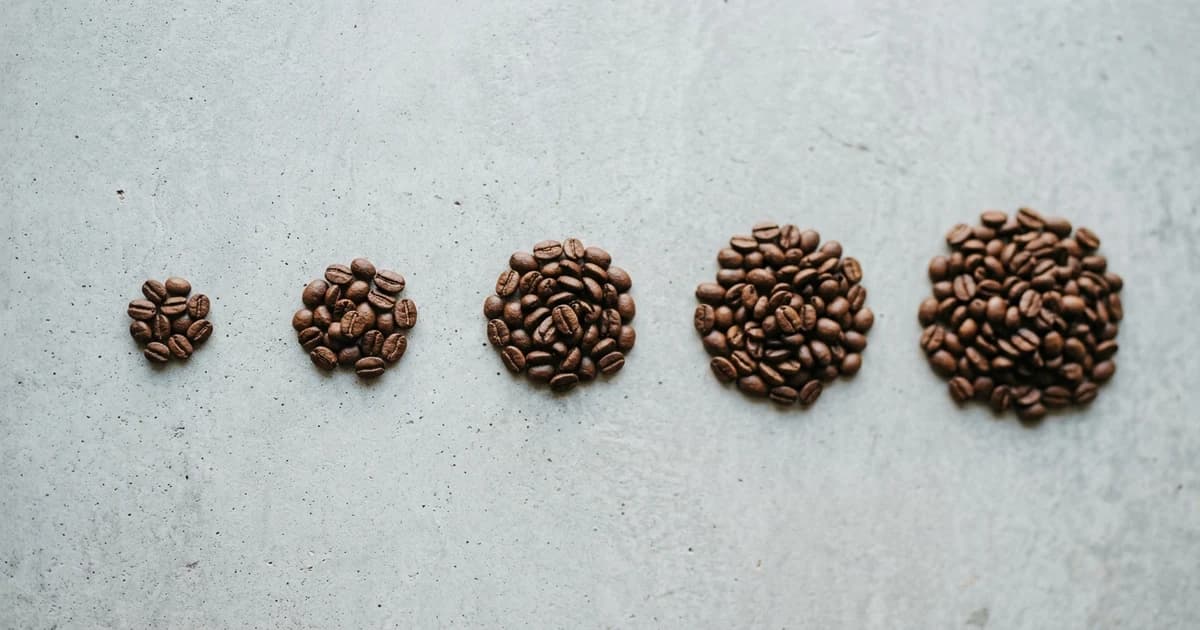
Caffeine for Night Shift: A 12-Hour Schedule Built From NIOSH and Cochrane
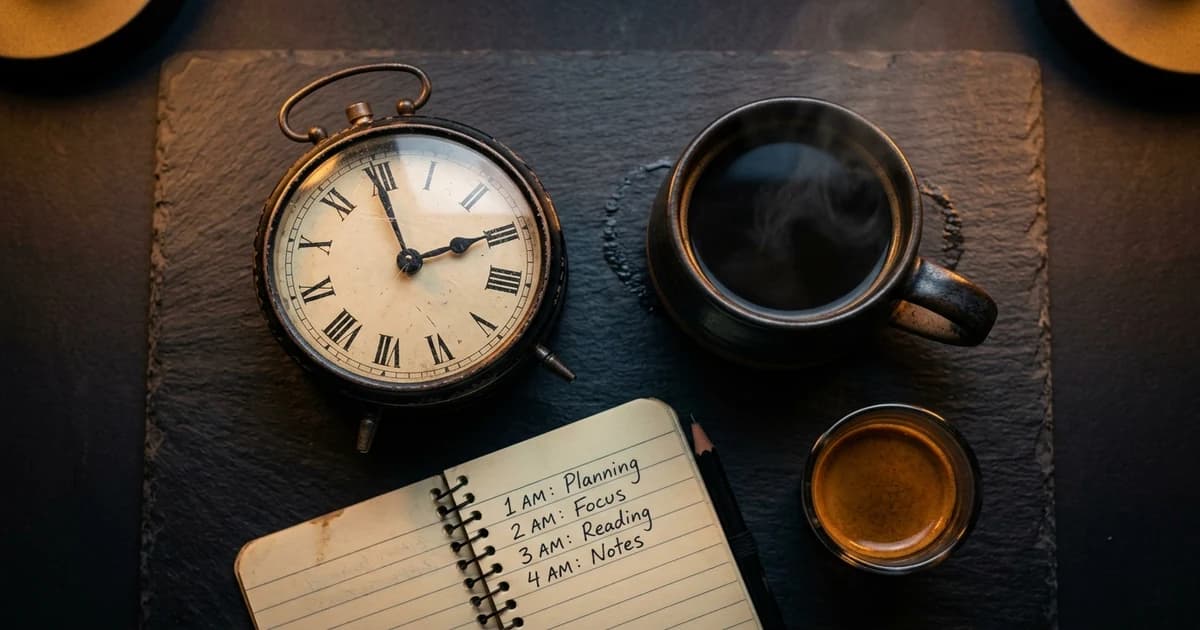
Caffeine for Night Shift: A 12-Hour Schedule Built From NIOSH and Cochrane
Caffeine for night shift work follows three rules: front-load it early, keep later doses small, and stop long before your daytime sleep. NIOSH puts caffeine onset at 15 to 45 minutes and its half-life at 5 to 6 hours. A 2023 meta-analysis of 24 studies found that even 107 mg of coffee needs 8.8 hours of clearance before bedtime to avoid losing total sleep time. This article turns those numbers into a clock-by-clock schedule for a standard 7 pm to 7 am shift.
Key Takeaways
- Your largest caffeine dose goes at or before the start of the shift, not in the middle of it.
- Your last dose must land at least 8.8 hours before you plan to sleep, which for most night workers means nothing after roughly 11 pm.
- A 30-minute nap during break beats a 4 am coffee in both evidence and practice.
- The FDA ceiling of 400 mg per day is the hard cap. Most people will stay well under it.
The Three Numbers Behind Every Caffeine for Night Shift Schedule
Every timing decision in this guide rests on three published figures.
| Parameter | Value | Source |
|---|---|---|
| Onset | 15 to 45 minutes | NIOSH Module 6 |
| Half-life | 5 to 6 hours | NIOSH Module 6 |
| Cutoff for 107 mg (1 coffee) | 8.8 hours before bed | Gardiner et al., 2023 |
| Cutoff for 217.5 mg (2 coffees) | 13.2 hours before bed | Gardiner et al., 2023 |
| Daily ceiling | 400 mg | FDA |
A worked example: you drink 200 mg at midnight. By 5 to 6 am, roughly 100 mg is still circulating. If you are trying to fall asleep at 8 am, that 100 mg is still working against you. NIOSH puts it plainly: if you drink coffee near the end of a night shift, there can still be enough caffeine in your system to cause restlessness while you are trying to sleep the next morning.
What the Cochrane Evidence Actually Shows
A Cochrane systematic review examined 13 trials on caffeine and shift-worker performance. Individual trials ranged from 6 to 68 participants. Caffeine reduced errors compared to placebo in the trials that measured errors. Trials comparing caffeine to nap found no significant difference in effect.
Those results carry real limits. None of the trials collected outcome data on the occurrence of injuries. No trial participants were reported as having a confirmed diagnosis of shift work disorder. The findings largely originate from studies involving young participants under simulated conditions. The review's conclusion: caffeine may be an effective intervention for improving performance in shift workers, but there are no trials from which we can assess its effect on injuries.
Step 1: Set Your Last-Dose Line First
Work backwards from sleep, not forwards from clock-in. The Gardiner et al. meta-analysis across 24 studies found caffeine reduced total sleep time by 45 minutes, sleep onset latency rose 9 minutes, wake-after-sleep-onset rose 12 minutes, and deep sleep (N3/N4) fell 11.4 minutes.
Their recommendation: 107 mg (one coffee) needs 8.8 hours before bedtime. A 217.5 mg dose needs 13.2 hours.
| Planned bedtime | Last dose for ~100 mg | Last dose for ~200 mg |
|---|---|---|
| 8:00 am | 11:12 pm | 6:48 pm (before shift) |
| 9:30 am | 12:42 am | 8:18 pm |
| Split sleep: 8 am nap + 4 pm nap | 11:12 pm (for morning block) | 6:48 pm |
The bigger the dose, the longer the runway. A 200 mg coffee at midnight, for someone sleeping at 8 am, violates the cutoff by five hours. That is why most night workers who "can't sleep after shift" are making a timing error, not a sensitivity error.
Run your own shift-end and bedtime through a caffeine half-life calculator to personalize these numbers.
Step 2: Front-Load Your Caffeine at Shift Start
With the last-dose line set, here is how much caffeine on night shift and exactly when to take it, for a 7 pm to 7 am shift with an 8 am bedtime.
| Clock time | Shift context | Caffeine (mg) | Rationale |
|---|---|---|---|
| 6:30 pm | Pre-shift, at home or in the car | 100 to 200 | Largest dose, peaks by shift start. Within 13.2-hour runway for bedtime if kept to ~200 mg. |
| 10:30 pm | Mid-first-half, settled into tasks | 50 to 100 | Bridging dose before the circadian low. Keeps daily total under 400 mg. |
| After 11:00 pm | All remaining hours | 0 | Hard stop. 8.8-hour cutoff for an 8 am bedtime. |
| 3:00 to 4:00 am | The low point | Nap, not caffeine | See Step 3. |
| Daily total | 150 to 300 | Well under the FDA's 400 mg ceiling |
This shape puts the strongest effect where your circadian alertness still partially supports you (the first half) and keeps caffeine out of the window where it would compete with your sleep. The bridge dose at 10:30 pm still clears the 8.8-hour line for an 8 am bedtime.
One note on counting: a single 12-ounce brewed coffee can land anywhere from 113 to 247 mg by the FDA's own numbers. "Three cups" is not a measurement.
Step 3: Handle the 4 am Wall Without More Caffeine
The lowest point of a night shift is also the worst time to add caffeine, because it sits closest to your sleep. Two alternatives have federal-agency support.
A brief nap. NIOSH states that a brief, roughly 30-minute nap can increase alertness during the night shift, and recommends allowing post-nap time for sleep inertia to dissipate before resuming tasks. The FAA's pilot safety guidance gives the same figure: keep it under 30 minutes, because longer naps produce sleep inertia.
The caffeine-then-nap sequence. NIOSH describes this directly: you can gain the benefits of both caffeine and a short nap by consuming caffeine and then immediately taking a short nap. Caffeine onset is 15 to 45 minutes, so it arrives as you wake. For the full breakdown, see our guide to the caffeine nap. The dose still counts against your daily total and your last-dose line.
Most workplaces do not offer a nap-friendly break room or a long enough break. If yours does not, movement and cold water on the face are the realistic options. More caffeine at 4 am is the one move that reliably costs you sleep at 8 am.
For more on handling the overnight low, see how to stay alert on the night shift without crashing at 4 am.
Why More Caffeine Stops Working
The FAA's Scientific Expert Panel on fatigue risk explains the mechanism. Caffeine blocks adenosine, the molecule that accumulates during wakefulness and produces sleepiness. It can temporarily make you feel more alert and improve performance, without reducing sleep debt. Sleep pressure keeps building while caffeine acts, so when it wears off, the accumulated pressure returns harder.
Caffeine masks the signal. It does not pay the debt. For more on how adenosine and sleep pressure work, we cover the full mechanism separately.
A 2022 survey of 26,680 active-duty military personnel shows the pattern clearly: 87% consumed caffeinated products at least once a week, with per-capita consumption averaging 218 mg per day for men and 167 mg per day for women, and those sleeping fewer than 4 hours consumed more caffeine than those sleeping 7 or more. The people who needed it the most were already using the most of it.
The FAA's own summary: sleep is the best remedy for the sleep loss that results from shiftwork schedules. Other countermeasures, including caffeine, do not provide the same level of benefits or lasting effects.
How to Count Your 400 mg Ceiling
The FDA's caffeine figures for an 8-ounce serving show why eyeballing does not work:
| Beverage (8 oz) | Caffeine (mg) |
|---|---|
| Caffeinated soft drink | 23 to 83 |
| Green tea | 37 |
| Black tea | 71 |
| Brewed coffee | 113 to 247 |
| Energy drink | 41 to 246 |
| Caffeine gum (per piece) | 100 |
| Caffeine pouch (typical) | 50 to 100 |
Two brewed coffees could land you anywhere between 226 and 494 mg. If you are working a caffeine and shift work routine, the range matters as much as the count. The FDA notes wide variation in sensitivity and elimination speed. Anyone pregnant, trying to become pregnant, breastfeeding, or taking medication should talk with a health care provider.
When a Cup Is Not an Option
Some jobs do not allow open containers at the workstation. Nurses' stations, clean rooms, fulfillment floors, and security posts all have versions of this rule. If that is your situation, caffeine gum (about 100 mg per piece) or a pouch (typically 50 to 100 mg) are formats you can use without a cup. The same night shift caffeine timing rules apply regardless of format.
For occupation-specific versions, see the night-shift nurses' guide, the overnight security breakdown, and the warehouse shift version.
Conclusion: What This Schedule Cannot Do
Sleep is the only thing that pays down sleep debt. No shift work caffeine schedule, no timing trick, and no format changes that. Caffeine keeps you more alert during the hours you must be awake. It does not replace the hours you need to be asleep.
Frequently Asked Questions
How much caffeine should I have on a 12-hour night shift?
Most people can work a 12-hour night shift on 150 to 300 mg total, front-loaded early in the shift. The FDA's general ceiling is 400 mg per day, but less is usually better for protecting your daytime sleep. Individual sensitivity and elimination speed vary widely.
When should I stop drinking caffeine before day sleep?
A 2023 meta-analysis found that a single coffee (107 mg) should be consumed at least 8.8 hours before bedtime to avoid reductions in total sleep time. For a double dose (217.5 mg), the cutoff extends to 13.2 hours. If you sleep at 8 am, your last ~100 mg dose should land before 11:12 pm.
Is it better to have one big coffee or several small ones?
Front-loading one larger dose (100 to 200 mg) early and following it with one smaller bridge dose (50 to 100 mg) is generally more effective than sipping throughout the shift. The key constraint is the last-dose cutoff, and multiple late doses make that harder to control.
Does caffeine help night-shift workers make fewer mistakes?
In the trials that measured errors, a Cochrane review of 13 trials found caffeine reduced errors compared to placebo. But none of those trials collected injury data, and results came largely from young participants under simulated conditions. Caffeine is not a substitute for adequate rest.
Can I take a caffeine nap at work?
NIOSH describes the technique: consume caffeine, then immediately take a short nap of about 30 minutes. Caffeine onset (15 to 45 minutes) roughly matches the nap length. The practical problem is that most workplaces do not provide a place or a break long enough for it.
Why do I crash at 4 am no matter what?
Your circadian rhythm drives alertness to its lowest point between roughly 3 and 5 am, regardless of caffeine intake. The FAA's expert panel explains that caffeine blocks the adenosine signal but does not eliminate the underlying sleep pressure. When it wears off, that accumulated pressure returns all at once.
Roon's First-Responder Shift Pouches
This schedule is built in milligrams, not products. But format matters when you cannot have a cup at your station. Each Roon pouch delivers 80 mg caffeine, 60 mg L-theanine, 25 mg methylliberine (Dynamine), and 5 mg theacrine (TeaCrine), zero nicotine, zero sugar. It is not a replacement for this schedule or for sleep. The same 8.8-hour last-dose rule applies to Roon exactly as it applies to coffee.
Written by Roon Team