Roon vs Alpha Brain: Which Nootropic Is Better for Focus?
Roon Team
Roon vs Alpha Brain: Which Nootropic Is Better for Focus?
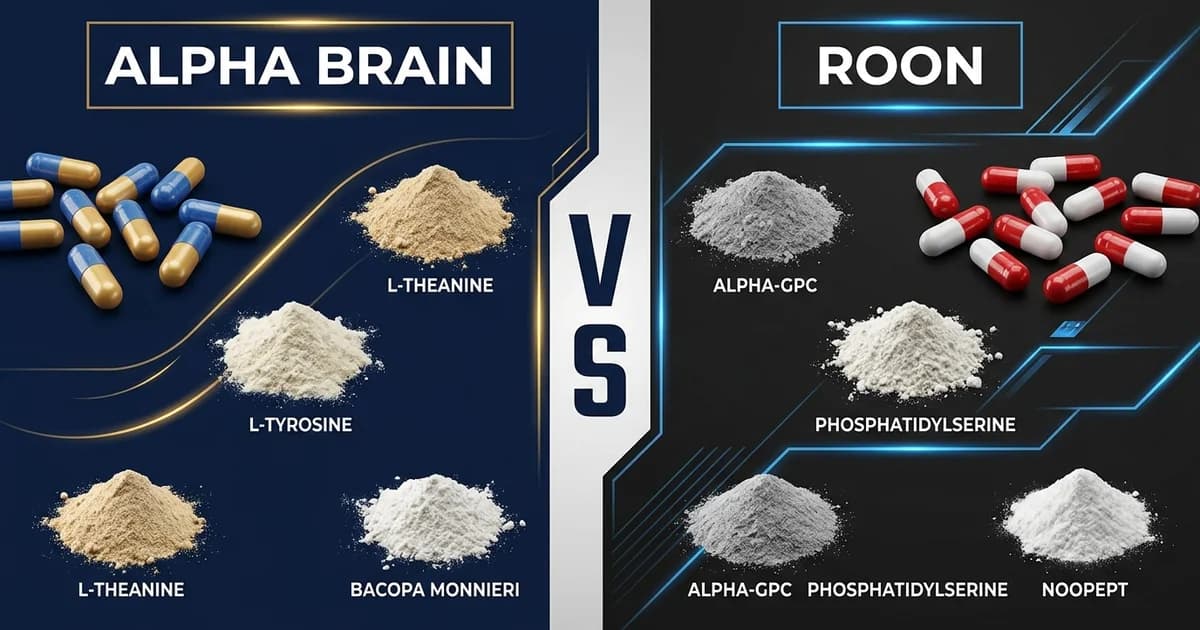
Short answer: For acute, same-session focus you can feel before a meeting or workout, Roon has the practical edge. It is a zero-nicotine sublingual pouch with four fully disclosed actives (80 mg caffeine, 60 mg L-theanine, 25 mg methylliberine/Dynamine, and 5 mg theacrine/TeaCrine) that absorb through the lining of the mouth in minutes. Alpha Brain is a caffeine-free capsule built around proprietary blends and aimed at daily, long-term memory support, with an onset closer to 30 to 45 minutes. Pick Roon if you want fast on-demand focus; pick Alpha Brain if you want a stimulant-free daily memory supplement.
You've narrowed your nootropic search to two products, and now you need to pick one. Roon vs Alpha Brain is a comparison worth making carefully, because these two supplements take radically different approaches to the same goal: sharper focus without the downsides of traditional stimulants. One is a sublingual pouch, specifically, Roon's zero-nicotine pouches. The other is a capsule you've probably seen on Joe Rogan's desk. Same promise, very different execution.
This roon vs alpha brain breakdown covers ingredients, delivery method, pricing, and the specific trade-offs each product forces you to make. No hype. Just the data.
Key Takeaways
- Alpha Brain uses a caffeine-free, proprietary-blend formula built around memory and "flow state" support. Its ingredient doses are hidden inside blends.
- Roon uses a transparent, four-ingredient stack (Caffeine, L-Theanine, Theacrine, Methylliberine) delivered sublingually for faster onset.
- Alpha Brain has two self-funded clinical trials showing modest verbal memory improvements over six weeks.
- Roon's formula is designed around acute, same-session focus rather than long-term memory support.
- The nootropic pouch vs capsule debate matters more than most people think, because delivery method directly affects how fast you feel the effects.
What's in Alpha Brain?
Alpha Brain is a daily nootropic designed to support memory, focus, and mental processing speed. It's made by Onnit (now owned by Unilever) and has been on the market since around 2011. It's formulated without caffeine, which is a deliberate choice. Onnit positions it as a supplement you can stack on top of your existing coffee habit. Understanding what's inside Alpha Brain is the first step in any honest roon vs alpha brain comparison.
The formula is split into three proprietary blends:
| Blend | Key Ingredients | Blend Total |
|---|---|---|
| Onnit Flow Blend | L-Tyrosine, L-Theanine, Oat Straw Extract, Phosphatidylserine | Not published on onnit.com |
| Onnit Focus Blend | Alpha GPC, Bacopa Monnieri, Huperzia Serrata | Not published on onnit.com |
| Onnit Fuel Blend | L-Leucine, Pterostilbene | Not published on onnit.com |
The formula also includes vitamin B6, with no amount published on onnit.com. Onnit's product page carries no Supplement Facts panel in its text or product images, and its ingredients index lists no milligram values at all, so even the blend totals are not first-hand readings.
Here's the problem: Onnit names the blends but publishes no doses, for the blends or for the ingredients inside them. You know the Flow Blend contains four ingredients, but you don't know how much L-Theanine or L-Tyrosine you're actually getting. The use of proprietary blends and the lack of transparency in ingredient dosages are significant drawbacks. This makes it nearly impossible to compare what you're taking to the doses used in clinical research, and it's a recurring theme in the roon vs alpha brain discussion.
For example, most L-Theanine studies showing cognitive benefits use doses between 100 mg and 200 mg. Alpha Brain's Flow Blend splits an unpublished total across four ingredients. The L-Theanine dose could sit inside that studied range. It could be a fraction of it. There's no way to know.
What's in Roon?
Roon takes the opposite approach. Four ingredients, all with disclosed doses. This transparency is one of the clearest advantages in the roon vs alpha brain matchup:
| Ingredient | Amount | Primary Role |
|---|---|---|
| Caffeine | 80 mg | Alertness, reaction time |
| L-Theanine | Disclosed | Calm focus, smooths caffeine edges |
| Theacrine | Disclosed | Sustained energy, no tolerance buildup |
| Methylliberine | Disclosed | Fast-onset energy, mood support |
Roon's 80 mg caffeine dose is comparable to a cup of coffee, but the experience is different. L-Theanine smooths the caffeine edges, while Theacrine and Methylliberine extend the effect to 6-8 hours of sustained focus with no jitters, no crash, and no tolerance buildup.
A study published on PubMed found that 97 mg of L-Theanine combined with 40 mg of caffeine helped participants focus attention during a demanding cognitive task. That research supports the principle behind Roon's caffeine-L-Theanine pairing, even though Roon uses a higher caffeine dose.
Roon's Exact Doses, Fully Disclosed
Roon lists every milligram, so you can match each compound against published research. Here is the complete per-pouch formula, with nothing tucked inside a blend:
| Roon Ingredient | Exact Amount | What It Supports |
|---|---|---|
| Caffeine | 80 mg | Alertness and faster reaction time |
| L-Theanine | 60 mg | Calm, even focus that smooths the caffeine edges |
| Methylliberine (Dynamine) | 25 mg | Fast-onset energy and mood |
| Theacrine (TeaCrine) | 5 mg | Sustained energy with little tolerance buildup |
| Nicotine | 0 mg | Zero, in every pouch |
Roon vs Alpha Brain: Head-to-Head Comparison
Here's how roon vs alpha brain stacks up across the categories that actually matter:
| Category | Roon | Alpha Brain |
|---|---|---|
| Format | Sublingual pouch | Capsule (2 per serving) |
| Caffeine | 80 mg | 0 mg |
| Ingredient Transparency | Full doses disclosed | Proprietary blends |
| Key Active Compounds | Caffeine, L-Theanine, Theacrine, Methylliberine | L-Tyrosine, L-Theanine, Alpha GPC, Bacopa, Huperzia Serrata |
| Onset Time | Minutes (sublingual absorption) | 30-45 minutes (oral digestion) |
| Duration | 6-8 hours | Varies; designed for daily use |
| Nicotine | Zero | N/A (capsule) |
| Clinical Trials | Ingredients individually studied | Two self-funded trials on the full formula |
| Price (approx.) | See takeroon.com | ~$34.95 (30 ct) / ~$79.95 (90 ct) |
The Ingredient Philosophy
These two products reflect two very different theories about cognitive performance, and the roon vs alpha brain divide starts right here.
Alpha Brain bets on a broad-spectrum approach: lots of ingredients at undisclosed doses, targeting memory, acetylcholine production, and general "flow state." It includes Bacopa Monnieri, which has solid long-term memory research behind it but typically requires weeks of daily use to show effects. It also includes Huperzia Serrata (a source of Huperzine A), which inhibits the enzyme that breaks down acetylcholine.
Roon bets on a focused, acute-performance approach: fewer ingredients at effective doses, designed to work within minutes of a single use. The caffeine-L-Theanine pairing is one of the most well-studied combinations in nootropic science. Adding Theacrine and Methylliberine extends the duration and smooths the energy curve. This is the core difference that separates roon vs alpha brain for anyone who needs on-demand performance.
The Delivery Method: Nootropic Pouch vs Capsule
This is where roon pouches vs alpha brain capsules diverge in a way that affects your actual experience. The nootropic pouch vs capsule format question isn't just about convenience; it's about pharmacokinetics.
A capsule has to survive your stomach acid, get absorbed through your intestinal lining, pass through first-pass liver metabolism, and then reach your bloodstream. That process takes 30 to 45 minutes on average, longer if you've eaten recently.
A sublingual pouch sits between your lip and gum, and oral delivery nootropic formats like pouches and gum all bypass the stomach in distinct ways. The active compounds absorb directly through the oral mucosa into your bloodstream, bypassing the digestive tract entirely. The result: faster onset and potentially higher bioavailability for certain compounds. This nootropic pouch vs capsule distinction is one of the biggest practical differences in the roon vs alpha brain comparison.
If you need focus in the next five minutes (before a meeting, a workout, a deep work session), this difference matters.
The Tolerance Question
Caffeine tolerance is real. Drink coffee every day and you'll need more of it to feel the same effect within a week or two. This is one reason Alpha Brain skips caffeine entirely.
But Roon addresses this differently. Theacrine, one of its four active ingredients, is structurally similar to caffeine but behaves differently in the body. A study on tactical personnel published in the Journal of the International Society of Sports Nutrition described theacrine as having "a longer half-life, less habituation, and fewer side effects" compared to caffeine. Early research suggests theacrine doesn't produce the same tolerance buildup that caffeine does, even with repeated use.
This is a meaningful distinction in the roon vs alpha brain debate. Instead of removing stimulants entirely (Alpha Brain's strategy), Roon uses a moderate dose of caffeine (80 mg, comparable to a cup of coffee) paired with compounds that may resist habituation.
What Alpha Brain Does Well
Credit where it's due. Alpha Brain has two things going for it that most nootropics don't, and any fair roon vs alpha brain analysis should acknowledge them.
First, it has published clinical data on the finished product. A randomized, double-blind, placebo-controlled trial found that six weeks of Alpha Brain use improved verbal memory and executive function compared to controls in healthy adults aged 18-35. That's more than most supplement brands can claim. The study was self-funded by Onnit, which matters for context, but the trial design was legitimate.
Second, its caffeine-free formula means you can take it at any time of day without worrying about sleep disruption. If you're someone who's already drinking three cups of coffee and doesn't want more stimulants, that's a valid consideration.
What's Missing from Both Products
No product is perfect. Here are the specific gaps that shape the roon vs alpha brain decision.
Alpha Brain's gaps:
- Hidden doses. You can't verify whether any single ingredient is present at a clinically effective amount. Innerbody's review notes that "proprietary blends obscure most ingredient dosages and make it difficult to truly estimate the chance of side effects from certain riskier nootropic ingredients."
- Slow onset. Capsules require digestion. If you need focus now, you're waiting half an hour minimum.
- No acute stimulant. The caffeine-free formula means there's no immediate alertness boost. You're relying on ingredients like Bacopa that work over weeks, not minutes.
- Cost per serving. At roughly $79.95 for a 90-count bottle (45 servings of two capsules), you're paying about $1.78 per serving for a product with undisclosed ingredient doses.
- Legal scrutiny. A 2024 lawsuit claimed the brand "misled consumers with promises of better memory, faster mental processing, and sharper focus without solid evidence."
Roon's gaps:
- Contains caffeine. At 80 mg (comparable to a cup of coffee), caffeine-sensitive individuals may want to avoid it late in the day.
- No long-term memory ingredients. Roon doesn't include Bacopa, Alpha GPC, or other compounds associated with long-term memory support. It's built for acute sessions, not cumulative cognitive benefits.
- Newer to market. Roon doesn't have the decade-plus track record or finished-product clinical trials that Alpha Brain has accumulated.
How Roon Fills the Gaps in the Roon vs Alpha Brain Comparison
The "What's Missing" section above reveals a pattern. Alpha Brain's biggest weaknesses are dose transparency, onset speed, and acute performance. Those happen to be exactly what Roon was built around. If you're comparing roon pouches vs alpha brain capsules, Roon's design directly targets Alpha Brain's shortcomings.
Roon's formula addresses these specific problems:
- Transparent dosing. Every ingredient amount is listed. You can cross-reference each dose against published research and know exactly what you're putting in your body.
- Sublingual delivery. The pouch format bypasses digestion entirely, delivering compounds through the oral mucosa for onset measured in minutes rather than the 30-45 minutes a capsule requires. This nootropic pouch vs capsule advantage is hard to overstate for time-sensitive situations.
- Acute focus stack. The caffeine-L-Theanine combination is backed by research showing improved attention at exactly these dose ranges. Theacrine and Methylliberine extend the effect window to 6-8 hours.
- Tolerance resistance. Instead of avoiding stimulants altogether, Roon pairs its 80 mg caffeine with theacrine, which research suggests does not produce the same habituation pattern as caffeine alone.
A study on gamers published in Cureus found that the combination of caffeine, theacrine, and methylliberine "improved speed, accuracy, and cognitive abilities" compared to both placebo and caffeine alone. That three-compound combination is the backbone of Roon's formula, and it's the reason roon vs alpha brain tilts toward Roon for anyone who prioritizes acute performance.
The Bottom Line on Roon vs Alpha Brain
Alpha Brain is a reasonable product with real clinical data behind it. If you want a caffeine-free, daily-use nootropic aimed at long-term memory support, it has a case. But its proprietary blends, slow onset, and lack of acute performance ingredients leave gaps that matter for people who need focus on demand. That's the central tension in the roon vs alpha brain decision.
Roon was designed to fill those gaps. Transparent ingredients, sublingual delivery for fast onset, and a stimulant stack engineered to last 6-8 hours without the jitters, crash, or tolerance buildup that comes with high-caffeine alternatives. When you weigh roon pouches vs alpha brain capsules side by side, Roon's format and formula are built for the person who needs results now, not six weeks from now.
If you want focus you can feel in minutes, not weeks, Roon is worth a look.
Frequently Asked Questions
Is Roon or Alpha Brain better for focus?
It depends on the kind of focus you want. Roon is built for acute, same-session focus: 80 mg caffeine paired with 60 mg L-theanine, plus methylliberine and theacrine, delivered sublingually for onset in minutes. Alpha Brain is caffeine-free and aimed at daily, cumulative memory support. For on-demand focus before a task, Roon fits better; for a stimulant-free daily routine, Alpha Brain is the closer match.
How fast does each one work?
Roon's pouch sits between your lip and gum, and its actives absorb through the oral mucosa, so most people feel it within minutes. Alpha Brain is a capsule that has to pass through digestion and first-pass liver metabolism, which typically takes 30 to 45 minutes, and longer on a full stomach. If timing matters, the sublingual format is the practical advantage.
Does Alpha Brain contain caffeine?
No. Alpha Brain is formulated without caffeine by design, so Onnit positions it as something you can stack on top of your existing coffee. Roon takes the opposite route, including a disclosed 80 mg of caffeine (roughly a cup of coffee) balanced with 60 mg of L-theanine. A systematic review of caffeine and L-theanine describes the pairing as a likely safe and effective cognitive enhancer.
How much caffeine and nicotine are in Roon?
Each Roon pouch contains 80 mg of caffeine, comparable to a single cup of coffee, and zero nicotine. The rest of the formula is 60 mg L-theanine, 25 mg methylliberine (Dynamine), and 5 mg theacrine (TeaCrine). Every amount is printed on the label, so you can compare each dose against published research instead of guessing at what sits inside a proprietary blend.
Does Roon build tolerance the way coffee does?
Roon pairs its caffeine with theacrine, a compound that behaves differently in the body. A human pharmacokinetic study found that caffeine raised theacrine exposure without altering theacrine's half-life, and early research points to less habituation than caffeine alone. That is part of why Roon uses a moderate caffeine dose alongside theacrine rather than removing stimulants entirely the way Alpha Brain does.
Can I take Roon and Alpha Brain together?
Some people do, since Alpha Brain is caffeine-free and Roon supplies the stimulant component. If you combine them, account for the total caffeine across everything you take that day, including coffee, and consider skipping Roon late in the afternoon if you are caffeine-sensitive. As with any supplement routine, check with your healthcare provider first, especially if you take medication or have a heart condition.
Which product has clinical research behind it?
Alpha Brain has two company-funded trials on the finished capsule; one randomized, double-blind, placebo-controlled trial reported gains in verbal memory and executive function after six weeks. Roon's case rests on research into its individual compounds and their combination, including the well-studied caffeine and L-theanine pairing. The two brands are studied in different ways, which mirrors their different goals.
By Roon Team