Alpha Brain vs Nootropic Pouch
Roon Team

Alpha Brain vs Nootropic Pouch: 5 Reasons the Format Matters More Than You Think
Alpha Brain has been the default nootropic for over a decade. Joe Rogan talks about it. Your buddy at the gym swears by it. And with good reason: it's one of the few supplements in the space that actually ran a clinical trial. But here's what most Alpha Brain users never question: the capsule itself. The alpha brain vs nootropic pouch debate isn't just about ingredients. It's about how fast those ingredients reach your brain, whether you can verify what's inside, and whether the delivery format is helping or limiting you.
If you've been swallowing two capsules every morning and waiting an hour to feel anything, this comparison will change how you think about cognitive supplements. The format you choose determines onset speed, bioavailability, and real-world usability, and capsules have serious limitations that most brands never talk about.
Key Takeaways:
- Sublingual pouches can deliver active compounds to your bloodstream in minutes, while capsules require 45-90 minutes of digestion first.
- Alpha Brain hides individual ingredient doses behind proprietary blends, making it impossible to know what you're actually getting.
- A focused, transparent nootropic stack with fewer well-dosed ingredients can outperform a long ingredient list with unknown quantities.
- The best pouch alternative to Alpha Brain addresses the specific gaps in capsule-based delivery: speed, transparency, and portability.
1. Sublingual Pouches Hit Your Bloodstream in Minutes, Not an Hour
This is the single biggest difference in the alpha brain pills vs pouches debate, and it comes down to basic pharmacology.
When you swallow an Alpha Brain capsule, it travels to your stomach, dissolves, passes through your intestinal wall, gets processed by your liver (a step called first-pass metabolism), and then finally enters systemic circulation. According to innerbody.com's 2026 review, testers found that Alpha Brain "can take an hour or two to kick in."
Sublingual delivery skips nearly all of that. A pouch placed under the tongue or against the gum releases active compounds directly into the capillary-rich oral mucosa. According to National Addiction Specialists, sublingual compounds typically begin absorbing within 2-5 minutes, bypassing the digestive system and the liver's first-pass effect entirely. A review published in Innovare Academics found that peak blood levels of most sublingually administered products are achieved within 10-15 minutes.
That's not a marginal improvement. It's a fundamentally different delivery timeline.
Best for: Anyone who needs cognitive support on demand, not 60-90 minutes from now.
2. You Can See Every Milligram (No Proprietary Blends)
Alpha Brain organizes its formula into three proprietary blends: the Onnit Flow Blend, the Onnit Focus Blend, and the Onnit Fuel Blend. Onnit publishes no Supplement Facts panel on its own site, so the totals in circulation come from third-party label readings: Innerbody puts them at 650 mg, 240 mg and 65 mg. Those totals include multiple ingredients lumped together, and Onnit does not disclose how much of each individual compound is in the blend.
This matters because dosing is everything in nootropics. Take Bacopa monnieri, one of Alpha Brain's ingredients. Research suggests effective doses fall between 300-600 mg per day for standardized extracts. But since Bacopa shares the Flow Blend with L-Tyrosine, L-Theanine, Oat Straw Extract, and Phosphatidylserine, there's no way to confirm it hits a clinical dose. The same uncertainty applies to every other ingredient in the stack.
A transparent label isn't a marketing gimmick. It's the only way to evaluate whether a supplement is worth taking. Any serious nootropic focus head-to-head should start here: can you verify the dose of every active ingredient, or are you trusting a blend total?
Typical dose transparency example: A well-designed pouch lists each compound individually (e.g., Caffeine 80 mg, L-Theanine 60 mg) rather than grouping them under a single number.
3. Four Targeted Compounds Beat a Kitchen-Sink Formula
Alpha Brain contains roughly 10 ingredients spread across its three blends, plus Vitamin B6. That sounds impressive on a label. In practice, it creates a problem: when you spread a limited total weight across that many compounds, individual doses get thin.
As innerbody.com noted, the Onnit Flow Blend contains 650 mg shared among L-tyrosine, L-theanine, oat straw extract, and phosphatidylserine. Oat straw extract, they point out, "has no known health benefits, but the other three ingredients do." So you're paying for filler that dilutes the active compounds.
The alternative approach: fewer ingredients, each at a meaningful dose, chosen because they work through distinct neurochemical pathways. Caffeine blocks adenosine receptors. L-Theanine modulates glutamate and GABA. Theacrine and methylliberine extend stimulant effects through overlapping but non-identical mechanisms. A 2022 study published in Cureus found that combining caffeine with TeaCrine (theacrine) and Dynamine (methylliberine) improved cognitive performance and reaction time in a randomized crossover trial of 50 participants, without negatively affecting mood.
Fewer ingredients isn't a limitation. It's a design decision.
Best for: People who want to know exactly what each compound is doing and why it's there.
4. No Water, No Bottle, No Ritual
This one sounds trivial until you actually think about how you use cognitive supplements. Alpha Brain requires two capsules taken with a light meal and water. That means you need the bottle, a glass of water, and ideally some food in your stomach for proper absorption. Miss the meal? Absorption suffers. Forget the bottle at home? You're out of luck.
A sublingual pouch fits in your pocket, and if you want to understand why pouches beat gum for on-the-go use, the same logic applies: no water, no food requirement, no pulling out a supplement bottle in the middle of a meeting or at your desk.
For anyone who travels, works variable hours, or simply doesn't want to build their cognitive support around a kitchen counter ritual, the format difference is practical, not theoretical. The ScienceDirect entry on sublingual delivery notes that sublingual dosages are specifically convenient in situations where potable liquids are not available.
Best for: Professionals, travelers, and anyone who needs focus support outside their kitchen.
5. Caffeine Combination vs. Caffeine-Free (A Trade-Off Worth Understanding)
Alpha Brain contains zero caffeine. Onnit markets this as a feature, and for some users, it genuinely is. If you're highly caffeine-sensitive or already consuming multiple cups of coffee, a caffeine-free nootropic makes sense.
But for the majority of people seeking acute cognitive performance, removing caffeine removes the most well-studied cognitive enhancer on the planet. The real question isn't caffeine vs. no caffeine. It's whether caffeine is paired with the right compounds to eliminate its downsides.
A systematic review published in PMC analyzed clinical trials on the caffeine and L-theanine combination and found improvements in attention, memory, and reduced distractibility. Separately, research on tactical personnel demonstrated that co-ingestion of caffeine, methylliberine, and theacrine improved vigilance and reaction time over a longer period compared to caffeine alone.
The combination approach doesn't just add caffeine. It manages caffeine, smoothing the onset with L-theanine and extending the duration with theacrine and methylliberine. That's a different proposition than drinking a cup of coffee alongside your Alpha Brain capsule.
Best for: Anyone who wants caffeine's benefits without the jitters, crash, or tolerance buildup.
Quick Comparison: Alpha Brain vs. Nootropic Pouch Format
| Feature | Alpha Brain (Capsule) | Nootropic Pouch (Sublingual) |
|---|---|---|
| Delivery Method | Oral capsule, requires digestion | Sublingual, absorbed through oral mucosa |
| Onset Time | 60-120 minutes | 2-15 minutes |
| Ingredient Transparency | Proprietary blends (doses hidden) | Individual doses listed per compound |
| Number of Active Ingredients | ~10 across 3 blends + B6 | Typically 3-5 targeted compounds |
| Caffeine | None | Varies by product (often paired with L-theanine) |
| Requires Water/Food | Yes (recommended with light meal) | No |
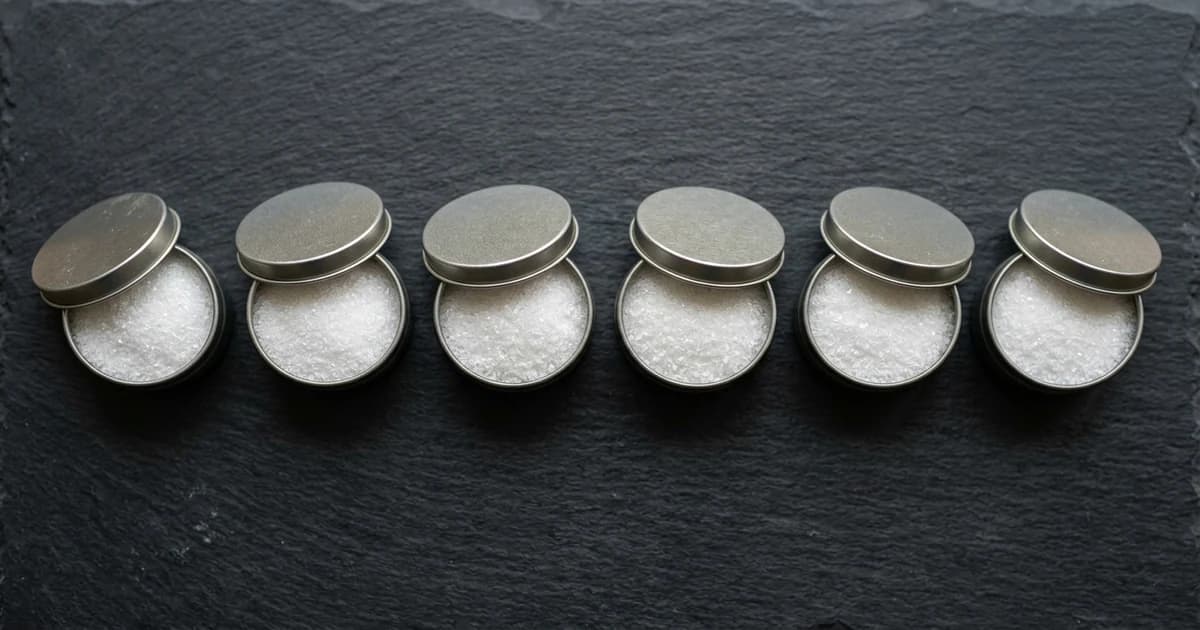
| Portability | Bottle of 90 capsules | Single tin fits in pocket |
| Price Per Serving | ~$1.78 (full price, iherb.com) | Varies by brand |
| Clinical Trial | 1 trial, 63 participants, Onnit-funded (PubMed) | Depends on product; ingredient-level research varies |
What's Missing From Both Sides
No product is perfect, and this comparison wouldn't be honest without identifying the gaps.
Alpha Brain's gaps are well-documented at this point. The proprietary blends make independent dose verification impossible, a point examined in depth in the Onnit Alpha Brain ingredient review. The capsule format means slow onset and dependence on digestive conditions for absorption. The lack of caffeine limits its usefulness for acute performance situations. And the single clinical trial, while real, was small (63 participants), short (6 weeks), and funded by Onnit itself. As athleticinsight.com's 2026 review put it, the proprietary blend problem and the $79.95 monthly cost create a "price point reality check."
Generic nootropic pouches have their own issues. Many pouch brands on the market are just caffeine in a pouch, with no supporting compounds to manage the stimulant curve. Others load up on a single nootropic like Alpha-GPC without addressing the full picture of sustained focus. And some use proprietary blends of their own, which defeats the purpose of the format advantage.
The specific gaps across both categories: most products either lack caffeine entirely (Alpha Brain) or include caffeine without adequate support compounds (many pouches). Few products combine sublingual delivery with a multi-compound stack that addresses onset, sustained duration, and tolerance prevention in a single serving.
How Roon Addresses Those Gaps
Roon was built around the specific problems identified above. It's a zero-nicotine sublingual pouch with four active ingredients, each listed individually on the label:
- Caffeine (80 mg): Blocks adenosine, promotes alertness. Comparable to a standard cup of coffee, but paired with L-theanine, methylliberine, and theacrine to smooth the onset and extend focus to 6-8 hours with no jitters or crash.
- L-Theanine (60 mg): Modulates glutamate and GABA, smoothing caffeine's stimulant edge. The caffeine-theanine pairing is one of the most studied combinations in cognitive performance research.
- Methylliberine/Dynamine (25 mg): Provides a fast-acting boost to mood and motivation. Works through adenosine and dopamine pathways.
- Theacrine/TeaCrine (5 mg): Extends the duration of the cognitive effect and helps prevent tolerance buildup over time.
That's four compounds, three distinct neurochemical mechanisms, and full dose transparency. The sublingual format means you're not waiting an hour for digestion. You place the pouch, and the active ingredients begin absorbing through the oral mucosa within minutes.
Roon's nootropic pouches aren't trying to replace Alpha Brain's entire value proposition. If you want a caffeine-free, herbal-heavy nootropic for long-term memory support, Alpha Brain fills that role. But if you need on-demand cognitive performance with a transparent label and fast delivery, the format and formula gaps are exactly what Roon was designed to fill.
Try the Format Difference Yourself
Reading about sublingual absorption is one thing. Feeling the difference between waiting 90 minutes for a capsule to dissolve and having a pouch working in five minutes is another.
If you've been using Alpha Brain and wondering why the effects feel inconsistent, the delivery format might be the variable you haven't tested yet. Roon gives you a way to test that hypothesis with a transparent, research-backed stack.
No pills. No water. No guessing what's inside. Give it a try and see how the format changes the experience.