Staying Sharp Through a 10-Hour Warehouse Shift Without Burning Out
Roon Team
Staying Sharp Through a 10-Hour Warehouse Shift Without Burning Out
Warehouse shift fatigue is not just feeling tired at hour eight. It is a specific kind of exhaustion that stacks physical wear, cognitive load, and environmental stress into a single 10-hour block, and it contributes directly to the injury rates that make warehousing one of the most dangerous sectors in the U.S. labor economy. With 1.9 million Americans now working in warehousing and storage (nearly triple the 749,000 employed in 2014), the problem is growing faster than most people outside the industry realize.
This article covers what actually causes fatigue to compound across a long warehouse shift, what the data says about the consequences, and what you can realistically do about it within the constraints of a rate-tracked, physically demanding workday.
Key Takeaways
- Warehouse work layers physical fatigue (walking 5 to 13 miles per shift), cognitive fatigue (scanning, sorting, picking accuracy), and often heat stress into a single shift, creating a compounding effect that pure desk work or pure physical labor does not.
- U.S. warehouses logged an injury rate of 4.8 per 100 full-time workers in 2024, and federal data identifies overexertion, often linked to working while fatigued, as the most common cause.
- Quota and rate-tracking systems can compress effective rest time even when scheduled breaks technically exist, making how you use those breaks a high-priority decision.
- Caffeine helps, but timing and format matter more than dose when your hands are full and your break is short.
Why 10-Hour Warehouse Shifts Create a Different Kind of Fatigue
Most fatigue advice is written for desk workers or drivers. Warehouse and fulfillment-center work is a different animal. You are not sitting still and fighting drowsiness. You are physically active for most of the shift, which masks early fatigue signals until they hit hard.
The physical demand alone is substantial. Industry sources estimate that warehouse workers walk an average of 5 to 10 miles per shift, with some distribution centers reporting up to 12 miles. One former Amazon picker described walking 13 miles per day over a 10-hour period. That mileage happens on concrete floors, often while carrying or pushing loads, which accelerates muscular fatigue in the legs and lower back.
But the physical piece is only half of it. Picking, scanning, sorting, and packing all require sustained attention: reading labels, matching SKUs, counting items, making rapid decisions about bin placement. Hundreds or thousands of times per shift. By hour seven or eight, error rates climb because your brain's capacity for sustained selective attention is genuinely depleted, not because you stopped caring.
The Heat Factor
Many warehouse and fulfillment facilities are not fully climate-controlled. OSHA published a Notice of Proposed Rulemaking for a heat injury and illness prevention standard in August 2024, acknowledging that indoor workplaces like warehouses expose employees to unsafe heat levels. The rule remains in the rulemaking process as of 2026 with no finalization date set.
Heat adds a real physiological cost. Research shows that dehydration of just 1 to 2% of body mass negatively influences mood, increases fatigue and anxiety, and impairs concentration and working memory. In a facility where ambient temperatures can climb well above 80°F in summer months, a worker who is not aggressively hydrating is fighting two fatigue sources at once: the shift itself and the environment.
The Injury Data: What Warehouse Shift Fatigue Actually Costs
Fatigue is not just uncomfortable. It is a safety problem with measurable consequences. A September 2024 GAO report (GAO-24-106413) found that the most common injuries among warehouse and delivery workers are from overexertion, defined as "working while fatigued or moving unsafely while lifting or bending." The report identified more than 60,000 estimated serious injury cases in general warehousing linked to overexertion alone.
The broader numbers confirm it. U.S. warehouses recorded an injury rate of 4.8 per 100 full-time workers in 2024, and a third-party analysis of BLS data reported 5.5 per 100 in 2021. The transportation and warehousing sector had the highest serious injury and illness rate of all 19 sectors in 2022. Fatigued workers move less carefully, react more slowly, and make worse decisions about body mechanics. That risk compounds across the back half of a long shift.
How Quota Systems Compress Your Real Rest Time
On paper, most large fulfillment operations provide scheduled breaks. At Amazon fulfillment centers, for example, the standard policy is two 15-minute paid breaks and a 30-minute unpaid meal break for shifts over six hours. That is 60 minutes of scheduled downtime in a 10-hour shift.
In practice, the effective rest time is often shorter. Workers at tracked facilities are subject to "time off task" monitoring, where time not spent actively working is logged and accumulated. Walking to the break room, waiting in line, using the restroom: it all counts against your minutes. California's AB 701, effective January 1, 2022, was designed to address this by requiring quota disclosure and prohibiting quotas that prevent workers from taking breaks or using the bathroom. But AB 701 applies only in California.
The result is a shift where your 15-minute break might offer 10 minutes of actual sitting. That changes the calculus on everything from food choices to caffeine timing.
A Practical Fatigue-Management Plan for Warehouse Shifts
You cannot eliminate fatigue on a 10-hour physical shift. But you can manage where in the shift it peaks and how hard it hits. Here is what actually works within the constraints of a rate-tracked warehouse job.
Hydration and Nutrition Timing
Start hydrating before your shift, not during your first break. Carry water if your facility allows it on the floor. Small, frequent sips beat large volumes at break time.
For food, prioritize protein and complex carbs over sugar. A candy bar or energy drink with 50+ grams of sugar will spike your blood glucose and crash it within 90 minutes. That is the worst possible timing if you ate it at your mid-shift break and have four hours left.
Caffeine Strategy: Timing Over Dose
A Cochrane review of 13 trials found that caffeine reduces errors and improves cognitive performance in shift workers compared to no intervention. That much is clear. The question for warehouse workers is not whether caffeine helps, but when and how to take it.
The biggest mistake is front-loading all your caffeine before clocking in. Caffeine's peak blood concentration arrives 30 to 60 minutes after ingestion. If you drink a large coffee at 6:00 AM for a 6:00 AM start, you peak at 7:00 AM, when you least need it. By hour six, the caffeine is largely cleared. A better approach: time your primary dose for your first or second break, so peak levels align with the mid-to-late shift window when fatigue actually threatens your accuracy.
| Strategy | Timing | Why It Works |
|---|---|---|
| Pre-shift hydration | 30-60 min before clock-in | Starts shift at full hydration rather than playing catch-up |
| Protein-focused mid-shift meal | Lunch break (hour 4-5) | Avoids the glucose crash that sugar-heavy meals cause in the back half |
| Timed caffeine | First or second break (hour 2-4) | Peaks during the mid-to-late shift window when fatigue compounds |
| Micro-movement on breaks | Every break | Gentle stretching counteracts the repetitive-motion stiffness that builds over hours |
| Aggressive hydration in heat | Continuous if allowed, every break at minimum | Prevents the 1-2% body mass dehydration threshold where cognition drops measurably |
Movement and Stretching
This sounds counterintuitive for a job that is already physical, but the type of movement matters. Warehouse work involves repetitive motion in limited planes: walking forward, reaching, lifting, scanning. Brief stretching that opens your hips, shoulders, and lower back during breaks can reduce the cumulative stiffness that makes you move less carefully as the shift wears on.
What Caffeine Can and Cannot Do for Physical Shift Work
Caffeine is effective for maintaining alertness and reducing cognitive errors on shift. But it does not fix muscular fatigue, rehydrate you, cool you down in a hot facility, or make an unsafe quota safe.
If you are falling asleep standing up at hour nine, caffeine helps. If you are physically broken down from ten hours of lifting with inadequate breaks, caffeine will not rebuild your lower back. That distinction, alertness problem versus structural workload problem, is the most important one in managing warehouse shift fatigue. The former responds to better timing and supplementation. The latter requires changes to shift design, staffing, or rest policy.
For a broader look at how different caffeine formats compare for shift work, see our comparison of stimulant options for night-shift work.
Managing Warehouse Shift Fatigue Across a Career
A single hard shift is survivable. The real damage from warehouse shift fatigue is cumulative: years of insufficient recovery, chronic mild dehydration in summer months, and the slow erosion of sleep quality that comes from rotating or early-start schedules.
The most underrated variable is sleep. Everything else works better when you start from seven-plus hours. If your shift schedule makes that structurally difficult, that is the first problem to solve, whether it means negotiating a different rotation or investing in blackout curtains and a locked-in pre-sleep routine.
Frequently Asked Questions
How many miles do warehouse workers walk per shift?
Most sources report 5 to 10 miles per shift on average, with some large fulfillment centers reporting 12 to 13 miles for pickers. Mileage depends on facility size, role, and automation level. All of it happens on concrete floors, which increases lower-body fatigue compared to softer surfaces.
What is the injury rate in U.S. warehouses?
U.S. warehouses logged an injury and illness rate of 4.8 per 100 full-time equivalent workers in 2024. That is well above the all-industry average. A 2024 GAO report found that overexertion, often from working while fatigued, is the most common cause of serious injuries among warehouse and delivery workers.
Does caffeine actually help with shift work fatigue?
Yes. A Cochrane review of 13 trials found that caffeine reduces errors and improves cognitive performance in shift workers compared to no intervention. It is most effective for maintaining alertness and accuracy, but it does not address muscular fatigue or the physical demands of warehouse work.
How much break time do warehouse workers get?
Break policies vary by employer and state law. At large fulfillment operations like Amazon, the standard is typically two 15-minute breaks and a 30-minute meal break during a 10-to-12-hour shift. In practice, effective rest time may be shorter due to transit time to break areas and time-off-task tracking systems.
What is California's AB 701 warehouse quota law?
AB 701, effective January 1, 2022, requires California warehouse employers to disclose productivity quotas and prohibits quotas that prevent workers from taking meal breaks, rest periods, or using the bathroom. It was a direct response to injury-rate concerns at high-volume fulfillment centers. Similar legislation has not yet been adopted in most other states.
When is the best time to take caffeine during a long shift?
For a 10-hour shift, timing caffeine for your first or second scheduled break (roughly hours 2 through 4) generally produces better results than taking it all before clocking in. This allows peak blood levels to align with the mid-to-late shift window when fatigue most affects accuracy and safety. Avoid caffeine in the last three to four hours before you plan to sleep.
Does dehydration make warehouse fatigue worse?
Substantially. Research shows that losing just 1 to 2% of body mass through dehydration impairs concentration, working memory, and mood while increasing perceived fatigue. In facilities without full climate control, summer heat makes this threshold easy to reach within a few hours if you are not drinking water consistently.
A Faster Format for a Shorter Break
If the analysis above makes one thing clear, it is that warehouse shift fatigue is a compound problem. Physical load, cognitive demand, heat, and compressed break times all stack on top of each other. Caffeine helps with the alertness piece, but how you take it matters almost as much as whether you take it.
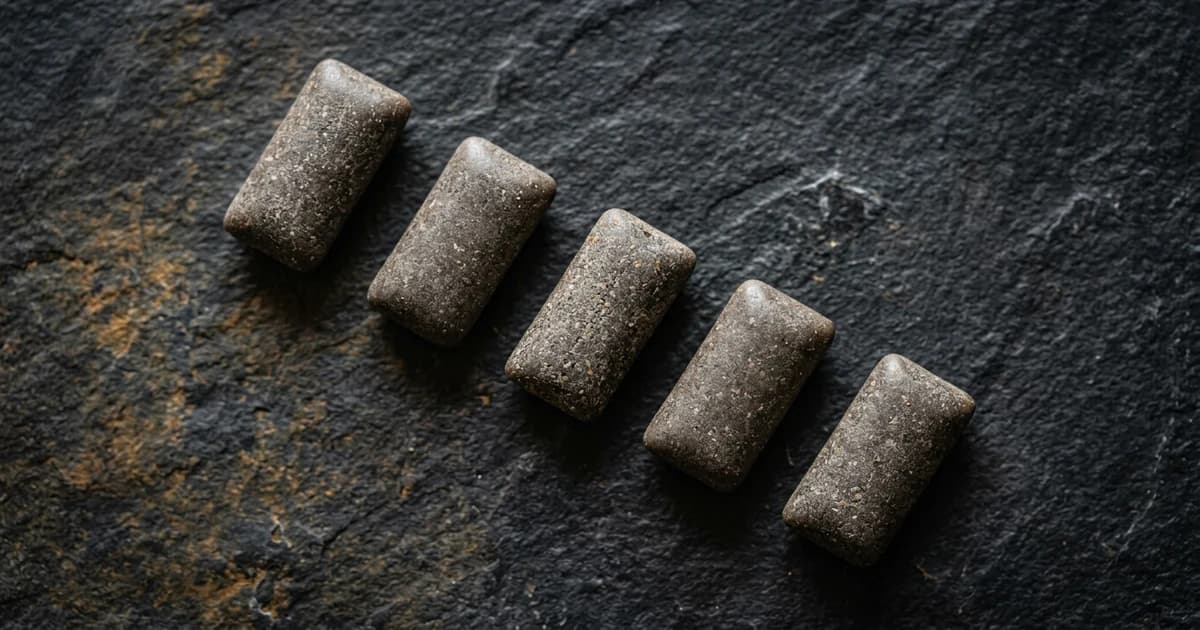
That is the specific problem Roon was built to solve. It is a zero-nicotine sublingual pouch with 80 mg caffeine, 60 mg L-theanine, 25 mg methylliberine (Dynamine), and 5 mg theacrine (TeaCrine). You place it under your lip. It absorbs in 5 to 10 minutes. No brewing, no bottle, no waiting in line. When your break is really 10 usable minutes, that matters.
The formulation is designed for a 6 to 8 hour felt window, not a two-hour spike. Methylliberine (Dynamine) slows caffeine's clearance: a randomized crossover PK study (n=12) found that co-administration with caffeine cut oral clearance from 41.9 to 17.1 L/hr and extended half-life from 7.2 to 15 hours, with no increase in peak concentration. That trial used 100 mg methylliberine with 150 mg caffeine; Roon's lower 25 mg and 80 mg dose has not been tested in an identical published trial, though the same directional effect is expected to hold. Same peak, longer tail. That means one pouch timed at your first break can carry you through the back half of the shift instead of fading out by hour six. Because the half-life is extended, do not take it within 8 hours of when you plan to sleep.
To be direct about what Roon is not: it is not a fix for inadequate break policy, unsafe heat conditions, or a quota system that does not give you time to recover. It does not address the physical demands of lifting, walking, or repetitive motion. It is a better-formatted, longer-lasting caffeine tool for the alertness layer of the problem. If your fatigue is rooted in shift length, insufficient rest, or dehydration, those need their own solutions first. For the cognitive sharpness piece, try Roon.
Written by Roon Team