Draft vs Roon: Two Nicotine-Free Energy Pouches Compared
Roon Team
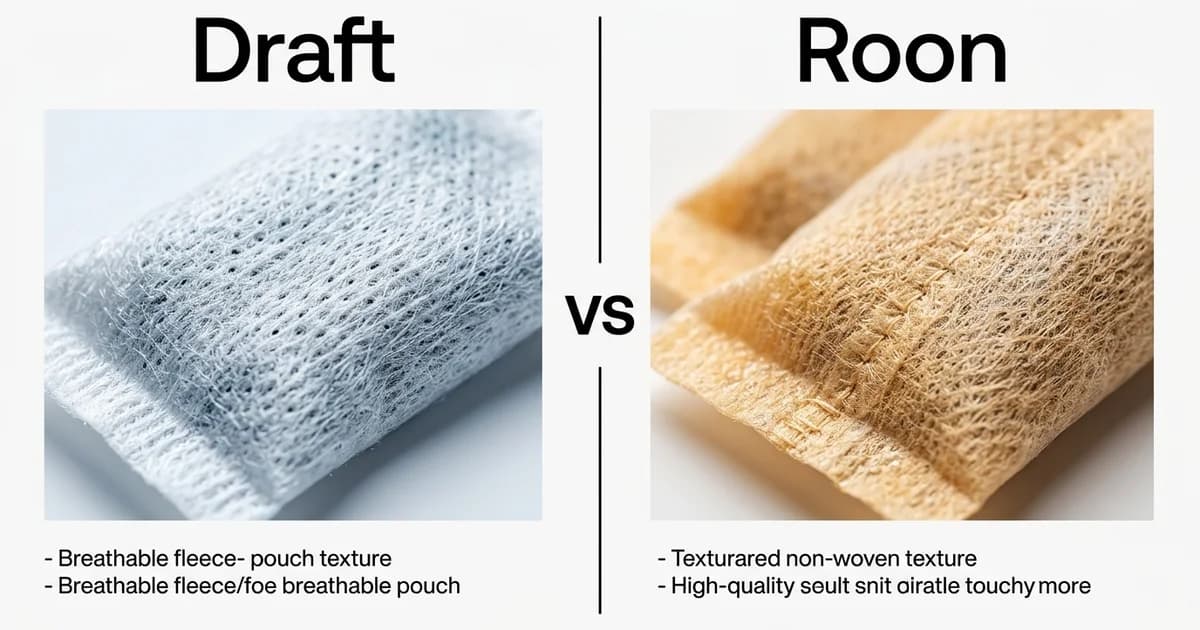
Draft vs Roon: Two Nicotine-Free Energy Pouches Compared
If you searched draft vs roon, you already know the pitch: a small pouch you tuck under your lip that delivers caffeine and focus without nicotine, without a can of soda, and without the crash. Both Draft State and Roon sell exactly that. Both skip tobacco entirely.
The draft vs roon debate matters, though, because these are not the same product. The differences count more than the marketing suggests. One leans hard on raw caffeine and dosing. The other builds around a four-ingredient stack designed for a longer, smoother window.
Here is the honest draft vs roon breakdown, including where each brand wins and where each one leaves something on the table.
Key Takeaways
- Draft State packs more per pouch: 150mg caffeine, 150mg L-theanine, plus B6 and B12, at 20 pouches per container and a lower price per pouch.
- Roon uses a smaller caffeine dose (80mg) but adds two ingredients Draft skips: methylliberine (Dynamine) and theacrine (TeaCrine).
- In the draft vs roon comparison, Draft wins on caffeine dose, L-theanine dose, pouch count, and cost. Roon wins on ingredient variety and flavor.
- Your pick depends on whether you want maximum stimulant per pouch or a longer, more layered focus curve.
Draft State vs Roon: The Quick Answer
Draft State is the higher-dose, lower-cost option; Roon is the more layered formula built for a longer no-crash window. If you have a high caffeine tolerance and want the most stimulant per pouch for the least money, Draft State is the straightforward choice. If you want a stack that combines caffeine with two slower-acting alkaloids, Roon is built for that.
That is the short version of draft state vs roon. The rest of this article unpacks why the draft vs roon question comes down to dose versus design.
What Is Draft State?
Draft State is a nicotine-free, tobacco-free energy pouch. Each pouch delivers 150mg of caffeine and 150mg of L-theanine, plus vitamin B6 and B12 at 100% of the daily value.
The caffeine dose is the headline. For context, that is roughly what you get in a strong cup of coffee, packed into a pouch you can use hands-free. Draft State publishes the 150mg figure on draftstate.com itself, and at that dose the pouch is aimed at people with an established caffeine tolerance.
Draft State ships 20 pouches per container in one flavor, Citrus Rush. Pricing runs $19.95 for a single, $49.95 for a 3-pack, and $69.95 for a 5-pack, which works out to $1.00, $0.83, and $0.70 per pouch as you buy more. Anyone weighing draft vs roon on price alone will notice this gap immediately.
Draft's real strength: the highest caffeine and L-theanine doses in this comparison, at the lowest cost per pouch.
What Is Roon?
Roon is a zero-nicotine sublingual pouch built around four active ingredients: 80mg caffeine, 60mg L-theanine, 25mg methylliberine (Dynamine), and 5mg theacrine (TeaCrine). It comes in Cool Mint at 15 pouches per tin, starting at $15.00 per tin one-time (about $1.00 per pouch) or as low as $9.16 per tin on subscription (about $0.61 per pouch).
The design logic is different from Draft's. Instead of pushing caffeine higher, Roon uses a moderate caffeine dose and adds two purine alkaloids that behave differently in the body. The goal is a fast onset, roughly 5 to 10 minutes, followed by a 6 to 8 hour focus window without the jitters or the crash.
Roon's real strength: ingredient variety. Methylliberine and theacrine are not in Draft's formula, and Roon offers a mint flavor rather than citrus. That ingredient gap is what makes the draft vs roon decision more than a simple numbers game.
Draft Pouches vs Roon: Side-by-Side Comparison
Here is where the draft pouches vs roon question gets concrete. I've included both brands honestly, with the numbers each company publishes on its own site.
| Feature | Draft State | Roon |
|---|---|---|
| Nicotine | None | None |
| Caffeine | 150mg | 80mg |
| L-theanine | 150mg | 60mg |
| Methylliberine (Dynamine) | Not included | 25mg |
| Theacrine (TeaCrine) | Not included | 5mg |
| Other actives | B6, B12 (100% DV) | None |
| Pouches per unit | 20 | 15 |
| Flavors | 1 (Citrus Rush) | 1 (Cool Mint) |
| Price per tin (one-time) | $19.95 | $15.00 |
| Price per pouch (best tier) | ~$0.70 | ~$0.61 |
| Stated onset / window | Not published | 5–10 min onset, 6–8 hr focus |
Read the draft pouches vs roon table plainly. Draft State wins on caffeine dose, L-theanine dose, pouch count, and price per pouch. Those are real, measurable advantages, and if raw value and stimulant strength are your priorities, Draft is the better buy.
Roon wins on the two-ingredient differentiator and format. It adds methylliberine and theacrine, which Draft does not carry, and pairs its caffeine with a specific onset-and-duration target.
Neither product is objectively "better." The draft vs roon choice depends on what you optimize for.
The Ingredient Science: Why Dose Isn't the Whole Story
More caffeine is not automatically more useful. The draft vs roon comparison proves that point well: it depends on what you are trying to do and how your body handles stimulants.
Caffeine and L-theanine work as a pair
Both brands combine caffeine with L-theanine, and that pairing has real support. Caffeine blocks adenosine receptors and raises noradrenaline to increase alertness, while L-theanine raises alpha brain-wave activity and calms the anxious edge of the caffeine response. Together they tend to deliver focus with less jitter than caffeine alone.
The commonly studied ratio matters here. Research reviews point to an optimal L-theanine to caffeine ratio somewhere between 1-to-1 and 2-to-1. Draft runs a clean 1-to-1 (150/150). Roon runs closer to 3-to-4 theanine-to-caffeine (60/80), a slightly more caffeine-forward blend. This ratio difference is another layer in the draft vs roon conversation.
There is also evidence the combination helps under fatigue. A double-blind crossover study found that a high-dose L-theanine and caffeine combination improved selective attention in sleep-deprived young adults.
What methylliberine and theacrine add
This is the part of the formula Draft does not have, and it is the biggest factor separating draft vs roon on paper. Methylliberine, sold as Dynamine, is a fast-acting purine alkaloid. Its supplier describes it as a rapid-onset ingredient that increases perceived energy, alertness, and motivation to perform tasks.
Theacrine, sold as TeaCrine, is the slow one. It has a much longer half-life than caffeine. One analysis in Scientific Reports notes theacrine's half-life of roughly 16 to 26 hours versus caffeine's typical 3 to 6 hours. That long tail is what a formula uses to stretch the focus window past the point where caffeine alone would fade.
It's worth being honest about the ceiling on these compounds. A 2023 human trial found that methylliberine improved mood and affect but did not measurably improve cognitive performance. These are supporting actors, not miracle molecules.
What's Missing From Both Products
No pouch here is complete. Each one forces a trade-off, and naming those gaps is the fairest way to settle the draft vs roon question.
Draft State's gaps:
- No slow-acting alkaloids. Draft relies entirely on caffeine for duration. Caffeine's half-life sits around 3 to 6 hours, so once it fades, there is nothing in the formula to carry the tail of the session.
- A high caffeine dose that not everyone tolerates. 150mg per pouch is a lot if you are stimulant-sensitive, use more than one pouch, or already drink coffee. It suits people who already have an established tolerance.
- One flavor only. Citrus Rush is your only option.
Roon's gaps:
- Lower caffeine and L-theanine doses. If you specifically want a big caffeine hit, 80mg will feel light next to Draft's 150mg.
- Fewer pouches per unit. 15 per tin at about $1.00 each one-time costs more than Draft's best tier, though Roon's own best tier is about $0.61 per pouch on subscription.
- No B vitamins. Draft adds B6 and B12; Roon does not.
- One flavor. Cool Mint only, though it is a different profile than Draft's citrus.
The core draft state vs roon trade-off is clean. Draft gives you more caffeine, more theanine, more pouches, and a lower price. Roon gives you a broader ingredient stack aimed at a longer, steadier curve. You are choosing between dose-and-value and formula-breadth.
How Roon Approaches the Duration Gap
The specific gap Roon is built around is duration and smoothness, not maximum stimulant load. This is the clearest way to understand the draft vs roon philosophy difference.
Caffeine alone tends to spike and fade. As one explainer puts it, you get alertness followed by overstimulation, then a crash as the blocked adenosine floods back. A caffeine-only pouch, no matter how well dosed, is still working against that curve.
Roon's answer is to layer three timescales. Methylliberine comes on fast, caffeine and L-theanine carry the middle, and theacrine's long half-life extends the back end. That is the reasoning behind the stated 6 to 8 hour window, though how it feels will vary by person and tolerance.
If you want to go deeper on how these compounds differ, Roon's own breakdown on paraxanthine vs methylliberine vs theacrine covers the pharmacokinetics in detail.
The Bottom Line on Draft vs Roon: Dose Versus Design
Draft State and Roon answer the same question in opposite ways. Draft maximizes what goes into each pouch: more caffeine, more L-theanine, more pouches, less money. If your tolerance is high and you want the most stimulant per dollar, that is a legitimately strong offer, and Draft earns those wins outright.
Roon trades raw dose for a wider ingredient stack and a specific duration target. Its caffeine is lower on purpose, with methylliberine and theacrine added to shape the onset and the tail of the session.
Pick based on what you actually need. The draft vs roon decision is personal. Chasing a strong, cheap caffeine hit points you toward Draft. Wanting a layered formula built for a longer, smoother window points you the other direction.
Frequently Asked Questions
Is Draft State or Roon stronger on caffeine?
Draft State, clearly. Each Draft pouch contains 150mg of caffeine versus 80mg in Roon. If you measure "strength" purely by stimulant dose in the draft vs roon matchup, Draft is nearly double. Roon uses less caffeine on purpose and adds methylliberine and theacrine to shape the energy curve rather than simply pushing the caffeine number higher.
Are both Draft and Roon actually nicotine-free?
Yes. Both Draft State and Roon are nicotine-free and tobacco-free. They deliver caffeine and focus ingredients through a pouch format instead of nicotine. Neither is a smoking or vaping cessation product, and neither makes cessation claims. If quitting nicotine is your goal, talk to a healthcare professional about proven options.
Which is cheaper per pouch?
Draft State. At its best pricing tier it runs about $0.70 per pouch, with 20 pouches per container. Roon comes in at about $1.00 per pouch one-time, or about $0.61 at its best subscription tier, with 15 per tin. The draft pouches vs roon price gap partly reflects Roon's extra two ingredients, methylliberine and theacrine, which Draft does not include, but on pure cost, Draft wins.
What do methylliberine and theacrine actually do?
Methylliberine (Dynamine) is a fast-acting alkaloid linked to perceived energy and mood, though a 2023 trial found it did not measurably boost cognitive performance. Theacrine (TeaCrine) has a much longer half-life than caffeine, roughly 16 to 26 hours, which is why formulas use it to extend the focus window. Draft State contains neither, and that absence is the biggest ingredient difference in the draft vs roon comparison.
Does more L-theanine make Draft better for jitters?
Not necessarily. Draft runs a 1-to-1 theanine-to-caffeine ratio at 150/150, which sits inside the commonly studied 1-to-1 to 2-to-1 range. Roon runs 60mg theanine to 80mg caffeine. Both pair the two compounds, so both aim to smooth the caffeine edge. Higher absolute doses do not automatically mean fewer jitters; the ratio and your own sensitivity matter more.
Which one has more flavors?
Neither offers a wide range. Draft State sells one flavor, Citrus Rush. Roon sells one flavor, Cool Mint. The difference is profile, not variety: citrus versus mint. If flavor is a deciding factor in your draft vs roon choice, it comes down to personal preference rather than selection.
Can I use these instead of coffee?
Both can serve as a coffee alternative if you want caffeine without brewing or without a can of soda. Draft delivers a coffee-sized 150mg dose per pouch. Roon delivers 80mg plus its additional actives. Neither is a substitute for sleep, hydration, or a healthy diet, and neither treats or cures any condition.
Why Roon Built Around the Tail, Not the Peak
This draft vs roon comparison keeps circling one gap: a caffeine-only pouch, even a well-dosed one like Draft State, has nothing to carry the session once caffeine fades. That is the specific problem Roon was designed around.
Roon's stack pairs 80mg caffeine and 60mg L-theanine with 25mg methylliberine (Dynamine) for a fast start and 5mg theacrine (TeaCrine) for a longer tail, in a sublingual pouch built for a 5 to 10 minute onset and a 6 to 8 hour focus window without jitters or a crash. It is not the cheapest option here, and it is not the highest caffeine dose. Draft beats it on both.
What Roon is not: a nicotine cessation aid, a medical treatment, or a replacement for real sleep. If your priority is maximum caffeine per dollar, Draft State is the smarter pick. If the draft vs roon question led you here because you want a layered formula built for steadiness over a long block of work, try Roon and judge the curve for yourself.
Written by Roon Team