Why Do Baseball Players Spit? The Habit Explained
Roon Team
Why Do Baseball Players Spit? The Habit Explained
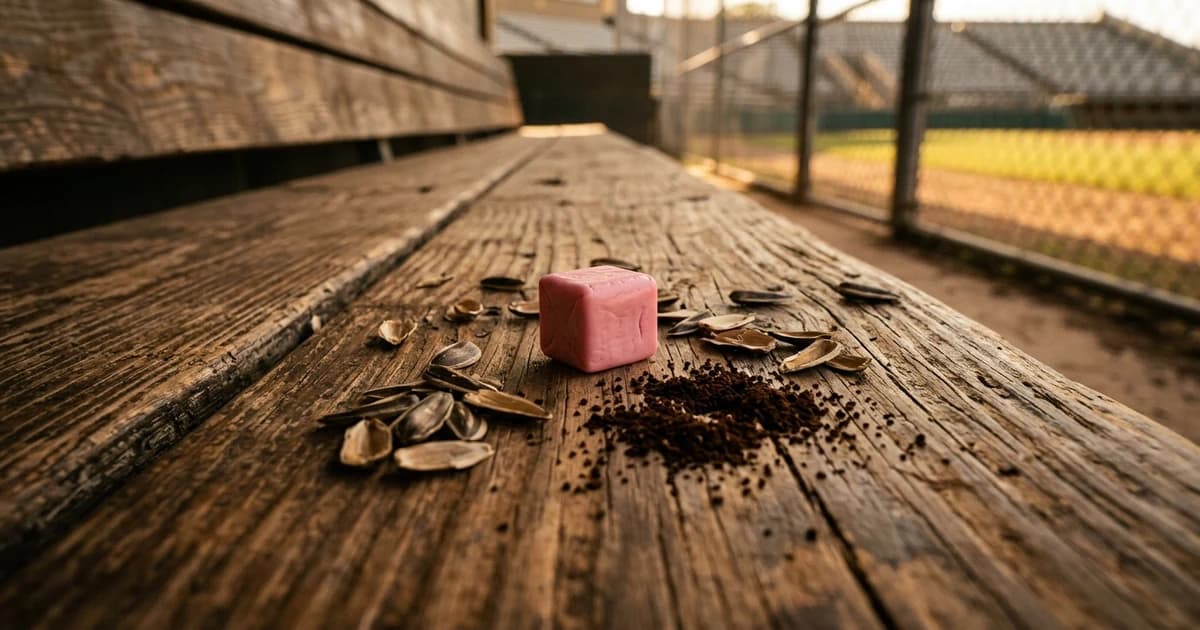
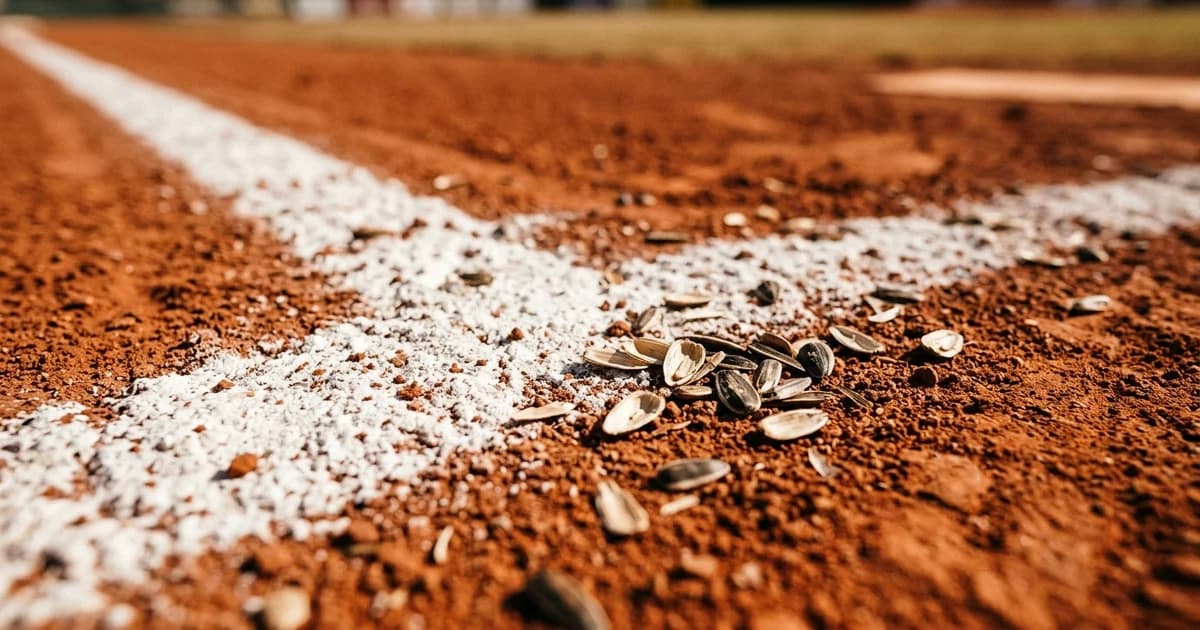
Why do baseball players spit? Because of what is in their mouths: sunflower seed shells, chewing gum, and for a shrinking number, tobacco. But the deeper answer is that a century of chewing tobacco turned spitting into a reflex that persists even when there is nothing in the mouth at all. The habit outlived the substance.
Key Takeaways
- Chewing tobacco entered baseball in the mid-1800s, and the spitting it produced became embedded in the game's culture for over a century.
- When tobacco faded, seeds and gum replaced it, and both still produce material you need to spit out.
- MLB banned spitting during the 2020 COVID season. Players said the reflex was harder to drop than the product.
- There is no permanent spitting ban in MLB today. Smokeless tobacco rules apply to players who debuted in 2017 or later and in select cities and all of California.
What Baseball Players Actually Spit (and Why)
| What's in the mouth | Why it makes you spit | Current MLB rule status |
|---|---|---|
| Sunflower seed shells | Shells must be expelled after cracking | Allowed (banned only during 2020 COVID season) |
| Chewing gum | Generates excess saliva | Allowed, even during 2020 |
| Smokeless tobacco (dip, chew) | Tobacco juice is not meant to be swallowed | Banned for players debuting 2017+; city/state bans in SF, Boston, LA, NYC, Chicago, Washington, D.C., and all CA stadiums |
| Nicotine pouches | Spit-free by design, though some users spit anyway | Not explicitly banned; MLB studying restrictions as of 2024 |
| Nothing at all | Reflex from decades of oral-habit culture | No rule against it |
To understand why spitting is so automatic in a dugout, you need the history.
Where the Spitting Came From: Tobacco and Dusty Fields
In the mid-1800s, when baseball took its shape as a national sport, chewing tobacco was enormously popular in the United States. Players chewed to stimulate saliva on dry, dusty infields. The spit had practical uses: once fielding gloves became common in the 1870s and 1880s, players moistened the leather with tobacco spit. Pitchers found another application, smearing tobacco juice on the ball to produce movement. The spitball was widely permitted until February 1920, when MLB's rules committee voted to ban it along with all doctored pitches. Six months later, a pitch struck and killed batter Ray Chapman, accelerating enforcement and the push to replace dirty baseballs during play.
So for the first 70-plus years of organized baseball, spitting was not just tolerated. It was functional.
Why Tobacco Faded but Spitting Did Not
The exit of tobacco from baseball happened in slow motion.
Robert Koch's identification of the tuberculosis bacterium in 1882 launched public health campaigns targeting spitting as a disease vector. Public spittoons disappeared. Chewing tobacco fell out of favor with the general population. Baseball held on longer than most institutions.
By the 1960s, the health dangers of smokeless tobacco were widely understood, and some players began switching to other oral habits. The institutional crackdown came in stages:
- 1993: Smokeless tobacco banned in the minor leagues.
- 2011 CBA (effective 2012): Players prohibited from carrying a tobacco tin or package in their uniforms once fans enter the park, and from using during televised interviews.
- 2016: City ordinances banning smokeless tobacco at ballparks took effect in San Francisco (January 1), Boston (April 1), Los Angeles, New York City, Chicago, and Washington, D.C., with $250 fines. California's AB 768 covered all professional stadiums statewide from December 1, 2016.
- December 2016 CBA: Smokeless tobacco banned for all new major league players; those with prior service grandfathered.
Each milestone pushed tobacco further from the dugout. None stopped the spitting.
What Is in the Mouth Now
If you watch a game in 2026, the most common things players spit are sunflower seed shells and gum.
Sunflower seeds arrived in the 1950s. Stan Musial and Enos Slaughter are commonly credited with bringing them to the dugout, cracking them between at-bats. Crack the shell, eat the kernel, spit the shell. There is no clean way to do it.
Bubble gum got its most iconic baseball form in 1977, when pitcher Rob Nelson came up with Big League Chew in the Portland Mavericks' bullpen: shredded gum in a pouch so players "could look cool and wouldn't make ourselves ill". It launched in 1980. Gum generates saliva. Saliva goes on the ground.
Nicotine pouches are a newer presence. They are spit-free by design, though some users spit anyway out of habit. MLB said in October 2024 it was studying potential restrictions on nicotine pouches, but no rule has been announced as of September 2026.
Caffeine pouches are also now on the market as a zero-nicotine alternative. For a closer look at what is actually in players' lips today, see our breakdown of what baseball players chew now.
The Reflex Without the Reason
Here is the part that surprises people: many players spit with absolutely nothing in their mouths. No seeds, no gum, no tobacco. Just spit.
This is not a medical phenomenon. It is a habit loop. Baseball has more idle time than any other major sport. Outfielders stand in position for minutes between plays. Batters wait in the on-deck circle. Relief pitchers sit in the bullpen for six innings before they are needed. That downtime invites repetitive motion, and spitting is the one the game chose.
Former Twins first baseman Justin Morneau told CBS News: "You got a lot of nervous energy when you're playing, so you need something that distracts you a bit." The oral habit itself, not the substance, does the distracting. That is also why some players fidget with oral fixation objects off the field.
The Year MLB Banned Spitting
The 2020 COVID-19 season gave baseball the closest thing to a controlled experiment on spitting. MLB's return-to-play protocols explicitly banned spitting, "including but not limited to saliva, sunflower seeds or peanut shells, or tobacco." Chewing gum was allowed. Pitchers could carry a wet rag instead of licking their fingers.
The player reaction was telling. Sports Illustrated captured the mood with a May 2020 headline: "'I'm Still Gonna Spit': MLB Players Are Facing a New Reality." The substance had already been leaving the game for years. The reflex had not.
Is Spitting Against the Rules Today?
No. The 2020 spitting ban was specific to that season's COVID protocols and is no longer in effect. There is no general MLB rule against spitting.
Tobacco-specific rules still apply. Any player who debuted in 2017 or later is banned from using smokeless tobacco under the December 2016 CBA. Players with prior service are grandfathered but still subject to city and state laws in San Francisco, Boston, Los Angeles, New York City, Chicago, Washington, D.C., and all California professional stadiums.
What to Put in Your Lip if You Do Not Want to Spit
If you play rec league or slow-pitch and want something in your lip without the puddle at your feet, the math is simple. Seeds and gum mean spitting. Pouches do not.
Nicotine pouches are spit-free by design, though they carry nicotine. Caffeine pouches offer a stimulant without nicotine and without spit. For a wider list, see our guide to alternatives to chewing tobacco worth trying or our spit-free pouch vs. dip comparison.
The Habit That Outlived the Reason
Spitting in baseball is not one thing. It is a stack of causes layered across 170 years: a tobacco culture that made spitting functional, replacements that still produce material to spit, and a reflex that no longer needs a trigger. The 2020 season proved the motion is independent of the product. Players will spit as long as the game has downtime and the rules do not stop them.
Frequently Asked Questions
Why do baseball players spit so much?
Sunflower seed shells, chewing gum, and a reflex inherited from over a century of tobacco use. Baseball has more idle time than other sports, and spitting fills those gaps. Many players spit even with nothing in their mouths.
What do baseball players spit out?
Sunflower seed shells and excess saliva from gum, mostly. Some grandfathered players still use smokeless tobacco, which produces tobacco juice. Many spit saliva alone, out of pure habit.
Is spitting allowed in MLB?
Yes, in 2026. The 2020 COVID season banned it temporarily, but that rule was pandemic-specific. There is no permanent rule against spitting. Smokeless tobacco has its own restrictions tied to debut date and local laws.
Why did MLB ban spitting in 2020?
To reduce COVID-19 transmission during the shortened season. The protocols banned spitting of saliva, sunflower seeds, peanut shells, and tobacco. Gum was still permitted. The ban was not carried forward.
Do baseball players still chew tobacco?
Some do. Players who debuted before 2017 are grandfathered under the current CBA, except in cities and states with local bans (San Francisco, Boston, Los Angeles, New York City, Chicago, Washington, D.C., and all California professional stadiums). The number declines each year as pre-2017 players retire.
Why do pitchers spit on the mound?
Same reasons as other players: habit, seeds, gum, nerves. Historically, pitchers had a functional reason (the spitball), but that pitch has been illegal since 1920. A pitcher spitting on the mound today is almost always a reflex during the pause between pitches.
Something in Your Lip for Nine Innings, and Nothing to Spit
The whole arc of this article points in one direction: the substance changed, but the spit stayed because the replacements still produce something to spit. Seeds have shells. Gum makes saliva. The only way to break that chain is a format that does not generate waste or excess fluid.
Roon is a zero-nicotine caffeine pouch. It sits in your lip, and there is nothing to spit. It is not a tobacco product and not a nicotine product, so it is not a substitute for either. What it does is deliver 80 mg of caffeine alongside 60 mg of L-theanine, 25 mg of methylliberine (Dynamine), and 5 mg of theacrine (TeaCrine) through a sublingual format that hits in 5 to 10 minutes and lasts 6 to 8 hours. That duration comes from methylliberine slowing caffeine clearance: a randomized, double-blind crossover study (n=12) showed co-administration extended caffeine's half-life from 7.2 to 15 hours with no increase in peak concentration. That study used 100 mg methylliberine and 150 mg caffeine, roughly four times and twice what Roon contains, so the effect at Roon's dose is directionally the same but not identical. The practical advice: one pouch covers a full nine-inning game, and you should stop at least 8 hours before bed.
Tins start at $15.00 for a one-time four-pack ($1.00 per pouch) or as little as $9.16 per tin on a 12-tin subscription ($0.61 per pouch). If you want the dugout ritual without the puddle at your feet, it is worth a try.
Related from Roon
- What Do Baseball Players Chew Now?
- Energy Dip Pouches: What to Know
- Alternatives to Chewing Tobacco Worth Trying
- ZYN vs Dip: A Pouch Comparison
Written by Roon Team