The Alternatives to Chewing Tobacco Worth Trying in 2026
Roon Team
The Alternatives to Chewing Tobacco Worth Trying in 2026
Roughly 47.7 million U.S. adults still use at least one tobacco product, according to 2024 NHIS survey data. A sizable chunk of that number belongs to dippers and chewers searching for alternatives to chewing tobacco that actually work. If you're reading this, you've probably already Googled the topic more than once. The good news: the market for alternatives to chewing tobacco in 2026 looks nothing like it did five years ago.
The old playbook was simple. Quit cold turkey, chew sunflower seeds, or slap on a nicotine patch. Now there are nicotine pouches, herbal long cuts, caffeinated pouches, and nootropic-infused options that didn't exist a decade ago. Some still contain nicotine. Others skip it entirely. This guide breaks down the best alternatives to chewing tobacco, covering what actually works, what's just marketing, and which products deserve your money.
Key Takeaways:
- Chewing tobacco contains at least 28 known carcinogens, per the National Cancer Institute.
- Nicotine pouches (like ZYN) remove the tobacco leaf but keep the nicotine, and the addiction that comes with it.
- Herbal dips replicate the physical ritual without nicotine or tobacco, making them popular dipping tobacco alternatives.
- Caffeinated and nootropic pouches are the newest alternatives to chewing tobacco, replacing the nicotine buzz with a cognitive boost.
Why You Should Care About Dipping Tobacco Alternatives
Smokeless tobacco is not the "safer" option your college roommate told you it was. The National Cancer Institute lists at least 28 carcinogens in smokeless tobacco products, including tobacco-specific nitrosamines (TSNAs), which are among the most potent cancer-causing compounds known to science.
A 2024 study published in The Lancet Oncology estimated that more than 120,000 cases of oral cancer globally were attributable to smokeless tobacco use in 2022 alone. That's not a small number. That's a stadium full of people.
And then there's the addiction itself. Nicotine from chewing tobacco absorbs through the oral mucosa and hits the brain fast. Your body builds dependence. Your mood, energy, and concentration become tethered to the next pinch. Quitting without a replacement strategy fails most people, which is exactly why the market for dipping tobacco alternatives has exploded.
The U.S. nicotine pouch market alone hit $3.95 billion in 2024 and is projected to reach nearly $50 billion by 2033. People are voting with their wallets. The demand for better alternatives to chewing tobacco is real.
The 5 Categories of Alternatives to Chewing Tobacco
Not all alternatives to chewing tobacco are created equal. Some swap one addiction for another. Others miss the point entirely. Here's how the options actually break down.
1. Nicotine Pouches (Tobacco-Free, Nicotine-Containing)
Examples: ZYN, VELO, On!, Rogue
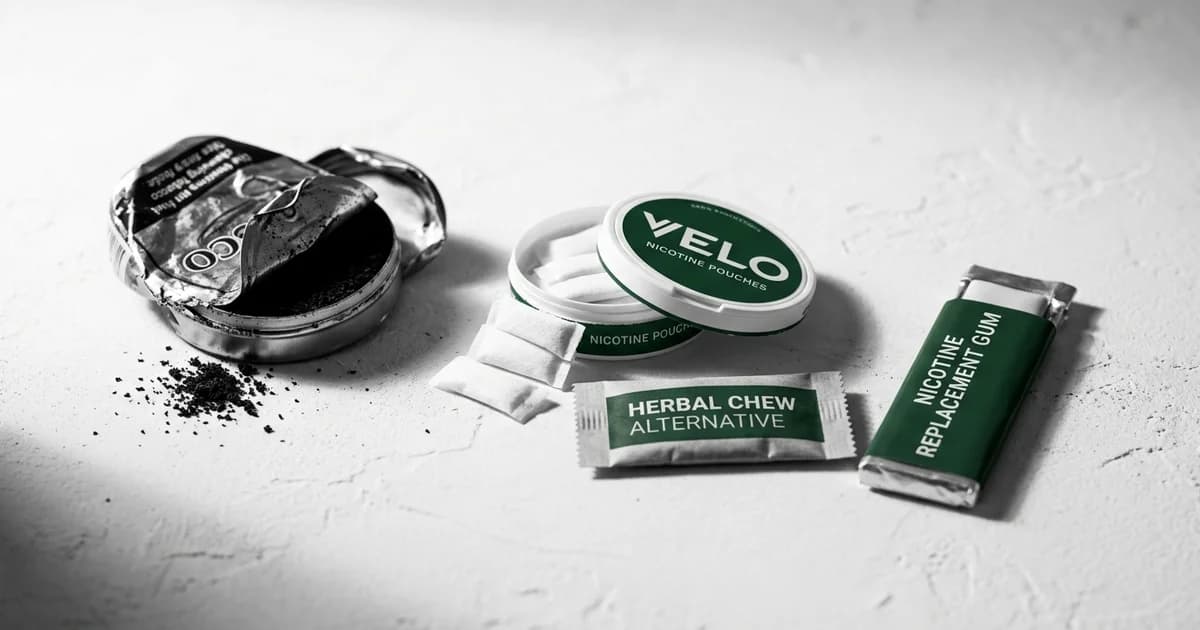
These are the heavyweights among alternatives to chewing tobacco. Nicotine pouches contain synthetic or tobacco-derived nicotine inside a small white pouch. No tobacco leaf, no spit, no staining. You tuck one under your lip and get a clean nicotine hit.
| Feature | Nicotine Pouches | Traditional Chew |
|---|---|---|
| Tobacco Leaf | No | Yes |
| Nicotine | Yes (2-8mg) | Yes (variable) |
| Spit Required | No | Yes |
| Known Carcinogens | Minimal data | 28+ |
| Addiction Risk | High | High |
The upside: you eliminate the tobacco leaf and the carcinogens that come with it. The downside: you're still hooked on nicotine. If your goal is to break free from dependence entirely, nicotine pouches are a lateral move, not a forward one, and exploring ZYN alternatives worth trying may get you closer to that goal. As dipping tobacco alternatives go, they reduce harm but don't eliminate addiction.
ZYN dominates this space. It's available in most gas stations and comes in strengths from 3mg to 6mg. VELO and On! nicotine pouch options offer similar products with slightly different flavor profiles.
2. Tobacco-Free Herbal Dips
Examples: Smokey Mountain, BaccOff, Outlaw Dip
Among the oldest alternatives to chewing tobacco, herbal dips replicate the texture, flavor, and ritual of traditional long cut or pouches using ingredients like corn silk, kudzu root, and mint leaves. Smokey Mountain, founded in 1985, is the original player here, offering both long cut and pouch formats with zero tobacco and zero nicotine.
Herbal dips work best for people who miss the physical habit: the packing, the lip, the spit. They satisfy the oral fixation without delivering any active stimulant. That's their strength and their weakness. If you relied on the nicotine buzz to power through a long shift or a late-night study session, herbal dip won't fill that gap.
BaccOff and Outlaw Dip are two other solid options in this category, each with multiple flavors and cuts.
3. Nicotine Replacement Therapy (NRT)
Examples: Nicotine gum, patches, lozenges
NRT products are FDA-approved cessation aids designed to wean you off nicotine gradually. They deliver controlled doses of nicotine without the tobacco. The patch gives you a steady baseline. The gum and lozenges give you something to do with your mouth. Many people use NRT as one of several alternatives to chewing tobacco during their quit attempt.
The data on NRT is mixed. It helps some people. For many, the success rate hovers around 7% for long-term abstinence when used alone. The problem is that NRT doesn't address the behavioral side of dipping. There's no pouch under your lip. There's no ritual. You're just wearing a sticker on your arm.
4. Nicotine-Free Nicotine Pouches
Examples: Zyn Citrus 0mg (limited), various white-label brands
A small but growing niche within alternatives to chewing tobacco. These products look and feel like nicotine pouches but contain zero nicotine. If you're deciding between the two formats, this breakdown of how nicotine and nicotine-free pouches compare lays out the tradeoffs. Some include vitamins or herbal extracts. The format is familiar for anyone transitioning off ZYN or similar products.
The category is still young. Most options lack the sensory "kick" that nicotine users expect, which makes the transition harder. But for people who've already tapered their nicotine intake down to minimal levels, these nicotine-free ZYN alternatives can serve as the final step away from dependence.
5. Caffeinated and Nootropic Pouches
Examples: Roon, Smokey Mountain Caffeinated Pouches, Dialed In
This is the newest and most interesting category of alternatives to chewing tobacco, and the nootropic pouch tobacco-free benefits set it apart from every other option on this list. Instead of replacing nicotine with nothing, these pouches replace it with something useful: cognitive performance ingredients.
The logic is straightforward. Most people don't dip because they love the taste of wintergreen tobacco. They dip because nicotine sharpens focus, lifts mood, and fights fatigue. Caffeinated and nootropic pouches target those same outcomes through different (and non-addictive) pathways.
Smokey Mountain's caffeinated pouches pair their herbal base with caffeine. Dialed In markets nootropic gum and energy pouches aimed at outdoorsmen and hunters. The ingredients and dosing vary widely across brands, so reading labels matters.
What to Look for in Alternatives to Chewing Tobacco
Picking the right product depends on where you are in the quitting process and what you actually need. Here's a framework:
If you need to manage nicotine withdrawal first: Start with nicotine pouches (ZYN, VELO) at a strength that matches your current intake, then taper down over 4-8 weeks.
If you've beaten the nicotine but miss the ritual: Herbal dips like Smokey Mountain or BaccOff give you the lip feel without the chemicals.
If you want the cognitive edge without the addiction: Caffeinated or nootropic pouches deliver focus and alertness through ingredients your body doesn't build dependence on. These are the dipping tobacco alternatives gaining the most traction right now.
A few things to check on any alternatives to chewing tobacco you consider:
- Ingredient transparency. If the label doesn't tell you exactly what's inside and how much, skip it.
- Third-party testing. Look for brands that test for heavy metals and contaminants.
- Nicotine content. "Tobacco-free" does not mean "nicotine-free." Read carefully.
- Active ingredients and dosing. For caffeinated pouches, know how much caffeine you're getting per pouch. Wildly high doses (200mg+) defeat the purpose of a clean, controlled experience.
The Science Behind Replacing Nicotine With Nootropics
Here's what makes the nootropic pouch category more than a gimmick, and why it stands out among alternatives to chewing tobacco.
Nicotine works by binding to acetylcholine receptors in the brain, increasing dopamine and norepinephrine release. That's why it sharpens attention and improves reaction time. The cost is dependence: your brain downregulates its own receptor activity, and you need more nicotine to feel normal.
Certain nootropic compounds can support similar cognitive pathways without triggering that dependence cycle.
Caffeine + L-Theanine is the most well-studied pairing. A study published in Nutritional Neuroscience found that the combination of 40mg caffeine and 97mg L-theanine improved accuracy during task-switching and increased self-reported alertness, while reducing tiredness. L-theanine improves attention-switching accuracy alongside caffeine, promoting calm focus and sustained alertness.
Theacrine and Methylliberine are newer compounds structurally related to caffeine. A randomized, placebo-controlled trial published in the Journal of the International Society of Sports Nutrition found that a combination of caffeine, methylliberine, and theacrine matched the vigilance benefits of double the caffeine dose alone, without the blood pressure spike. A separate study on esports athletes published in Cureus found that this same combination improved cognitive performance and reaction time without negatively affecting mood.
The key difference: theacrine does not appear to produce tolerance with repeated use, meaning you don't need to keep increasing your dose to get the same effect. That's what separates nootropic pouches from nicotine-based alternatives to chewing tobacco.
A Quick Comparison: Chewing Tobacco vs. the Top Alternatives
| Traditional Chew | Nicotine Pouches | Herbal Dip | Nootropic Pouches | |
|---|---|---|---|---|
| Tobacco | Yes | No | No | No |
| Nicotine | Yes | Yes | No | No |
| Addiction Risk | High | High | None | None |
| Cognitive Benefit | Short-term (nicotine) | Short-term (nicotine) | None | Yes (caffeine, nootropics) |
| Oral Cancer Risk | Elevated | Unknown long-term | Negligible | Negligible |
| Spit Required | Yes | No | Sometimes | No |
Focus Without Nicotine: The Best of the Alternatives to Chewing Tobacco
If the reason you started dipping was focus, and the reason you've stayed is because nothing else hits the same way, the equation has changed. The best alternatives to chewing tobacco now deliver real cognitive benefits without the dependence.
Roon is a zero-nicotine, sublingual performance pouch built around the exact stack the research supports: 80mg caffeine, L-theanine, theacrine, and methylliberine. It sits under your lip. It delivers 6-8 hours of sustained focus. No tobacco, no nicotine, no tolerance buildup, no crash.
It's not a cessation product. It's not pretending to be medicine. It's a cleaner tool for the same job you were hiring nicotine to do, and one of the most effective alternatives to chewing tobacco on the market. If you want to see the exact formula and dosing, Roon's focus pouch lists every ingredient on the label.
If you're ready to keep the ritual and drop the addiction, check out Roon.