What Do Baseball Players Chew Now? Gum, Seeds, Pouches
What Do Baseball Players Chew Now? Gum, Seeds, Pouches
What do baseball players chew now? Most chew bubble gum or sunflower seeds. Smokeless tobacco is banned for anyone who debuted in 2017 or later under the December 2016 collective bargaining agreement, though players with earlier service time are grandfathered in. Tobacco-free nicotine pouches are not banned by name and have quietly spread through clubhouses. A smaller number of players use caffeine pouches. Here is every option, its rule status, and whether you need a spit cup.
Key Takeaways
- Smokeless tobacco is not gone, but it is going. The 2016 CBA grandfather clause means older veterans can still use it; the phase-out happens by roster attrition, not a cutoff date.
- Nicotine pouches sit in a rule gap. A league source told Front Office Sports in October 2024 that MLB was studying restrictions. No rule has been announced as of September 2026.
- Gum and seeds still dominate because they are cheap, legal everywhere, and keep the mouth busy during a three-hour game.
- Caffeine pouches are the newest category, launched by former minor-league-turned-college players who literally chewed coffee grounds while pulling an all-night study session.
What Baseball Players Chew in 2026: The Full Lineup
| Option | What it is | MLB rule status | Spit required? |
|---|---|---|---|
| Bubble gum | Shredded gum (Big League Chew) or standard sticks | Always allowed | Optional |
| Sunflower seeds | Roasted, salted whole seeds cracked in the mouth | Always allowed (banned during 2020 COVID season) | Yes |
| Smokeless tobacco | Chewing tobacco, dip, snuff | Banned for post-2016 debuts; grandfathered for earlier players; banned in some cities for everyone | Yes |
| Nicotine pouches | Tobacco-free pouches containing synthetic nicotine (e.g., ZYN) | Not banned by name; under study since Oct 2024 | No |
| Caffeine pouches | Pouches with caffeine, sometimes combined with L-theanine or other compounds | Not addressed in any MLB rule | No |
Sources: 2016 CBA, Front Office Sports, CNBC.
Do MLB Players Still Chew Tobacco?
Some do, legally. The December 2016 CBA banned smokeless tobacco for all new major league players, defined as anyone who had zero days of major league service before the agreement took effect. Anyone with at least one day of service was grandfathered in. The rule carried into the 2022 CBA with the same language.
There is no cutoff date. The grandfather clause ends when the last grandfathered player retires. Even those veterans face restrictions: they cannot use smokeless tobacco in cities that have passed their own bans, and MLB can fine players who violate local ordinances. Every season, the share of grandfathered players on active rosters shrinks. The ban is working through attrition.
MLB Chewing Tobacco Rules: A Timeline
Five dates tell the story of how baseball pushed tobacco off the field.
1993: Minor League Baseball bans smokeless tobacco for all players. The rule applies to every affiliated minor league club and remains in force today. SI reported on the ban's persistence over two decades later.
1994: The NCAA bans tobacco for all student-athletes and game personnel during practice and competition. A violating athlete is disqualified for the remainder of that practice or competition.
2011 CBA (effective 2012): MLB and the MLBPA agree that players cannot carry tobacco tins or packages in their uniforms when fans are in the ballpark, and cannot use tobacco during televised interviews or club appearances. The union rejected a full ban.
2016, city ordinances: San Francisco becomes the first U.S. city to ban smokeless tobacco at professional sports venues, effective January 1, 2016. Boston follows on April 1, 2016, with Los Angeles, New York City, and Chicago passing similar laws the same year. Fines apply to players and fans alike. California's AB 768, effective December 1, 2016, covers all five of the state's professional stadiums.
December 1, 2016 CBA: The league-wide ban for new players takes effect. Tony Gwynn's death from salivary gland cancer at 54, after more than 30 years of smokeless tobacco use, had reframed the conversation two years earlier. Chris Sale said he quit the day Gwynn died.
What Replaced Chewing Tobacco in Baseball
Bubble Gum
Big League Chew is inseparable from the dugout. The idea started in the Portland Mavericks bullpen in 1977, where left-hander Rob Nelson and former Yankee Jim Bouton watched teammates spit tobacco and thought shredded bubble gum could serve the same oral habit without the health cost. Amurol, a Wrigley subsidiary, launched it in 1980. The shredded format was designed to look like a pouch of chewing tobacco, and it worked: it became one of the best-selling novelty gums of the decade.
Gum keeps the mouth busy. It helps manage dry mouth from adrenaline. And it gives you something to spit, which, for a sport that has spit baked into its culture, matters more than it should.
Sunflower Seeds
Stan Musial and Enos Slaughter are commonly credited with eating sunflower seeds in the outfield during the 1950s. Reggie Jackson made them famous in the late 1960s and 1970s. The ritual, cracking the shell, eating the kernel, spitting the husk, is its own kind of fidget. It fills time between at-bats in a sport where a position player might stand idle for ten minutes between plays.
Nicotine Pouches
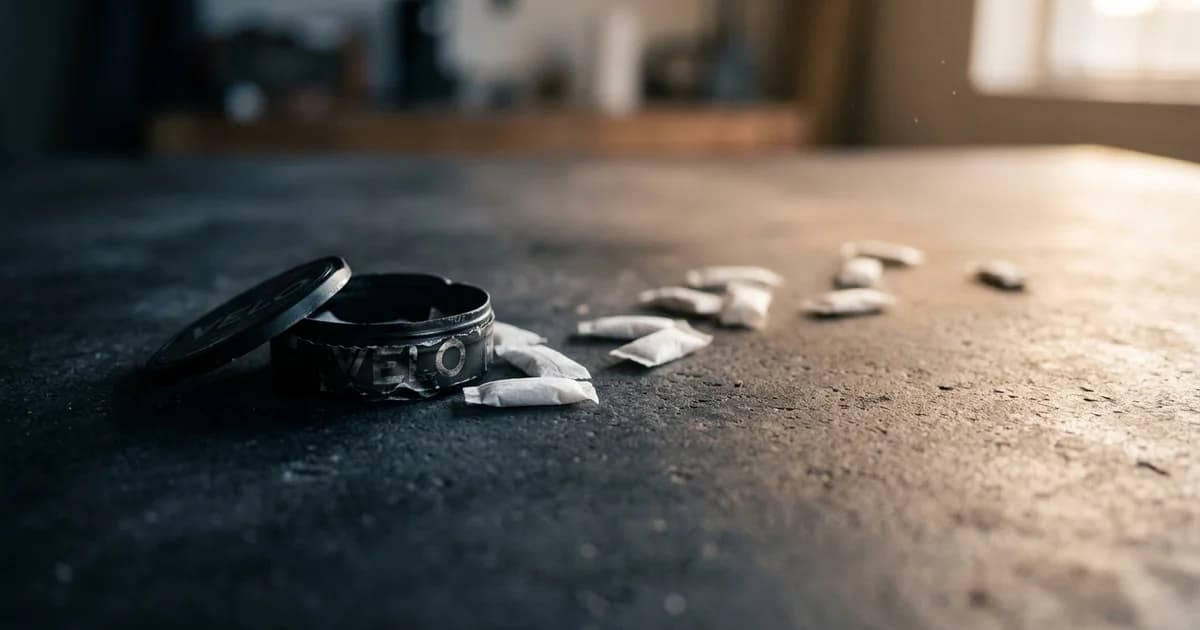
Nicotine pouches are tobacco-free and sit between the gum and lip, delivering nicotine without any leaf product. Because they contain no tobacco, they fall outside the smokeless tobacco definition in the CBA. That makes them technically legal under the current agreement.
This has not gone unnoticed. In October 2024, a league source told Front Office Sports that MLB was studying potential restrictions on nicotine pouches and planned to raise the issue with the MLBPA, specifically to avoid players using them where they would be "visible to younger fans." As of September 2026, no new rule has been announced. The minor leagues have already implemented a ban.
Caffeine Pouches
The caffeine pouch category traces back to two Cal Poly baseball players, Matt Canepa and Pat Pezet, who in 2009 started chewing coffee grounds one night while finishing a college project. That became Grinds Coffee Pouches, which sampled at spring training in 2010 and appeared on Shark Tank in 2014. The category has grown since, with newer entrants combining caffeine with compounds like L-theanine for a smoother stimulant effect. No MLB rule mentions caffeine pouches. Caffeine pouches vs nicotine pouches explains the difference for players switching off dip, and for a night game the caffeine calculator shows how much of a pregame dose is still active at bedtime.
Why Nothing Has Fully Replaced the Habit
The constant across every option is a three-hour game with long stretches of nothing to do. A pitcher waiting in the bullpen, a bench player sitting through seven innings, an outfielder between batters. Every option keeps the mouth occupied. Seeds and gum give you something to spit. Pouches give you something to park in the lip without the spit.
The oral fixation outlasted the substance. That is the thread connecting a 1950s outfielder cracking seeds to a 2026 reliever tucking a nicotine or caffeine pouch. The habit is the game's rhythm. The product is just whatever fits.
For adult rec-league players and weekend coaches looking for alternatives to chewing tobacco, the same options apply. League rules vary. If you play under NCAA rules, the standard is clear: tobacco use during practice or competition means disqualification for the remainder of that session.
The 2020 Spitting Ban
COVID-19 gave baseball an accidental experiment in stripping the oral habit entirely. MLB's 2020 return-to-play protocols banned spitting of any kind, including sunflower seeds, peanut shells, and tobacco. Chewing gum was allowed because it could be disposed of without spitting.
Players reported that giving up the spitting habit was harder than giving up any particular product. The protocols lasted one shortened season, but they demonstrated something the league had suspected: the attachment is to the ritual, not the nicotine or the salt or the sugar. Gum versus a pouch for a long sit comes down to whether you want to spit, and in 2020, nobody could.
Chewing in Baseball Is Changing, Not Disappearing
The dugout lip is not going away. It has been part of the sport since before television. What is changing is the substance. Tobacco is being phased out by rule and by roster turnover. Nicotine pouches have filled part of that gap but face their own regulatory uncertainty. Gum and seeds remain the defaults because they are simple, cheap, and carry no rule risk. Caffeine pouches are the newest entry, built for a longer effect without the spit question.
The trend line is clear: fewer combustible or leaf products, more processed alternatives, and a league that moves slowly but consistently toward restricting anything visible to fans.
Frequently Asked Questions
Do MLB players still chew tobacco?
Some veterans do, legally. The December 2016 CBA banned smokeless tobacco for anyone who debuted in 2017 or later but grandfathered players with prior major league service. Those grandfathered players are still allowed to use it except in cities with their own bans (San Francisco, Boston, Los Angeles, New York City, Chicago, and all California stadiums under AB 768). The pool shrinks every season as veterans retire.
When did MLB ban chewing tobacco?
The league-wide ban for new players took effect with the December 2016 CBA. The minor leagues banned it in 1993. The 2011 CBA restricted visible use (no tins in uniforms, no use in televised interviews) but stopped short of a ban after the union rejected the proposal.
Are nicotine pouches like ZYN allowed in MLB?
Nicotine pouches are not banned by name in the current CBA because they contain no tobacco leaf and fall outside the smokeless tobacco definition. In October 2024, a league source told Front Office Sports that MLB was studying potential restrictions. No new rule has been announced as of September 2026. The minor leagues have already banned them.
What do baseball players spit in the dugout?
Sunflower seed shells, gum, and, for grandfathered players, tobacco juice. Pouches, both nicotine and caffeine, produce no spit. The 2020 COVID protocols temporarily banned all spitting, and gum was the only approved oral option that season.
Why do baseball players chew gum instead of tobacco?
Gum fills the same oral role without the health risk or the rule complications. Big League Chew was literally designed as a tobacco look-alike for the dugout when it was created in 1977. For players who debuted in 2017 or later, tobacco is not an option, so gum and seeds are the defaults.
Can college players chew tobacco or use pouches?
No, not during practice or competition. The NCAA bans tobacco for all student-athletes and game personnel, with the penalty being disqualification for the rest of that session. Nicotine pouch policies vary by conference and institution. Adults playing in recreational leagues should check their specific league rules.
The Dugout Habit Without the Tobacco or the Nicotine
The article's through-line is a three-hour game and a mouth that needs something to do. If what you want is a caffeine ritual rather than a nicotine one, that is exactly what Roon is.
Roon is a zero-nicotine oral pouch with 80 mg caffeine, 60 mg L-theanine, 25 mg methylliberine (Dynamine), and 5 mg theacrine (TeaCrine). The design argument is duration. Methylliberine slows caffeine's clearance: a randomized, double-blind, crossover PK study (n=12) found that co-administration with caffeine cut oral clearance from 41.9 to 17.1 L/hr and extended the half-life from 7.2 to 15 hours, with no increase in peak concentration. That study used 100 mg methylliberine and 150 mg caffeine, roughly 4x the methylliberine and nearly 2x the caffeine in Roon's formula, so the effect at Roon's dose is directionally the same, not identical. Roon's felt window is 6 to 8 hours, which covers a nine-inning game and the drive home. Because the half-life extends, stop at least 8 hours before bed.
Nothing to spit, so it works in every ballpark and every league. Roon is not a nicotine product and is not a substitute for one. It is a caffeine pouch with a longer tail. Tins start at $9.16 on a 12-tin subscription (as little as $0.61 per pouch), with one-time 4-tin packs also available. If you want something in the lip during the game that is not tobacco, not nicotine, and not gone in twenty minutes, try Roon.
Related from Roon
- ZYN vs. Dip: A Full Pouch Comparison
- Alternatives to Chewing Tobacco Worth Trying
- Grinds Caffeine Pouches: The Complete Guide
- Caffeine and L-Theanine for Athletes: The Calm Focus Stack
Written by Roon Team