Ryze Mushroom Coffee Side Effects: What the Label Predicts

Ryze Mushroom Coffee Side Effects: What the Label Predicts
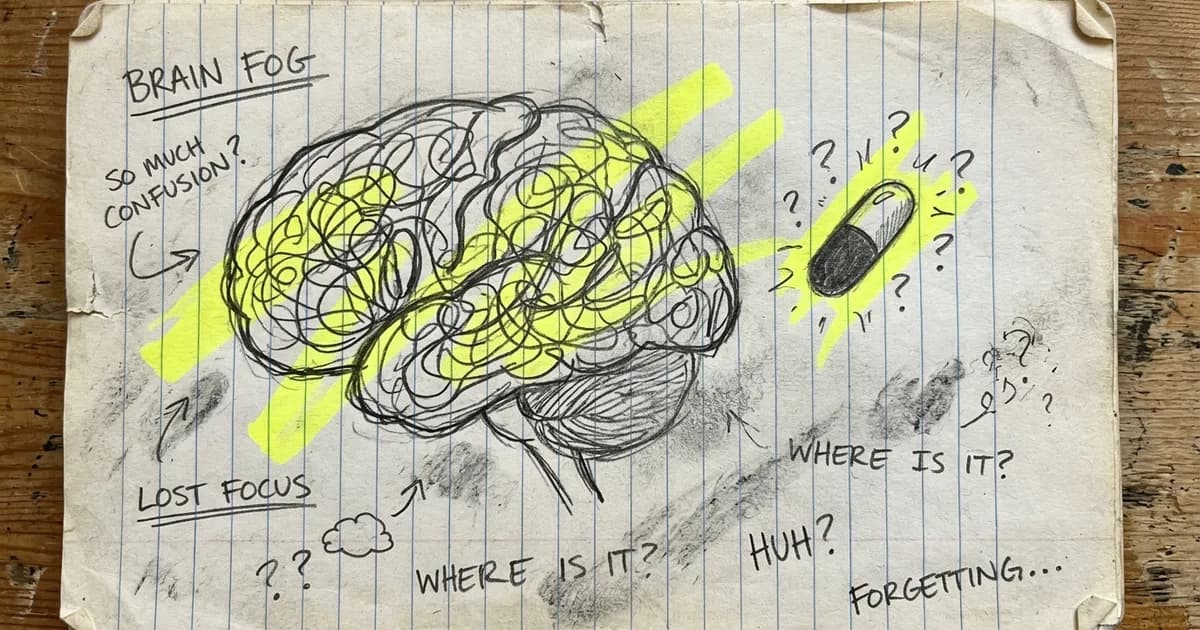
The reported side effects of Ryze mushroom coffee fall into two categories. Digestive effects (bloating, gas, more frequent bowel movements) trace to the prebiotic fiber and mushroom beta-glucans in the blend. Head effects (headache, fatigue, brain fog) trace to a caffeine cut: Ryze's medium roast delivers about 48 mg per cup, roughly half of what a standard cup of coffee contains. Neither category is mysterious once you read the label.
Key Takeaways
- Bloating and gas come from fermentable fibers (inulin, acacia) and mushroom beta-glucans, not from "detox." They are dose-dependent and usually settle in days.
- Headache, fatigue and brain fog match the caffeine-reduction literature. Switching from a 95 mg cup to a 48 mg cup is a 50% dose cut, and the body notices.
- Ryze's own side-effects page says symptoms "tend to subside within 3-7 days." The caffeine withdrawal research puts the timeline at 2 to 9 days.
- The dark roast (80-90 mg caffeine) is a different product than the medium roast (48 mg). If lower caffeine was never your goal, the roast you pick changes the equation entirely.
What Is in a Serving of Ryze
The current label reads: Organic Instant Coffee, Organic RYZE Super6 Mushroom Blend (Cordyceps, Reishi, Turkey Tail, King Trumpet, Shiitake, Lion's Mane), Organic Prebiotic Blend (Acacia Fiber, Inulin Fiber, Tapioca Fiber). That is the full ingredient statement as of September 2026, per Ryze's product page.
The mushroom blend is listed at about 2,000 mg per serving on retail listings. Per-mushroom amounts and fiber grams are not disclosed. The current coffee label does not list MCT oil (that is in the Mushroom Matcha, not the coffee).
Caffeine content, per Ryze: about 48 mg for the medium roast, about 80-90 mg for the dark roast. A standard 8 oz cup of brewed coffee runs roughly 95 mg.
| Ingredient | What It Is | Predicted Effect | Typical Duration |
|---|---|---|---|
| Inulin and acacia fiber | Fermentable prebiotic fibers | Bloating, gas, looser stools | Days to ~1 week as gut adapts |
| Mushroom beta-glucans (2,000 mg blend) | Polysaccharide fiber in mushroom extracts | Mild GI discomfort at higher doses | Dose-dependent; usually transient |
| Instant coffee, 48 mg caffeine (medium roast) | ~50% less caffeine than a standard cup | Headache, fatigue, brain fog if switching from regular coffee | 2 to 9 days per withdrawal literature |
| Instant coffee, 80-90 mg caffeine (dark roast) | Roughly equal to a standard cup | Minimal caffeine-reduction effects | N/A if habitual intake stays similar |
Bloating and Gas: The Fiber Explanation
Inulin and acacia are fermentable fibers. Your gut bacteria break them down, and the byproduct is gas. This is fermentation, not detox, and it scales with dose.
A randomized, double-blind crossover trial (Bonnema et al., 2010, 26 healthy adults) found that up to 10 g/day of chicory inulin was well tolerated, with flatulence as the most frequent symptom and bloating second. A second trial (Holscher et al., 2014, 29 healthy adults, agave inulin at 5.0 and 7.5 g/day) confirmed that bloating and flatulence intensity rose with dose.
Ryze does not publish fiber grams per serving, so no one can say exactly where on that dose-response curve a single cup falls. What the trials predict: the effect is real, dose-dependent, and settles as the gut adjusts.
What Ryze Says About Its Own Side Effects
Ryze's April 2026 blog post lists "temporary digestive changes in the form of more frequent bowel movements or mild bloating" alongside brain fog, fatigue, and headaches when switching from traditional coffee. The brand says these "tend to subside within 3-7 days" and suggests starting with half a scoop mixed with half a scoop of regular coffee, transitioning over a week.
That 3-to-7-day window aligns with the fiber tolerance data. For caffeine reduction effects, the research stretches the tail a bit longer.
Do the Mushrooms Cause Stomach Effects?
Beta-glucans are the main structural polysaccharide in mushroom cell walls, and they act as fiber in the gut. The question is whether Ryze's dose is high enough to matter.
A randomized, placebo-controlled trial (AJCN, 2023, 263 adults) tested beta-glucan tablets at 1.5, 3, and 6 g/day for 12 weeks. GI adverse events: 23.4% (1.5 g), 34.8% (3 g), 66.7% (6 g), versus 36.9% on placebo. At low doses, beta-glucans look like placebo. At high doses, the gut notices.
The BELT study (Nutrients, 2020, 83 adults, 3 g/day oat beta-glucan, 8 weeks) reported no unfavorable effect on self-perceived intestinal well-being, though three subjects had moderate, reversible cramps and diarrhea.
Ryze's mushroom blend is listed at about 2,000 mg per serving, but beta-glucan content is not disclosed. At a typical extraction ratio, the actual beta-glucan load is likely low enough to be unremarkable alone. Combined with the prebiotic fiber blend, the total fermentable load rises. (For context: mushroom coffee doses often sit below clinical trial levels.)
Headache, Brain Fog, and Fatigue: The Caffeine-Reduction Explanation
This is the effect most Ryze reviews skip, and it has the most research behind it.
Ryze's medium roast delivers about 48 mg of caffeine. A standard cup runs roughly 95 mg. If you were drinking two cups a day (about 190 mg) and switch both to Ryze, you drop to about 96 mg. That is a 50% dose cut, taken in one morning.
Juliano and Griffiths (2004), reviewing 57 experimental and 9 survey studies, established the withdrawal profile: headache in about 50% of subjects in experimental abstinence, with 13% experiencing clinically significant distress or impairment. Onset runs 12 to 24 hours after the dose drop, peak intensity at 20 to 51 hours, and total duration of 2 to 9 days. Severity scales with habitual dose.
A partial cut produces a milder version of the same curve. You probably will not get the full-abstinence headache from going 190 to 96 mg, but expect a dull headache on day one, some afternoon fatigue through day three or four, and a fogginess that lifts as your adenosine receptors recalibrate. For a detailed breakdown, see the caffeine withdrawal timeline and caffeine withdrawal headache timeline.
Jitters, Sleep, and Heart Rate
At 48 mg, the medium roast sits well below the FDA's 400 mg/day guideline for most adults. Jitters from a single cup of Ryze medium roast are unlikely unless you are exceptionally caffeine-sensitive.
The dark roast at 80-90 mg is roughly one full cup of coffee, and stacking it on top of regular coffee cuts nothing. Drink Ryze dark roast in the morning and two regular coffees by noon, and you are at 270+ mg before lunch. The usual caffeine side effects (restlessness, elevated heart rate, disrupted sleep) apply. Total daily milligrams, not the brand name, drive jitters and sleep disruption.
Who Should Check with a Clinician First
If you take prescription medication, are pregnant or breastfeeding, or have a known mushroom allergy, talk to your prescriber or clinician before starting Ryze or any mushroom coffee product. The same applies if you have a condition that requires you to limit caffeine or dietary fiber.
Persistent or severe symptoms are a reason to see a clinician. Ryze's own guidance: consult with a healthcare provider if anything feels off beyond mild discomfort.
Reducing the Effects Without Quitting
If you want to keep drinking Ryze but want fewer side effects in the first week:
- Start with half a scoop of Ryze mixed with half a scoop of regular coffee. Ryze's own recommendation. It keeps caffeine closer to baseline while introducing fiber gradually.
- Take it with food. A meal slows the delivery of fermentable fiber to the colon, reducing the initial gas spike.
- Taper caffeine over one to two weeks, not one day. One cup of coffee plus one Ryze is gentler than switching both cups at once.
- Pick the dark roast if lower caffeine was never the goal. At 80-90 mg, the dark roast approximates a standard cup without the caffeine-reduction headache.
Making Sense of the Label
The side effects of Ryze mushroom coffee are not random and not signs of "detox." They are predictable from two features of the product: fermentable fiber that your gut bacteria need time to adjust to, and (in the medium roast) a caffeine dose roughly half of what most coffee drinkers are used to. Digestive effects are fiber effects. Head effects are caffeine-reduction effects. Both are temporary for most people, and both respond to simple dose management.
Frequently Asked Questions
Does Ryze mushroom coffee cause bloating?
It can. Ryze contains inulin, acacia, and tapioca fiber, all fermentable by gut bacteria. Clinical trials confirm that bloating and flatulence increase with fermentable fiber dose and typically decrease as the gut adapts over several days.
Why do I get a headache on Ryze?
If you switched from regular coffee (about 95 mg per cup) to Ryze medium roast (about 48 mg), you cut your caffeine roughly in half. Caffeine withdrawal research shows headache in about 50% of people during experimental abstinence, onset 12 to 24 hours after the dose drop. A partial cut produces a milder version.
Is Ryze mushroom coffee safe to drink every day?
For most healthy adults, the ingredients are well-established food components: instant coffee, edible mushrooms, and prebiotic fiber. Both roasts sit well under the FDA's 400 mg/day caffeine guideline. If you take medication or have a health condition, check with your clinician first.
Does Ryze mushroom coffee make you poop?
Possibly. Prebiotic fibers draw water into the colon and are fermented by gut bacteria, both of which can increase bowel movement frequency. Ryze lists "more frequent bowel movements" as a common early adjustment effect.
How long do Ryze side effects last?
Ryze says symptoms "tend to subside within 3-7 days." The fiber tolerance literature supports a similar window. For caffeine reduction symptoms, the research puts the range at 2 to 9 days, with peak intensity at 20 to 51 hours (Juliano and Griffiths, 2004).
Can Ryze mushroom coffee cause jitters?
At 48 mg (medium roast), jitters are unlikely for most adults. The dark roast at 80-90 mg is closer to a regular cup and could contribute to jitters if stacked with other caffeine sources. Total daily intake determines the outcome.
If the Headache Was the Caffeine Cut, Not the Mushrooms
The pattern this article describes has a specific shape: you switched to Ryze for the mushrooms or the lower caffeine, and the reward was a headache, some afternoon fog, and a bloated stomach. The stomach part is the fiber. The head part is a caffeine dose that dropped further than you planned. If the real goal was easing heartburn, our list of coffee alternatives for acid reflux rates nine options by acid and caffeine.
If what you actually wanted was sustained energy without a jittery peak and a 2 PM crash, the variable to control is caffeine dose and duration, not caffeine reduction. Roon holds the caffeine at 80 mg per pouch, roughly one cup of coffee, paired with 60 mg L-theanine, 25 mg methylliberine (Dynamine), and 5 mg theacrine (TeaCrine) in a zero-nicotine, zero-sugar sublingual pouch. No fiber blend, no mushroom powder, no liquid. The digestive variables in this article do not apply.
The duration piece comes from methylliberine. In a randomized, double-blind, crossover PK study (n=12), co-administration of methylliberine with caffeine cut caffeine's oral clearance from 41.9 to 17.1 L/hr and extended its half-life from 7.2 to 15 hours, with no increase in peak concentration. That study used 100 mg methylliberine plus 150 mg caffeine, roughly 4x the methylliberine and 1.9x the caffeine in a Roon pouch, so the effect at Roon's dose is directionally the same but not identical in magnitude. The felt window is 6 to 8 hours. The trade-off: stop at least 8 hours before bed.
From $9.16 per tin on the 12-tin subscription ($0.61 per pouch) or $15.00 per tin one-time ($1.00 per pouch). Roon is not a mushroom product and makes no claims about gut health or adaptogens. It is a caffeine-and-duration tool. If that is the problem you are solving, try Roon.
Related from Roon
- Caffeine Withdrawal Timeline: Hour by Hour
- Caffeine Withdrawal Headache Timeline
- Mushroom Coffee Science: Cognitive Dose Thresholds
- Best Mushroom Coffee Replacement 2026
Written by Roon Team