Zyn vs Dip: Spit-Free Pouch vs Smokeless Tobacco, Compared Honestly
Zyn vs Dip: Spit-Free Pouch vs Smokeless Tobacco, Compared Honestly
If you are choosing between Zyn and dip purely on harm, the answer is not close. Dip is tobacco, and tobacco carries the carcinogens. Zyn is tobacco-free and spit-free, which removes most of those compounds but keeps the nicotine and the addiction that comes with it. There is also a third lane that ex-dippers rarely hear about: a tobacco-free, nicotine-free pouch that keeps the upper-lip ritual and drops the drug entirely.
That is the honest version of the zyn vs dip question. Most comparisons skip the part where neither is "safe," and they skip the option that removes nicotine altogether.
This article is for informational purposes only and is not medical advice. If you have health concerns, are pregnant or breastfeeding, or are trying to cut down on caffeine or quit nicotine, talk to a healthcare provider. This comparison is published by Roon, which makes a zero-nicotine pouch mentioned below.
Key Takeaways
- Dip is smokeless tobacco. It contains at least 28 cancer-causing chemicals and is a known cause of oral, esophageal, and pancreatic cancer.
- Zyn is tobacco-free. It removes the tobacco leaf and most tobacco-specific nitrosamines (TSNAs), but it still delivers addictive nicotine and is not a recommended quit method.
- Spit is the obvious difference. Dip requires spitting; Zyn and other pouches do not.
- A zero-nicotine pouch exists. For ex-dippers who want the lip ritual without tobacco or nicotine, that is the cleanest option on the table.
- Neither Zyn nor dip is harm-free. The honest ranking is dip > Zyn > zero-nicotine pouch, worst to best on toxicant load.
Zyn vs Dip vs Zero-Nicotine: The Comparison Table
The fastest way to read this decision is side by side. Most articles on this topic skip the table entirely, so here it is.
| Product | Tobacco-derived? | Nicotine per use (mg) | TSNAs / carcinogens | Spit required? | Oral-cancer evidence | Cost per use | Zero-nicotine option? |
|---|---|---|---|---|---|---|---|
| Dip (smokeless tobacco) | Yes | ~10-15 mg total nicotine; ~3-4 mg absorbed | At least 28 carcinogens; high TSNAs | Yes | Established cause of oral, esophageal, pancreatic cancer | ~$0.30-0.50 | No |
| Zyn (nicotine pouch) | No | 3 or 6 mg | Tobacco-free; TSNAs substantially reduced or absent | No | New product; no long-term data; addiction confirmed | ~$0.30-0.38 | No |
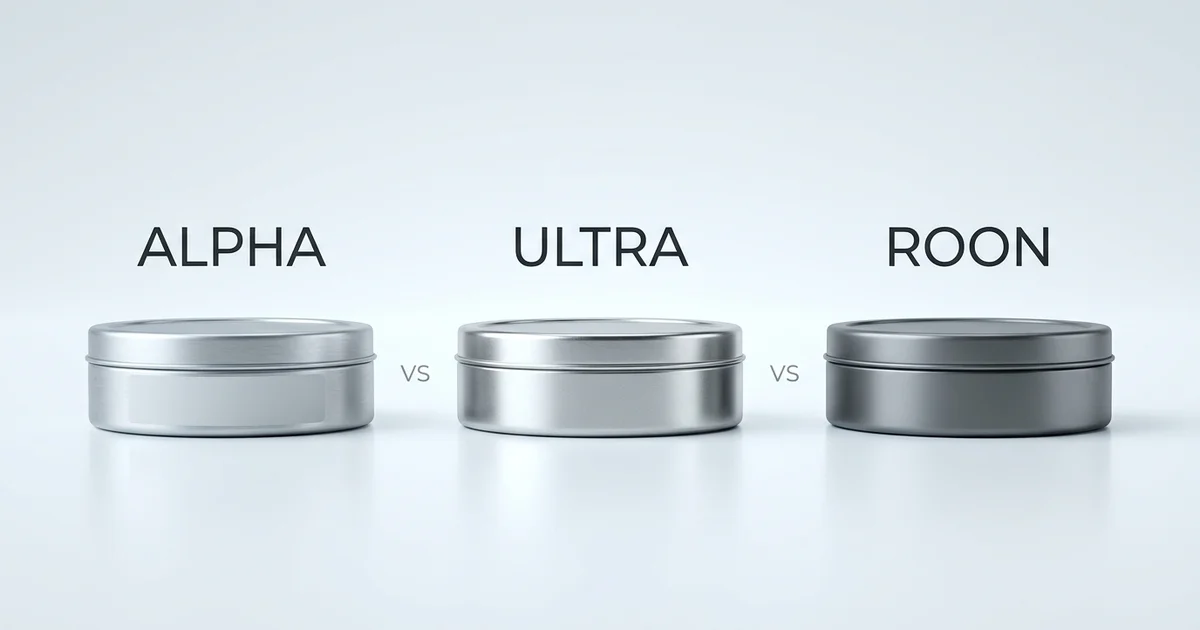
| Roon (caffeine pouch) | No | 0 mg | None from tobacco; no nicotine | No | No nicotine and no tobacco; upper-lip ritual only | Varies | Yes |
Roon is the honest entry in the third column. It is a tobacco-free, nicotine-free sublingual pouch built for focus, not a tobacco substitute and not a nicotine product. More on where it fits below.
Dip Is Tobacco, and That Is the Whole Problem
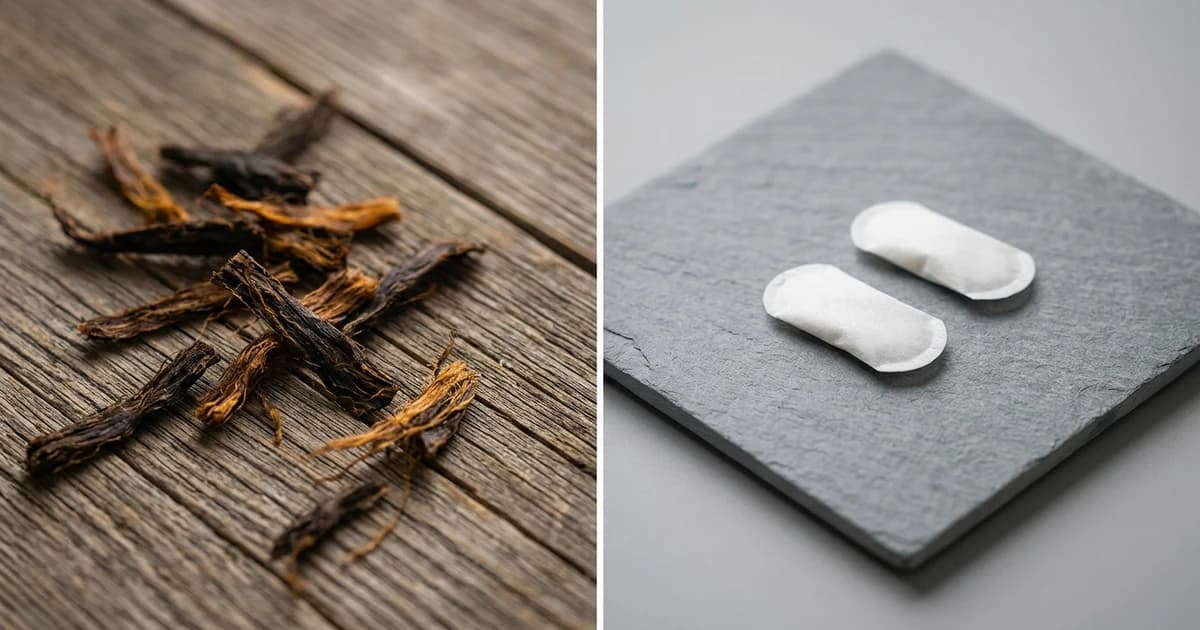
Dip is the riskiest option here because it is unprocessed tobacco held against your gum for long stretches. According to the National Cancer Institute, at least 28 chemicals in smokeless tobacco have been found to cause cancer, and smokeless tobacco causes oral cancer, esophageal cancer, and pancreatic cancer.
The most dangerous of those chemicals are tobacco-specific nitrosamines. Among 28 known carcinogens in smokeless tobacco, tobacco-specific nitrosamines (TSNA) are considered to be the most important due to the combination of abundance and strong carcinogenicity. These form during tobacco curing and processing, so they are baked into the product itself.
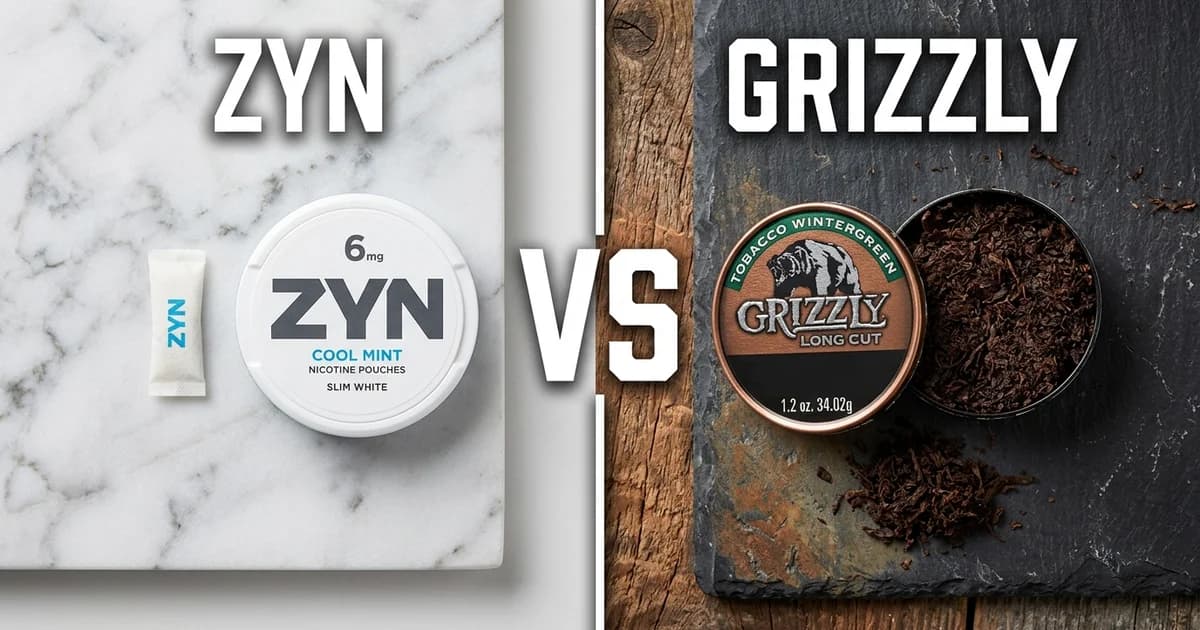
The link to cancer is not theoretical. The American Cancer Society states that the most harmful cancer-causing chemicals in smokeless tobacco are tobacco-specific nitrosamines (TSNAs). TSNA levels vary by product, but the higher the level the greater the cancer risk. Long-term dip use is also tied to nicotine addiction and precancerous oral lesions. The spit is the least of the issues. For one brand-level example, see ZYN vs Grizzly, which compares Grizzly dip with Grizzly's own tobacco-leaf-free pouches.
Zyn Is Tobacco-Free, Which Changes the Risk Profile but Not the Addiction
Zyn removes the tobacco leaf, and that single change strips out the bulk of the carcinogen problem. A nicotine pouch is made from nicotine salts, plant fibers, pH adjusters, and flavoring rather than cured tobacco. You place it between your gum and lip, and nicotine crosses the oral lining.
Because there is no tobacco and no combustion, the toxicant math shifts hard. A pharmacokinetic study published in PMC notes that due to the absence of tobacco leaf and combustion when using nicotine pouches, it is expected that levels of associated toxicants such as tobacco specific nitrosamines (TSNAs), polycyclic aromatic hydrocarbons (PAHs) and carbon monoxide present will be substantially reduced, if at all present.
Here is the catch. Tobacco-free does not mean drug-free. The Truth Initiative is direct on this point: nicotine pouches can contain high concentrations of nicotine, which can put users at risk of nicotine addiction and can make quitting more challenging. For these reasons, using oral nicotine pouches like Zyn is not a recommended way to quit nicotine. Zyn comes in 3 mg and 6 mg strengths, and the nicotine is the entire point of the product. So on the zyn vs dip toxicant question, Zyn wins. On the question of whether Zyn is harmless, the answer is no.
So Is Zyn Actually Safer Than Dip?
On carcinogen load, yes, and a cancer-prevention nonprofit says so plainly. According to Less Cancer, nicotine pouches pose a substantially lower risk of cancer of any kind when compared to smoking or chewing. Chewing tobacco has at least 28 carcinogenic chemicals, none of which are in Zyn or related products.
"Safer than dip" is a low bar, though, and newness is the open variable. Nicotine pouches have only been widely available for a few years, so long-term human data does not exist yet. Early clinical reports have already documented localized gum problems in heavy users. A 2025 case series in PMC described a 22-year-old man with localized gingival recession and leukoplakia after consistently placing pouches in the same spot for eleven months. Rotate your placement, and understand you are still feeding an addiction.
The Third Lane: A Zero-Nicotine Pouch for the Upper-Lip Ritual
If what you actually miss about dip is the ritual, not the buzz, you do not need nicotine at all. A lot of long-term dippers describe the habit as muscle memory: the hand-to-lip motion, the tucked pouch, the something-to-do during a drive or a deadline. None of that requires a drug.
This is the lane Zyn comparisons almost never mention. A tobacco-free, nicotine-free pouch keeps the physical ritual and the oral placement while removing both the carcinogens of dip and the addictive nicotine of Zyn. You get the lip habit and nothing pharmacologically habit-forming attached to it.
Roon sits here. It is a sublingual pouch with zero nicotine and zero tobacco, built around caffeine and L-theanine for focus rather than a nicotine hit. It is not a nicotine-replacement therapy and not a medical quit aid. It is the option for the ex-dipper who wants to keep his hands and mouth busy without keeping the chemistry.
Cost: Closer Than You Think
Per use, Zyn and dip land in a similar range. A single can of Zyn runs a few dollars for 15 pouches, putting it around 30 to 38 cents per pouch, and dip cans land in roughly the same per-use territory depending on brand and state tobacco taxes. Rising state taxes on nicotine products are pushing pouch prices up, so the gap is narrowing rather than widening.
Cost is the wrong tiebreaker here anyway. The meaningful difference between these products is carcinogen exposure and addiction, not a dime per pouch.
Conclusion: Rank by What the Product Actually Contains
The zyn vs dip decision comes down to what you are putting against your gum. Dip is tobacco, with at least 28 carcinogens and a documented cause of oral cancer, so it is the worst option on the board. Zyn drops the tobacco and most of the carcinogens, which makes it meaningfully less harmful, but it keeps the addictive nicotine and lacks long-term safety data.
If your goal is harm reduction, switching from dip to a tobacco-free pouch lowers your carcinogen exposure. If your goal is to be done with the drug entirely, the only product that gets you there is one with no nicotine at all. Rank these honestly, worst to best on what they contain: dip, then Zyn, then a zero-nicotine pouch. Choose the lowest rung you are ready to stand on.
Frequently Asked Questions
When to See a Doctor
If you are trying to stop dipping or using nicotine, or you notice gum, mouth, or other health changes, talk to a healthcare provider or a cessation service. This article does not replace personalized medical guidance.
Is Zyn safer than dip?
On carcinogen exposure, yes. Dip is tobacco and contains at least 28 cancer-causing chemicals, including tobacco-specific nitrosamines that drive oral cancer risk. Zyn is tobacco-free, so those compounds are substantially reduced or absent. That said, "safer" is not "safe." Zyn still delivers addictive nicotine, and because pouches are new, long-term human safety data does not yet exist. Treat the comparison as relative risk, not a clean bill of health.
Does Zyn cause oral cancer like dip does?
There is no long-term evidence that Zyn causes oral cancer, but there is also no long-term evidence that it does not, because the product is too new. What is established is that smokeless tobacco like dip is a proven cause of oral, esophageal, and pancreatic cancer. Zyn lacks the tobacco-specific nitrosamines that drive most of that risk. Early case reports have documented localized gum recession and lesions in heavy pouch users, so oral effects are still possible.
Do you spit with Zyn?
No. Zyn and other nicotine pouches are designed to be spit-free. You place the pouch between your gum and lip, and nicotine absorbs through the lining of your mouth without producing the saliva and tobacco juice that dip requires you to spit out. The spit-free, discreet format is a major reason many dippers switch to pouches in the first place.
Is Zyn addictive?
Yes. Nicotine is the addictive substance in both Zyn and dip, and the Truth Initiative states that nicotine pouches can contain high concentrations of nicotine that put users at risk of addiction. Zyn comes in 3 mg and 6 mg strengths. Removing tobacco does not remove the dependence, which is why health organizations do not recommend Zyn as a way to quit nicotine.
What can I use instead of dip if I want to quit nicotine entirely?
If you want to keep the upper-lip ritual without nicotine, a tobacco-free, nicotine-free pouch is the cleanest fit. These products preserve the physical habit, the hand-to-lip motion and the tucked pouch, without delivering any addictive drug. For people trying to fully quit nicotine, FDA-cleared nicotine-replacement therapies and a clinician's guidance are the evidence-based route, since they are pharmaceutical-grade and dose-controlled.
How much does Zyn cost compared to dip?
They are close. A can of Zyn holds 15 pouches and costs a few dollars, landing around 30 to 38 cents per pouch. Dip cans fall into a similar per-use range depending on brand and state taxes. Rising state taxes on nicotine pouches are narrowing the gap. Cost is a poor deciding factor here, since the real difference between the two products is carcinogen exposure and addiction.
If the Ritual Is What You Miss, Not the Nicotine
This article ranked your options by what they actually contain, and the cleanest rung is the one with no nicotine and no tobacco at all. That only matters if the part of dip you are chasing is the ritual: the lip placement, the something-to-do, the focus it seemed to give you on a long drive or a long shift.
That is the gap Roon is built for. It is a sublingual pouch with zero nicotine and zero tobacco, formulated with 80 mg caffeine, 60 mg L-theanine, 25 mg methylliberine (Dynamine), and 5 mg theacrine (TeaCrine) and designed for steady, sustained focus without the spike-and-crash of a strong coffee. You keep the upper-lip habit and lose the drug.
Be clear on what Roon is not. It is not a nicotine product, not a nicotine-replacement therapy, and not a tobacco or nicotine cessation aid. Quitting nicotine or dip is a conversation for a clinician, not a pouch swap. If you are working to break a nicotine dependence, talk to a healthcare provider about a real cessation plan. If you already want the ritual without the chemistry, this is a place to start.
By Roon Team