The 'Study With Me' Desk
Roon Team
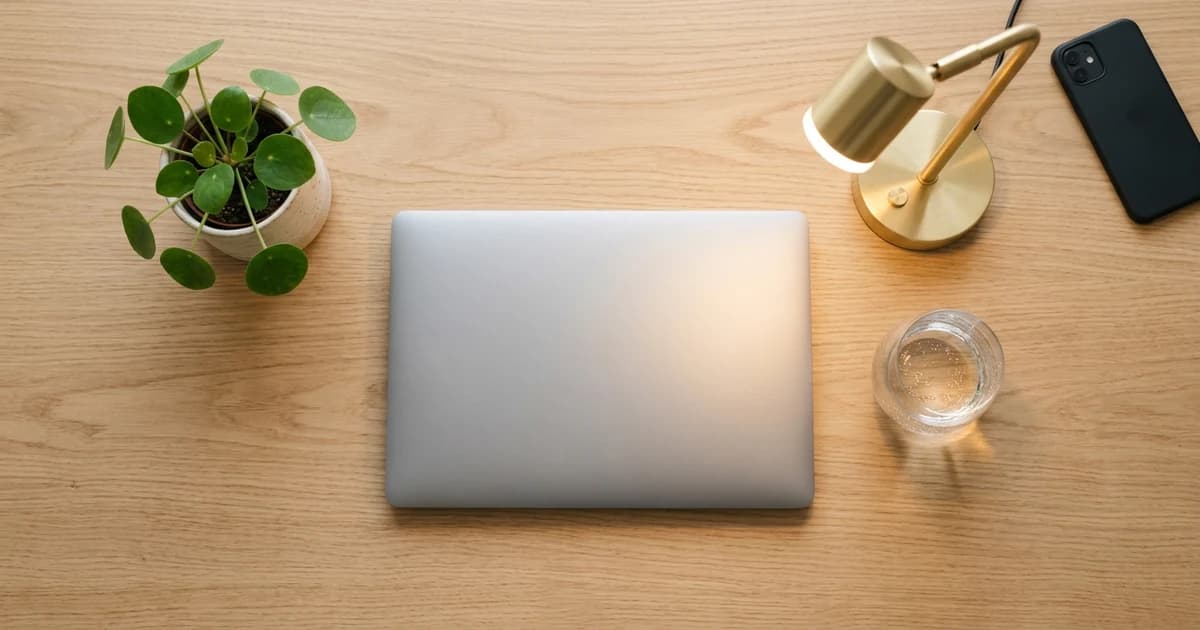
The 'Study With Me' Desk: What Actually Belongs Next to Your Laptop
A good "study with me" session lives or dies before you press play. The physical desk setup, what is on it and what is not, determines whether you get three focused hours or three hours of fidgeting while an ambient café stream plays in the background. Below is every item that earns a spot next to your laptop, backed by the research on why each one matters.
Key Takeaways
- A visible countdown timer (Pomodoro or similar) prevents the steady attention decline that starts around 20 to 30 minutes into unbroken work, according to a 2011 study in Cognition.
- Your phone belongs in another room, not face-down on your desk. A study of nearly 800 participants found that its mere presence reduces available cognitive capacity, even when it is turned off.
- Water within arm's reach protects sustained attention; a 2018 meta-analysis found that dehydration above 2% body mass loss impairs attention, executive function, and motor coordination.
- Your caffeine choice should match the session's length, not just its start. Coffee peaks in 30 to 60 minutes and the noticeable energy drop begins 2 to 4 hours later.
Why Does the "Study With Me" Format Actually Work?
External accountability and visible structure. A 2025 paper in Computers & Education analyzed 393 "study with me" videos on YouTube and found they had collectively attracted over 400 million views, with more than half published after 2023. A separate 2025 study in Frontiers in Psychology noted that Lofi Girl's most-viewed video alone surpassed 700 million views, with the channel reaching over 14.7 million subscribers by 2024.
Watching someone else focus makes it easier to focus yourself. But the stream is only the accountability layer. The desk underneath you is the operational layer. Get that wrong and no amount of ambient piano will save the session.
What Timer Setup Should You Use for a Study Session?
A visible countdown timer is the single most useful object on a study desk. The classic Pomodoro method uses 25-minute work blocks separated by 5-minute breaks, but the principle matters more than the exact numbers: timed blocks with scheduled breaks outperform unstructured work.
Alejandro Lleras at the University of Illinois tested this directly. In a 2011 study in Cognition, Lleras and Ariga found that brief mental diversions during a 50-minute task completely prevented the usual decline in sustained attention. The control group's accuracy dropped steadily. The group given two brief breaks did not decline at all.
This is why so many "study with me" videos bake a Pomodoro timer into the screen. The timer is the mechanism, not decoration. If your stream does not include one, use a physical timer or a browser Pomodoro app. Use 25/5 for dense reading or problem sets, 50/10 for writing or creative work.
Do You Actually Need Water on Your Desk?
Yes, and not as a wellness aesthetic. A 2018 meta-analysis in Medicine & Science in Sports & Exercise by Wittbrodt and Millard-Stafford examined dehydration ranging from 1% to 6% body mass loss and found a significant impairment in attention, executive functioning, and motor coordination, particularly beyond the 2% threshold.
You will not hit 2% sitting at a desk. But if the only water is in the kitchen, you will either break your flow to get it or skip it and study mildly dehydrated for three hours. Neither is good. Put a full bottle on the desk before the session starts. Refill during Pomodoro breaks, not in the middle of a work block.
Where Should Your Phone Be During a Study Session?
In another room. Not face-down on the desk. Not in your bag. In another room, behind a closed door.
A 2017 study by Ward et al. in the Journal of the Association for Consumer Research ran experiments with nearly 800 smartphone users and found that cognitive capacity was measurably reduced when a phone was on the desk or in a pocket, compared to in another room. The effect held even when the phone was powered off.
The researchers called this "brain drain": part of your attention is continuously allocated to not checking the phone, leaving fewer cognitive resources for the actual task. The only condition that eliminated this cost was physical separation.
If you need your phone for emergencies, set it on Do Not Disturb in the next room and check it during Pomodoro breaks. If you are using your phone as your timer, buy a $10 kitchen timer instead. The trade is worth it.
Does Blue Light From Your Screen Hurt Your Eyes During Long Sessions?
Blue light from screens is not causing eye damage. The American Academy of Ophthalmology has stated there is no scientific evidence that screen light damages eyes, and does not recommend special computer eyewear. A 2023 Cochrane systematic review of randomized controlled trials found blue-light-filtering lenses made no difference in visual performance or fatigue.
What does cause discomfort is reduced blink rate and sustained near-focus. You blink less while staring at a screen, drying your eyes, and your ciliary muscles fatigue from holding focus at laptop distance. The fix is already built into the Pomodoro method: during every break, look at something 20+ feet away for 20 seconds. The real intervention is the break, not a special lens.
What Should Your Physical Desk Look Like?
The surface should be boring. That is the goal. Every object on it should serve the session; everything else goes in a drawer or on the floor.
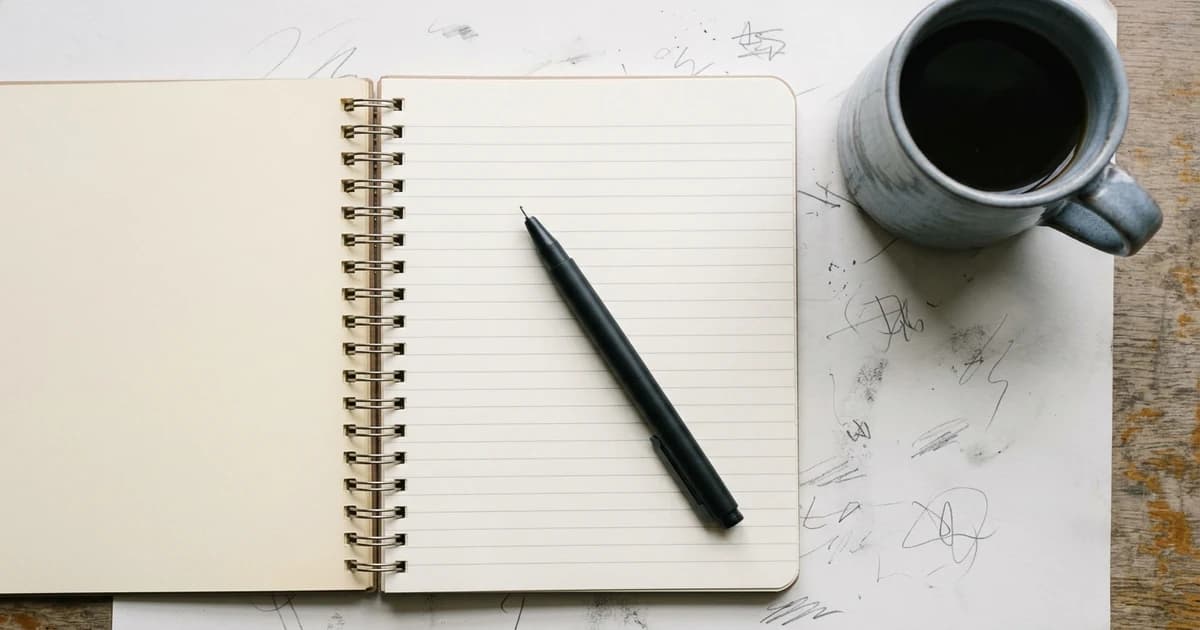
What earns a spot: laptop or monitor (one screen only), visible timer, full water bottle, one notebook and one pen, a desk lamp that lights the surface without screen glare.
What does not: your phone, snack wrappers, open food bags, a second device you are not actively using, decorative items that catch your eye during a focus lapse.
Posture matters for sessions over 90 minutes. Your screen should sit at or just below eye level; a $20 laptop stand plus an external keyboard fixes this. Feet flat, forearms parallel to the desk.
Lighting matters too. Study under bright, cool-toned light (4000K to 5000K) for morning or afternoon sessions. If you study at night, lower the color temperature after 8 PM to avoid suppressing melatonin, but accept that nighttime study is already a compromise.
How Should You Plan Caffeine for a Multi-Hour Study Session?
Most study sessions run 2 to 4 hours. Most caffeine sources do not. Coffee reaches peak plasma concentration in 30 to 60 minutes and the noticeable energy drop begins 2 to 4 hours after that peak. A drip coffee at the start of a 3-hour session means you are riding the downslope for the entire second half.
Energy drinks carry the same timing problem with higher caffeine doses (150 to 300 mg in many cans) that overshoot what seated cognitive work requires. An 8 oz coffee delivers roughly 80 to 100 mg, plenty for studying. The issue is not the dose. It is the duration.
How do you sustain alertness across a full session without re-dosing (which resets the crash clock) or overshooting (which introduces jitters)? This is a design problem. For a deeper look at study-specific supplements, the guide to the best study supplements for students covers the ingredient evidence. And the study hacks for staying locked in for 8 hours straight walks through the full session strategy beyond just the desk.
The Session That Runs Itself
A well-set study desk is a decision-elimination machine. Timer visible, water full, phone gone, surface clear, caffeine plan matched to the session length. The "study with me" format, whether Pomodoro-timer video, ambient café stream, or silent co-study session, only works when the physical setup removes every friction point that would pull you out of flow. Build the desk right once, and 3-hour sessions stop feeling like endurance tests.
Frequently Asked Questions
What is a "study with me" session?
A "study with me" session is a format on YouTube and Twitch where a creator films themselves studying in real time, often with a visible Pomodoro timer, ambient music, or café sounds. Viewers study alongside the video for accountability and structure. A 2025 analysis of 393 videos in this genre found they had collectively drawn over 400 million views.
How long should a study with me session last?
Most effective sessions run 2 to 4 hours with structured breaks. The Pomodoro method (25 minutes on, 5 minutes off) is the most common timer structure. For longer sessions, a 50/10 split works well. Going beyond 4 hours without a real break tends to produce diminishing returns on retention and focus.
Does the Pomodoro Technique actually improve studying?
Yes. A 2011 study by Lleras and Ariga in Cognition showed that brief, scheduled diversions during a 50-minute task completely prevented the decline in sustained attention that the control group experienced. The exact interval matters less than the principle: timed blocks with mandatory breaks outperform continuous, unstructured work.
Should I use blue-light glasses during long study sessions?
The evidence does not support them. The American Academy of Ophthalmology states there is no scientific evidence that screen light damages eyes and does not recommend special computer eyewear. What does help is taking regular breaks to look at a distant object, which relaxes the ciliary muscles responsible for near-focus fatigue.
Can I keep my phone on my desk if it's on Do Not Disturb?
No. Ward et al. (2017) found that the mere physical presence of a smartphone reduced cognitive capacity in nearly 800 participants, even when the phone was off and face-down. The only condition that eliminated this cost was placing it in a separate room. Do Not Disturb reduces interruptions but does not address the "brain drain" of proximity.
What is the best lighting for studying?
Bright, cool-toned light in the 4000K to 5000K range supports alertness during daytime sessions. Avoid dim or warm lighting during focused work. If studying at night, lower color temperature after 8 PM to reduce melatonin suppression, but recognize that late-night study is a trade-off no lamp fully fixes.
How much water should I drink during a study session?
No universal number, but keep a full water bottle on the desk and sip regularly. The goal is avoiding the mild dehydration that comes from sitting in a heated or air-conditioned room for hours without drinking. Refill during Pomodoro breaks so the trip doubles as a movement break.
Does ambient music or café noise actually help focus?
It depends on the task. For repetitive or low-complexity work, moderate background noise (around 70 dB, café level) has been linked to improved creative output. For dense reading or problem-solving, silence or very low-volume instrumental music works better. Most "study with me" streams offer a range, so experiment during low-stakes work first.
The Caffeine Plan That Actually Lasts the Whole Session
The desk setup above solves every problem except one: the caffeine crash at the two-hour mark. Coffee peaks fast and fades fast. That is fine for a 45-minute meeting. It is a poor match for a 3-hour study block.
Roon is a zero-nicotine oral pouch built for exactly this duration mismatch. Each pouch contains 80 mg of caffeine (roughly one small cup of coffee), 60 mg of L-theanine to smooth the subjective response, 25 mg of methylliberine (Dynamine), and 5 mg of theacrine (TeaCrine). The reason it lasts longer than coffee at the same caffeine dose: methylliberine slows caffeine's clearance. In a randomized, double-blind, crossover PK study (n=12), co-administration with caffeine cut oral clearance from 41.9 to 17.1 L/hr and extended caffeine's half-life from 7.2 to 15 hours, with no increase in peak concentration (study). Same peak, longer tail. The felt window is 6 to 8 hours, not coffee's 3 to 4.
That extended half-life carries a trade-off: do not take it late in the day. Roon's own guidance is to stop at least 8 hours before bed. For a study session starting at 10 AM or 2 PM, the timing works. For a midnight cram session, coffee is probably the better (if imperfect) choice.
Roon is not a substitute for sleep, a structured study plan, or the desk setup described above. It is the caffeine layer. One pouch at $1.00 (or $0.61 on subscription), tucked into the corner of the desk, onset in 5 to 10 minutes, and you do not think about caffeine again for the rest of the session.
Written by Roon Team