Rogue vs ZYN on Price: Which Is Actually Cheaper Per Pouch?
Rogue vs ZYN on Price: Which Is Actually Cheaper Per Pouch?
Short answer: Rogue is usually the cheaper pouch, and the reason is the can, not the sticker. A Rogue can holds 20 pouches; a standard ZYN can holds 15. Even at a similar shelf price, that gap changes the per-pouch cost. This page does that math. For the full head-to-head on strength, flavor, and ingredients, see our complete Rogue vs ZYN breakdown.
You're standing in a gas station aisle, staring at two cans of nicotine pouches. One says Rogue. The other says ZYN. The rogue vs zyn debate has become one of the most common questions in the nicotine pouch world, and for good reason. Both are tobacco-free, both come in mint flavors, and both promise a clean nicotine experience. So which one do you grab? These two brands dominate the U.S. market among top nicotine pouch brands, and the rogue vs zyn decision often comes down to details most people overlook.
This side-by-side breakdown covers everything that actually matters: ingredients, flavors, nicotine delivery, price per pouch, and the trade-offs nobody talks about.
Key Takeaways
- ZYN uses nicotine salt (nicotine bitartrate dihydrate) for a smooth, consistent release. Rogue uses a similar tobacco-free nicotine but in a slightly moister pouch format.
- Rogue gives you more pouches per can (20 vs. ZYN's 15), which changes the value equation in the rogue vs zyn matchup.
- Rogue comes in 3mg and 6mg, and Rogue Max adds 9, 12 and 15mg. ZYN's standard line runs 1.5mg to 8mg, and its newer ZYN Ultra line comes in 9mg and 11mg.
- Neither brand contains any ingredients designed to support focus, calm, or sustained cognitive performance. They deliver nicotine. That's it.
ZYN: The Market Leader
ZYN is the biggest name in nicotine pouches in the United States. Made by Swedish Match, ZYN has built its reputation on consistency and a dry, slim pouch format that sits discreetly under your lip. Understanding ZYN's strengths is essential to any honest rogue vs zyn evaluation.
Flavors and Strengths
ZYN comes in 10 flavored and unflavored varieties including Wintergreen, Cool Mint, Spearmint, Peppermint, Menthol, Citrus, Coffee, Cinnamon, Smooth, and Chill. Most flavors come in 3mg and 6mg, with 1.5mg and 8mg on part of the range.
The flavor range leans heavily toward mint and menthol, which makes sense given that Cool Mint and Wintergreen are consistently the top sellers. If you want a fruit-forward option, your choices are limited to Citrus.
Ingredients
In addition to nicotine salt, ZYN contains only food-grade ingredients, including a granulation agent, fillers, pH balancers, sweeteners, and flavorings. The nicotine is pharmaceutical-grade nicotine bitartrate dihydrate, a nicotine salt form that absorbs smoothly through the gum tissue.
Pouch Count and Price
Every can of ZYN contains 15 nicotine pouches. Pricing varies by retailer, but according to Prilla, ZYN prices start from $5.19 per can. That works out to roughly $0.35 per pouch at the lower end. Keep this number in mind for the rogue vs zyn value breakdown below.
Rogue: The American-Made Challenger
Rogue is a domestically manufactured nicotine pouch brand that has carved out a loyal following, especially among users who want more flavor variety and a slightly different pouch feel. In the rogue vs zyn conversation, Rogue often appeals to users looking for better bang for their buck.
Flavors and Strengths
Rogue nicotine pouches come in 13 flavors: Apple, Berry, Blue Raspberry, Bold, Cinnamon, Citrus, Honey Lemon, Mango, Original (unflavored), Peppermint, Smooth, Spearmint, and Wintergreen. All Rogue flavors are available in 3mg and 6mg strengths.
The flavor selection is where Rogue pulls ahead in the rogue vs zyn matchup. Apple, Berry, Mango, and Honey Lemon give you options that ZYN simply doesn't offer. If you've gotten bored with mint, Rogue has more room to explore.
Ingredients
For a closer look at what goes into Rogue pouches, the formula includes nicotine, food-grade fillers, flavorings, and plant-based fibers. They contain no tobacco leaf, just nicotine derived from the tobacco plant or made synthetically, and are both spit-free and sugar-free. The ingredient profile also includes a stabilizer and a sweetener. The pouches use sodium carbonate and sodium bicarbonate as pH balancers to optimize nicotine absorption.
Pouch Count and Price
Here's where Rogue starts to look interesting from a value standpoint. Every can of Rogue contains 20 pouches, compared to ZYN's 15. According to Prilla, Rogue pricing typically ranges from $5 to $6 per can. At $5 per can, that's $0.25 per pouch, a meaningful savings over ZYN. Those are retailer prices, not Rogue's own: Rogue's store sells pouches only in 5-packs at $26.99, about $5.40 a can.
Rogue vs ZYN: Head-to-Head Comparison
Here's the full rogue nicotine pouches vs zyn breakdown in one table:
| Feature | ZYN | Rogue |
|---|---|---|
| Manufacturer | Swedish Match | Swisher International |
| Flavors | 13 | 13 |
| Nicotine Strengths | 1.5mg, 3mg, 6mg, 8mg (Ultra: 9, 11) | 3mg, 6mg (Max: 9, 12, 15) |
| Nicotine Type | Nicotine salt (bitartrate dihydrate) | Tobacco-free nicotine |
| Pouches Per Can | 15 | 20 |
| Price Per Can | ~$5.19+ | ~$5.00–$6.00 |
| Approx. Price Per Pouch | ~$0.35 | ~$0.25–$0.30 |
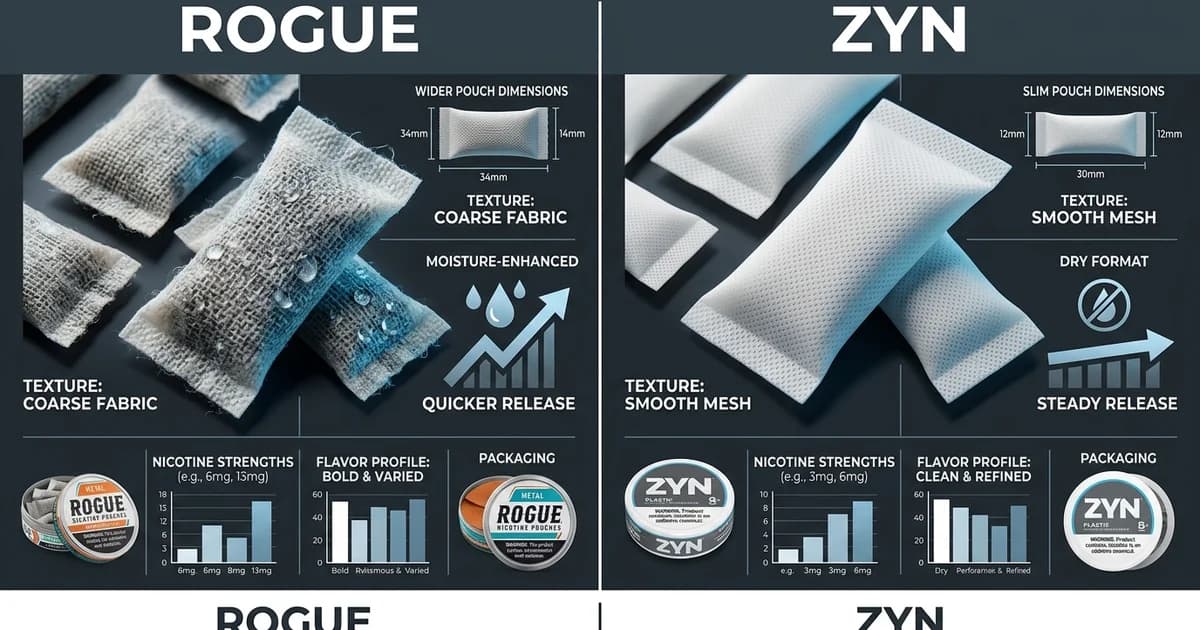
| Pouch Format | Dry, slim | Slightly moister, slim |
| Tobacco Leaf | No | No |
| Sugar-Free | Yes | Yes |
| Cognitive Support Ingredients | None | None |
If Your Goal Is Focus, Not Nicotine: A Third Option
Rogue and ZYN are both nicotine pouches. If nicotine is what you want, pick the one that suits your palate and budget. But if you reached for this comparison because you want sustained cognitive performance, there is a third category worth knowing about.
Roon is a zero-nicotine sublingual pouch built for focus. It contains no nicotine, no tobacco, and no stimulant without a counterbalance. The formula is a four-ingredient stack: 80 mg caffeine, 60 mg L-theanine, 25 mg methylliberine (Dynamine), and 5 mg theacrine (TeaCrine). Each ingredient is disclosed publicly on the label and the product page, with no proprietary blends.
| Brand | Active Compounds + Exact mg | Nicotine-Free | Approx. Price/Pouch | Full Label Transparency |
|---|---|---|---|---|
| ZYN | Nicotine (bitartrate dihydrate) 1.5mg to 8mg; Ultra 9mg or 11mg | No | ~$0.35 | Partial (nicotine mg listed) |
| Rogue | Tobacco-free nicotine 3mg or 6mg; Rogue Max 9mg to 15mg | No | ~$0.25–$0.30 | Partial (nicotine mg listed) |
| Roon | Caffeine 80mg, L-theanine 60mg, Methylliberine 25mg, Theacrine 5mg | Yes | As little as $0.61 | Full (all ingredients + mg) |
Roon is not a nicotine replacement product. It does not claim to help you quit nicotine. It is a separate category: a nootropic pouch designed to support hours-long concentration without the tolerance curve that comes with regular nicotine use.
Pouch Feel and Nicotine Delivery in the Rogue vs ZYN Matchup
The physical experience differs between the two brands more than most reviews mention. This is one area where the rogue vs zyn choice becomes very personal.
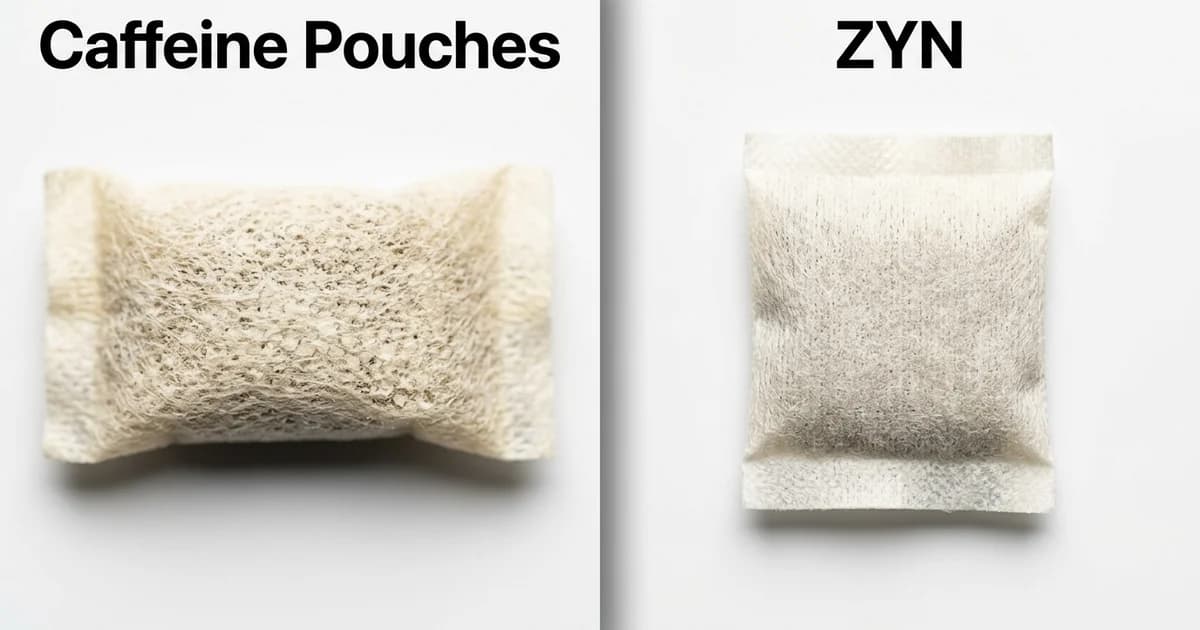
ZYN pouches are dry. Noticeably so. This means less drip and less flavor up front, but a slower, more gradual nicotine release. Some users prefer this because it feels cleaner and less noticeable in the mouth. The trade-off is that the initial flavor hit can feel muted.
Rogue's pouches are slightly drier than VELO but not as dry as ZYN, making them ideal for users who want a middle ground. You'll get more immediate flavor and a slightly faster nicotine onset, but the pouch may produce more saliva. Each Rogue pouch is designed to be enjoyed for up to an hour, and the same holds roughly true for ZYN. This difference in moisture level is a key factor in the rogue nicotine pouches vs zyn experience.
The most common real-world knock on Rogue is gum irritation. One user captured the whole trade-off: "The wintergreen and peppermint are two of the best tasting pouches I've had. I also love the pouch size and moisture...feels perfect in my lip. I tried hard to make them my daily go-to, but they just irritate my gums too much and I had to give them up... literally no other single brand has irritated my gums at all... But, I've never [found] anything to replace Zyn as my main daily pouch" (r/NicotinePouch).
Standard Rogue tops out at 6mg (Rogue Max reaches 15mg), while ZYN's standard line now reaches 8mg and ZYN's newer Ultra line comes in 9mg and 11mg. Coming from heavy tobacco use, the standard options may feel mild at first.
Who Wins the Rogue vs ZYN Flavor Contest?
This one isn't close. Rogue wins the flavor variety contest with 13 options versus ZYN's 10, but the real difference is in the type of flavors. ZYN's lineup is mint-heavy. If you love mint, ZYN's range of Cool Mint, Spearmint, Peppermint, Wintergreen, and Menthol gives you five variations on the same theme.
Rogue offers Mango, Apple, Berry, and Honey Lemon alongside its mint options. For users who want something different from yet another wintergreen pouch, Rogue is the more interesting brand. This flavor edge is one reason the rogue vs zyn debate keeps tilting toward Rogue for newer users. As one Reddit user explained their preference: "I prefer them because the pouches are larger and you get 5 more per tin. I also like the flavors like apple, mango, and berry more than what I can find for Zyn" (r/NicotinePouch).
On pure mint quality, though, ZYN has a slight edge. The dry format delivers a crisp, clean mint that many long-term users swear by.
Who Wins on Value?
Rogue. With 20 pouches per can versus ZYN's 15, you're getting roughly 33% more pouches at a similar price point. Even if you pay $6 for a can of Rogue, you're still at $0.30 per pouch compared to ZYN's $0.35 or higher. In any rogue vs zyn cost analysis, Rogue comes out ahead.
Over the course of a month, that difference adds up. If you use a can every two days, switching from ZYN to Rogue saves you the equivalent of several free cans per month.
What's Missing from Both Rogue and ZYN
Here's the part of the zyn vs rogue comparison that neither brand's marketing will tell you: both products do exactly one thing. They deliver nicotine to your bloodstream through your gum tissue. That's it.
Neither ZYN nor Rogue contains any ingredients designed to support focus, reduce jitters, or smooth out the stimulant curve. There are no nootropics, no adaptogens, no amino acids working alongside the active ingredient. The zyn vs rogue comparison reveals the same limitation on both sides: you get nicotine, sweetener, filler, and flavoring.
This matters because most people reach for a pouch when they need to perform. Before a meeting. During a long study session. On a deadline. They want sharper focus and sustained energy. Nicotine can provide a short burst of alertness, but it comes with well-documented downsides:
- Tolerance builds quickly. Regular nicotine users need more over time to feel the same effect.
- Dependence is real. Nicotine is one of the most addictive substances available over the counter.
- The crash is noticeable. Nicotine's stimulant effect is short-lived, often followed by irritability and reduced concentration.
- No sustained focus. Nicotine spikes attention briefly but doesn't support the kind of smooth, hours-long concentration that deep work requires.
Both Rogue and ZYN are well-made products for what they are. But if your actual goal is better cognitive performance, rather than just a nicotine hit, the rogue vs zyn question might be the wrong question entirely.
Where the Rogue vs ZYN Decision Actually Lands
Rogue wins on value and flavor variety. ZYN wins on consistency and mint precision. Neither brand wins on cognitive support, because neither is designed for it. The rogue vs zyn decision is really a personal preference call: pouch feel, flavor range, and how much you care about cost per pouch. On those terms, Rogue edges ahead for most new users, while ZYN holds its ground with long-term fans of the dry, slim format.
If you use pouches strictly for nicotine, both brands deliver. Pick Rogue if you want fruit flavors and better value. Pick ZYN if you want the driest, most discreet experience available in the U.S. market.
A Different Approach to the Pouch Format
This is where Roon enters the conversation. Roon is a zero-nicotine sublingual pouch built specifically for sustained cognitive performance.
Instead of nicotine, Roon uses a four-ingredient stack: 80 mg of caffeine, 60 mg of L-theanine, 25 mg of methylliberine, and 5 mg of theacrine. Each ingredient targets a specific piece of the focus equation.
A 2025 crossover study published on PubMed found that the L-theanine and caffeine combination improved measures of selective attention in sleep-deprived adults. That pairing is the foundation of Roon's formula: caffeine provides the alertness while L-Theanine smooths out the jittery edge that caffeine alone can produce.
Theacrine and Methylliberine extend the duration. Where caffeine typically peaks and fades within two to three hours, these two compounds help sustain energy for six to eight hours without the sharp crash. And because none of these ingredients carry the same tolerance profile as nicotine, you don't need to keep increasing your dose to feel the same effect.
Roon isn't trying to replace nicotine pouches for people who want nicotine. But if you've been weighing rogue vs zyn because you want to focus better, and you've noticed the returns diminishing, it's worth asking whether nicotine was ever the right tool for that job.
You can learn more at takeroon.com.
Frequently Asked Questions
Is Rogue or ZYN stronger?
Standard Rogue tops out at 6mg (Rogue Max reaches 15mg). ZYN's standard line runs 1.5mg to 8mg, and its newer ZYN Ultra line comes in 9mg and 11mg, so at the high end Rogue Max is the stronger option. ZYN's dry pouch format may feel like a slower, steadier release to some users, while Rogue's slightly moister pouch can feel like a faster initial hit. Strength is the same at equivalent mg levels.
Does Rogue have more pouches per can than ZYN?
Yes. Rogue comes with 20 pouches per can, while ZYN contains 15. At similar price points, that gives Rogue a per-pouch cost advantage of roughly $0.05 to $0.10 per pouch depending on the retailer.
Are ZYN and Rogue pouches tobacco-free?
Yes, both brands are tobacco leaf-free. They use synthetic or tobacco-derived nicotine without any tobacco plant material in the pouch itself. Both are also spit-free and sugar-free.
Which nicotine pouch is better for focus?
Neither Rogue nor ZYN contains ingredients formulated for sustained cognitive performance. Both deliver nicotine, which produces a brief spike in alertness but builds tolerance quickly and does not support hours-long focus. If sustained cognitive performance is the goal, a nicotine-free nootropic pouch is a different category worth considering.
What is Roon and how does it differ from Rogue and ZYN?
Roon is a zero-nicotine sublingual pouch designed for cognitive performance. Unlike Rogue and ZYN, Roon contains no nicotine. Its active stack is 80mg caffeine, 60mg L-theanine, 25mg methylliberine, and 5mg theacrine. It is a separate product category, not a nicotine replacement, and is aimed at users seeking sustained focus rather than a nicotine experience.
Do nicotine pouches cause tolerance or dependence?
Yes. Nicotine is an addictive substance and regular use of nicotine pouches, including ZYN and Rogue, can produce tolerance (requiring more to achieve the same effect) and dependence. Users may also experience withdrawal symptoms such as irritability and difficulty concentrating if they stop using them abruptly.
By Roon Team