Is Non-Alcoholic Beer Bad for You? What the Label Shows
Roon Team
Is Non-Alcoholic Beer Bad for You? What the Label Shows
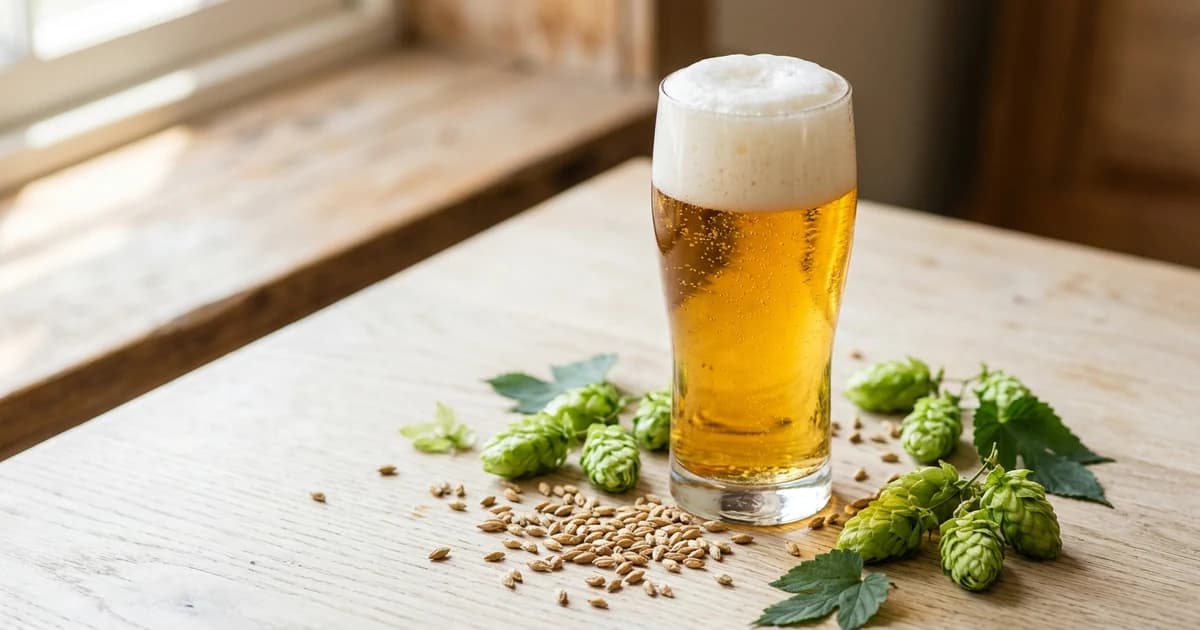
For most healthy adults, non-alcoholic beer is not bad for you. It is a clear step down from regular beer: up to 0.5% alcohol by volume, roughly 25 to 70 calories per 12 oz can versus about 153 for a standard beer. The real watch-outs are carbohydrates in certain styles, trace alcohol that matters for specific groups, and cue-driven cravings for people in recovery.
Key Takeaways
- Most NA beers contain under 0.5% ABV and 25 to 70 calories per can, but carbohydrate counts range from 5 g to 16 g depending on style.
- A 2025 randomized trial found that two wheat or mixed NA beers daily for four weeks worsened glucose and triglyceride markers. Style and quantity matter.
- People in recovery, pregnant individuals, those with liver disease, and anyone on alcohol-interacting medications should talk to a clinician first.
- Reading "0 g sugar" on the label does not mean zero carbohydrate.
Does Non-Alcoholic Beer Have Alcohol?
Yes, most of it does. Under U.S. federal rules (27 CFR 7.65), a malt beverage labeled "non-alcoholic" must carry the statement "contains less than 0.5 percent alcohol by volume" right next to the term. Only the phrase "alcohol free" means 0.0% ABV, and a label cannot print "0.0%" unless it also says "alcohol free."
For most people, 0.5% is trivially small. A ripe banana can reach 0.4% ethanol by weight. But for anyone in recovery from alcohol use disorder, or during pregnancy, even trace amounts deserve a conversation with a clinician (more on that below).
A footnote on label accuracy: a 2010 Canadian lab study tested 45 no- and low-alcohol beverages by gas chromatography and found 29% contained more ethanol than declared, with some "0.0%" products measuring up to 1.8%. The study is old and Canadian, so it does not map directly to 2026 U.S. brands. Still, label claims are only as good as the testing behind them.
Calories, Carbs, and Sugar: What the Labels Show
Remove alcohol and the calorie source shifts to carbohydrate. Here are five popular NA beers alongside a regular-beer baseline from FatSecret (USDA data):
| Beer | Serving | ABV | Calories | Carbs (g) | Sugar (g) | Source |
|---|---|---|---|---|---|---|
| Athletic Lite | 12 oz | <0.5% | 25 | 5 | 0 | Athletic Brewing |
| Athletic Upside Dawn | 12 oz | <0.5% | 45 | 10 | 0 | Athletic Brewing |
| Budweiser Zero | 12 oz | 0.0% | 50 | 12 | 0 | Brand/retailer |
| Athletic Run Wild IPA | 12 oz | <0.5% | 65 | 14 | 0 | Athletic Brewing |
| Heineken 0.0 | 11.2 oz | 0.0% | 69 | 16 | 0 | Heineken US |
| Regular beer (avg) | 12 oz | ~5% | 153 | 13 | 0 | USDA/MedlinePlus |
Every NA beer here reports 0 g sugar, yet carbohydrate ranges from 5 g to 16 g. Those carbs come from residual maltose and dextrins, not classified as "added sugar" under FDA rules. One can is modest. Four cans of Heineken 0.0 is 64 g of carbohydrate, roughly what you would get from a large soda, and more than many people expect from a "zero sugar" drink.
Style selection matters as much as the swap itself. A light NA brew at 25 calories and 5 g of carbs is a different product from a wheat or IPA at 65 to 69 calories and 14 to 16 g of carbs.
Is Non-Alcoholic Beer Bad for Your Liver or Heart?
A 2022 review in Nutrients (PMC9824297) examined the non-alcoholic fraction of beer and concluded that NA beer appeared more favorable than conventional beer on oxidative stress, endothelial function, and thrombogenic markers. But the underlying human studies are mostly small and short-term, and the authors noted the scarcity of published data.
Removing alcohol removes the major source of hepatic stress, which is a clear win. The drink itself is not a liver tonic. If you have existing liver disease, talk to your doctor. For context on what changes when you stop drinking, liver enzyme levels typically start improving within weeks.
The 2025 Trial That Complicates the Picture
A 2025 randomized trial in Nutrients assigned 44 healthy young men to drink 660 mL (two bottles) per day of pilsener, mixed beer, wheat beer, or water for four weeks.
- Mixed beer raised fasting glucose and triglycerides.
- Wheat beer raised insulin, C-peptide, and triglycerides.
- Pilsener and water did not worsen glucose metabolism.
The authors attributed the unfavorable shifts to caloric and sugar content. Limits: only young men, German beer styles, four weeks, small groups. But the point stands. Two NA beers a day for a month is not the same as one with dinner.
Can You Drink Non-Alcoholic Beer Every Day?
No study has published a "safe daily limit" for NA beer. The data above suggest a practical frame:
- One light or pilsener-style can (25 to 50 calories, 5 to 12 g carbs) is a minor addition to a normal diet.
- Two to three heavier-style cans (65 to 69 calories, 14 to 16 g carbs each) adds up to 130 to 207 calories and 28 to 48 g of carbohydrate. That is a large soda.
For Dry January or a longer stretch, one NA beer in the evening slot is almost certainly a net positive. Four a night, every night, deserves a label check.
Who Should Skip It or Ask First
Not everyone gets the same risk-benefit ratio from this swap.
People in recovery from alcohol use disorder. A 2022 systematic review (Caballeria et al., 10 studies) found that desire to drink rose after exposure to alcohol-free beverages, especially in those with higher dependence severity. The drinks tended to add to rather than replace alcohol. The authors advise caution.
Pregnancy. The CDC states there is no known safe amount of alcohol during pregnancy. NA beer may contain up to 0.5% ABV, and label accuracy is imperfect. Talk to your OB-GYN.
Liver disease, heart conditions, or medications that interact with alcohol. Even small amounts of ethanol may matter. Talk to your prescriber.
Under 21. Most U.S. states restrict the sale of beverages labeled "non-alcoholic" to adults.
Is Draft Non-Alcoholic Beer Safe?
A 2023 Cornell study in the Journal of Food Protection inoculated low and non-alcoholic beers with E. coli O157:H7, Salmonella enterica, and Listeria monocytogenes. E. coli and Salmonella survived for the full 63-day study and grew in the non-alcoholic samples. Listeria died off.
This was a lab inoculation, not an outbreak report. The researchers' point: alcohol is one of beer's natural preservatives, and without it, NA beer needs to be handled like food. Pasteurization, clean draft lines, and cold storage all matter more than they would for a 5% ABV keg.
What the Swap Is Really About
The person searching "is non-alcoholic beer bad for you" is usually keeping a ritual and removing a drug. The cold can at 6 p.m., the glass on the patio, without the next-morning anxiety. That logic is sound, and it extends beyond alcohol.
The same pattern shows up with caffeine and with nicotine pouches people quit but still miss. The sober-curious movement is really an exercise in separating the ritual from the substance. The question is not "is the new thing perfect?" It is "is it better than what I was doing before?" For most people swapping a regular beer for an NA beer, yes. For someone exploring other zero-proof options, the label still deserves a read.
The Bottom Line on Non-Alcoholic Beer
Non-alcoholic beer is not a health food, but it is not the problem that regular beer can be. Calories drop by half to 80%. Liver stress from ethanol drops to near zero. The trade-off is carbohydrate, which varies wildly by style, and trace alcohol, which matters for a small number of people who should talk to a clinician first.
Read the label. Pick a lighter style if you plan to have more than one. And if you are in recovery, pregnant, or managing a condition that interacts with alcohol, this is a question for your doctor.
Frequently Asked Questions
Does non-alcoholic beer have alcohol in it?
Most of it does. Under U.S. federal rules (27 CFR 7.65), "non-alcoholic" means under 0.5% ABV. Only "alcohol free" requires 0.0%. If the label says "non-alcoholic," assume trace ethanol is present.
Can you get drunk on non-alcoholic beer?
Practically, no. At under 0.5% ABV, you would need to consume an enormous volume in a very short window to approach measurable intoxication. Your stomach would revolt long before your blood alcohol moved. The real concern is not intoxication but trace ethanol exposure for specific populations and, for some, cue-driven cravings.
Is non-alcoholic beer high in sugar?
Most list 0 g sugar, but carbohydrate is a different line: 5 g for a light brew, up to 16 g for a wheat or lager style. Those carbs come from residual malt sugars, not classified as "added sugar" under FDA rules. One can is modest. Several in a row add up.
Is non-alcoholic beer OK for your liver?
Removing alcohol removes the primary hepatotoxin, which is a straightforward win. A 2022 review found NA beer looked more favorable than regular beer on cardiovascular and oxidative-stress markers, but no study shows it is actively good for the liver. If you have liver disease, consult your physician.
Can you drink non-alcoholic beer while pregnant?
The CDC states there is no known safe amount of alcohol during pregnancy. NA beer can contain up to 0.5% ABV, and label accuracy has been questioned. This is a question for your OB-GYN.
Does non-alcoholic beer have caffeine?
Standard NA beers do not. The typical ingredients are water, malt, hops, and yeast, none of which contribute meaningful caffeine. The exception is NA coffee stouts, which use coffee beans in brewing and will contain some caffeine, usually listed on the label.
Keep the Ritual, Change What Is in It
This whole article is about one move: keeping the 6 p.m. can and swapping what is inside it. If you have done that with alcohol and brain fog, the same logic works for the other daily habit worth auditing, your afternoon caffeine.
Roon is a zero-nicotine, zero-sugar oral pouch with 80 mg caffeine, 60 mg L-theanine, 25 mg methylliberine (Dynamine), and 5 mg theacrine (TeaCrine). Methylliberine slows caffeine clearance: a randomized, double-blind crossover PK study (n=12) found co-administration with caffeine cut oral clearance from 41.9 to 17.1 L/hr and extended half-life from 7.2 to 15 hours, with no increase in peak concentration. That study used 100 mg methylliberine and 150 mg caffeine (roughly 4x and 1.9x Roon's doses), so the numbers are directional, not a direct measurement of the product. The practical result: a 6 to 8 hour felt window from one pouch. Stop at least 8 hours before bed.
Roon is not a beer replacement and not a sobriety tool. It is a labeled 80 mg caffeine pouch that lasts longer than coffee. The formula contains sucralose, so if you are reading labels now, you know what is in it. Tins start at $9.16 on a 12-tin subscription ($0.61 per pouch), or $15.00 one-time for a 4-tin pack ($1.00 per pouch). First order comes with a 30-day money-back guarantee, one time, nothing to send back.
Related from Roon
- What Is Sober Curious? The Movement Explained
- Sober Curious Drinks: What to Know
- Best Dry January Drinks 2026
- Brain Fog from Alcohol: Why It Happens
Written by Roon Team