Brain Fog From Alcohol
Roon Team
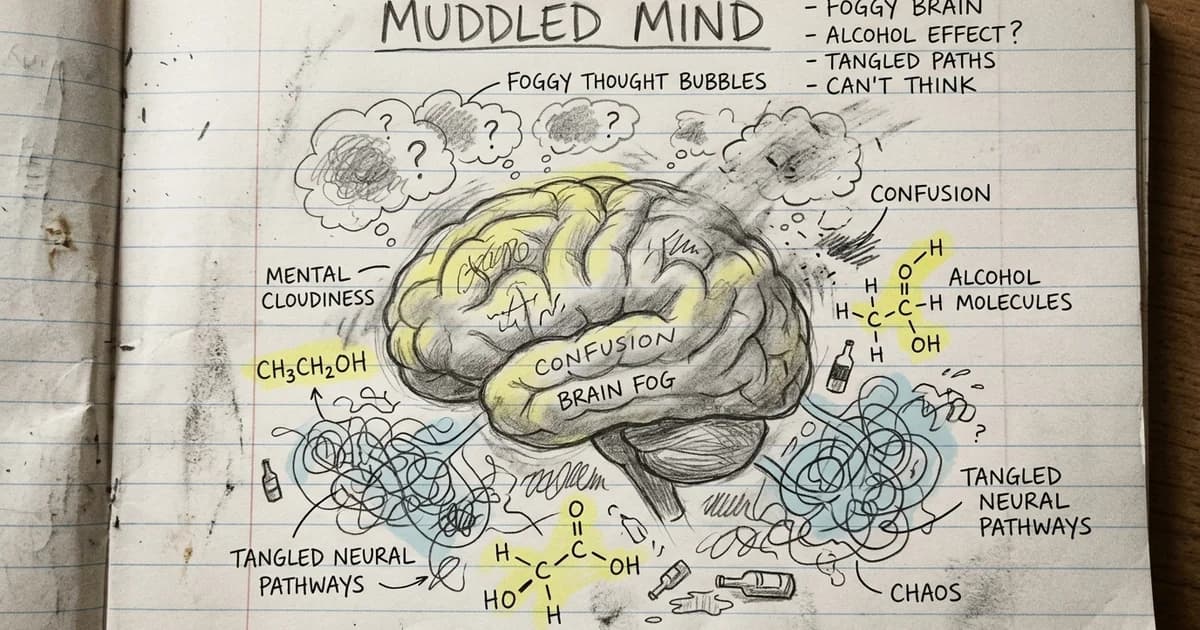
Brain Fog From Alcohol: What's Actually Happening Inside Your Head
You had three drinks last night. Maybe four. Nothing crazy. But this morning, your brain feels like it's running on dial-up. Words come slower. Your focus drifts mid-sentence. Simple decisions feel oddly heavy. This is brain fog from alcohol, and it's not just "being hungover." It's a measurable neurochemical disruption that affects memory, attention, and processing speed for hours (sometimes days) after your last drink.
Brain fog from alcohol is one of the most common cognitive complaints among adults who drink, yet most people write it off as part of the deal. It doesn't have to be. Understanding the science behind brain fog from alcohol, including its broader brain fog causes and symptoms, is the first step toward protecting your mental performance.
Key Takeaways:
- Brain fog from alcohol results from at least four overlapping mechanisms: neurotransmitter rebound, neuroinflammation, sleep disruption, and dehydration.
- Even moderate alcohol intake (two to three drinks) can impair cognitive function the next day.
- Recovery timelines vary, but full neurochemical balance can take anywhere from 24 hours to several weeks depending on consumption patterns.
- Specific nutrients and compounds can support faster cognitive recovery.
What Brain Fog From Alcohol Actually Looks Like
Understanding what brain fog actually is starts here: it's not a clinical diagnosis, but a shorthand for a cluster of cognitive symptoms: difficulty concentrating, slow recall, mental fatigue, and a general feeling that your thinking is "off." After drinking, these symptoms tend to peak in the morning and can linger well into the afternoon.
You might struggle to remember a colleague's name. You re-read the same email three times. You sit down to work and stare at a blank screen for ten minutes before anything clicks.
This isn't laziness. It's your brain dealing with a chemical mess.
The Four Mechanisms Behind Brain Fog From Alcohol
1. The GABA-Glutamate Rebound
This is the big one. Alcohol enhances the activity of GABA, your brain's primary inhibitory neurotransmitter, which is why drinking makes you feel relaxed and loose. At the same time, alcohol suppresses glutamate, the brain's main excitatory neurotransmitter.
The problem starts when alcohol leaves your system. Your brain has been compensating for the artificial GABA boost and glutamate suppression all night. Once alcohol is gone, the brain overcorrects. GABA levels drop. Glutamate surges.
The result, according to neuroscience research, is "anxiety, restlessness, and impaired cognitive control." That foggy, wired-but-tired feeling the morning after? That's glutamate rebound driving brain fog from alcohol.
Data tracking neurotransmitter recovery during alcohol detoxification shows that peak glutamate hyperactivity occurs in the first 6 to 24 hours after drinking. GABA recovery begins around days one through three, but full neurochemical balance can take two to four weeks for heavier drinkers.
2. Neuroinflammation and Immune Activation
Brain fog from alcohol isn't just a neurotransmitter problem. It's also an inflammatory one.
When your liver metabolizes alcohol, it produces acetaldehyde, a toxic compound that triggers oxidative stress and damages neural tissue. Acetaldehyde is between 10 and 30 times more toxic than alcohol itself.
Research published in PMC shows that alcohol activates microglia (the brain's resident immune cells), which then release pro-inflammatory cytokines. This process, called neuroinflammation, disrupts normal neural signaling and is closely linked to the cognitive sluggishness you feel the day after drinking.
A 2024 review in Alcohol, Clinical and Experimental Research reframes hangover symptoms as a manifestation of systemic inflammation, not just dehydration or tiredness. The researchers highlight that neuroinflammation, mediated by toll-like receptors (TLRs), contributes to neurodegeneration and is observed across multiple disease states, including chronic alcohol intake.
This means brain fog from alcohol isn't just annoying. Repeated episodes may carry long-term consequences.
3. Sleep Architecture Destruction
You passed out at midnight. You slept eight hours. So why do you feel like you barely slept at all?
Because alcohol wrecks the quality of your sleep, even if it doesn't reduce the quantity. Research published in Alcoholism: Clinical and Experimental Research found that while alcohol reduces sleep onset latency (you fall asleep faster), it causes "a more consolidated first half sleep and an increase in sleep disruption in the second half."
The second half of the night is when most of your REM sleep occurs. REM is the phase where your brain consolidates memories, processes emotions, and clears metabolic waste. A 2024 systematic review and meta-analysis confirmed a clear dose-response relationship: disruptions to REM sleep begin at just two standard drinks and get progressively worse with higher doses.
Without adequate REM sleep, your brain can't do its nightly housekeeping. The cognitive debt shows up the next morning as brain fog from alcohol.
4. Dehydration and Nutrient Depletion
Alcohol is a diuretic. It suppresses vasopressin (antidiuretic hormone), causing you to lose more fluid than you take in. Research from the Journal of the American College of Nutrition found that the combination of alcohol consumption and dehydration may be "further detrimental to cognitive performance" due to overlapping effects on neurotransmitter systems.
Even mild dehydration of just 2% impairs performance on tasks requiring attention, psychomotor skills, and immediate memory.
Alcohol also depletes B vitamins, magnesium, and zinc, all of which play direct roles in cognitive function and neurotransmitter synthesis. When these are low, your brain simply can't operate at full capacity, worsening brain fog from alcohol.
How Long Does Brain Fog From Alcohol Last?
The answer depends on how much you drank, how often you drink, and your individual biology. Here's a general timeline based on the available research:
| Timeframe | What's Happening |
|---|---|
| 0-6 hours after last drink | Alcohol still being metabolized. Acetaldehyde levels peak. |
| 6-24 hours | Glutamate rebound at its worst. Peak neuroinflammation. Most noticeable brain fog from alcohol. |
| 1-3 days | GABA function begins recovering. Sleep quality starts normalizing. Fog lifts for most moderate drinkers. |
| 4-7 days | Major improvement in cognitive clarity. Subtle imbalances may still persist. |
| 2-4 weeks | Full neurochemical homeostasis returns for regular or heavy drinkers. |
For a single night of moderate drinking (two to four drinks), most people will feel cognitively normal within 24 to 48 hours. But if you drink multiple times per week, those recovery windows overlap, and you may be operating in a persistent low-grade fog without realizing it.
Why Some People Get Worse Brain Fog From Alcohol Than Others
Not everyone metabolizes alcohol at the same rate. Several factors determine how severe your brain fog from alcohol will be:
- Genetics: Variations in the ALDH2 enzyme (which breaks down acetaldehyde) affect how quickly your body clears the most toxic byproduct of alcohol metabolism. Research from the University of Maryland found ALDH2 in brain regions responsible for emotional regulation and decision-making, including the hippocampus, amygdala, and prefrontal cortex.
- Sleep quality baseline: If you're already sleep-deprived, alcohol's disruption of REM sleep hits harder.
- Hydration status: Starting a night of drinking already dehydrated amplifies cognitive impairment the next day.
- Age: Enzyme efficiency declines with age. The same three beers at 35 hit differently than they did at 22.
- Congener content: Darker liquors (bourbon, red wine, brandy) contain more congeners, byproducts of fermentation that may worsen inflammatory responses.
Practical Steps to Reduce Brain Fog From Alcohol
You can't completely eliminate the cognitive cost of alcohol. But you can minimize brain fog from alcohol with the right approach.
Before drinking:
- Eat a full meal with protein and fat to slow alcohol absorption.
- Hydrate aggressively. Start the evening ahead on fluids, not behind.
- Take a B-complex vitamin. Alcohol depletes B1 (thiamine), B6, and B12, all of which support neural function.
While drinking:
- Alternate every alcoholic drink with a full glass of water.
- Choose lighter-colored spirits over dark ones to reduce congener intake.
- Set a hard cap. The cognitive cost scales non-linearly: drinks four and five do more damage than drinks one and two.
The morning after:
- Prioritize electrolytes over plain water. Sodium, potassium, and magnesium help restore cellular hydration faster.
- Move your body. Light exercise increases cerebral blood flow and supports neurotransmitter rebalancing.
- Avoid the "hair of the dog." More alcohol just delays and deepens the rebound cycle.
Clearing Brain Fog From Alcohol Without the Compromise
Brain fog from alcohol is a real, measurable disruption to how your brain processes information, stores memories, and maintains focus. It's driven by neurotransmitter imbalances, inflammation, wrecked sleep architecture, and dehydration, all hitting at once.
If you're someone who values sharp thinking but still enjoys a drink, the goal isn't perfection. It's damage control and smart recovery.
That's where the right cognitive support matters. Roon was built around four ingredients that directly support the systems alcohol disrupts. Caffeine (80 mg) restores alertness without the overcorrection of a triple espresso. L-Theanine promotes calm, focused attention by modulating the same GABA and glutamate pathways that alcohol throws off balance. Theacrine and Methylliberine extend clean mental energy for six to eight hours with no crash and no tolerance buildup.
Roon is not a hangover cure. Nothing is. But if you want to cut through brain fog from alcohol, or any morning where your brain needs a push, Roon is a zero-nicotine sublingual pouch designed for exactly that.