Is 150 mg of Caffeine a Lot? The One-Can Dose, Explained
Roon Team
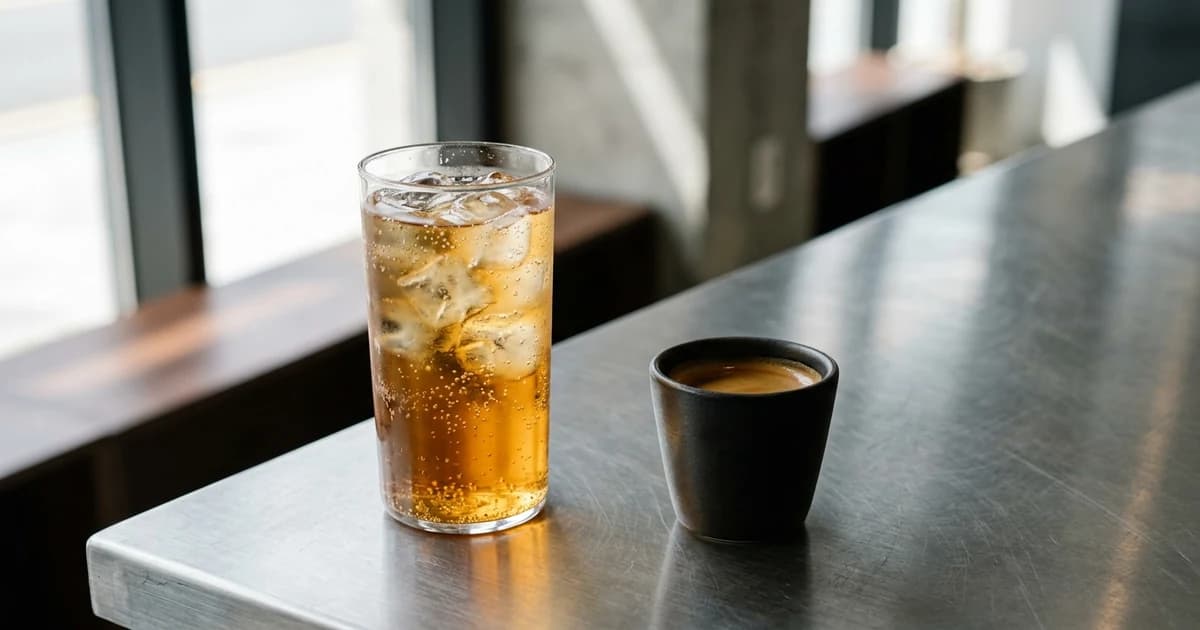
Is 150 mg of Caffeine a Lot? The One-Can Dose, Explained
For most healthy adults, 150 mg of caffeine is not a lot. It is about one and a half 8 oz cups of brewed coffee, 38% of the 400 mg daily figure the FDA cites, and inside the single-dose range EFSA's 2015 review calls safe for healthy adults (up to 200 mg, roughly 3 mg per kg).
The answer changes with who you are. 150 mg is one and a half times the daily limit pediatricians set for teenagers, three quarters of the pregnancy guideline, and enough to register differently in a 110 lb person than in a 180 lb one. It also changes with when you drink it, because caffeine's five-hour half-life means a 3 pm can is still measurable in your blood at midnight.
Key Takeaways
- 150 mg is the dose in a 16 oz Red Bull, a Starbucks Tall Americano, several cold brews and yerba mates, and some energy pouches.
- For healthy adults it falls inside both the FDA's OTC single-dose window (100 to 200 mg) and the EFSA threshold (200 mg).
- For teens 12 to 18 it exceeds the AACAP's recommended cap of 100 mg per day. In pregnancy it consumes 75% of the ACOG guideline (less than 200 mg per day).
- Nobody has tested 150 mg specifically for sleep effects. Plan for a half-life of about five hours and time accordingly.
What Has 150 mg of Caffeine?
Beverage makers and cafes have quietly converged on 150 mg as the standard single-serving dose. You will find it, give or take 5 mg, in more products than you might expect.
| Product | Serving | Caffeine (mg) | Source |
|---|---|---|---|
| Red Bull | 16 fl oz can | 151 | Brand FAQ |
| Starbucks Tall Caffè Americano | 12 fl oz | 150 | Starbucks menu |
| Starbucks Tall Cold Brew | 12 fl oz | 155 | Starbucks menu |
| Starbucks Pike Place, Short | 8 fl oz | 155 | Starbucks menu |
| GORGIE energy drink | 12 fl oz can | 150 | Brand site |
| Wandering Bear cold brew | 6 fl oz | 150-160 | Brand FAQ |
| Nespresso Vertuo Diavolitto | 1.35 fl oz | 150 | Nespresso FAQ |
| Draft energy pouches | 1 pouch | 150 | Brand site |
| Iceberg energy pouches | 1 pouch | 150 | Retailer listing |
For reference, a standard 8 fl oz cup of drip coffee has about 95 mg (USDA), and a 12 oz Coca-Cola has 34 mg. So 150 mg equals roughly 1.6 cups of drip coffee, or about four and a half colas. Caffeine in commercial energy drinks varies widely, and 150 mg falls in the middle of the market range.
Is 150 mg of Caffeine a Lot in One Sitting?
For a healthy adult, no. The FDA's OTC caffeine rule (21 CFR 340.50) allows 100 to 200 mg per dose, not more often than every three to four hours. EFSA sets the same ceiling at 200 mg, or about 3 mg per kg. At 150 mg you are inside both windows.
Body weight shifts the math. A 154 lb (70 kg) adult absorbs 150 mg at 2.1 mg per kg. At 110 lb (50 kg), the same dose hits 3.0 mg per kg, right on the line where EFSA's safety language starts to narrow. Lighter body, stronger hit. That is pharmacology, not a scare.
Some caffeine pouches carry 150 mg too (Draft's 150 mg pouches reviewed, Iceberg's 150 mg pouches reviewed), while Roon carries 80 mg, a dose covered on the is 80 mg too much, the pouch-sized dose page.
Who Is 150 mg of Caffeine a Lot For?
Teenagers. The AACAP recommends at most 100 mg per day for ages 12 to 18 and advises against energy drinks for all minors. One 16 oz Red Bull overshoots the daily number by 50%. Talk to a pediatrician if you have questions about a teen's caffeine intake.
Pregnancy and breastfeeding. ACOG Committee Opinion 462 calls less than 200 mg per day moderate. One 150 mg serving uses 75% of that budget and leaves almost no room for a second caffeine source. The FDA recommends anyone who is pregnant or breastfeeding talk to their healthcare provider.
People who rarely consume caffeine. In a 2010 trial (Rogers et al., Neuropsychopharmacology, n=379), low caffeine consumers showed a larger anxiety response than habitual users. The study gave 100 mg followed by 150 mg 90 minutes later (250 mg cumulative). Carriers of the ADORA2A TT genotype were more susceptible to caffeine-induced anxiety regardless of habit.
People with altered clearance. Oral contraceptives can roughly double caffeine's half-life, per the Institute of Medicine review. Anyone on medication or managing a health condition should talk to their clinician before relying on a fixed caffeine number.
What Does 150 mg of Caffeine Do?
One randomized, placebo-controlled crossover trial used exactly 150 mg: Haskell et al. 2008, Biological Psychology. Caffeine alone produced faster digit vigilance reaction time, improved Rapid Visual Information Processing (RVIP) accuracy, and lower self-reported mental fatigue.
The same study tested 250 mg of L-theanine combined with 150 mg of caffeine. The combination yielded faster simple reaction time, faster numeric working memory reaction time, improved sentence verification accuracy, and higher "alert" ratings with lower "tired" and "headache" scores.
Those are findings from one trial, consistent with the broader caffeine literature but not a blanket promise. Individual responses vary with tolerance, genetics, body size, and recent food intake.
How Long Does 150 mg of Caffeine Last?
Caffeine is 99% absorbed within 45 minutes, with peak plasma levels between 15 and 120 minutes. The mean half-life in healthy adults is about five hours (range: 1.5 to 9.5 hours).
A worked example: you open a 16 oz Red Bull at 3 pm. By 8 pm, roughly 75 mg remains, the equivalent of a short cup of drip coffee. By 1 am, roughly 38 mg is still circulating, about the same as a can of cola. You are metabolizing caffeine well past midnight from a single afternoon can.
One half-life is not zero. Two half-lives still leave a quarter of the dose.
Is 150 mg of Caffeine a Lot at Night?
Nobody tested 150 mg specifically for sleep effects. The best recent data comes from Gardiner et al. 2025, Sleep (crossover, 23 men, habitual intake under 300 mg per day). That study tested 100 mg and 400 mg at 12, 8, and 4 hours before bed. The 100 mg dose showed no measurable sleep disruption at any timing. The 400 mg dose delayed sleep and degraded architecture within 12 hours; perceived sleep quality dropped substantially when taken 4 hours before bed.
150 mg sits between those arms, closer to the low one. The EFSA opinion notes that even 100 mg close to bedtime may lengthen sleep latency in some adults. A 150 mg drink after 6 or 7 pm is a gamble, worse if you are a slow metabolizer. For more on timing, see the latest time for caffeine without losing sleep.
How Many 150 mg Drinks Can You Have in a Day?
Two puts you at 300 mg, inside the FDA's 400 mg figure with room for a small tea. Three reaches 450 mg, over the line. The OTC rule says every three to four hours between doses.
A realistic scenario: a Grande Pike Place at 8 am (310 mg) and a 16 oz Red Bull at 2 pm (151 mg). That is 461 mg, 61 past the FDA number. Most people do not track caffeine across sources, which is how 150 mg becomes excessive without any single drink looking large.
150 mg in a Can vs. a Coffee vs. a Pouch
Same milligrams, different delivery. A 16 oz Red Bull brings about 52 g of sugar with its 151 mg. GORGIE, a 150 mg green-tea energy drink, skips the sugar but still delivers 12 oz of liquid. A Tall Americano is 150 mg in hot water. Caffeine in yerba mate, cup, gourd and can varies by brand, and you can compare cold brew caffeine by brand.
Caffeine pouches (Draft, Iceberg) deliver 150 mg through the oral mucosa with no drink, no sugar, no volume. The trade-off: 150 mg in a pouch is still 150 mg, and the absorption route does not change the half-life or the total load on your system. For a look at the lower-dose pouch format, see is 80 mg too much, the pouch-sized dose.
The One-Can Number in Context
150 mg of caffeine is a moderate dose for healthy adults, the amount the beverage industry has settled on for a single mid-size serving. It sits comfortably inside recognized safety windows. Where it stops being moderate is in the groups who metabolize it differently, teens, pregnant individuals, slow metabolizers, and in the hours closest to sleep. Know your body weight, know your timing, count what you have already had today.
Frequently Asked Questions
Is 150 mg of caffeine a lot for a 16 year old?
Yes. The AACAP recommends no more than 100 mg per day for ages 12 to 18. A single 150 mg serving exceeds that by 50%. Pediatricians advise against energy drinks for all children and adolescents. Bring questions to your child's doctor.
Is 150 mg of caffeine a lot while pregnant?
It takes up most of the daily budget. ACOG considers less than 200 mg per day moderate, so 150 mg leaves only about 50 mg for everything else. Anyone who is pregnant or breastfeeding should discuss caffeine intake with their healthcare provider.
Is 150 mg of caffeine more than a cup of coffee?
Yes. The USDA lists brewed drip coffee at roughly 95 mg per 8 fl oz. 150 mg is about 12.6 oz of drip, or one and a half standard cups.
Is 150 mg of caffeine a lot for a pre-workout?
Not really. Many pre-workout supplements contain 200 to 300 mg or more. 150 mg falls within the FDA's OTC single-dose range of 100 to 200 mg and below the doses commonly studied for exercise performance.
Can 150 mg of caffeine cause anxiety?
It can, especially in people who rarely consume caffeine or carry certain genetic variants. The Rogers et al. 2010 trial found low caffeine consumers experienced greater anxiety than habitual users, with the ADORA2A TT genotype amplifying the effect. If caffeine makes you anxious, see how long caffeine anxiety lasts, by dose.
Is 150 mg of caffeine a day too much?
For healthy adults, no. It is 38% of the FDA's 400 mg daily figure. For teenagers it exceeds the recommended daily cap. For people who are pregnant it is within guidelines but leaves very little margin. Context matters more than the number.
Half the Can, Longer on the Clock
150 mg is what the drink industry decided one serving should be. Fine for most adults in one sitting. The trouble is what follows: a second can that takes the day to 300, a 3 pm can that is still 38 mg at 1 am. The one-can dose is moderate, but the one-can half-life is long.
Roon starts at roughly half that number: 80 mg caffeine, 60 mg L-theanine, 25 mg methylliberine (Dynamine), and 5 mg theacrine (TeaCrine), in a zero-sugar, zero-nicotine sublingual pouch. Caffeine with L-theanine is the pairing studied in the Haskell trial cited above. The duration piece comes from methylliberine: in a randomized, double-blind, crossover PK study (n=12), co-administration of 100 mg methylliberine with 150 mg caffeine cut caffeine's oral clearance from 41.9 to 17.1 L/hr and extended its half-life from 7.2 to 15 hours, with no increase in peak concentration (study). That study used 4x the methylliberine and roughly 1.9x the caffeine in a Roon pouch, so the numbers are not directly transferable. The mechanism points the same direction, same peak, longer tail, and the felt window is 6 to 8 hours instead of coffee's 3 to 4.
A longer half-life means timing still matters. Stop at least 8 hours before bed. From $9.16 per tin on subscription or $15.00 per tin one-time (4 tins), you can try Roon here.
Related from Roon
- How Much Caffeine Is in a Focus Pouch? Is 80 mg Too Much?
- Is 100 mg of Caffeine a Lot?
- Is 200 mg of Caffeine a Lot?
- Caffeine in Every Red Bull Can
Written by Roon Team