Iceberg Energy Pouches Review: 150mg Caffeine, Made in Poland
Roon Team
Iceberg Energy Pouches Review: 150mg Caffeine, Made in Poland
Iceberg energy pouches are nicotine-free, caffeine-only oral pouches made by the Poland-based manufacturer Neoptolem, available in nine flavors across two strength tiers: 150mg and 75mg caffeine per pouch. At roughly EUR 3.90 per 20-pouch can through European retailers, they are among the cheapest caffeine pouches on the market. But cheap and strong is not the same as effective. Here is what the formula actually delivers, what it leaves out, and who these pouches make sense for.
Key Takeaways
- Two caffeine tiers, one active ingredient. Every Iceberg Energy pouch contains caffeine and nothing else pharmacologically active. No L-theanine, no nootropic stack, no secondary compounds.
- 150mg is a serious dose. The five higher-strength SKUs pack nearly double a standard cup of coffee per pouch. If you are caffeine-sensitive, the 75mg tier is safer to start with.
- Pricing is retailer-dependent. Iceberg does not sell direct; the brand site (icebergpouches.eu) has no checkout. Third-party cans run EUR 3.90 to EUR 4.69 depending on the store.
- Wholesale-driven brand, limited transparency. No confirmed founding year, no public funding details, and no official social media presence that could be independently verified.
What Is Iceberg Energy, and Who Makes It?
Iceberg Energy is the caffeine-pouch sub-line of ICEBERG, a brand best known in Europe for high-strength nicotine pouches. The pouches are manufactured by Neoptolem, a Poland-based company, a detail corroborated by multiple independent retailers (Alternix, SnusFriend, DarePouch) even though the brand's own About page never names Poland directly.
The brand's founding date is unclear. One guide places the brand's origin around 2019, while others reference a late-2023 launch for parts of the lineup. Neither date can be confirmed from primary sources, so treat both as approximate. There is no public press coverage, no disclosed funding, and no confirmed official social media account. Discussion about Iceberg flavors does show up organically on Reddit's r/NicotinePouch, but the brand reads more as a wholesale and distributor operation than a direct-to-consumer startup with a public-facing story.
The Energy line sits apart from Iceberg's nicotine pouch range. Every one of the nine Energy SKU product pages states: "With no nicotine or tobacco... our caffeine pouches are perfect for anyone looking to enjoy caffeine in a convenient way" (icebergpouches.eu).
Iceberg Energy Pouches: Full Ingredient and Dose Breakdown
Caffeine is the only ingredient with a disclosed dose. Every other component listed on Iceberg's product pages is named generically with no milligram figure attached.
| Ingredient | Iceberg Energy (150mg tier) | Iceberg Energy (75mg tier) |
|---|---|---|
| Caffeine | 150mg | 75mg |
| Plant fibers / cellulose / lignin | Present (dose not disclosed) | Present (dose not disclosed) |
| Flavoring agents | Present (dose not disclosed) | Present (dose not disclosed) |
| Humectants | Present (dose not disclosed) | Present (dose not disclosed) |
| Preservatives | Present (dose not disclosed) | Present (dose not disclosed) |
| L-theanine | Not present | Not present |
| Methylliberine (Dynamine) | Not present | Not present |
| Theacrine (TeaCrine) | Not present | Not present |
Pouch weight: The brand's own pages list 0.8g per pouch. One third-party retailer (DarePouch) lists 0.6g. The discrepancy is unresolved; the official figure is 0.8g but buyer experience may vary.
Pouches per can: 20, stated on all nine official product pages.
All 9 Iceberg Energy Flavors, Ranked by Strength
Iceberg splits its Energy line into two caffeine tiers. Here are all nine flavors:
150mg caffeine (5 flavors):
- Arasaka (peach-forward profile)
- Black (tutti frutti)
- Emerald (green apple and lime)
- Sweet Mint
- Watermelon Mint
75mg caffeine (4 flavors):
- Energy Mango
- Menthol
- Strawberry Mango Gum
- Sour Berries
The flavor range tilts heavily toward fruit and candy profiles. Alternix's hands-on review tested all nine and noted that flavor typically becomes noticeable around the 10-minute mark, peaks at about 20 minutes, and starts to dissipate by 35 to 40 minutes. That timeline is consistent with a simple caffeine-only pouch: quick in, quick out.
How Much Do Iceberg Energy Pouches Cost?
Iceberg does not sell directly to consumers. The brand's website, icebergpouches.eu, functions as a wholesale and marketing portal with no shopping cart. You buy through independent European retailers, and prices vary:
| Retailer | Price per Can (20 pouches) | Price per Pouch | Flavors Available |
|---|---|---|---|
| pouches.eu | EUR 3.90 | ~EUR 0.20 | All 9 |
| pouchdaddy.com | EUR 4.69 | ~EUR 0.23 | 6 of 9 (1 out of stock) |
| DarePouch | Varies | Varies | Select SKUs |
At roughly 20 cents per pouch for 150mg of caffeine, this is objectively cheap stimulation. But those prices are in euros, availability is European-centric, and US-based buyers will face international shipping costs and delays. No confirmed US retailer currently stocks the Energy line.
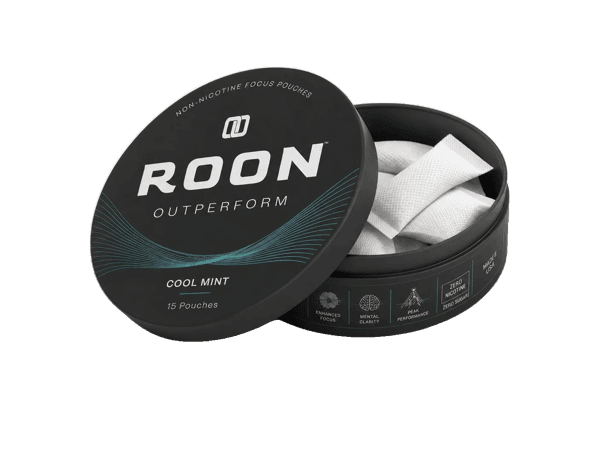 RoonOne pouch RoonOne pouch | 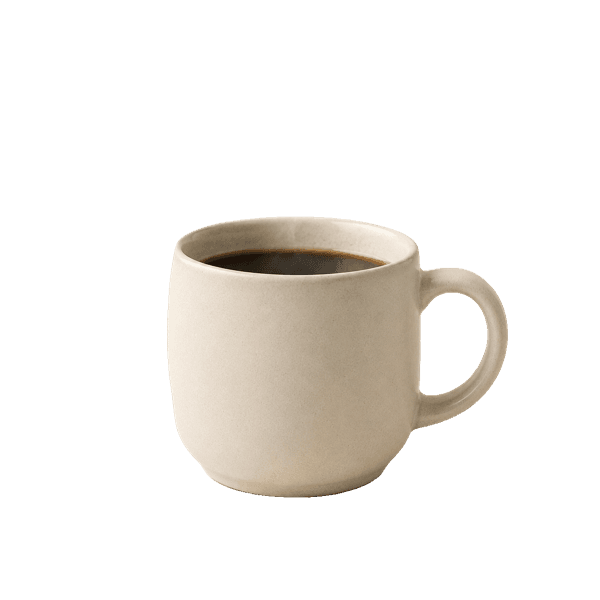 Coffee8 fl oz Coffee8 fl oz |  Energy drink8.4 fl oz can Energy drink8.4 fl oz can | 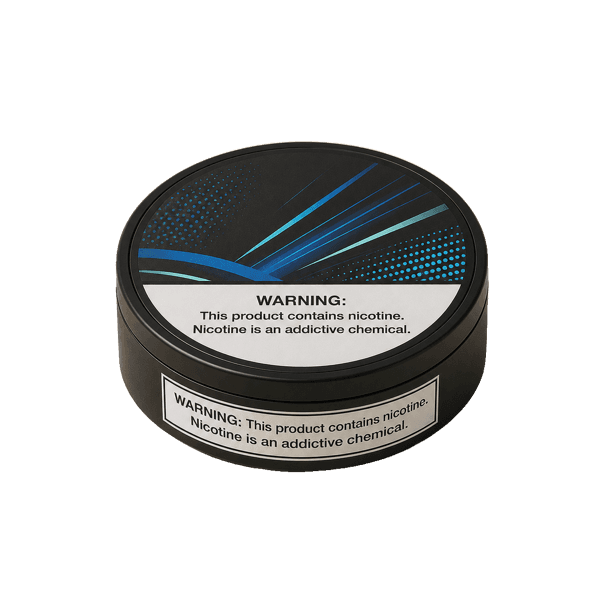 Nicotine pouchOne pouch Nicotine pouchOne pouch |  Other pouchesNon-nicotine Other pouchesNon-nicotine | |
|---|---|---|---|---|---|
| CaffeineCaffeine | 80 mg | ~95 mg | 200–300 mg | 0 mg | 100–200 mg |
| SynergistsSynergists (L-theanine, Dynamine®, TeaCrine®) | Yes | No | No | No | No |
| Fast onsetFast onset (5 to 10 min) | Yes | No | Sometimes | Yes | Yes |
| Lasts 6-8hLasts 6 to 8 hours | Yes | No | No | No | No |
| No crashNo crash or jitters | Yes | No | No | Sometimes | Sometimes |
| No nicotineNo nicotine | Yes | Yes | Yes | No | Yes |
| No sugarNo sugar | Yes | Yes | No | Yes | Yes |
What's Missing from Iceberg Energy Pouches?
Three specific gaps stand out.
1. No supporting compounds to shape the caffeine response
150mg of caffeine is a large, blunt dose. For reference, a standard 8oz cup of coffee delivers roughly 95mg. Without L-theanine to smooth the stimulatory response or any methylxanthine cousins like methylliberine or theacrine, what you get is a straight caffeine spike followed by the usual crash curve. If you have ever felt jittery from too much coffee, 150mg absorbed through the oral mucosa will feel similar, just faster.
The 75mg tier is more reasonable from a dosing perspective, but the same structural issue applies: caffeine alone, with nothing to modulate the onset, peak, or tail end of the effect.
2. No direct-to-consumer sales channel or transparent pricing
You cannot buy from Iceberg directly. That means pricing, availability, and even product freshness depend entirely on whichever third-party retailer you find. The EUR 3.90 to EUR 4.69 range reflects current listings, but there is no brand-level price guarantee, and stock gaps already exist (pouchdaddy.com had one SKU out of stock at the time of this review).
3. Brand transparency is thin
No confirmed founding year. No named leadership team. No official social media presence that could be independently verified. The brand's own site gives category-level marketing copy but almost no company-level detail. SnusFriend's guide describes ICEBERG's public-facing materials as pointing to a Poland-based operation while noting that they "do not clearly disclose a separate manufacturer." For a product you put in your mouth, that level of opacity is worth flagging.
Iceberg Energy vs. Roon: Side-by-Side Comparison
| Feature | Iceberg Energy (150mg) | Iceberg Energy (75mg) | Roon |
|---|---|---|---|
| Caffeine per pouch | 150mg | 75mg | 80mg |
| L-theanine | None | None | 60mg |
| Methylliberine (Dynamine) | None | None | 25mg |
| Theacrine (TeaCrine) | None | None | 5mg |
| Total active ingredients | 1 | 1 | 4 |
| Nicotine | Zero | Zero | Zero |
| Pouches per can | 20 | 20 | 15 |
| Price per pouch | ~EUR 0.20 (third-party) | ~EUR 0.20 (third-party) | $1.00 (one-time) / $0.61 (subscription) |
| Flavor options | 5 flavors | 4 flavors | Cool Mint (1 flavor) |
| Sales channel | European third-party retailers only | European third-party retailers only | Direct via takeroon.com |
| Reported effect duration | ~35 to 40 min (flavor); caffeine half-life standard | ~35 to 40 min (flavor); caffeine half-life standard | 6 to 8 hours (designed duration) |
Where Iceberg wins: raw caffeine per pouch, variety of flavors, and sticker price. Where it falls short: the formula is a single ingredient with no supporting stack, availability is limited to European retailers, and the effect profile is a standard caffeine spike-and-crash rather than a shaped, extended curve.
Should You Buy Iceberg Energy Pouches?
Iceberg Energy occupies a clear niche: maximum caffeine at minimum cost. If you want a cheap, strong caffeine hit in pouch format and you are based in Europe, these deliver. The 150mg tier is not subtle, and the nine-flavor lineup offers more variety than most caffeine pouch brands.
But the formula is deliberately simple. Caffeine alone, with no theanine to take the edge off, no methylxanthine stack to extend the working window, and no brand-level transparency about manufacturing details beyond what third-party retailers disclose. That tradeoff is fine if all you need is raw stimulation. It is less compelling if you care about the shape and duration of the cognitive effect, or if you want to buy from a company that tells you who they are.
Frequently Asked Questions
Do Iceberg energy pouches contain nicotine?
No. Every Iceberg Energy SKU is nicotine-free and tobacco-free. The brand states this explicitly on each of the nine Energy product pages. Iceberg does produce a separate line of nicotine pouches under the same brand name, so make sure you are buying from the "Energy" sub-line specifically if you want the caffeine-only product.
How much caffeine is in an Iceberg energy pouch?
Iceberg Energy pouches come in two strength tiers: 150mg caffeine (Arasaka, Black, Emerald, Sweet Mint, Watermelon Mint) and 75mg caffeine (Energy Mango, Menthol, Strawberry Mango Gum, Sour Berries). The 150mg dose is roughly equivalent to a large coffee or 1.5 standard energy drinks.
Where can you buy Iceberg energy pouches?
Iceberg does not sell direct to consumers. The brand's website, icebergpouches.eu, is a wholesale portal. You can purchase through European online retailers like pouches.eu (EUR 3.90/can) and pouchdaddy.com (EUR 4.69/can). No confirmed US-based retailer currently carries the Energy line.
Are Iceberg energy pouches available in the US?
Not through any confirmed US retailer as of mid-2026. The product is manufactured in Poland and distributed primarily through European online pouch shops. US buyers would need to order internationally, which adds shipping cost and transit time.
How long do Iceberg energy pouch effects last?
The pouch flavor lasts roughly 35 to 40 minutes based on independent reviews. The caffeine itself follows standard pharmacokinetics: peak blood levels within 30 to 60 minutes of absorption, a half-life of about 5 hours, and a perceived energy window of roughly 3 to 4 hours, followed by the typical caffeine crash.
What flavors do Iceberg energy pouches come in?
Nine flavors total: Arasaka, Black, Emerald, Sweet Mint, and Watermelon Mint at 150mg caffeine; Energy Mango, Menthol, Strawberry Mango Gum, and Sour Berries at 75mg caffeine. The range is fruit and candy-forward, with only Sweet Mint and Menthol offering a traditional mint profile.
When Caffeine Alone Isn't the Whole Formula
Iceberg proves that you can deliver a serious dose of caffeine in a pouch for under 25 cents. That is a real value proposition, and it works for people who just want stimulation without complexity.
But caffeine is only one variable in how alert, focused, and steady you actually feel. Duration matters. Smoothness matters. And the crash matters.
Roon takes a different approach with a four-compound formula: 80mg caffeine, 60mg L-theanine, 25mg methylliberine (Dynamine), and 5mg theacrine (TeaCrine). The key differentiator is duration. Methylliberine slows caffeine's oral clearance; in a randomized, double-blind crossover PK study (n=12), co-administration with caffeine cut oral clearance from 41.9 to 17.1 L/hr and extended half-life from 7.2 to 15 hours, with no increase in peak concentration. Same peak, longer tail. That is why 80mg in a Roon pouch delivers a 6 to 8 hour working window instead of coffee's 3 to 4.
Roon is not a substitute for cheap, high-dose caffeine when all you need is a quick jolt. It costs more per pouch ($1.00 one-time, $0.61 on subscription), comes in one flavor, and ships from the US. But if your day requires sustained focus rather than a spike, the stack design is the point. The tradeoff on the longer half-life: do not take it within 8 hours of bedtime. Try Roon here.
Written by Roon Team