How Much Caffeine Is in Red Bull? Every Can Size
Roon Team
How Much Caffeine Is in Red Bull? Every Can Size
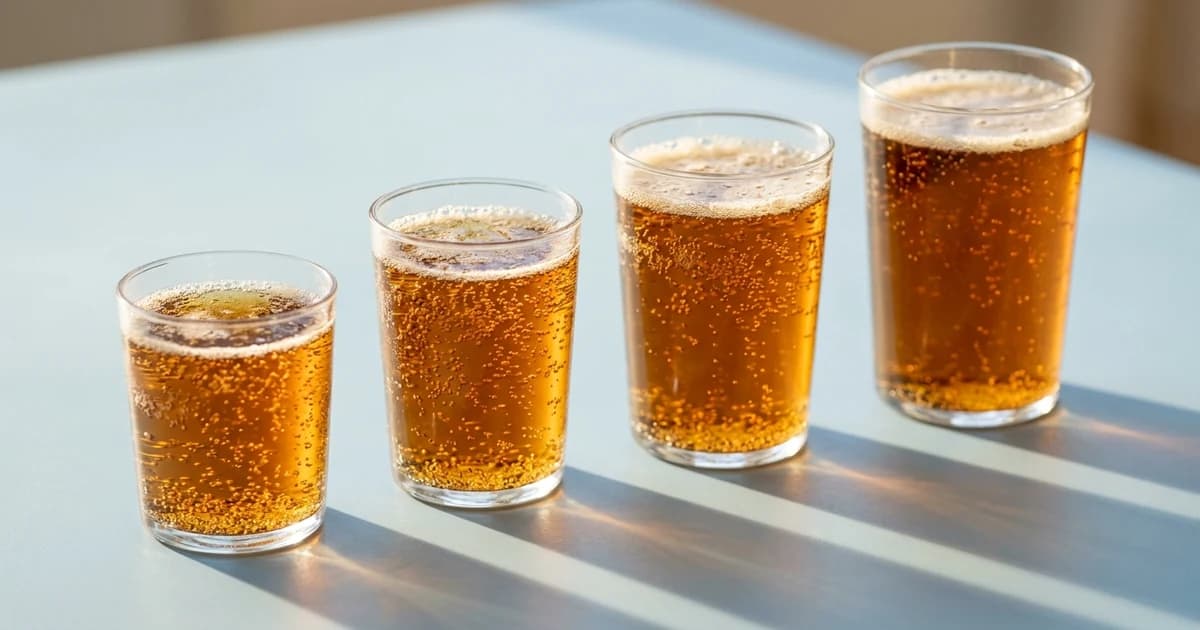
An 8.4 fl oz can of Red Bull has 80 mg of caffeine. The 12 fl oz can has 114 mg, the 16 fl oz can has 151 mg, and the 20 fl oz can has 198 mg, per Red Bull's own US product page (checked September 2026). The Sugarfree line has the same amounts at every size. That works out to roughly 9.5 mg of caffeine per fl oz across the board, so the only variable is how big a can you grab.
Red Bull Caffeine by Can Size
Every Red Bull Original sold in the US uses the same concentration. A bigger can simply means more liquid, more caffeine, and more sugar.
| Can size | Caffeine (mg) | mg per fl oz | Sugar (g) | % of FDA 400 mg daily limit | Source |
|---|---|---|---|---|---|
| 8.4 fl oz | 80 | 9.5 | 27 | 20% | redbull.com |
| 12 fl oz | 114 | 9.5 | 37 | 29% | redbull.com |
| 16 fl oz | 151 | 9.4 | 51 | 38% | redbull.com |
| 20 fl oz | 198 | 9.9 | 63 | 50% | redbull.com |
The FDA cites 400 mg per day as the amount "not generally associated with negative effects" for most healthy adults. One 20 oz can gets you halfway there in a single sitting.
Does Red Bull Sugarfree or Red Bull Zero Have Less Caffeine?
No. Red Bull Sugarfree contains exactly the same caffeine as the original at every can size: 80 mg (8.4 fl oz), 114 mg (12 fl oz), 151 mg (16 fl oz), and 198 mg (20 fl oz). The difference is sweetener, not stimulant.
Red Bull Zero also lists 80 mg per 8.4 fl oz can, sweetened with monk fruit extract, sucralose, and erythritol. Red Bull does not publish caffeine figures for larger Zero cans on its product page.
| Line | 8.4 fl oz | 12 fl oz | 16 fl oz | 20 fl oz | Sugar |
|---|---|---|---|---|---|
| Original | 80 mg | 114 mg | 151 mg | 198 mg | Yes (27 g per 8.4 oz) |
| Sugarfree | 80 mg | 114 mg | 151 mg | 198 mg | 0 g |
| Zero | 80 mg | Not published | Not published | Not published | 0 g |
How Much Caffeine Is in Red Bull Editions?
Red Bull publishes 80 mg per 8.4 fl oz for its Editions, same as the original. Each 8.4 fl oz Edition can also has 27 g of sugar.
As of September 2026, the US Edition flavors listed on Red Bull's site are: Summer, Apple, Iced, Peach, Pink, Amber, Sea Blue, Coconut, Yellow, and Red.
For Edition cans larger than 8.4 fl oz, Red Bull does not publish caffeine figures on the Edition ingredient pages. Given that every other Red Bull line holds steady at about 9.5 mg per fl oz, the larger Editions are likely similar, but that number is not on the label or the site.
Red Bull Caffeine vs Coffee, Cola, and Tea
Red Bull's 9.5 mg per fl oz is actually weaker by volume than brewed coffee, which runs about 12 mg per fl oz. The small Red Bull and a standard 8 oz cup of coffee land in the same neighborhood (80 vs ~95 mg), but once you pour a 12 oz mug the coffee pulls ahead.
| Drink | Serving | Caffeine (mg) | mg per fl oz | Source |
|---|---|---|---|---|
| Red Bull Original | 8.4 fl oz | 80 | 9.5 | redbull.com |
| Brewed coffee | 8 fl oz | ~95 | ~12 | USDA FoodData Central |
| Celsius Original | 12 fl oz | 200 | 16.7 | celsius.com |
| Coca-Cola | 12 fl oz | 34 | 2.8 | coca-cola.com |
| Diet Coke | 12 fl oz | 46 | 3.8 | coca-cola.com |
| Black tea | 8 fl oz | ~47 | ~5.9 | redbull.com |
| Roon pouch | 1 pouch | 80 | n/a (not a drink) | takeroon.com |
For more granular breakdowns, see Monster's caffeine by can, Celsius caffeine by line, 5-hour Energy caffeine, or convert mg of caffeine to cups of coffee.
How Many Red Bulls Can You Drink in a Day?
Based on the FDA's 400 mg daily figure for healthy adults, here is the math by can size:
- 8.4 fl oz: 5 cans = 400 mg (exactly at the limit)
- 12 fl oz: 3 cans = 342 mg (a fourth would be 456 mg, over the limit)
- 16 fl oz: 2 cans = 302 mg (a third would be 453 mg)
- 20 fl oz: 2 cans = 396 mg (just under; a third would be 594 mg)
Red Bull's own site cites the same five-can figure, referencing EFSA's 2015 opinion.
But caffeine is not the only ceiling. Five 8.4 oz Original cans carry 135 g of sugar. For context, the USDA Dietary Guidelines recommend limiting added sugars to about 50 g per day on a 2,000-calorie diet. Sugar, not caffeine, is the practical limiter for most people choosing the Original. For pregnant or nursing women, Red Bull's own page recommends a 200 mg limit, which is two and a half small cans.
For more on the 400 mg energy drink math, that article covers the full daily arithmetic across brands.
How Long Does Red Bull Last?
Caffeine from any source, Red Bull included, is absorbed quickly. Per the Institute of Medicine, 99% of ingested caffeine is absorbed within 45 minutes. Plasma levels peak between 15 and 120 minutes after consumption, with a mean half-life of about 5 hours (range: 1.5 to 9.5 hours depending on genetics, liver function, oral contraceptive use, and smoking status).
What does that mean in practice? If you drink an 8.4 oz Red Bull (80 mg) at noon, you still have roughly 40 mg circulating at 5 PM. A 2013 study (Drake et al., n=12) found that 400 mg of caffeine taken 6 hours before bed reduced objectively measured sleep by more than one hour. That dose is five small Red Bulls, not one, but it illustrates why late-afternoon caffeine stacks up.
For the deeper math, see caffeine half-life math for sleep.
What Else Is in the Can Besides Caffeine?
Red Bull's other active ingredients per 8.4 fl oz can include taurine, B vitamins (niacin at 100% DV, B6 at 250% DV, B12 at 80% DV, and pantothenic acid at 50% DV), and 27 g of added sugar in the Original (source). The Sugarfree and Zero lines swap in artificial or non-nutritive sweeteners.
Taurine is an amino acid your body produces naturally. Red Bull notes that the body contains about 70 times more taurine than one can provides. For lower-sugar alternatives in this category, see Red Bull alternatives without the sugar.
Is 80 mg of Caffeine a Lot?
For a healthy adult, no. EFSA's 2015 safety opinion concluded that single doses up to 200 mg (about 3 mg/kg body weight) raise no safety concern. That puts a small Red Bull at 40% of the single-dose threshold EFSA considers safe.
The more relevant question is timing. EFSA's same opinion noted that 100 mg taken close to bedtime may disrupt sleep in some adults. An 8.4 oz Red Bull falls 20 mg short of that line, but a 12 oz can (114 mg) exceeds it if you drink it in the evening. The fix is simple: keep Red Bull, coffee, or any caffeine source away from the hours before bed.
For children and adolescents, the American Academy of Pediatrics is direct: "caffeine and other stimulant substances contained in energy drinks have no place in the diet of children and adolescents."
Putting the Numbers Together
Red Bull is a consistent product. Every line runs at roughly the same 9.5 mg of caffeine per fl oz, which is weaker than brewed coffee by volume. The small can is 80 mg, the big can is 198 mg, and the FDA's daily ceiling for healthy adults is 400 mg. Sugar content in the Original line scales with can size and becomes the practical concern faster than caffeine does. Choose your size, check the timing relative to sleep, and you have all the numbers you need.
Frequently Asked Questions
How much caffeine is in a 12 oz Red Bull?
A 12 fl oz can of Red Bull contains 114 mg of caffeine, which is about 9.5 mg per fl oz. That is 29% of the FDA's 400 mg daily limit for healthy adults and roughly equivalent to a 10 oz cup of brewed coffee.
How much caffeine is in a 16 oz Red Bull?
The 16 fl oz Red Bull has 151 mg of caffeine. Two of these in a day puts you at 302 mg, still under the FDA limit. But the Original version also delivers 51 g of sugar per can, which exceeds the USDA's recommended daily added-sugar limit on its own.
How much caffeine is in a 20 oz Red Bull?
A 20 fl oz can has 198 mg of caffeine. That is almost half the FDA's daily ceiling in one container and 63 g of sugar in the Original.
Does Sugarfree Red Bull have the same caffeine?
Yes. Red Bull Sugarfree matches the Original at every size: 80 mg (8.4 oz), 114 mg (12 oz), 151 mg (16 oz), and 198 mg (20 oz). The only difference is zero sugar and zero calories.
Is Red Bull stronger than coffee?
Per ounce, no. Red Bull runs about 9.5 mg per fl oz. Brewed coffee averages about 12 mg per fl oz (USDA). An 8.4 oz Red Bull (80 mg) and an 8 oz coffee (~95 mg) are close, but a 12 oz mug of coffee can hit 140 mg or more.
Can teens drink Red Bull?
The American Academy of Pediatrics (2011) stated that energy drinks have no place in the diet of children and adolescents. The FDA also discourages energy drink consumption for children and teens. If there is a specific health concern, consult a pediatrician.
Same 80 mg as the Small Can, Built to Last Longer
The table above shows that every Red Bull is the same strength. You are not choosing potency; you are choosing volume, and with the Original, that means choosing how much sugar comes along for the ride. The small can is 80 mg. That is the exact dose in a Roon pouch.
The difference is duration. Caffeine alone has a mean half-life near 5 hours, which is why the second can or the 20 oz upgrade is tempting by mid-afternoon. Roon pairs its 80 mg of caffeine with 60 mg L-theanine, 25 mg methylliberine (Dynamine), and 5 mg theacrine (TeaCrine). Methylliberine is the compound that extends caffeine's action: in a randomized, double-blind crossover PK study (n=12), co-administration with caffeine cut oral clearance from 41.9 to 17.1 L/hr and extended half-life from 7.2 to 15 hours, with no increase in peak concentration (study). That study used 100 mg methylliberine + 150 mg caffeine, roughly 4x the methylliberine and 1.9x the caffeine in a Roon pouch, so the effect at Roon's doses is directionally the same but not identical. The felt window Roon reports is 6 to 8 hours, with onset in 5 to 10 minutes. A longer half-life also means you should stop at least 8 hours before bed.
Roon is zero sugar (it contains sucralose), zero calories, no can to finish. It is a pouch, not a drink. Subscriptions start at $9.16 per tin ($0.61 per pouch); one-time pricing is $15.00 per tin for a 4-tin order ($1.00 per pouch). It is not a replacement for Red Bull in every context, but if the reason you reach for the bigger can is that the small one does not last, Roon solves duration without more milligrams.
Written by Roon Team