L-Theanine and Blood Pressure
Roon Team
L-Theanine and Blood Pressure: What the Research Actually Shows
Nearly half of American adults have high blood pressure. That's roughly 120 million people, according to the CDC. Most of them are managing it with medication, lifestyle changes, or both. But a growing body of research suggests that l theanine lower blood pressure effects are real, particularly during periods of stress. Here's what the science says, what it doesn't say, and what it means for you.
Key Takeaways
- L-theanine blunts stress-related blood pressure spikes by calming the sympathetic nervous system, the body's "fight or flight" wiring.
- A 200mg dose reduced both systolic and diastolic blood pressure during mental stress tasks in clinical trials.
- The mechanism is indirect: l theanine lower blood pressure effects don't act on blood vessels the way a drug does. L-theanine works through the brain, reducing the neural excitation that triggers stress responses.
- L-theanine is not a replacement for blood pressure medication, but it may be a useful part of a broader strategy for cardiovascular health.
How Stress Drives Blood Pressure Up
Before we talk about how l theanine lower blood pressure responses work, you need to understand why stress matters so much for cardiovascular health.
When you're stressed, whether from a deadline, a traffic jam, or a difficult conversation, your brain fires up the sympathetic nervous system. Cortisol and adrenaline flood your bloodstream. Your heart rate climbs. Your blood vessels constrict. And your blood pressure rises.
This is fine in short bursts. It's the system that kept your ancestors alive when a predator appeared. The problem is that modern stress doesn't come and go. It lingers. Deadlines stack up. Sleep deteriorates. The sympathetic nervous system stays activated for hours, sometimes days.
A 2019 review published in Pharmacological Research noted that repeated stress-driven blood pressure spikes may contribute to the development of chronic hypertension over time. This is where l theanine lower blood pressure research enters the picture.
Can L-Theanine Lower Blood Pressure? What Clinical Trials Found
The most cited study on this topic comes from Yoto et al., published in the Journal of Physiological Anthropology in 2012. It's a well-designed, placebo-controlled trial, and its findings are worth understanding in detail.
The Yoto et al. Study (2012)
Fourteen healthy participants each completed three separate trials. In each trial, they received one of the following before performing a series of mental arithmetic tasks:
- 200mg of L-theanine + placebo
- 100mg of caffeine + placebo
- Placebo only
The results split participants into two groups: those who had a large blood pressure response to mental stress and those who had a smaller response.
In the high-response group, L-theanine produced a clear, measurable effect. Systolic and diastolic blood pressure increases were both reduced compared to placebo and caffeine conditions. The study's authors concluded that L-theanine "not only reduces anxiety but also attenuates the blood-pressure increase in high-stress-response adults."
That last part is important. L theanine lower blood pressure effects didn't reduce resting readings across the board. L-theanine specifically blunted the spike that stress produced. If your blood pressure barely budged during the stress task, L-theanine didn't have much additional effect.
The AlphaWave® Trial (2021)
A randomized, triple-blind, placebo-controlled crossover study published in 2021 tested a single 200mg dose of L-theanine (branded as AlphaWave®) in healthy adults. Participants performed a mental arithmetic test designed to induce stress, both before and after taking the supplement.
The study confirmed that L-theanine increased alpha brain wave activity, which is associated with a state of relaxed alertness. While the primary focus was on stress and brain activity rather than blood pressure specifically, the findings reinforced the broader mechanism: L-theanine calms the neural systems that drive cardiovascular stress responses.
How L-Theanine Works to Lower Blood Pressure (The Mechanism)
Understanding how L-theanine acts in the brain helps explain why it doesn't lower blood pressure the way an ACE inhibitor or a calcium channel blocker does. It doesn't directly relax blood vessel walls or reduce blood volume. Its effects are upstream, in the brain.
1. It Blocks Excessive Glutamate Activity
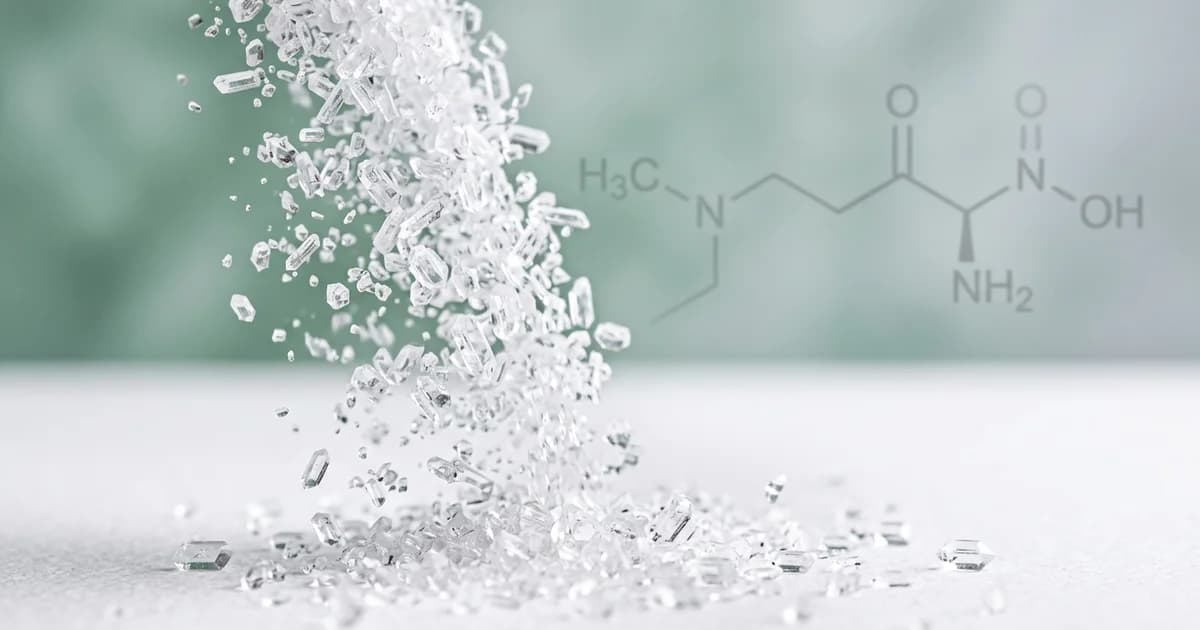
L-theanine is structurally similar to glutamate, the brain's primary excitatory neurotransmitter. It binds to glutamate receptors (AMPA, kainate, and NMDA types) with micromolar affinity, according to research published in the Journal of Herbal Pharmacotherapy. This binding doesn't fully activate the receptors. Instead, it partially blocks glutamate from doing its job, reducing cortical excitation.
Less cortical excitation means a quieter sympathetic nervous system. And a quieter sympathetic nervous system means less adrenaline, less vasoconstriction, and the ability of l theanine lower blood pressure during stress.
2. It Increases GABA, Serotonin, and Dopamine
The same body of neurochemistry research shows that L-theanine increases levels of GABA (the brain's main inhibitory neurotransmitter), serotonin, and dopamine. GABA in particular acts as a brake pedal for neural activity. When GABA levels rise, the nervous system shifts from sympathetic (fight or flight) toward parasympathetic (rest and digest) dominance.
This shift has direct cardiovascular implications. Parasympathetic activation slows heart rate and relaxes blood vessel tone. Think of it this way: GABA tells your nervous system to ease off the gas, and your cardiovascular system responds accordingly.
A 2019 study published in Pharmaceutical Biology confirmed that the GABA and L-theanine combination produces stronger calming effects than either compound alone, suggesting that L-theanine's ability to boost endogenous GABA production amplifies its own relaxation properties.
3. It Promotes Nitric Oxide Production
There's also a vascular angle. A 2012 study published in the Journal of Nutritional Biochemistry found that L-theanine promotes nitric oxide (NO) production in endothelial cells through eNOS phosphorylation. Nitric oxide is one of the body's primary vasodilators. It signals blood vessels to relax and widen, which directly reduces blood pressure.
This suggests l theanine lower blood pressure effects may operate through both a central (brain-mediated) and a peripheral (vascular) pathway.
L-Theanine vs. Caffeine: Opposite Effects on Blood Pressure
This comparison matters because most people consume L-theanine alongside caffeine, whether in green tea or in supplement stacks.
| Factor | L-Theanine (200mg) | Caffeine (100mg) |
|---|---|---|
| Blood pressure during stress | Reduced in high responders | Increased |
| Heart rate | Neutral to slightly reduced | Increased |
| Anxiety during mental tasks | Reduced | No change or increased |
| Alertness | Maintained | Increased |
The Yoto et al. study found that caffeine raised blood pressure during mental tasks, while l theanine lower blood pressure responses were confirmed. But here's what makes the combination interesting: research from the Alzheimer's Drug Discovery Foundation notes that when the two are taken together, L-theanine attenuated the blood pressure increase caused by caffeine without reducing caffeine's positive effects on alertness.
In other words, you get the focus without the cardiovascular cost. That's a meaningful distinction for anyone who relies on caffeine but worries about its effects on blood pressure.
What L-Theanine Won't Do for Blood Pressure
Let's be direct about the limitations.
L-theanine is not a blood pressure medication. If you have diagnosed hypertension, you need to work with your doctor. No amino acid supplement replaces prescribed treatment.
The clinical evidence for l theanine lower blood pressure effects is strongest in the context of acute stress responses, not chronic baseline readings. The Yoto study measured blood pressure changes during and after mental tasks, not long-term resting blood pressure over weeks or months.
There are no large-scale, long-term randomized controlled trials specifically testing L-theanine as a standalone intervention for hypertension. The existing data is promising but limited in scope, mostly involving small sample sizes and healthy (non-hypertensive) participants.
What the research does support is this: l theanine lower blood pressure responses help your body handle stress without the cardiovascular fallout that usually comes with it. For the millions of people whose blood pressure climbs every time they sit in traffic or open their inbox, that's a real, measurable benefit.
It also matters for long-term risk. As the Yoto study noted, "stress may not directly cause hypertension, but it can lead to repeated blood pressure elevations" that accumulate over time. Reducing those daily spikes is a form of cardiovascular maintenance that most people overlook entirely.
Dosing: How Much L-Theanine to Lower Blood Pressure?
Clinical trials on l theanine lower blood pressure effects have consistently used 200mg of L-theanine as the standard dose. According to WebMD's summary of the research, most studies use doses in the range of 200-400mg daily.
A single cup of green tea contains roughly 20-30mg of L-theanine. You'd need to drink 7-10 cups to reach the 200mg threshold used in clinical trials. That's why most people who want a meaningful dose turn to concentrated supplements or products that deliver L-theanine in a more practical format.
L-theanine has an excellent safety profile. A rat toxicity study found no adverse effects at the highest dose tested (4,000 mg/kg/day), and Cochrane meta-analyses of green tea consumption have reported that side effects are mild.
Is L-Theanine Good for High Blood Pressure? Common Questions
The human blood-pressure evidence here is small, short, and about acute stress. It rests largely on two single-dose trials in healthy volunteers, neither of which enrolled anyone with diagnosed hypertension. Here is what that means in practice.
Does L-theanine lower resting blood pressure?
That is not what these trials measured. Yoto et al. 2012 tested 14 healthy students (mean age 22.8) and tracked the change in blood pressure during mental arithmetic and a cold pressor test. The effect appeared only in a "high responder" subgroup defined by each person's own placebo reaction, and the low-response group showed no effect. Resting readings were never the outcome.
Has it been tested in people with diagnosed high blood pressure?
Not in these trials. Yoto enrolled healthy students, and Rogers et al. 2008 enrolled 48 healthy adults. Nothing here supports L-theanine as a treatment for hypertension, and no one should change or stop a prescribed blood pressure medication. That is a conversation for your doctor.
How fast does a dose act, and how long have studies run?
Rogers measured blood pressure starting 40 minutes after dosing, and plasma L-theanine peaks about 0.8 hours after a 100 mg oral dose (Scheid et al. 2012). The longest daily-dosing trial runs about four weeks (Hidese et al. 2019, n=30), designed around stress, sleep, and cognition, not blood pressure.
Does it offset caffeine's effect on blood pressure?
In Rogers 2008, 250 mg of caffeine raised blood pressure and 200 mg of theanine antagonized that effect. One dose, healthy adults, one measurement window. Antagonized is not the same as cancelled.
Can I take it alongside blood pressure medication?
No published trial has tested that combination. NCCIH advises talking with your health care provider before adding supplements if you take any medicine.
Is L-theanine considered safe?
FDA raised no questions on a GRAS notice covering L-theanine at up to 250 mg per serving in food (GRN 209, 2007). Safe and effective for blood pressure are separate claims, and only the first is well supported.
A Smarter Way to Get Your Daily L-Theanine
The research on l theanine lower blood pressure tells a consistent story: this amino acid helps your brain stay calm under pressure, and that calmness translates to measurable cardiovascular benefits during stress. L-theanine pairs well with caffeine, too, boosting alpha-wave activity and attention-switching accuracy while preserving the focus.
That pairing is the foundation of Roon. Roon's nootropic pouches deliver L-theanine alongside 80mg of caffeine, theacrine, and methylliberine in each sublingual pouch. It absorbs fast, lasts 6-8 hours, and contains zero nicotine. The result is clean, sustained cognitive performance without the blood pressure spike that comes from caffeine alone.
If you're already looking for a practical way to get your daily L-theanine, Roon builds it into a format that works on the go, not just on the supplement shelf.