Wintergreen vs Spearmint vs Peppermint: The Three Pouch Mints Explained
Wintergreen vs Spearmint vs Peppermint: The Three Pouch Mints Explained
Short answer: Wintergreen isn't a mint. Its flavor is methyl salicylate (at least 98% of the oil), which tastes sweet and root-beer-like and barely cools. Spearmint is carvone-led (55% or more, under 2% menthol) and gently cool. Peppermint is 29-55% menthol, so it is the coldest of the three in a pouch or gum.
In the wintergreen vs spearmint debate, the first thing to know is that wintergreen is not a mint at all. Its flavor comes from methyl salicylate, an ester that shares zero chemistry with the menthol in peppermint or the carvone in spearmint. Despite that, pouch and gum brands shelve all three side by side and call them "mint" options. If you have ever wondered why wintergreen tastes closer to root beer than to a breath strip, or why peppermint feels icier than spearmint, the answer lives in three very different molecules acting on three different receptors in your mouth.
Key Takeaways
- Wintergreen belongs to the Ericaceae (heath) family, not Lamiaceae (mint). Its dominant compound, methyl salicylate (≥98% of the essential oil), is chemically unrelated to menthol or carvone.
- Peppermint delivers the strongest cooling hit because its menthol (29-55% of the oil) directly activates the cold-sensing TRPM8 receptor. Spearmint contains less than 2% menthol, so it reads as sweet, not icy.
- The reason brands like ZYN stock Wintergreen, Spearmint, Peppermint, Cool Mint, and Menthol as separate SKUs is that these are genuinely different sensory profiles, not relabeled variations of the same thing.
Wintergreen, Spearmint, and Peppermint Compared
Before getting into the chemistry, here is the side-by-side snapshot. The numbers below come from pharmacopeial specifications and published essential-oil analyses.
| Wintergreen | Spearmint | Peppermint | |
|---|---|---|---|
| Dominant compound | Methyl salicylate | (R)-(−)-Carvone | l-Menthol |
| % in essential oil | ≥98% | ≥55% | ~29-55% |
| Botanical family | Ericaceae (heath) | Lamiaceae (mint) | Lamiaceae (mint) |
| Menthol content | Trace / negligible | <2% | 29-55% |
| Primary sensation | Sweet, warm, medicinal | Sweet, herbal, mild cool | Icy, sharp, strong cool |
| TRPM8 activation (cold receptor) | No | Minimal | Strong |
| Common flavor association | Root beer, muscle rub | Chewing gum, mojito | Breath mint, candy cane |
The single most useful column is "Menthol content." That number predicts how cold a flavor feels in your mouth better than anything else on the label.
Wintergreen Isn't a Mint: The Methyl Salicylate Story
The wintergreen plant, Gaultheria procumbens, is a member of the Ericaceae (heath) family, the same group that includes blueberries and rhododendrons. Peppermint (Mentha × piperita) and spearmint (Mentha spicata) belong to Lamiaceae, the true mint family. Wintergreen gets filed under "mint" purely because of marketing convention, not botany.
The flavor itself is almost entirely one molecule. Wintergreen essential oil is composed of approximately 98% or more methyl salicylate, making it one of the most chemically simple essential oils in commercial use. Methyl salicylate is an ester of salicylic acid. If that name sounds familiar, it should: salicylic acid is the precursor to aspirin, and methyl salicylate is the active ingredient in topical muscle rubs like Bengay and Icy Hot. (At flavoring-grade concentrations in a pouch or gum, the amount is trace and food-safe. Do not confuse the taste with the liniment.)
The root-beer connection is real, too. Traditional root beer recipes used wintergreen alongside sassafras and birch bark, all of which contain methyl salicylate. That shared molecule is why a wintergreen pouch can hit your palate with a faintly nostalgic, sweet-medicinal note that has nothing to do with coolness.
Spearmint: Carvone-Driven Sweetness
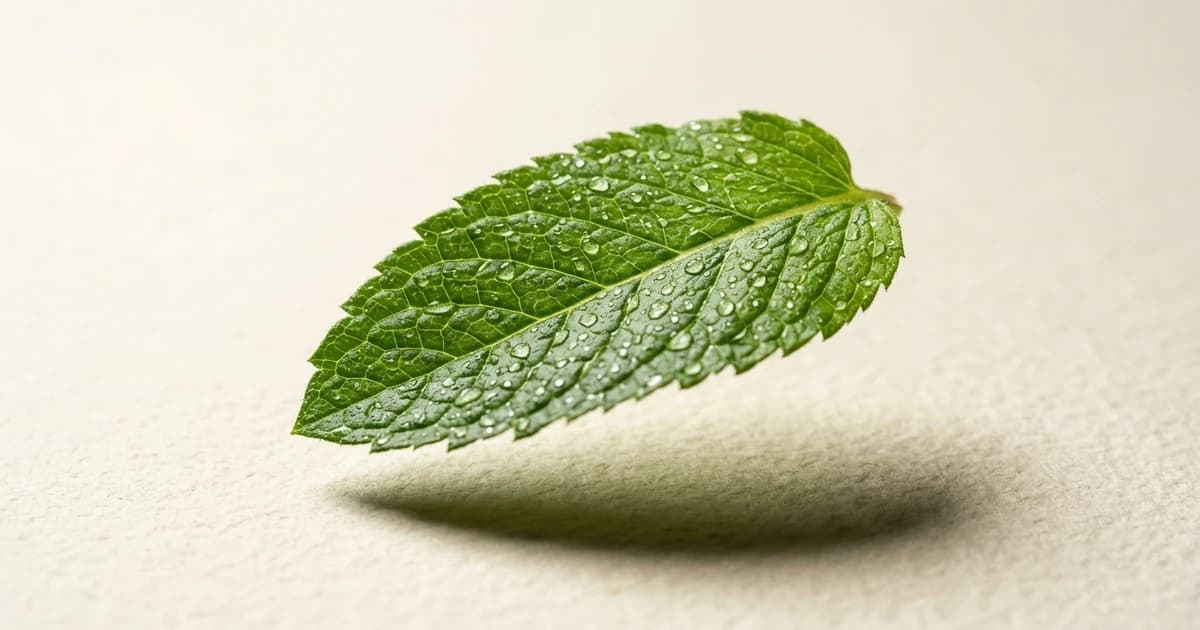
Spearmint oil is dominated by (R)-(−)-carvone, specified at 55% or above by the British Pharmacopoeia, with menthol sitting below 2%. That near-absence of menthol is the whole story: spearmint tastes sweet and herbal because the molecule doing most of the work, carvone, does not activate the TRPM8 cold receptor the way menthol does.
Carvone belongs to the monoterpene ketone family. It has a clean, slightly green, gently sweet profile. This is why spearmint is the default flavor in most chewing gums and toothpastes marketed as "mild" or "gentle." It delivers recognizable mintiness without the icy punch.
For a deeper breakdown of how spearmint and peppermint differ in daily-use products, see the dedicated spearmint vs peppermint comparison.
Peppermint: Menthol-Driven Coolness
Peppermint is the heavy hitter. Its essential oil contains roughly 29-55% l-menthol and 10-40% menthone, and menthol is the compound directly responsible for the "cold" sensation you feel.
That sensation is not a perception trick. Menthol physically activates the TRPM8 ion channel, the same receptor your sensory neurons use to detect actual cold temperatures. Two landmark 2002 papers, McKemy et al. in Nature and Peier et al. in Cell, identified TRPM8 and demonstrated that menthol triggers it. Your brain literally interprets menthol as cold, which is why peppermint feels like it drops the temperature in your mouth.
Methyl salicylate does not activate TRPM8. A 2004 study by Bandell et al. in Neuron found that methyl salicylate instead activates TRPA1, a different TRP channel associated with pungent and irritant compounds like mustard oil and cinnamon. That is why wintergreen can produce a faint warmth or tingle at higher concentrations, but never the clean, icy coolness of peppermint.
Which Flavor Feels "Coolest" in a Pouch or Gum?
Ranking the three by perceived cooling intensity:
- Peppermint (strongest cool). High menthol content drives direct TRPM8 activation. Products labeled "Cool Mint" or "Ice Mint" almost always lean on peppermint-derived flavoring.
- Spearmint (mild cool). The small amount of menthol (<2%) plus carvone's own subtle sensory properties produce a gentle, short-lived coolness. The dominant impression is sweetness.
- Wintergreen (minimal cool). No meaningful menthol, no TRPM8 hit. The sensation is sweet and slightly warm or medicinal. Some people describe it as "smooth" relative to the other two.
If you have tried ZYN's lineup, this tracks. ZYN sells Wintergreen, Spearmint, Peppermint, Cool Mint, and Menthol as five distinct SKUs, and users consistently describe them as occupying different sensory spaces. Cool Mint and Peppermint sit at the cold end; Wintergreen sits at the warm end; Spearmint lands in the middle. For a full rundown, see the guide to every ZYN flavor.
Why Pouch and Gum Brands Sell All Three
Flavor variety is not just marketing. Sensory science has a term for why people rotate flavors: sensory-specific satiety. Repeated exposure to a single flavor reduces how pleasant it tastes over time, even if you liked it initially. A consumer who uses pouches daily will eventually feel less satisfied by a flavor they use every day. Offering wintergreen, spearmint, and peppermint gives the same brand three genuinely distinct sensory anchors (sweet-warm, sweet-mild, icy-sharp), which helps retain daily users who might otherwise switch brands out of boredom.
This also explains why wintergreen, despite being the least "minty" of the three, remains one of the most popular pouch flavors in the U.S. It fills a sensory niche that neither spearmint nor peppermint can. The sweet, root-beer-adjacent warmth appeals to users who want a pouch without the cooling blast.
The Molecular Reason "Mint" Is a Misleading Category
All three flavors get called "mint," but only two of them come from mint plants, and their lead compounds act on different receptors. Grouping them together is a retail convenience, not a scientific description. Understanding the chemistry lets you predict what a product will actually feel like in your mouth before you buy it:
- See "methyl salicylate" or "wintergreen" on an ingredient list? Expect sweet warmth.
- See "carvone" or "spearmint"? Expect mild, herbal freshness.
- See "menthol" or "peppermint"? Expect icy cold.
That is the entire framework. Three molecules, three sensations, one misleading shelf label.
Frequently Asked Questions
Is wintergreen a mint?
No. Wintergreen (Gaultheria procumbens) belongs to the Ericaceae (heath) family, alongside blueberries and azaleas. True mints like peppermint and spearmint are in the Lamiaceae family. Wintergreen is called a "mint" flavor only by convention in the food, gum, and pouch industries, not because of any botanical or chemical relationship.
What does wintergreen actually taste like?
Wintergreen tastes sweet, slightly medicinal, and faintly warm. The flavor compound is methyl salicylate, the same molecule found in root beer and topical muscle rubs (at much higher concentrations in the latter). It does not produce the icy-cool sensation associated with peppermint.
Is wintergreen stronger than peppermint?
It depends on what you mean by "stronger." Wintergreen has a more persistent, heavier sweetness that some people perceive as intense. Peppermint produces a sharper, more physically noticeable cooling sensation because menthol activates the TRPM8 cold receptor. In terms of raw sensory impact, peppermint usually wins; in terms of lingering flavor presence, wintergreen can.
Why does wintergreen taste like root beer?
Traditional root beer was brewed with wintergreen, sassafras, and birch bark. All three contain methyl salicylate. That shared molecule is why a wintergreen pouch or candy evokes root beer for many people.
What is the difference between ZYN Wintergreen and ZYN Spearmint?
ZYN Wintergreen uses wintergreen flavoring (methyl salicylate base), which tastes sweet and warm. ZYN Spearmint uses spearmint flavoring (carvone base), which tastes herbal and mildly cool. They are chemically and sensorially distinct products. For a broader comparison, see the complete ZYN flavor ranking.
Which pouch mint flavor is best for someone who hates strong cooling?
Wintergreen. It has negligible menthol content and does not activate the TRPM8 cold receptor, so you get flavor without the icy sensation. Spearmint is the middle ground. Peppermint is the worst choice if cooling bothers you.
Can you mix wintergreen and peppermint?
You can, and some brands do. The combination produces a layered effect: wintergreen's sweet warmth followed by peppermint's icy finish. Whether that appeals to you is entirely personal preference.
Are the health effects of these three flavors different?
At flavoring-grade concentrations used in pouches and gum, the amounts of methyl salicylate, carvone, and menthol are all trace-level and considered food-safe. Health differences between them at these doses are negligible. At higher, topical or medicinal concentrations, their pharmacological profiles diverge, but that is a different context entirely.
One Flavor, Formulated for Focus
Roon takes a different approach to the flavor question. Instead of offering wintergreen, spearmint, and peppermint as separate products, Roon ships a single Cool Mint flavor across its entire line. It is not wintergreen. It is a formulated cool mint with sucralose, designed to pair with the active formula without competing for your attention.
The logic is simple: Roon is a zero-nicotine performance pouch, not a flavor-rotation product. The mint is there to make the experience clean, not to be the point of the experience. If you want variety across wintergreen, spearmint, and peppermint, nicotine pouch brands serve that need. If you want a single pouch built for sustained focus with no nicotine, flavor simplicity is a feature, not a limitation.
Tins start from $9.16 on a 12-tin subscription ($0.61 per pouch). Try Roon if the active formula matters more to you than the flavor menu.
Related from Roon
- Every ZYN Flavor, Ranked: Complete Guide
- Spearmint vs Peppermint
- Rogue Wintergreen Nicotine Pouches: What to Know
- ALP vs ZYN: Strength, Flavor, Price
Written by Roon Team