How Long Does Caffeine Anxiety Last? A Timeline by Dose and Metabolizer Type
How Long Does Caffeine Anxiety Last? A Timeline by Dose and Metabolizer Type
How long does caffeine anxiety last? It typically peaks 30 to 60 minutes after you drink coffee and fades over the next 3 to 5 hours for most people. But "most people" hides a huge range. Your genetics, your dose, and even your medications can stretch that window from under 2 hours to well over 8. Here is what the pharmacokinetics actually predict, and why the same cup of coffee can feel fine for your coworker and miserable for you.
Key Takeaways
- Caffeine-induced anxiety tracks plasma concentration: it rises to a peak around 30 to 60 minutes post-ingestion, then falls with a half-life that varies 5-fold from person to person.
- Two genes explain most of the variance. CYP1A2 controls how fast you clear caffeine. ADORA2A controls how strongly your brain reacts to it.
- A 2024 meta-analysis pooling 14 comparisons from 8 articles (546 participants) found caffeine raised anxiety scores, with the largest effect in the high-dose (≥400 mg) subgroup, but genetically sensitive individuals can feel it at much lower doses.
- No single study has directly measured "caffeine anxiety duration" as an endpoint. The timelines below are pharmacokinetic estimates, not measured subjective durations.
Why Caffeine Causes Anxiety in the First Place
Caffeine is an adenosine receptor antagonist. Adenosine is a molecule your brain uses as a slow-down signal, and caffeine blocks it. When adenosine receptors are blocked, your nervous system compensates by releasing more catecholamines (norepinephrine, adrenaline, cortisol). That is the alertness you want. It is also, at higher concentrations, the anxiety you do not want.
The dose where alertness tips into anxiousness is different for everyone. But the mechanism is the same: too much adenosine blockade, too many stress hormones, and your body reads the situation as a threat.
The Caffeine Anxiety Timeline: Onset, Peak, and Tail-Off
No trial has measured caffeine-induced anxiety duration as a standalone outcome. What we have is well-established pharmacokinetic data, and anxiety tracks plasma caffeine concentration closely enough to build a practical timeline.
| Phase | Approximate Timing | What Is Happening |
|---|---|---|
| Absorption | 0 to 30 min | Caffeine enters the bloodstream. Anxiety begins as plasma levels rise. |
| Peak plasma (Tmax) | 30 to 60 min | Caffeine concentration hits its maximum (NCBI Bookshelf). Anxiety is at its worst here. |
| First half-life | ~5 hours (average) | Half the caffeine is cleared. Anxiety drops noticeably for most people. |
| Second half-life | ~10 hours (average) | 75% cleared. Most people feel normal, though slow metabolizers may still feel on edge. |
| Tail | 12+ hours | Negligible for fast metabolizers. Slow metabolizers may carry residual stimulation into the evening. |
The mean half-life is about 5 hours, but the documented range is 1.5 to 9.5 hours (Brachtel and Richter, 1992; Busto et al., 1989). That range is not noise. It is genetics.
Why You React Harder Than Your Friends: CYP1A2 and ADORA2A
Two genes account for most of the person-to-person variation in caffeine anxiety. Understanding them explains why blanket advice ("just drink less coffee") misses the point.
CYP1A2: How fast you clear the drug
CYP1A2 is the liver enzyme responsible for roughly 95% of caffeine metabolism. The rs762551 polymorphism splits people into fast and slow metabolizers. Fast metabolizers (A/A genotype) clear caffeine with a half-life around 2 to 4 hours. Slow metabolizers (C carriers) can take 6 to 8 hours or longer (Sachse et al., 1999). If you are a slow metabolizer, a 200 mg coffee at 2 PM can still have 100 mg circulating at 8 PM.
Other factors shift clearance too. Oral contraceptives roughly double caffeine's half-life. Pregnancy can extend it to 15 hours in the third trimester. Cigarette smoking cuts it nearly in half. For a deeper look at how CYP1A2 sets your limit, the genetic picture gets even more specific.
ADORA2A: How strongly your brain reacts
Even at identical plasma concentrations, some people feel anxious and others feel fine. The ADORA2A gene (rs5751876, also called 1976T/C) is why. In a 2003 study by Alsene et al. and a 2008 replication by Childs et al., the T/T genotype group reported the greatest increase in anxiety after caffeine, while C/C carriers barely reacted. The doses used were equivalent to 1 to 2 cups of coffee.
This means two people can drink the same latte, metabolize it at the same speed, and still have completely different emotional responses. One gene governs duration. The other governs intensity. If you drew the short straw on both, even moderate caffeine can feel terrible.
How Much Caffeine Does It Take?
A 2024 meta-analysis by Liu et al. pooled 14 comparisons from 8 articles (546 participants) and found that caffeine elevated anxiety scores with an overall standardized mean difference of 0.94 (95% CI: 0.28 to 1.60, p < 0.05). The effect was strongest above 400 mg, roughly four cups of drip coffee.
But "strongest above 400 mg" does not mean you are safe below it. The studies included in that meta-analysis used a range of doses, and genetically sensitive individuals (T/T on ADORA2A, slow on CYP1A2) showed measurable anxiety increases at 150 to 200 mg. If you are reading this article because coffee makes you anxious, the threshold that matters is yours, not the population average.
| Caffeine Source | Approximate Dose | Anxiety Risk (General Population) |
|---|---|---|
| Single espresso | 63 mg | Low for most people |
| Standard drip coffee (12 oz) | 120 to 150 mg | Low to moderate; varies by genotype |
| Large coffee shop brew (16 oz) | 200 to 300 mg | Moderate; noticeable for slow metabolizers |
| Double-shot energy drink | 300 to 400 mg | Elevated; approaches the meta-analytic threshold |
| Pre-workout or high-dose supplement | 400+ mg | High; measurable anxiety increase across genotypes |
When Caffeine Anxiety Crosses a Clinical Line
In people with pre-existing panic disorder, caffeine does not just cause discomfort. It can trigger full panic attacks. A 2022 systematic review by Klevebrant and Frick found that 51.1% of panic-disorder patients (n = 237 across 9 studies) had a panic attack after caffeine challenge doses of 400 to 750 mg, compared to none in the placebo condition.
This is a clinical population, not a general one. If you are an otherwise healthy person who gets jittery after a large cold brew, you are not in the same category. But if caffeine consistently produces chest tightness, derealization, or a sense of impending doom, that pattern is worth discussing with a clinician. The DSM-5 includes caffeine-induced anxiety disorder (292.89) as a recognized diagnosis.
What Actually Shortens Caffeine Anxiety
Once caffeine is in your system, you cannot speed up its metabolism. But you can reduce the intensity of the response while you wait.
L-theanine has the best evidence. A 2008 randomized controlled trial (Rogers et al., n = 48) found that 200 mg of L-theanine attenuated caffeine-induced blood pressure rises when co-administered with 250 mg caffeine. A 2012 study by Yoto et al. found similar blood-pressure attenuation under stress tasks in a high-response subgroup. Neither study was designed to measure subjective anxiety duration, but the physiological calming effect is consistent and directional. For more on the caffeine-theanine ratio that matters, the interaction is worth understanding.
Breathing techniques (slow diaphragmatic breathing, box breathing) reduce sympathetic activation directly. They will not clear caffeine from your blood, but they lower the adrenaline response that drives the anxious feeling.
Physical activity may modestly increase clearance through elevated hepatic blood flow, though this is not well-quantified. A walk also burns off excess catecholamines.
Time is the only sure fix. If your half-life is 5 hours, roughly 75% of the caffeine is gone by hour 10. If you are dealing with jitters right now, most of what you feel will pass.
Does Caffeine Anxiety Go Away With Regular Use?
The short answer: partially, and it depends on the dose.
A 2010 study by Rogers et al. found that habitual caffeine consumers showed a reduced anxiety response compared to non-consumers, even among those carrying the anxiety-prone ADORA2A T/T genotype. Substantial tolerance does develop to caffeine's anxiogenic effect with regular use.
But there is a catch. The same research found that habitual consumers gained no net alertness benefit: caffeine abstinence reduced their baseline alertness, and consumption merely restored it to normal. You build tolerance to the anxiety, but also to the focus. And "substantial" is not "complete." High doses can still provoke anxiety in regular drinkers, especially slow metabolizers who accumulate caffeine across the day. The caffeine crash timeline adds another layer: withdrawal-rebound anxiety can mimic the problem you are trying to avoid.
The Pharmacokinetic Answer to Caffeine Anxiety
Caffeine anxiety is real, measurable, and genetically variable. For a typical dose in a typical metabolizer, the worst passes within 1 to 3 hours after peak, and most residual effects clear within 5 to 8 hours. For slow metabolizers or high doses, the tail can stretch to 10 hours or beyond. The two biggest levers you control are dose and timing. Know your metabolizer type, keep your dose below the threshold where anxiety starts, and leave a wide buffer before sleep. If caffeine-induced anxiety is a recurring problem at any dose, talk to a clinician.
Frequently Asked Questions
How long does caffeine anxiety last after one cup of coffee?
For most people, a single cup (100 to 150 mg) produces peak anxiety around 30 to 60 minutes after drinking, with symptoms fading over the next 3 to 5 hours. Slow CYP1A2 metabolizers may feel residual effects for 6 to 8 hours. The timeline tracks caffeine's plasma half-life, which averages 5 hours but ranges from 1.5 to 9.5 hours.
Does caffeine anxiety go away on its own?
Yes. Caffeine anxiety resolves as your body metabolizes and clears the drug. There is no lasting damage from a single episode. If you are feeling it right now, it will pass. Breathing exercises and L-theanine can reduce the intensity while you wait.
Can caffeine cause panic attacks?
In people with panic disorder, yes. A systematic review found that 51.1% of panic-disorder patients experienced a panic attack after caffeine challenge doses of 400 to 750 mg. In healthy controls, this rate was near zero. Occasional jitteriness after coffee is not the same as a panic attack, but if your symptoms are severe or recurring, see a clinician.
Why does coffee make me anxious but not my friends?
Genetics. The ADORA2A gene (rs5751876) determines how strongly your adenosine receptors respond to caffeine, and the CYP1A2 gene determines how quickly you clear it. If you carry the high-anxiety variant of ADORA2A and are a slow CYP1A2 metabolizer, you experience more anxiety for a longer duration from the same dose.
Does L-theanine help with caffeine anxiety?
L-theanine has been shown to attenuate caffeine-induced physiological stress responses (blood pressure increases) in controlled trials. It is not a complete antidote, and most studies measured physical markers rather than subjective anxiety scores. But the direction of the effect is consistent, and the combination is well-tolerated.
How much caffeine is too much for anxiety?
A 2024 meta-analysis found the anxiety effect was strongest above 400 mg, but genetically sensitive individuals showed measurable increases at 150 to 200 mg. There is no universal safe dose. Your threshold depends on your CYP1A2 and ADORA2A genotypes, habituation level, and other substances (oral contraceptives, for example, double caffeine's half-life).
Does building a caffeine tolerance reduce the anxiety?
Partially. Regular consumers show a reduced anxiety response compared to non-habitual users. But tolerance to the anxiogenic effect is not complete, and it comes at a cost: habitual users also lose the net alertness benefit, because their baseline drops without caffeine. High doses can still trigger anxiety even in daily drinkers.
Is caffeine-induced anxiety a real diagnosis?
Yes. The DSM-5 recognizes caffeine-induced anxiety disorder (code 292.89) as a substance-induced condition. It is diagnosed when anxiety symptoms are directly attributable to caffeine use and cause clinically meaningful distress. It is not the same as generalized anxiety disorder, though the two can overlap.
If Caffeine Feels Like a Coin Flip, Fix the Inputs
The core problem this article describes is unpredictability. You drink coffee, and some days you feel sharp. Other days, the same cup leaves you wired, tense, and watching the clock until it wears off. That unpredictability usually comes from two places: too much caffeine, or caffeine without anything to smooth the adenosine rebound.
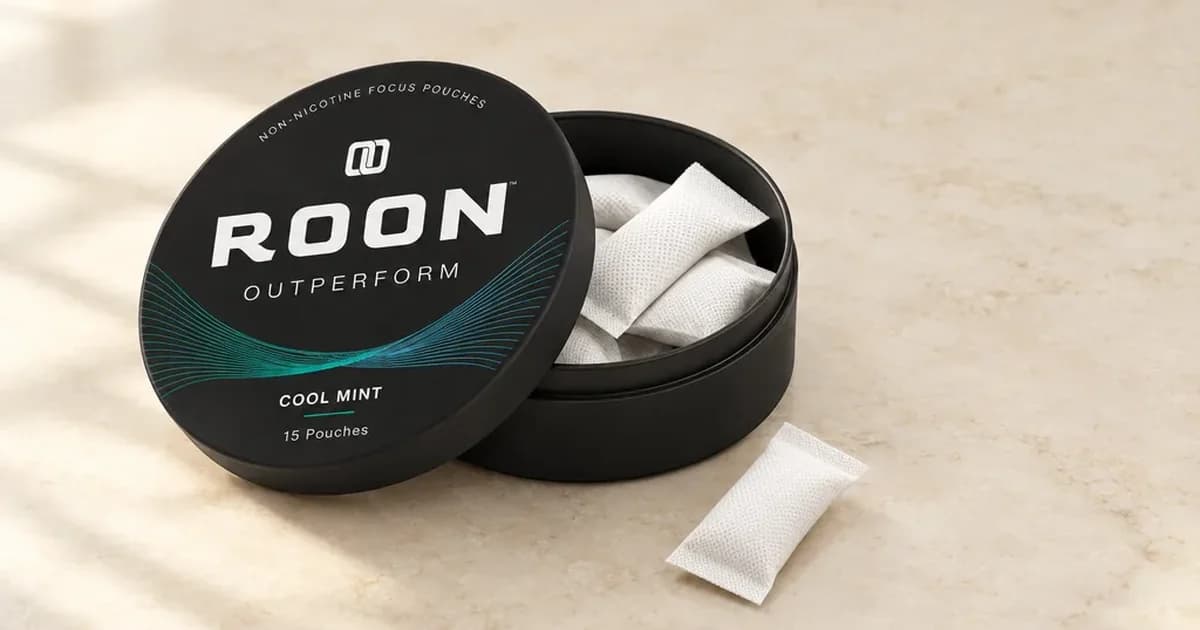
Roon is a zero-nicotine oral pouch built around a lower caffeine dose paired with L-theanine, methylliberine (Dynamine), and theacrine (TeaCrine). It is not a treatment for caffeine anxiety, and if caffeine at any dose causes you problems, a pouch with caffeine in it is not the answer. But if your issue is that coffee delivers more caffeine than you need in a format you cannot titrate, a lower-stim approach with L-theanine built in is worth considering. Tins start from $9.16 each (12-tin subscription).
Written by Roon Team