How to Stay Awake While Hunting: All-Day Deer Stand Plan
Roon Team
How to Stay Awake While Hunting: All-Day Deer Stand Plan
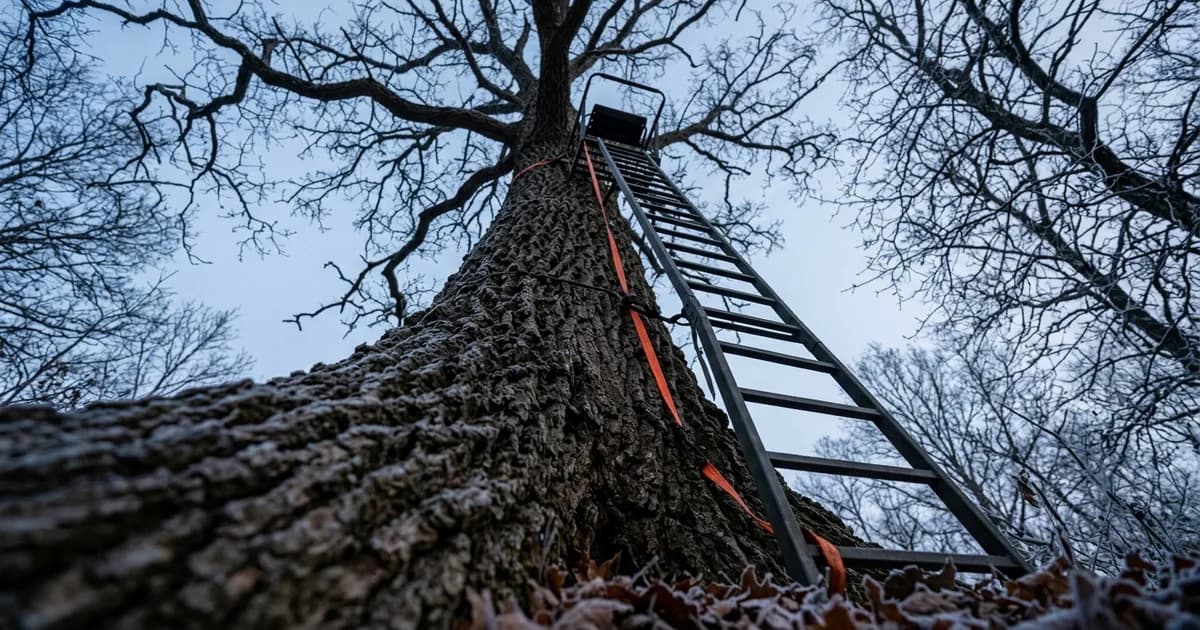
You stay awake in the deer stand by sleeping more the night before, spreading food and caffeine across the day instead of dumping it all at dawn, and moving your eyes and feet every 20 minutes. Before any of that, clip into a full-body harness with a lifeline from the ground up. The first risk of dozing 18 feet in the air is not a missed buck.
Key Takeaways
- Wear and clip into a full-body harness before you climb. If you doze, the harness is the only thing between you and the ground.
- Sleep seven to eight hours the night before. Caffeine fixes alertness for hours; it does not fix a week of four-hour nights.
- Time two caffeine doses: one at 9 a.m. to cover the 10-to-1 danger window, a second at 1 p.m. for the post-lunch dip, both under the FDA's 400 mg daily ceiling.
- If you need a nap, take it in a box blind or ground blind. Never in a hang-on, climber, or ladder stand.
Why the Deer Stand Puts You to Sleep
A 3:30 a.m. alarm drops you into the bottom of your circadian trough. A short week of late-night prep stacks sleep pressure on top. Then the stand strips away every cue that keeps a tired brain awake: dim pre-dawn light, near-total stillness, warm layers trapping body heat, silence.
By 9 or 10 a.m. the woods go quiet, adrenaline has faded, and accumulated sleep debt hits at once. A second dip arrives between roughly 1 and 3 p.m., driven by a normal circadian downturn that happens whether or not you ate lunch. Two slumps, one day, 18 feet up.
The Harness Rule Before Anything Else
Less than half of Wisconsin deer hunters use a safety harness every time they climb. An Ohio State University Medical Center review of 130 hunting-trauma cases over 10 years found 50 percent were falls, 92 percent of those from tree stands, 59 percent of victims fractured, and 8.2 percent had permanent neurological damage.
- Full-body harness, not a belt or chest strap.
- Lifeline from ground to platform so you are clipped in the entire climb.
- Tether short enough that a fall cannot drop you below the platform.
- Suspension-relief strap attached and accessible. Suspension trauma can begin within about 20 minutes of hanging motionless.
If you consistently doze on all-day sits, hunt from a box blind or ground blind.
How Much Sleep an All-Day Sit Needs
Count backward from the alarm. If you are waking at 3:30 a.m., lights out by 8:00 p.m. gets you seven and a half hours. The forums' most repeated answer is the simplest: go to bed early. It is also the most ignored. One short night will not destroy you. A full week of four-hour nights will. The 20-minute nap later in this plan is a backup, never the strategy.
An All-Day Sit Schedule That Keeps You Awake
| Time | Action | Caffeine (approx.) | Notes |
|---|---|---|---|
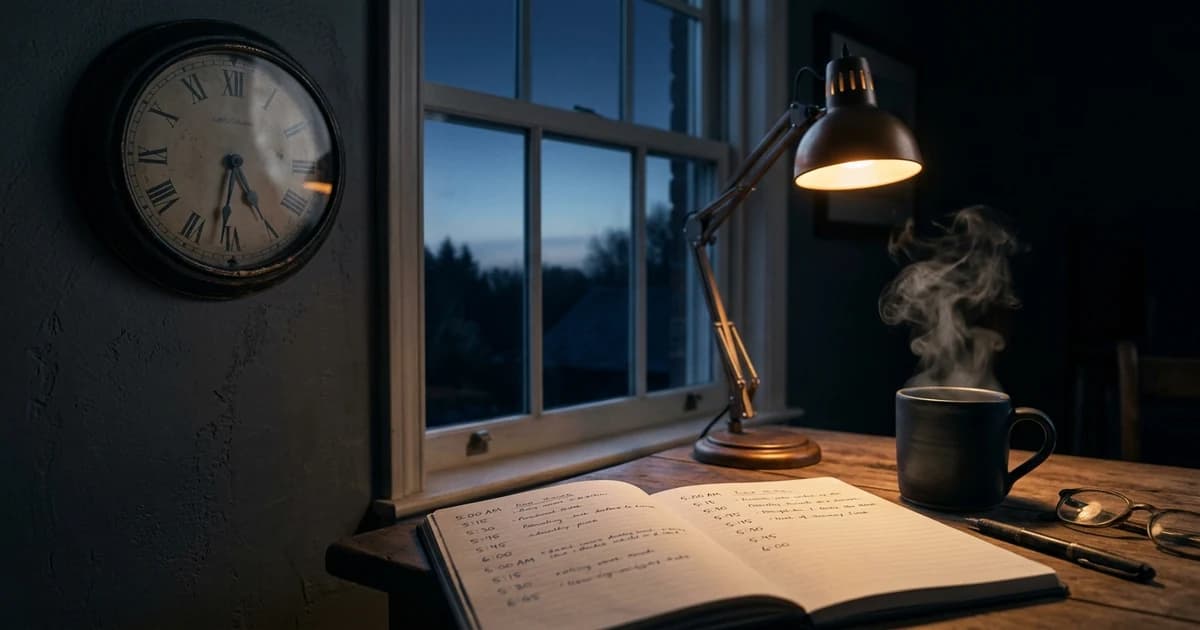
| 4:00 a.m. | Coffee at home, breakfast, water | ~95 mg (one 8 oz cup) | Eat protein. Pack quiet, low-scent snacks. |
| 5:00 – 6:30 a.m. | Climb in, settle, clip harness | 0 | Adrenaline covers this window. |
| 9:00 a.m. | First planned dose + snack | 80 – 200 mg | Peaks 30–60 min later, covering the 10-to-1 lull. |
| 12:00 p.m. | Lunch + water | 0 | Eat slowly. Hydrate. |
| 1:00 p.m. | Second caffeine dose | 80 – 200 mg | Covers the post-lunch dip. |
| 3:00 p.m. | Last snack | 0 | Activity picks up toward last light. |
| Last light | Descend clipped in | 0 | Stay alert for the drive home. |
Caffeine reaches peak blood levels 30 to 60 minutes after a dose and has a half-life of roughly five hours. A 5 a.m. cup is more than half gone by 10 a.m., right when the lull hits. The 9 a.m. dose exists to fill that gap. Keep total intake under 400 mg.
Coffee, Energy Drinks, Pills, or Pouches on Stand
| Source | Caffeine | Drawbacks on stand |
|---|---|---|
| Thermos of coffee (Stanley 1.1 qt, ~35 oz, 1.85 lb) | ~95 mg per cup | Lid noise, arm movement, scent risk, added weight |
| Energy drink (canned) | 80 – 300 mg | Can tab click, sugar crash, cold liquid in cold weather |
| NoDoz caplet | 200 mg per caplet | One large dose, hard to split |
| Caffeine gum | 50 – 100 mg per piece | Jaw movement, wrapper noise |
| Caffeine pouch (e.g., Roon, 80 mg) | 80 mg per pouch | No liquid, no spit, no scent; one hand to place |
The diuresis question: a 2014 crossover study (n=50) found no 24-hour urine difference between moderate coffee and water, while a 2015 meta-analysis found about 109 mL more overall at a median 300 mg dose, with the effect attenuated during exercise. Mild effect. Keep water steady and plan accordingly.
The 20-Minute Caffeine Nap in a Box Blind
A 1997 study by Reyner and Horne (n=12 sleepy drivers) found that 200 mg of caffeine followed by a 15-minute nap cut driving incidents to 9 percent of placebo versus 34 percent for caffeine alone. The caffeine takes about 20 minutes to hit, so you wake as it arrives. Full details on the caffeine-nap protocol here.
This only works in a box blind or ground blind. Set your phone alarm on vibrate at 20 minutes. If you are in a hang-on, climber, or ladder stand, do not attempt this. Climb down first.
How to Stay Alert Without Moving
- Eye scanning: Rotate your gaze across shooting lanes every 15 to 20 seconds. American Hunter recommends scanning at intervals instead of staring at one spot.
- Toe and calf squeezes: Flex inside your boots every few minutes. No visible motion.
- One slow stand-and-sit per hour while clipped in.
- Cold air on the face: Drop your neck gaiter below your chin at the first head nod.
For more fast wake-up tactics that work in tight spaces, we wrote a separate guide.
What Hunters Who Sit All Day Actually Do
The honest consensus from years of forum threads: most hunters fight sleep, and some lose. One poster described falling asleep roughly 95 percent of the time. Another recommended climbing down the moment you catch yourself nodding. Several swore by early bedtimes. One hunted exclusively from a ground blind to remove the fall risk.
On the Texas Hunting Forum, a hunter described building a dry, warm box blind and then being unable to sit an hour without sleeping 30 minutes. Comfort is the goal for an all-day sit, but comfort also lowers your arousal threshold. The "just sleep and let the deer wake you" school works until it does not, and only in a blind.
Staying Awake on a Deer Stand Comes Down to Planning
Falling asleep in the deer stand is not a willpower problem. It is a physiology problem: short sleep, a 3:30 alarm, two circadian dips, and a body held still in warm layers for 12-plus hours. The fix is structural. Sleep more the night before. Dose caffeine on a schedule that covers the 10 a.m. and 1 p.m. windows. Move your eyes and feet on a rhythm. And if none of that works, hunt from a blind where a nap is just a nap and not a trip to the ER. The harness comes first, the schedule comes second.
Frequently Asked Questions
How do you stay awake in a deer stand all day?
Sleep seven to eight hours the night before. Eat small snacks every two to three hours. Time caffeine to cover the 10 a.m. lull and the 1 p.m. post-lunch dip instead of drinking it all at dawn. Move your eyes in a scanning pattern and flex your calves every few minutes. Stay clipped into a full-body harness so that if you do nod off, the worst outcome is a missed deer, not a fall.
Is it safe to fall asleep in a tree stand?
No. Even with a full-body harness and short tether, falling asleep in a hang-on, climber, or ladder stand carries risk. Suspension trauma can begin within about 20 minutes of hanging motionless. If you consistently doze on all-day sits, switch to a box blind or ground blind.
How much caffeine should I have for an all-day sit?
The FDA considers up to 400 mg per day generally safe for healthy adults. A typical plan: one cup of coffee at home (~95 mg), an 80 mg dose at 9 a.m., and an 80 mg dose at 1 p.m. totals roughly 255 mg, well under the ceiling and timed to both danger windows.
Does coffee make you pee in the deer stand?
At moderate doses, probably not much. A 2014 crossover trial found no 24-hour urine difference between coffee and water. A 2015 meta-analysis found roughly 109 mL more overall at a median 300 mg dose. Staying hydrated matters more than dodging caffeine.
Can I take a nap in a deer blind?
Yes, in a box blind or ground blind with no fall risk. Use the caffeine-nap protocol: take your dose, set a vibrating alarm for 20 minutes, close your eyes. You wake as the caffeine peaks. Never attempt this in an elevated stand.
What time of day do hunters fall asleep on stand?
The peak danger window is 10 a.m. to 1 p.m. Initial adrenaline has faded, the woods are quiet, and the 4 a.m. coffee is wearing off. A second dip hits between 1 and 3 p.m. from the normal circadian rhythm. The timed caffeine schedule in this article is designed to cover both.
The 9 a.m. Dose That Is Still Working at 2: Caffeine Built for the Lull
The schedule above calls for a caffeine dose at 9 a.m. and another at 1 p.m. Plain caffeine's problem is the gap: at a roughly five-hour half-life, a single morning dose is fading by the time the lull peaks. You either re-dose (noise, movement, another bathroom variable) or white-knuckle through the window where rut bucks are moving.
Roon is built around extending that curve. Each pouch pairs 80 mg of caffeine with 60 mg of L-theanine, 25 mg of methylliberine (Dynamine), and 5 mg of theacrine (TeaCrine). Methylliberine slows caffeine's clearance: in a randomized, double-blind crossover PK study (n=12), co-administration cut caffeine's oral clearance from 41.9 to 17.1 L/hr and extended its half-life from 7.2 to 15 hours, with no increase in peak concentration. That study used 100 mg methylliberine with 150 mg caffeine, roughly 4x the methylliberine and 1.9x the caffeine in a Roon pouch, so the mechanism is directional, not a direct measurement of Roon's formula. The felt window is 6 to 8 hours. L-theanine alongside caffeine is studied for improved attention-switching accuracy in a 2025 meta-analysis of 50 RCTs.
On stand: 80 mg per pouch means two pouches plus a morning cup land you at 255 mg, well under 400. No liquid, so the diuresis question drops away. No thermos lid, no can tab, no spit bottle. One hand, two seconds. None of this replaces the harness or the sleep. A longer caffeine tail also means you should stop at least 8 hours before bed, so plan tomorrow night's sleep, too. Tins start at $9.16 on subscription ($0.61 per pouch) or $15.00 one-time for four tins ($1.00 per pouch), with a 30-day money-back guarantee on a first order.
Related from Roon
- Can Deer Smell Coffee? What Hunters Should Know About Scent
- Best Deer Stand Snacks: Quiet, No Scent, Steady Energy
- How to Take a Caffeine Nap
- How Long Does Caffeine Stay in Your System?
Written by Roon Team