When Is Your Brain Sharpest? Circadian Rhythm, Chronotypes, and the Post-Lunch Dip
Roon Team
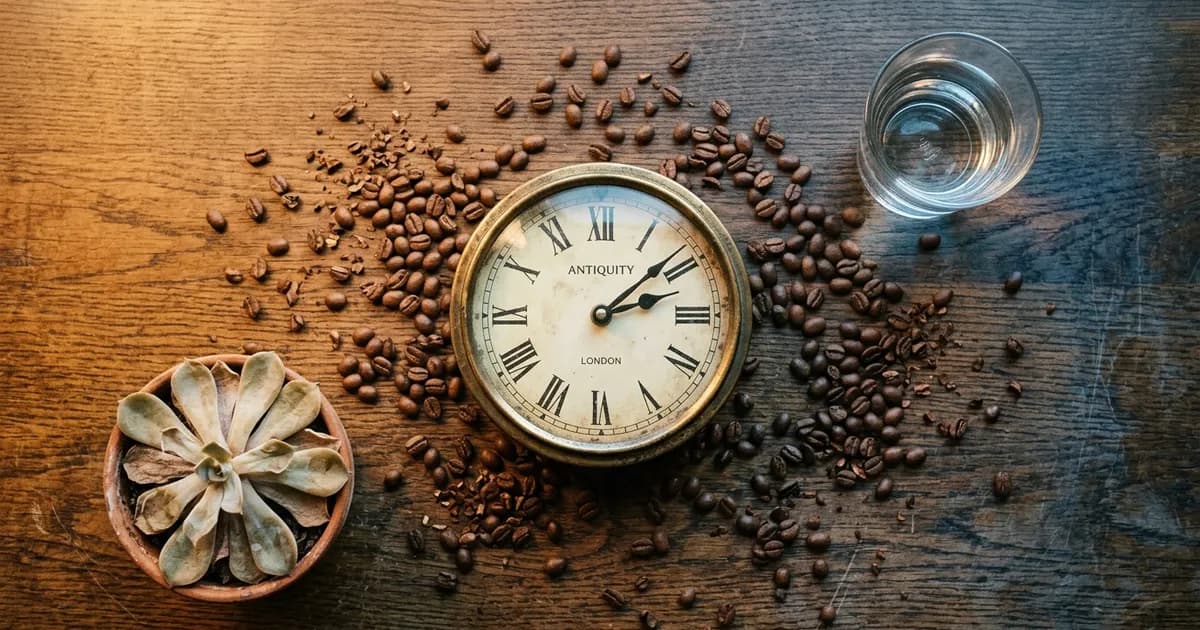
When Is Your Brain Sharpest? Circadian Rhythm, Chronotypes, and the Post-Lunch Dip
Your brain does not run at one steady speed all day. It rises, peaks, dips, and recovers on a schedule set deep in your biology, which is why the best time of day for productivity is a real, measurable window rather than a matter of willpower or coffee.
For most people, raw cognitive horsepower climbs through the morning, holds through late morning, then drops in the early afternoon before a smaller second wind in the early evening. The shape of that curve shifts depending on whether you are a lark or an owl.
Once you can read your own curve, you stop fighting your biology and start scheduling around it. That single change does more for output than any productivity app.
Key Takeaways
- Alertness and many cognitive tasks track your circadian rhythm, with a strong morning rise for most people.
- The post-lunch dip is biological, not just a food coma. It shows up even when you skip lunch.
- Your chronotype (lark, owl, or in between) shifts your personal peak earlier or later by hours.
- You perform best on demanding tasks at your "optimal" time of day, a finding called the synchrony effect.
- Timing a focus aid to your natural afternoon trough beats spreading stimulants evenly across the day.
What Circadian Rhythm Cognition Actually Means
Your circadian rhythm is the roughly 24-hour internal clock that governs sleep, hormone release, body temperature, and alertness. It is anchored in a small region of the brain called the suprachiasmatic nucleus, and it sets the rhythm of when you feel sharp and when you feel foggy.
Core body temperature is one of the clearest markers of this clock. As it rises through the day, alertness and performance on many tasks tend to rise with it. As it falls in the late evening and overnight, performance falls too.
This matters because circadian rhythm cognition is not abstract. Reaction time, working memory, sustained attention, and self-control all rise and fall on a daily curve, and the size of that swing is large enough to change how a hard task feels.
When Is the Brain Most Alert?
For most adults, the brain is most alert in the late morning, roughly two to four hours after waking, and again in the early evening after the post-lunch dip lifts. That late-morning window is when alertness, working memory, and focused attention tend to line up.
This is why hard analytical work, writing, and problem solving usually go best before lunch. Your clock has pushed alertness up, adenosine (the molecule that makes you sleepy) has not yet built up much, and you have a clean runway.
The catch is that "late morning" is not the same clock time for everyone. A 9 a.m. peak for one person is an 11 a.m. or 1 p.m. peak for another. That difference is your chronotype.
Chronotype Peak Performance: Lark, Owl, or Somewhere Between
Your chronotype is your biological preference for earlier or later timing, and it shifts your peak by several hours. Morning types ("larks") hit their stride early. Evening types ("owls") warm up slowly and peak in the afternoon or evening. Most people sit somewhere in the middle.
The strongest research finding here is the synchrony effect: you perform best on demanding cognitive tasks at the time of day that matches your chronotype. The synchrony effect involves better performance for optimal (i.e., morning time for morning-type individuals and evening time for evening-type individuals) as compared to non-optimal times of day.
This shows up most clearly on tasks that need self-control and the ability to ignore distractions. Inhibitory control is greatest at optimal times for both age groups and is generally greater for younger than for older adults.
A 2025 systematic review in Chronobiology International put numbers on it. About 63.63% (7 of 11) of the memory-recognition studies reported a marked synchrony effect, with both young evening and old morning types performing better at their optimal time of day on tasks involving memory and recognition.
The practical takeaway is simple. If you are an owl forcing your hardest thinking into 8 a.m. meetings, you are working against your own clock. Chronotype peak performance means scheduling your deep work for your window, not the office default.
How to Find Your Chronotype
You do not need a lab. Ask yourself when you would naturally wake and sleep on a free week with no alarm. Larks drift early, owls drift late. Then track your own focus for a week and note when hard tasks feel easiest. Your subjective sense usually matches your curve.
The Post-Lunch Dip Is Real (and It Is Not Just Lunch)
The post-lunch dip is a genuine drop in alertness and performance in the early afternoon, and the most important fact about it is that food is not the main cause. Monk showed in 2005 that the so-called post-lunch dip occurs regardless of food intake. Whether you eat lunch or skip it: the dip comes anyway.
It is built into your clock. The post-lunch dip appears to be an endogenous phenomenon, individually determined, but related to the strength of the 12-hour harmonic of the circadian system.
That said, not everyone gets hit equally. For some performance variables, and some individuals, there is a dip in performance during the midafternoon hours that is linked to an increase in sleep propensity at that time of day.
A heavy, carb-loaded lunch can deepen the dip, but it does not create it. The trough is roughly a daily afternoon event between about 1 and 4 p.m. for many people, and it overlaps with a real rise in sleepiness.
What Helps the Dip
Bright light is one lever with research behind it. A multi-measure study published on PMC tested light exposure during the early-afternoon slump and looked at both alertness and mental performance. A short walk outside or a window seat is a cheap version of the same idea.
A brief nap also works for the sleepiness side of the dip. So does saving low-stakes, mechanical tasks (email, admin, scheduling) for that window instead of fighting through deep analytical work.
Time of Day Effects on Focus: A Practical Schedule
Here is how the time of day effects on focus map onto a typical day for a middle-of-the-road chronotype. Shift everything earlier if you are a lark, later if you are an owl.
| Time Window | Typical State | Best Use |
|---|---|---|
| First 1-2 hrs after waking | Groggy, ramping up | Light routine, planning, coffee |
| Late morning (peak) | Highest alertness and focus | Deep work, hard analysis, writing |
| Early afternoon (1-4 pm) | Post-lunch dip | Admin, meetings, light tasks, a walk |
| Late afternoon to early evening | Second wind | Creative work, problem solving |
| Late evening | Winding down | Reading, low-stakes tasks, no caffeine |
The headline rule: protect your peak for your hardest task, and stop expecting peak-level output during your trough.
Where a Focus Aid Fits: Timing Beats Spreading
Most people use caffeine on autopilot, sipping coffee steadily from morning to mid-afternoon. The science of the daily curve suggests a smarter pattern: match your intake to your trough rather than smearing it evenly.
Timing matters for caffeine specifically. A narrative review on PMC found that the time of day you take caffeine changes its effects, which means a single well-placed dose before your dip can do more than constant grazing.
The other reason to time it: caffeine taken too late disrupts sleep, and poor sleep flattens tomorrow's whole curve. A clinical crossover trial in the journal SLEEP found that both dose and timing of caffeine disrupted the initiation and maintenance of sleep. One dose aimed at the early-afternoon dip respects that constraint better than an all-day drip.
Conclusion
Your brain has a schedule, and it is not subtle. Alertness rises through the morning, peaks in your personal late-morning window, drops during the early-afternoon post-lunch dip, and recovers for a second wind in the early evening.
The two variables that bend this curve are your chronotype and your sleep. Larks peak early, owls peak late, and almost everyone faces a real afternoon trough that food did not cause and coffee alone rarely fixes cleanly.
Stop scheduling against your biology. Protect your peak for the work that matters, hand the trough your easy tasks, and time any focus aid to the dip instead of spreading it thin. That is the whole game.
Frequently Asked Questions
What is the best time of day for productivity?
For most people, the late-morning window, roughly two to four hours after waking, is the best time of day for productivity on demanding cognitive tasks. Alertness is high, sleep pressure is still low, and focus tends to peak. The exact clock time shifts with your chronotype, so larks should aim earlier and owls later. Track your own focus for a week to pin down your personal window.
Is the post-lunch dip caused by eating lunch?
No. The post-lunch dip is mostly biological, driven by your circadian rhythm rather than your meal. Research shows the dip appears even when people skip lunch entirely. A heavy, high-carb meal can deepen the slump, but it does not create it. The trough is roughly a daily early-afternoon event, often between 1 and 4 p.m., when sleepiness naturally rises.
What is a chronotype and why does it matter?
Your chronotype is your biological preference for earlier or later timing, commonly described as lark (morning type), owl (evening type), or intermediate. It shifts your cognitive peak by several hours. Research on the synchrony effect shows people perform best on hard tasks at the time that matches their chronotype, so scheduling deep work for your natural window meaningfully improves output.
When is the brain most alert during the day?
For most adults the brain is most alert in the late morning and again in the early evening after the afternoon dip lifts. Core body temperature, a marker of your internal clock, rises through the day and tracks alertness closely. Reaction time, working memory, and attention all follow this curve. Your chronotype shifts these peaks earlier or later by a few hours.
Should I drink coffee at the same times every day?
Spreading caffeine evenly is usually less effective than timing it to your natural trough. Research shows the time of day you take caffeine changes its effects, so one well-placed dose before your early-afternoon dip can outperform constant sipping. Avoid caffeine late in the day, since both dose and timing can disrupt sleep, which flattens your whole performance curve the next day.
Can I change my chronotype?
You can nudge it, not flip it. Consistent wake times, morning light exposure, and limiting evening light can shift an owl somewhat earlier over time. But your underlying tendency is largely genetic. A more reliable strategy is to accept your chronotype and schedule your hardest work for your peak window rather than forcing your biology onto a clock that does not fit it.
Does the afternoon dip mean I need a nap?
A short nap helps the sleepiness side of the dip, but it is not the only option. Bright light, a brisk walk outside, and saving low-stakes tasks for that window all work. If you cannot nap, treat the early afternoon as your admin and meeting block, then return to deep work during your early-evening second wind when alertness recovers.
Time Your Focus to the Trough, Not the Clock
The argument of this article is simple: your output is shaped less by how hard you push and more by when you push. The afternoon dip is the one predictable hole in nearly everyone's day, and it is exactly where a steady all-day coffee habit fails you.
That is the gap Roon is built for. It is a zero-nicotine sublingual pouch with a four-ingredient stack: 80 mg caffeine, 60 mg L-theanine, 25 mg methylliberine (Dynamine), and 5 mg theacrine (TeaCrine). It is designed to come on in 5 to 10 minutes and hold for 6 to 8 hours with no jitters, no crash, and no tolerance buildup, which makes it easy to place a single dose right before your trough instead of grazing on caffeine from breakfast onward.
Roon is not a replacement for sleep, daylight, or a schedule that respects your chronotype. Those come first. But if you want one clean, well-timed lever for the afternoon dip rather than four mediocre coffees, try Roon aimed at your trough and see how the rest of your day holds.
Written by Roon Team