Coffee Breath: Why It Happens and How to Get Rid of It Fast
Roon Team

Coffee Breath: Why It Happens and How to Get Rid of It Fast
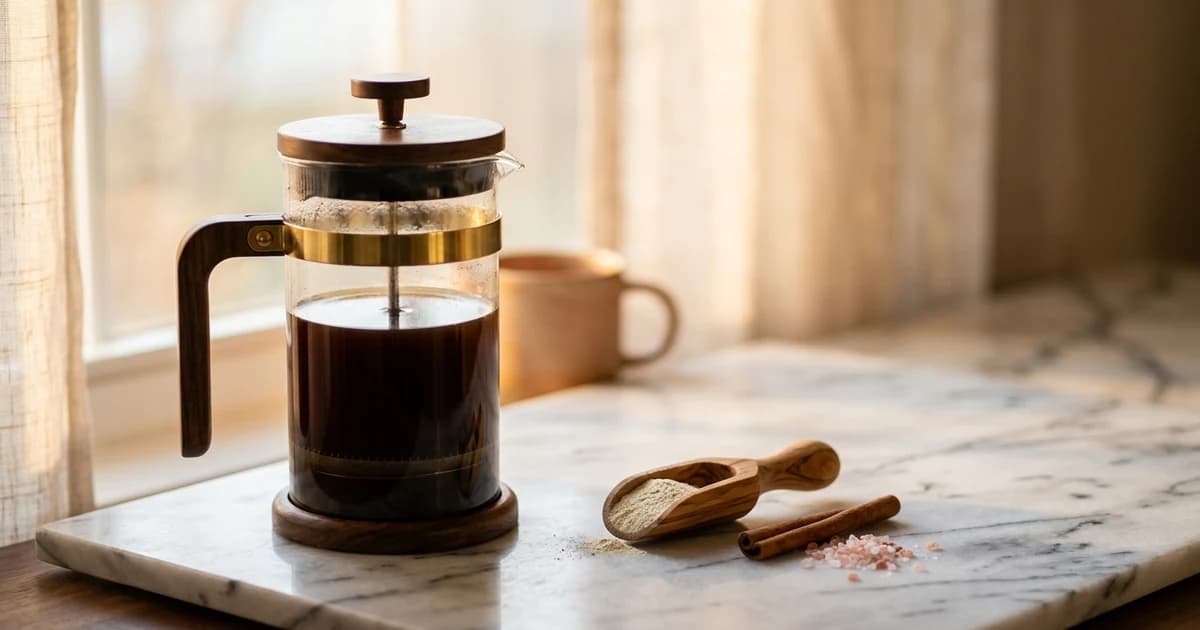
Coffee breath is three things happening at once. Sulfur-containing aroma compounds form when beans roast. Tannins bind to slippery proteins in your saliva and leave your mouth dry. Then bacteria on your tongue, thriving in that dry environment, release volatile sulfur compounds (VSCs) that smell like rotten eggs and old garbage. The fastest fixes, ranked: water rinse, tongue clean, sugar-free gum, then brushing when you can get to a sink.
Key Takeaways
- Coffee breath comes from roasted sulfur compounds, tannin-induced dry mouth, and the bacteria that feed on both.
- Coffee dries your mouth locally but does not dehydrate your body. The fix is oral, not a glass of water for hydration.
- Milk and sugar make it worse. Lab research found black coffee extracts actually suppressed malodor bacteria in saliva samples.
- You can meaningfully reduce coffee breath in under three minutes with a water rinse and a tongue scrape.
Why Does Coffee Cause Bad Breath? Three Overlapping Mechanisms
Coffee breath is not one problem. It is three, layered on top of each other.
1. Roasted sulfur compounds
When green coffee beans hit temperatures above 200°C, sulfur-containing aroma compounds form: thiols and sulfides that give coffee its smell but also cling to your mouth's soft tissue. A 2026 review in PMC noted that coffee's thiols and sulfides "can also further enhance odor" beyond what bacterial metabolism alone produces.
2. Tannins that strip your saliva
Coffee contains tannins and pseudo-tannins (chlorogenic acid derivatives) that bind salivary proteins and precipitate them, producing the sandy, astringent mouthfeel of a strong black cup. Once those proteins are bound, saliva loses its lubrication and rinsing ability. Healthline puts it plainly: tannins "bind to your proteins in saliva, inhibiting its production." The same 2026 PMC review describes how chlorogenic acids and volatile phenols "stimulate astringency and decrease salivary secretion."
3. Tongue bacteria producing VSCs
Your tongue's dorsum hosts a dense biofilm of anaerobic bacteria. In a dry, low-oxygen mouth, they break down cysteine and methionine into hydrogen sulfide, methyl mercaptan, and dimethyl sulfide, the primary molecules behind intraoral halitosis (PMC). Coffee provides the perfect setup: residue to feed on, and a dry mouth to thrive in.
| Cause | What happens | Key compounds |
|---|---|---|
| Roasted sulfur compounds | Form during bean roasting above 200°C | Thiols, sulfides, furfuryl mercaptan |
| Tannin-induced dry mouth | Tannins bind salivary proteins, reduce rinsing | Chlorogenic acid derivatives |
| Tongue biofilm bacteria | Anaerobes metabolize cysteine, methionine | Hydrogen sulfide (H₂S), methyl mercaptan, dimethyl sulfide |
The Dry-Mouth Link (It Is Not Dehydration)
People assume coffee dehydrates you and that is why your mouth dries out. It does not. A 2014 crossover study (Killer et al., n=50) found no differences in hydration markers between coffee and water at moderate doses. The myth that coffee dehydrates you is well debunked.
The dryness is local. Tannins act inside your mouth, binding the glycoproteins that keep everything slick. Brewed coffee sits at a pH of roughly 4.85 to 5.10 (Rao and Fuller, 2018), acidic enough to favor the anaerobes that produce VSCs. Your body is fine. Your mouth is the issue.
Is It the Coffee or the Milk?
In 2009, Prof. Mel Rosenberg's lab at Tel Aviv University tested coffee extracts from three brands against bacteria-laden saliva samples. The extracts suppressed malodor gases in lab samples. The findings were presented to the International Society for Breath Odor Research (ScienceDaily, CNN).
Rosenberg told CNN that coffee "can ferment into bad breath when mixed with substances such as milk." Black coffee's own compounds fought the bacteria in the lab, but lactose and milk proteins gave those bacteria fresh fuel.
Two caveats. This was bench-top lab work, not a clinical trial in living mouths. And a dry oral environment still promotes bacterial growth regardless. But if you are choosing between black and a latte before a meeting, the lab data points toward black.
How to Get Rid of Coffee Breath, Ranked by Minutes
Every fix below addresses a different cause. The fastest ones go first.
| Fix | Time to work | What it targets |
|---|---|---|
| Water rinse (swish and swallow) | Immediate | Washes residue, rehydrates oral tissue |
| Tongue scraper or tongue brushing | 1 to 2 min | Removes biofilm producing VSCs |
| Sugar-free gum (zinc or magnolia bark) | 2 to 5 min | Stimulates saliva; some formulas reduce VSCs directly |
| Brushing with zinc-containing toothpaste | 3 to 5 min | Removes residue mechanically; zinc addresses VSCs |
| Alcohol-free mouthwash | 30 to 60 sec (need a bottle) | Reduces bacterial load without drying |
| Raw parsley | A few min of chewing | Chlorophyll supposedly neutralizes odor (evidence is thin) |
On the evidence: the ADA confirms sugarless gum stimulates saliva by activating mechanical and taste receptors. A 2017 systematic review (Muniz et al., 10 trials) found gums with zinc acetate plus magnolia bark reduced VSCs vs. placebo, while sucrose gum only helped for about five minutes. The Cochrane tongue-scraping review was withdrawn in 2016 pending update, but scraping remains standard dental advice.
If Your Call Is in 10 Minutes
Here is the exact sequence. Each step takes about 60 seconds.
- Water rinse. Large sip, swish 15 to 20 seconds, swallow or spit. Repeat once. Clears residue and rehydrates tissue.
- Tongue scrape. Back to front, three or four passes. No scraper? Use the back of a spoon or a dry toothbrush.
- Sugar-free gum. Chew for two to three minutes, then remove before the call. The goal is saliva stimulation, not flavor.
- Nose-breathe while listening. Close your mouth between sentences. This keeps residual VSCs contained and gives saliva time to work.
You will not eliminate coffee breath entirely in 10 minutes. You will reduce it enough that nobody across a conference table will notice.
How to Prevent Coffee Breath Before It Starts
Prevention beats damage control.
Drink it black. Milk and sugar give oral bacteria extra substrates to ferment. Black coffee is still astringent, but at least it does not add fuel. If you need milk, rinse with water immediately after.
Do not nurse one cup all morning. Every sip recoats your tongue and restarts the tannin-saliva cycle. Finish in a reasonable window, then switch to water.
Drink water alongside your coffee. Alternating sips keeps saliva flowing and dilutes residue between swallows.
Consider caffeine that skips the cup entirely. If coffee breath is a recurring issue during meeting-heavy mornings, a caffeine pouch removes the liquid, the tannins, and the roasted sulfur compounds from the equation.
When Bad Breath Is Not the Coffee
If your breath smells even on days you skip coffee, the cause is probably not your drink. Persistent halitosis can stem from tongue coating buildup, gum disease, dry-mouth medications, or systemic conditions. That is a dentist conversation, not a Google search.
The Causes Are Layered, but the Fixes Are Fast
Coffee breath is a three-part problem: roasted sulfur aroma compounds, tannin-stripped saliva, and the anaerobic bacteria that exploit both. None of it is dangerous. All of it is temporary. The fastest path through is mechanical: rinse, scrape, stimulate saliva, stop re-coating your mouth. Black beats milk, water alongside beats water after, and a ten-minute protocol before a meeting handles the rest.
Frequently Asked Questions
Why does coffee give you bad breath?
Three causes working together. Roasting creates sulfur aroma compounds that cling to your mouth. Tannins bind salivary proteins and dry the mouth out. In that dry environment, tongue bacteria break down amino acids into volatile sulfur compounds like hydrogen sulfide and methyl mercaptan.
How do you get rid of coffee breath fast?
Rinse your mouth with water (immediate), scrape or brush your tongue (one to two minutes), then chew sugar-free gum for two to three minutes to stimulate saliva. This three-step sequence addresses residue, biofilm, and dryness. It will not make your breath perfect, but it will make it unremarkable.
Does adding milk make coffee breath worse?
Lab data suggests yes. A 2009 Tel Aviv University study found coffee extracts suppressed malodor bacteria in saliva samples, but the lead researcher noted that coffee mixed with milk can ferment into odor-causing substances. Milk gives oral bacteria extra fuel.
Does chewing gum get rid of coffee breath?
Sugar-free gum helps. The ADA notes that sugarless gum stimulates saliva flow. A 2017 systematic review found gums containing zinc acetate with magnolia bark extract reduced VSCs compared to placebo. Sugared gum only helped for about five minutes before bacterial fermentation negated the effect. Go sugar-free.
Does black coffee cause bad breath?
Yes, but less than coffee with milk and sugar. Black coffee still has tannins and roasted sulfur compounds. The difference is you are not adding lactose and milk proteins for bacteria to ferment.
How long does coffee breath last?
It depends on saliva production, whether you ate beforehand, and whether you actively address it. Left alone, coffee breath persists until saliva flow recovers and the tongue surface clears. The fixes above can compress that from hours to minutes.
The Caffeine That Never Touches the Cup
Every fix on this page is damage control. Water rinse, tongue scrape, gum, mouthwash: all happen after the cup. If your morning is two or three coffees before noon, you are running that cycle on repeat.
Roon is 80 mg caffeine, 60 mg L-theanine, 25 mg methylliberine (Dynamine), and 5 mg theacrine (TeaCrine) in a Cool Mint oral pouch. Zero nicotine, zero sugar. No liquid, no tannins across your tongue, no roasted sulfur residue, nothing to nurse.
One pouch lasts because methylliberine slows caffeine's clearance. In a double-blind, placebo-controlled PK study (n=12), co-administration of methylliberine with caffeine cut oral clearance from 41.9 to 17.1 L/hr and extended half-life from 7.2 to 15 hours, with no increase in peak concentration. That study used 100 mg methylliberine and 150 mg caffeine, roughly 4x the methylliberine and 1.9x the caffeine in Roon's formula, so exact magnitudes will differ. The mechanism is directionally the same. Roon's felt window is 6 to 8 hours, which means one morning pouch can replace the second and third cups that keep your mouth dry. The trade-off: stop at least 8 hours before bed.
Tins start from $9.16 on a 12-tin subscription ($0.61 per pouch), or $15.00 per tin one-time ($1.00 per pouch). First order includes a 30-day money-back guarantee, once per customer. If your mornings are back-to-back calls and you are tired of the rinse-scrape-gum routine, try a tin and see if skipping the cup solves the problem the fixes never quite do.
Related from Roon
- Energy Drink vs. Coffee: What Else a Cup Brings With It
- Caffeine Myths Debunked
- How to Focus for Hours Without Coffee or Energy Drinks
- The Best Study Drink Isn't a Drink
Written by Roon Team