Does Peppermint Tea Have Caffeine? The Blends That Do
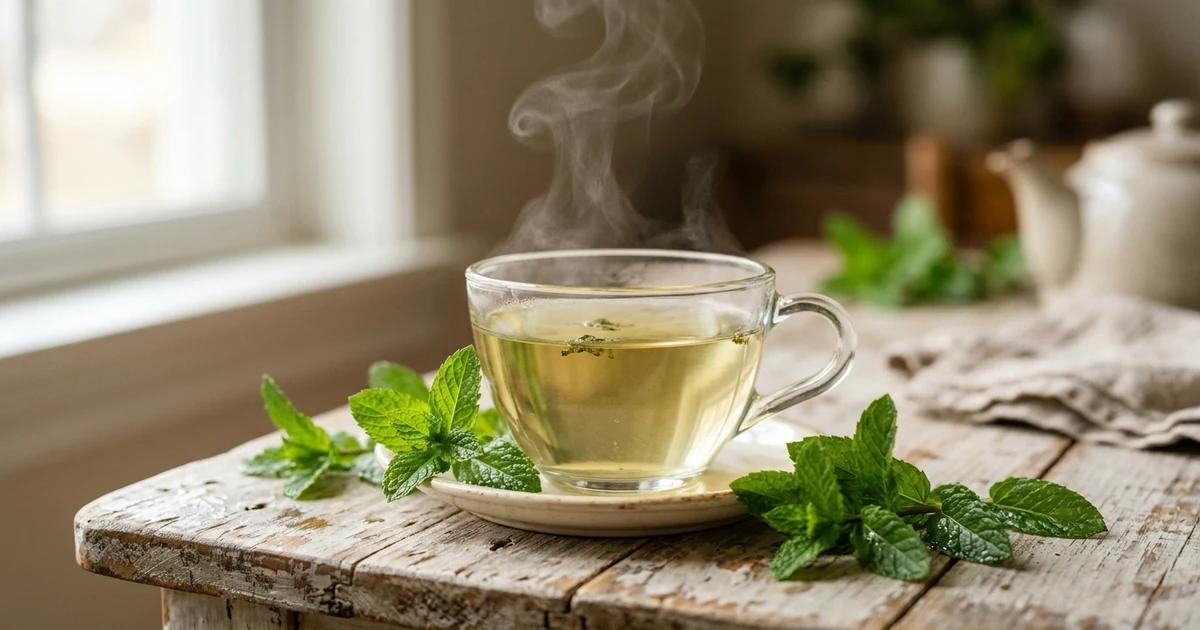
No. Plain peppermint tea is an herbal infusion of peppermint leaves, and USDA FoodData Central lists 0 mg of caffeine for brewed herbal tea. The catch is mint blends: Bigelow's Perfectly Mint is black tea with spearmint at about 30 to 60 mg per 8 fl oz, and green-tea mint blends from Stash, Bigelow, and Traditional Medicinals all contain caffeine (brand pages checked Oct 31, 2026). The ingredient list tells the whole story.
Peppermint and Mint Teas: Which Have Caffeine
| Tea (brand page) | Ingredients (brand) | Caffeine |
|---|---|---|
| Bigelow Peppermint Herbal Tea | Peppermint leaves | Caffeine free (Bigelow) |
| Celestial Seasonings Peppermint | Peppermint | 0 mg on Celestial's Caffeine Meter |
| Stash Peppermint | Peppermint leaves | Naturally caffeine free (Stash) |
| Traditional Medicinals Organic Peppermint | Organic peppermint leaf | Caffeine free (Traditional Medicinals) |
| Bigelow Perfectly Mint Black Tea | Black tea, spearmint | About 30 to 60 mg per 8 fl oz (Bigelow) |
| Bigelow Green Tea with Mint | Green tea, mint leaves | Contains caffeine; mg not printed on the page (Bigelow's guide: green teas 25 to 50 mg per 8 oz) |
| Stash Moroccan Mint | Green tea, spearmint, lemongrass, peppermint | Caffeinated; mg not published |
| Traditional Medicinals Green Tea Peppermint | Organic peppermint leaf, organic green tea leaf | "Mildly caffeinated"; mg not published |
| USDA: herbal tea, brewed | n/a | 0 mg |
Source: brand product pages and USDA FoodData Central, checked Oct 31, 2026.
How to Tell from the Box
Read the ingredient line. If it lists only peppermint leaves, the tea is caffeine free. If "black tea," "green tea," "tea," or "matcha" appears anywhere in the ingredients, the product contains caffeine.
Moroccan mint is the classic trap. Stash's Moroccan Mint lists "green tea, spearmint, lemongrass, peppermint." Green tea is the first ingredient, so it is caffeinated despite the mint in the name. If your tea routine ties into fasting, the same label check applies there.
Decaf is not zero. The FDA notes that decaffeinated teas "still contain some caffeine." Bigelow's guide puts decaf teas at 1 to 8 mg per 8 oz cup. For truly zero caffeine, pick an herbal peppermint over a decaf blend.
Peppermint Tea vs Black and Green Tea, by the Numbers
USDA FoodData Central reference brews. Brand ranges differ with steep time and leaf grade.
| Tea type | USDA caffeine (mg per 100 g) | Cup size (g) | Caffeine per cup (mg) | USDA source |
|---|---|---|---|---|
| Herbal tea, brewed (non-chamomile) | 0 | 237 (8 fl oz) | 0 | FDC 173232 |
| Black tea, brewed | 20 | 237 (8 fl oz) | ~47 | FDC 173227 |
| Green tea, brewed | 12 | 245 (8 fl oz) | ~29 | FDC 171917 |
| Decaf black tea, brewed | 1 | 237 (8 fl oz) | ~2 | FDC 174871 |
Formula: mg per 100 g × cup grams ÷ 100. Bigelow's own ranges are wider: black teas 30 to 60 mg, green teas 25 to 50 mg per 8 oz serving.
Can You Drink Peppermint Tea Before Bed?
Caffeine is not a reason to skip it: plain peppermint tea has none. Traditional Medicinals markets its peppermint as "naturally caffeine-free, you can drift off to dreamland without late night jitters", which is accurate on the caffeine point. If your "mint tea" is actually a caffeinated blend (check those ingredients), save it for earlier in the day.
If you want the opposite, a tea chosen for its lift, see our guide to tea for energy.
Is Peppermint Tea Safe Every Day?
Most safety research covers peppermint oil, not brewed tea. NCCIH states that peppermint oil appears to be safe when taken orally in commonly used doses, with possible side effects including heartburn, nausea, abdominal pain, and dry mouth, and rarely allergic reactions. That page is about the oil, not the tea, and a cup of tea is far more dilute than oil capsules.
If you are pregnant, breastfeeding, or managing a medical condition, talk to your clinician first. For the aroma research on mint and focus, see our separate writeup.
Related from Roon
Frequently Asked Questions
Does spearmint tea have caffeine?
Spearmint is an herb like peppermint, and Traditional Medicinals sells a spearmint tea, but we did not check spearmint labels for this page. Apply the same rule: look for black, green or white tea (or "Camellia sinensis") in the ingredient list, which would mean caffeine. For a closer look at spearmint vs peppermint, we break down those differences separately.
Does peppermint tea count toward the 400 mg caffeine limit?
Plain peppermint tea contributes zero milligrams, so there is nothing to count. The FDA has cited 400 mg a day as an amount not generally associated with negative effects for most adults, and that total includes caffeine from every source. A caffeinated mint blend (Bigelow Perfectly Mint at 30 to 60 mg) does count.
Does Starbucks or restaurant mint tea have caffeine?
It depends entirely on what is in the cup. Some cafés serve a pure peppermint herbal (zero caffeine); others steep fresh mint with green tea (caffeinated). There is no single answer. Ask the barista whether the base is herbal or a true tea before you order if caffeine matters to you.
Is decaf mint green tea caffeine free?
Not completely. The FDA confirms that decaffeinated teas still contain some caffeine. Bigelow estimates 1 to 8 mg per 8 oz cup for decaf teas. That is a small amount, but it is not zero. If you need absolute zero, herbal peppermint is the cleaner choice. For a similar breakdown, see our guide on chamomile tea and caffeine. For more on decaf caffeine levels, see our full guide.
When You Do Want the Caffeine
Peppermint tea is the right pick for the hours when caffeine would only keep you up. For the hours when you actually want sustained alertness, Roon delivers 80 mg of caffeine alongside 60 mg L-theanine, 25 mg methylliberine (Dynamine), and 5 mg theacrine (TeaCrine) in a Cool Mint pouch placed under the lip.
Methylliberine is why. In a randomized, double-blind, crossover PK study (n = 12), co-administering methylliberine with caffeine stretched caffeine's half-life from 7.2 to 15 hours and reduced oral clearance from 41.9 to 17.1 L/hr, without raising the peak (Journal of Exercise and Nutrition). That study used 100 mg methylliberine with 150 mg caffeine, about 4× the methylliberine and 1.9× the caffeine in one Roon pouch, so the mechanism applies directionally, not as a measured Roon result. That is why one pouch tends to carry through a morning and early afternoon, roughly 6 to 8 hours, with no jitters and no crash.
Because that caffeine lingers longer than a cup of tea, keep your last pouch at least 8 hours before bedtime, stay within Roon's 4-pouch daily limit, and count it toward the 400 mg a day from all sources. Peppermint tea covers the evening; Roon covers the morning, from $9.16 per tin or as little as $0.61 per pouch on the 12-tin subscription.
Sources
- USDA FoodData Central: Herbal tea, brewed (FDC 173232)
- USDA FoodData Central: Black tea, brewed (FDC 173227)
- USDA FoodData Central: Green tea, brewed (FDC 171917)
- USDA FoodData Central: Decaf black tea, brewed (FDC 174871)
- FDA: Spilling the Beans: How Much Caffeine is Too Much?
- NCCIH: Peppermint Oil
- Bigelow: How Much Caffeine Is in Tea?
- Bigelow Perfectly Mint Black Tea
- Traditional Medicinals Organic Peppermint
- Methylliberine and caffeine pharmacokinetics, Journal of Exercise and Nutrition
Written by Roon Team