Caffeine for Boxing and MMA: Focus vs. Hype
Roon Team
Focus vs. Hype: What Actually Helps Boxers and MMA Fighters, According to the Research
Caffeine for boxing and MMA does not work the way most supplement ads imply. A 2019 double-blind crossover study in 11 professional MMA athletes found that 5 mg/kg of caffeine produced no significant increase in punch force or punch frequency compared to placebo. That is a specific, well-designed finding, and it deserves a straight answer before the usual marketing spin kicks in.
But the story does not end at punch power. Two meta-analyses of caffeine in combat sports found strong effects on reaction time, offensive action volume, and sustained intensity across rounds. The honest version of the evidence is more useful than either extreme. It just requires reading past the headline.
Key Takeaways
- A controlled study in professional MMA fighters found caffeine did not improve maximal punch force (p=0.974) or punch frequency (p=0.204).
- Meta-analyses of 25+ combat sports studies show caffeine reliably improves reaction time (large effect size) and the number of offensive actions during bouts.
- Caffeine's strongest case for fighters is sustained alertness and speed across rounds or a long training camp, not raw one-rep power output.
- A moderate dose paired with L-theanine can provide the focus benefits while reducing the jittery overstimulation that interferes with fine motor timing.
Did Caffeine Improve Punch Power in Professional MMA Athletes?
No. In the most direct test available, caffeine did not improve punch power in trained professional fighters. De Azevedo et al. (2019) gave 11 male professional MMA athletes (mean age 27.6, mean body weight 83.5 kg) either 5 mg/kg caffeine dissolved in 400 mL of flavored solution or a matched placebo, 60 minutes before testing, in a double-blind, counterbalanced crossover design.
The protocol was straightforward: three sets of 15-second maximal straight-punch bouts on the dominant arm, hitting a padded-plate force transducer, with 45 seconds of recovery between sets.
The results were clear for this specific outcome. No significant difference in mean punch force (p=0.953), maximum punch force (p=0.974), or punch frequency (p=0.204) between caffeine and placebo. Caffeine also produced no difference in perceived readiness to invest physical and mental effort, or in perceived exertion.
For a trained fighter already at their neuromuscular ceiling for maximal punch output, caffeine does not appear to add anything. That matters, because a large share of pre-fight supplement marketing implies the opposite.
Where Caffeine Actually Helps Combat Athletes
Reaction time, offensive volume, and the ability to sustain intensity across successive rounds. That is where the controlled data is strong.
A 2023 systematic review and meta-analysis by Diaz-Lara et al., published in Critical Reviews in Food Science and Nutrition, pooled 25 blinded crossover studies on caffeine in combat sports athletes. The results showed a large effect on reaction time (SMD: −0.98; 95% CI: −1.46 to −0.50), a moderate effect on the number of throws in judo-specific fitness tests (SMD: 0.62; 95% CI: 0.14 to 1.09), and an increase in both the number of offensive actions and the duration of offensive actions during bouts.
A second meta-analysis by Delleli et al. (2022), covering 26 studies, confirmed a small but significant effect on handgrip strength (ES = 0.28, p = 0.02) and total throws during the Special Judo Fitness Test (ES = 0.42, p = 0.02). It also noted that in taekwondo athletes, 5 mg/kg caffeine improved reaction time by 11.9% to 29% before the first bout.
A 2014 study by Santos et al. in 10 taekwondo athletes puts that in concrete terms: caffeine reduced kick reaction time from 0.42 to 0.37 seconds before the first combat (p = 0.004). Fifty milliseconds sounds small until you consider that scoring in striking sports depends on landing before your opponent's block arrives.
Why the Punch Power Finding and the Reaction Time Finding Do Not Contradict Each Other
These results are measuring different things. Punch power in the de Azevedo study tested maximal single-arm force output in isolated 15-second bursts. Trained fighters are already near their neuromuscular ceiling for that movement pattern, and caffeine's primary mechanism, adenosine receptor antagonism in the CNS, does not raise that ceiling.
Reaction time, sustained offensive output, and resistance to fatigue-driven drop-offs across rounds are centrally mediated. They depend on alertness, attentional speed, and the brain's willingness to keep initiating actions as fatigue accumulates. Caffeine blocks adenosine, the molecule your brain uses to signal "slow down." That is where it operates best.
The practical translation: caffeine will not make your cross hit harder. It may help you see the opening 50 milliseconds sooner and keep throwing in round four when you would otherwise fade.
What the Evidence Means for Pre-Fight Caffeine and Training Camp Use
| Outcome | Evidence Strength | Key Finding | Source |
|---|---|---|---|
| Maximal punch force | One controlled study (n=11) | No effect (p=0.974) | de Azevedo et al. 2019 |
| Reaction time (combat sports) | Meta-analysis (25 studies) | Large effect, SMD: −0.98 | Diaz-Lara et al. 2023 |
| Offensive actions in bouts | Meta-analysis (25 studies) | Increased number and duration | Diaz-Lara et al. 2023 |
| Handgrip strength | Meta-analysis (26 studies) | Small effect, ES = 0.28 | Delleli et al. 2022 |
| Taekwondo kick reaction time | Controlled study (n=10) | Improved ~50 ms (p=0.004) | Santos et al. 2014 |
| Judo throw volume (SJFT) | Meta-analysis (26 studies) | Moderate effect, ES = 0.42 | Delleli et al. 2022 |
Two different use cases emerge from this table, and they call for different dosing strategies.
Pre-fight (competition day). The reaction-time and offensive-volume data support a moderate caffeine dose timed 45 to 60 minutes before the first bout. Most positive studies used 3 to 5 mg/kg, which for an 80 kg fighter is 240 to 400 mg. Higher doses increase jitteriness, elevated heart rate, and GI distress, all of which actively hurt fight performance. A dose on the lower end, paired with L-theanine, matches the evidence better than a 400 mg caffeine bomb.
Training camp (daily use). Camp sessions span 2 to 3 hours of mixed drilling, sparring, and conditioning. Sustained alertness across that window matters more than a single peak. The problem with high-dose daily caffeine is tolerance: adenosine receptors upregulate within days of consistent intake, requiring more to get the same effect. A lower daily dose preserves sensitivity for competition day.
The Jitters Problem: Why Dose and Format Matter for Fighters
A fighter entering the cage or ring with shaky hands and a racing heart is worse off than one who took nothing. High-dose caffeine can produce exactly that response, especially when stacked with the adrenaline of competition.
This is why the caffeine-plus-L-theanine combination shows up so often in performance nutrition research. A 2008 study by Kelly et al. in the Journal of Nutrition found the combination improved attention task performance and increased alpha-band brain activity, a marker of alert relaxation, more than caffeine alone. A 2010 randomized trial by Giesbrecht et al. confirmed the pairing improved sustained attention and subjective alertness beyond caffeine in isolation.
For a combat athlete, "alert but not wired" is the target state. You want faster reaction time without the fine-motor tremor that makes your guard sloppy or your grappling transitions imprecise.
If you want a deeper look at how caffeine pairs with other focus-oriented ingredients, the Roon guide to caffeine and L-theanine covers that neuroscience in detail. And for fighters weighing nicotine pouches as a focus tool (a common habit in combat sports gyms), the comparison of caffeine pouches vs. nicotine pouches lays out what the evidence shows about each.
Honest Supplementation for a Dishonest Industry
The combat sports supplement market sells aggression. Pre-fight products promise "explosive power" with branding to match. The controlled research tells a different story: caffeine does not make trained fighters punch harder. It may help them react faster, maintain output across rounds, and resist the cognitive dulling that accumulates over a long camp.
That is a less exciting pitch. It is also a more accurate one. The best use of any focus supplement in combat sports is to keep the brain sharp enough to execute what you already know how to do, especially in the rounds where fatigue wants to take that away.
Frequently Asked Questions
Does caffeine make you punch harder?
The best available evidence says no, at least not in trained fighters. A 2019 double-blind study in 11 professional MMA athletes found no significant increase in mean or maximum punch force after 5 mg/kg caffeine. Caffeine primarily stimulates the central nervous system, which affects alertness and reaction speed more than peak force output in athletes already trained for that movement.
How much caffeine should a fighter take before a bout?
Most positive findings in combat sports research used doses between 3 and 5 mg/kg of body weight, taken 45 to 60 minutes before competition. For an 80 kg fighter, that is 240 to 400 mg. Lower doses (around 3 mg/kg) tend to produce fewer side effects like jitteriness and elevated resting heart rate, which can actively hurt performance in precision-dependent sports.
Does caffeine improve reaction time in combat sports?
Yes, and the effect is large. A 2023 meta-analysis of 25 combat sports studies found a standardized mean difference of −0.98 for reaction time, one of caffeine's strongest and most consistent benefits for fighters. A separate taekwondo study measured a 50 ms improvement in kick reaction time, which is meaningful in scoring-dependent striking sports.
Is caffeine banned in boxing or MMA?
Caffeine is not on the World Anti-Doping Agency (WADA) prohibited list. It was removed in 2004 and remains monitored but not banned. Most major MMA and boxing commissions follow WADA guidelines, so caffeine use in competition is permitted. Extremely high urinary concentrations could trigger additional scrutiny under WADA's monitoring program.
Can L-theanine help fighters avoid caffeine jitters?
Research supports this combination. L-theanine promotes alpha-band brain wave activity associated with relaxed alertness. When paired with caffeine, studies show it improves attention task performance without the jitteriness or elevated anxiety that caffeine alone can produce at moderate-to-high doses. For fighters, that means faster reactions without shaky hands or a racing heart in the cage.
Does caffeine tolerance affect fighters who train daily?
Yes. Adenosine receptors upregulate with consistent daily caffeine intake. A fighter drinking 3 to 4 cups of coffee daily will need more caffeine to achieve the same alertness and reaction-time benefits than one who uses it strategically. Cycling intake or keeping daily doses low helps preserve sensitivity for competition days.
The Focus Layer Your Corner Cannot Coach Into You
A coach can sharpen your technique, fix your footwork, and build a game plan tailored to your opponent. What a coach cannot do is stop adenosine from accumulating in your brain by the fourth round of a five-round fight. That is a pharmacology problem, not a coaching problem.
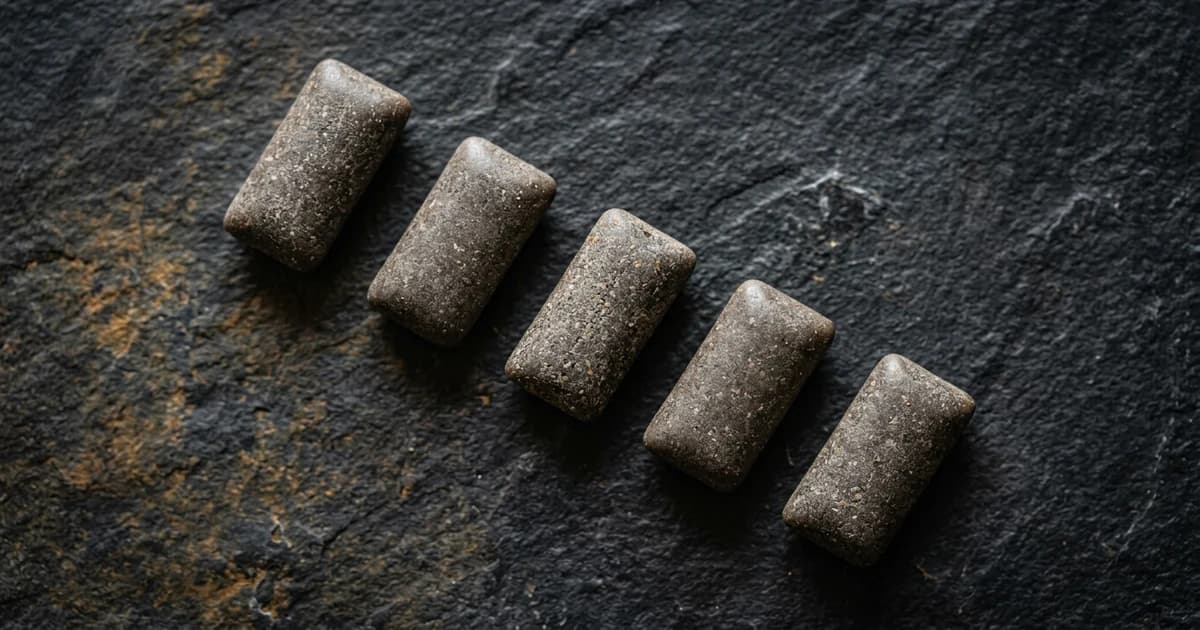
Roon is built for exactly this gap. Each pouch delivers 80 mg caffeine, 60 mg L-theanine, 25 mg methylliberine (Dynamine), and 5 mg theacrine (TeaCrine) in a zero-nicotine sublingual format that hits in 5 to 10 minutes. The dose is moderate by design. Methylliberine slows caffeine's oral clearance: a randomized crossover PK study (n=12) found co-administration cut clearance from 41.9 to 17.1 L/hr and extended caffeine's half-life from 7.2 to 15 hours, with no increase in peak concentration. Same peak, longer tail. That is why the felt window runs 6 to 8 hours on just 80 mg, enough to cover a camp session or a fight-day warm-up through the main event.
Roon is not a substitute for conditioning, technique, a game plan, or sleep. A longer caffeine half-life also means you should stop at least 8 hours before bedtime, because recovery matters more than any supplement in camp. Try Roon for sustained focus across rounds and training days, not as a punch-power shortcut. The research is clear on which of those caffeine actually delivers.
Written by Roon Team