Caffeine Pouches vs Nicotine Pouches
Caffeine Pouches vs Nicotine Pouches: The Honest Category Comparison
Caffeine pouches and nicotine pouches look almost identical and sit in the same spot in your mouth, but they are not the same category of product. A caffeine pouch delivers a legal stimulant most adults already use daily through coffee. A nicotine pouch delivers an addictive drug regulated like tobacco. The format is shared. The active ingredient, the addiction profile, the legal status, and the intended use are not.
That distinction is the entire point of the caffeine pouches vs nicotine pouches conversation, and it gets blurred constantly because the two products are marketed side by side on the same shelves and the same social feeds.
Here is the honest comparison, with the science attributed and the marketing stripped out.
Key Takeaways
- Same delivery, different drug. Both are sublingual pouches held between lip and gum. One carries caffeine, the other carries nicotine.
- Addiction is the real divide. Each nicotine pouch contains as much or more nicotine as a standard cigarette, so the pouches are highly addictive and affect the developing brain as much as smoking or vaping. Caffeine produces mild, well-characterized dependence by comparison.
- Legality differs. There are no federal age restrictions on the sale or use of caffeine, while nicotine pouches are age-restricted to adults 21 and older.
- Doses differ. Caffeine pouches typically run 30 to 100 mg per pouch; nicotine pouches typically run 2 to 8 mg.
- A zero-nicotine option like Roon sits squarely in the caffeine-pouch category: 80 mg caffeine, 60 mg L-theanine, 25 mg methylliberine (Dynamine), 5 mg theacrine (TeaCrine), no nicotine.
The Category Comparison Table
The cleanest way to see the difference is to put the two products in the same table and compare the things that actually matter: what is inside, how it works, how addictive it is, who can buy it, and why people use it.
| Category | Active + typical mg | Mechanism | Addiction / dependence | Age restriction | Intended use |
|---|---|---|---|---|---|
| Caffeine pouches | Caffeine, ~30 to 100 mg per pouch | Adenosine receptor antagonism (blocks the sleep-pressure signal) | Mild physical dependence; mild withdrawal (headache, fatigue) | None federally in the US | Energy and focus; a coffee alternative |
| Roon (caffeine-pouch category) | 80 mg caffeine, 60 mg L-theanine, 25 mg methylliberine (Dynamine), 5 mg theacrine (TeaCrine); 0 mg nicotine | Caffeine adenosine antagonism, balanced with L-theanine; methylxanthine co-actives | Mild caffeine dependence; no nicotine, no nicotine dependence | None federally in the US | Sustained focus without the jitter-and-crash cycle |
| Nicotine pouches | Nicotine, ~2 to 8 mg per pouch | Binds nicotinic acetylcholine receptors; drives dopamine release | Severe; high dependence and withdrawal | Restricted to adults 21+ (US) | Tobacco-free nicotine delivery; smoking and vaping alternative |
The table makes the point the marketing avoids. These products share a shape, not a risk profile.
The Format Is Identical. The Drug Is Not.
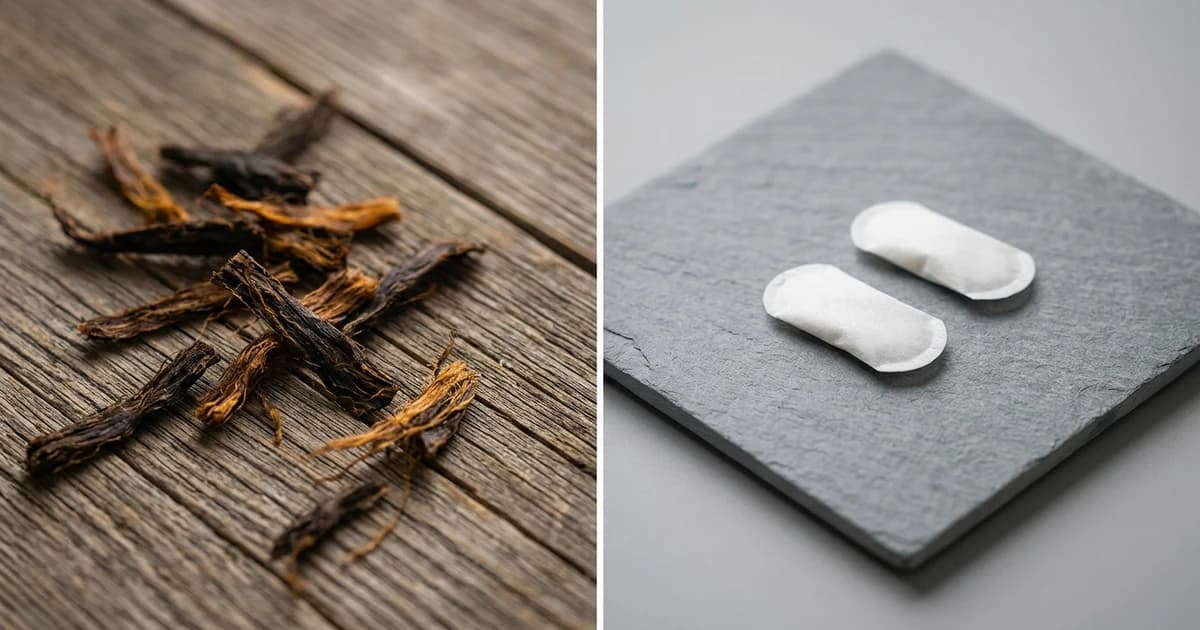
The confusion starts because the user experience is genuinely the same. You tuck a small white pouch under your lip, the active ingredient absorbs through the lining of your mouth, and you go about your day. With nicotine pouches, the pouch is held between the lips and gums, the powder dissolves, allowing nicotine to be absorbed through the lining of the mouth. A caffeine pouch works through the same oral route.
That shared format is exactly why the categories get marketed together. Caffeine pouches join a growing market drafting off the popularity of nicotine pouches and trying to sell Americans on a new alternative to caffeinated beverages, with the rise paralleling the popular nicotine pouch brand Zyn. The pitch borrows the nicotine-pouch habit and swaps the drug. Useful framing for a marketer. Misleading framing for a consumer who assumes "same shape, same thing."
Addiction Is the Line That Separates Them
Nicotine and caffeine are not in the same league on dependence, and pretending otherwise is the most common error in this category. Nicotine is one of the most addictive substances people use recreationally. As Benowitz (2010) documented in the New England Journal of Medicine, repeated nicotine exposure triggers tolerance development that reduces its primary reinforcing effects while inducing physical dependence, with withdrawal symptoms becoming more pronounced between successive doses. Youth are especially sensitive to nicotine's addictive effects because their brains are still developing, and the use of nicotine can rewire a youth's brain. Stopping is not trivial.
Nicotine withdrawal symptoms include irritability, restlessness, feeling anxious or depressed, trouble sleeping, problems concentrating, and craving nicotine. The dose concentration compounds the problem. Each nicotine pouch contains as much or more nicotine as a standard cigarette, so the pouches are highly addictive and affect the developing brain as much as smoking or vaping.
Caffeine produces dependence too, but it is mild and self-limiting for most adults. Skip your usual dose and you may get a headache and feel tired for a day or two. That is real, but it is not the same biological grip. This is the single most important fact in the caffeine pouches vs nicotine pouches comparison: one carries a drug with severe addiction potential, and one does not.
How Caffeine Actually Works in a Pouch
Caffeine is fast, predictable, and well-studied, which is why it remains the default stimulant for adults. According to the NCBI StatPearls caffeine pharmacology reference, caffeine has nearly 100% oral bioavailability and antagonizes all four adenosine receptor subtypes in the brain, with peak plasma concentrations occurring between 30 minutes and 2 hours after oral ingestion. The mechanism is simple: caffeine blocks adenosine receptors, the receptors that normally build up sleep pressure across the day, which is the alertness you feel.
There is a deeper layer worth knowing. Most of caffeine's downstream activity comes from what your liver turns it into. Paraxanthine is the primary metabolite of caffeine in humans. According to a 2022 systematic review published in Frontiers in Pharmacology, N-3 demethylation of caffeine to paraxanthine accounts for around 80 to 90% of caffeine demethylation, exclusively mediated by the CYP1A2 enzyme. Paraxanthine is itself a stimulant. Like caffeine, paraxanthine is a psychoactive central nervous system stimulant, and similar antagonism of adenosine receptors is responsible for its stimulatory effects. So when you use a caffeine pouch, you get both the parent compound and the active metabolite that does much of the work.
The Legal and Age Difference Is Not Subtle
Caffeine and nicotine are regulated as different things, and the law reflects the risk gap. Nicotine pouches are age-restricted to adults 21 and older in the United States and are sold under tobacco-product rules. Caffeine is not. There are no federal age restrictions on the sale or use of caffeine, though the American Academy of Pediatrics recommends that teens consume no more than 100 mg of caffeine per day, or, even better, avoid using it at all.
That last clause matters. "No legal age limit" is not the same as "appropriate for kids." The absence of a restriction is a regulatory fact about caffeine's relative safety, not a recommendation to hand a 100 mg pouch to a teenager. Adults choosing a caffeine pouch should still treat the dose like the dose of coffee it replaces.
The Zero-Nicotine Swap: Where Caffeine Pouches Fit
If you like the pouch format but want nothing to do with nicotine's addiction profile, a zero-nicotine caffeine pouch is the direct swap. You keep the ritual, the discreet delivery, and the hands-free focus, and you drop the regulated, highly dependence-forming drug entirely.
This is the lane Roon occupies, honestly. It is a zero-nicotine caffeine and nootropic pouch built on a four-ingredient formula: 80 mg caffeine, 60 mg L-theanine, 25 mg methylliberine (Dynamine), and 5 mg theacrine (TeaCrine). The caffeine dose sits inside the typical 30 to 100 mg caffeine-pouch range and lands at the AAP's 100 mg adult-reference ceiling rather than above it. The L-theanine is paired with caffeine to support smooth focus. The point of the format here is convenience and control, not nicotine replacement.
One honest caveat. If your goal is to stop using nicotine, that is a quitting topic, not a flavor-swap. A caffeine pouch is not a cessation product and is not a treatment for nicotine dependence. Talk to a doctor or a cessation service about a real plan.
The Honest Bottom Line on Two Products That Only Look Alike
Caffeine pouches and nicotine pouches share a delivery system and almost nothing else that matters. The format is the same small pouch under the lip. The drug, the addiction risk, the legal status, and the reason people reach for them are different in kind, not in degree. Nicotine is severely addictive and age-restricted. Caffeine is a mild, fast-acting stimulant most adults already consume daily, with no federal age limit and well-mapped pharmacology.
Judge the two by what is inside, not by what they look like. If you want energy and focus, a caffeine pouch is the relevant category. If you are trying to quit nicotine, that is a separate problem with separate tools, and a medical professional is the right starting point.
Frequently Asked Questions
Are caffeine pouches the same as nicotine pouches?
No. They share the sublingual pouch format and the under-the-lip delivery, but the active ingredient is completely different. Caffeine pouches contain caffeine, a mild stimulant with no federal age restriction. Nicotine pouches contain nicotine, a highly addictive drug regulated like tobacco and restricted to adults 21 and older. Same shape, different drug, different risk profile.
Are caffeine pouches addictive?
Caffeine produces mild physical dependence, not the severe dependence associated with nicotine. If you stop after regular use, you may experience a temporary withdrawal headache and fatigue for a day or two. That is real but self-limiting for most adults. It is not comparable to nicotine, which the CDC and Stanford Medicine describe as highly addictive, especially for developing brains.
How much caffeine is in a caffeine pouch?
Caffeine pouches typically deliver around 30 to 100 mg per pouch, though some products go higher. For reference, NBC News reported on pouches containing 200 mg per pouch, which is a large dose. Roon contains 80 mg of caffeine, which sits inside the common range and at the American Academy of Pediatrics' 100 mg daily reference for adolescents, a figure worth keeping in mind for dosing.
Can caffeine pouches help me quit nicotine?
A caffeine pouch is not a smoking or nicotine cessation product, and it does not treat nicotine dependence. Some people who like the pouch ritual use a zero-nicotine pouch to keep the habit without the nicotine, but quitting is a separate medical topic. If you want to stop using nicotine, talk to a doctor or a recognized cessation service about an evidence-based plan.
How fast do caffeine pouches work?
Caffeine is absorbed quickly. According to the NCBI StatPearls caffeine reference, caffeine has nearly 100% oral bioavailability, with peak plasma concentrations occurring between 30 minutes and 2 hours after oral ingestion. Sublingual delivery generally feels fast because absorption begins through the mouth. The effect comes from caffeine blocking adenosine receptors, plus paraxanthine, the primary active metabolite your liver produces from the majority of the caffeine you take.
Is there an age limit to buy caffeine pouches?
There is no federal age restriction on the sale or use of caffeine in the United States, unlike nicotine pouches, which are restricted to adults 21 and older. That said, no legal limit is not an endorsement for minors. The American Academy of Pediatrics recommends teens consume no more than 100 mg of caffeine per day, or avoid it entirely.
The Pouch Without the Addictive Part
The whole argument of this comparison is that the format is shared and the drug is not. If you like the discreet, hands-free pouch but want nothing to do with nicotine's addiction profile, the relevant category is caffeine, not tobacco.
That is exactly what Roon is built for. It is a zero-nicotine sublingual pouch with 80 mg caffeine, 60 mg L-theanine, 25 mg methylliberine (Dynamine), and 5 mg theacrine (TeaCrine), designed for sustained focus without the jitter-and-crash cycle. The caffeine dose sits inside the normal caffeine-pouch range, paired with L-theanine to keep the energy smooth.
Be clear on what Roon is and is not. It is a zero-nicotine caffeine and nootropic pouch for energy and focus. It is not a nicotine product, not a cessation aid, and not a substitute for medical advice if you are trying to quit nicotine. If you want the pouch format minus the addictive part, try Roon as a coffee alternative, and talk to a doctor about anything involving nicotine dependence.
By Roon Team